Lima To Machu Picchu: Every Way To Get There
Machu Picchu is the reason most travelers come to Peru, and almost none of them realize the ruins have no road, no airport and no train station of their own. Every single visitor arrives through Cusco, and how you choose to cross the 584 km between Lima and Cusco shapes the whole trip: a 1 hour 20 minute flight, a 21.5 to 24 hour direct bus, or a multi-day hop-on hop-off journey along the coast and the altiplano. This guide lays out every option, with real times, real prices and the ticket rules waiting at the end.
Short answer
Machu Picchu lies 584 to 587 km from Lima by air, and every route runs through Cusco. Fly Lima to Cusco in about 1 hour 20 minutes, or ride a direct bus in 21.5 to 24 hours, then take 62 to 72 km of road to Ollantaytambo and a 43 km train to Aguas Calientes. The full-day group tour from Cusco costs from $332.
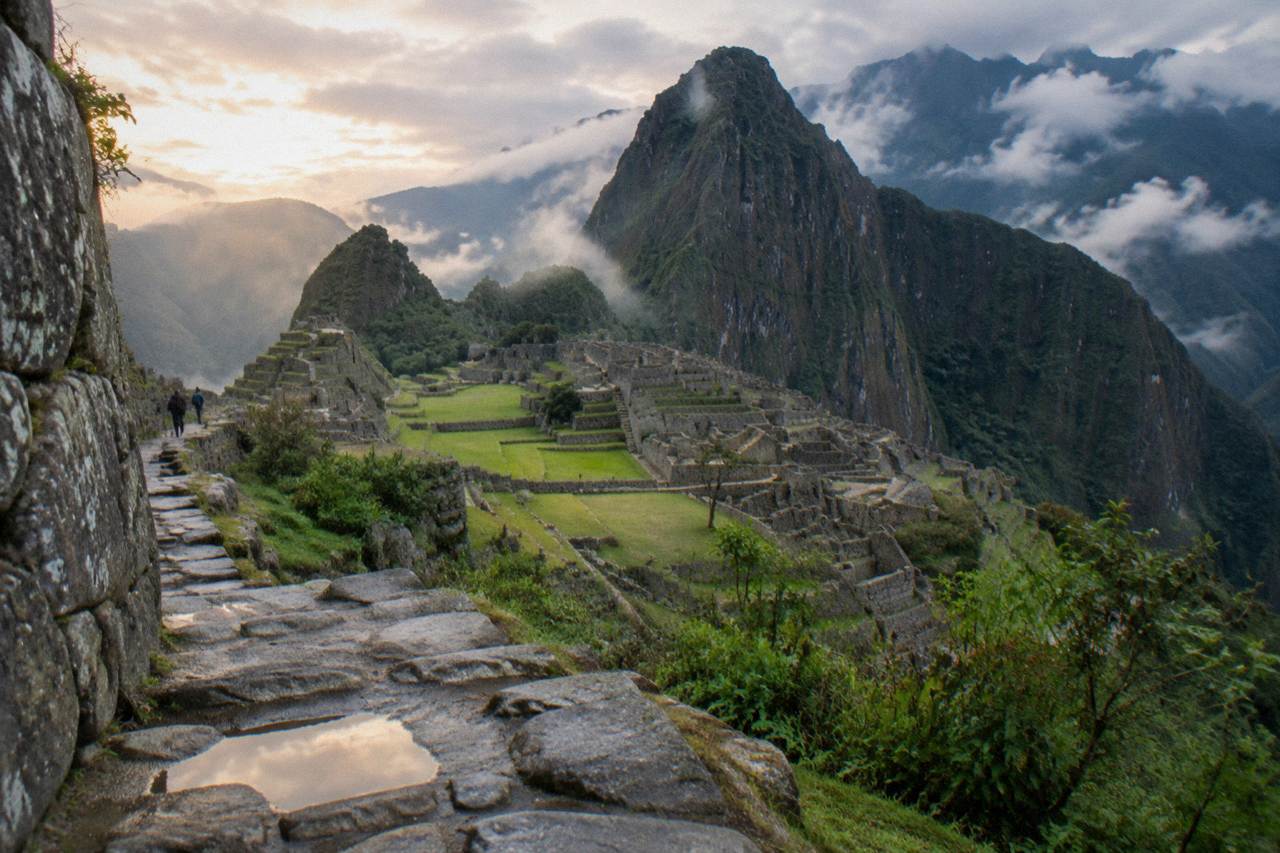
Machu Picchu sits at 2,430 m on a ridge above the Urubamba river, and the nearest thing it has to a front door is a mountain town called Aguas Calientes that no car can reach. That single fact explains almost everything about planning the trip. The citadel is fed by train from Ollantaytambo, which is fed by road from Cusco, which is 584 to 587 km from Lima by air across the Andes. The journey is the destination's gatekeeper, and travelers who treat it as one decision instead of four separate ones save money, days and a good deal of altitude misery.
This guide walks the corridor in order: how far it really is, the fast way by air, the slow way by road, what it costs, how many days it deserves, and the entry rules at the far end. Along the way it points to the bookable pieces where a tour genuinely beats a self-planned leg, and it flags where booking ahead matters most.
How Far Is Machu Picchu From Lima?
Machu Picchu lies 584 to 587 km from Lima by air, and no road or train reaches the ruins directly. Every route goes through Cusco, 21.5 to 24 hours by direct bus or 1 hour 20 minutes by flight, then 62 to 72 km by road and a 43 km train leg to Aguas Calientes.
The straight-line distance hides the real shape of the journey. On a map, Lima and Cusco look like a short hop across the mountains. On the ground, the corridor either climbs over the Andes or runs the long way around them along the coast, and both versions take the better part of a week if you stop anywhere worth stopping. The site you are reading, Lima To Cusco, exists entirely to map this one corridor, because it is the single most-traveled long route in Peru and the one most often underestimated.
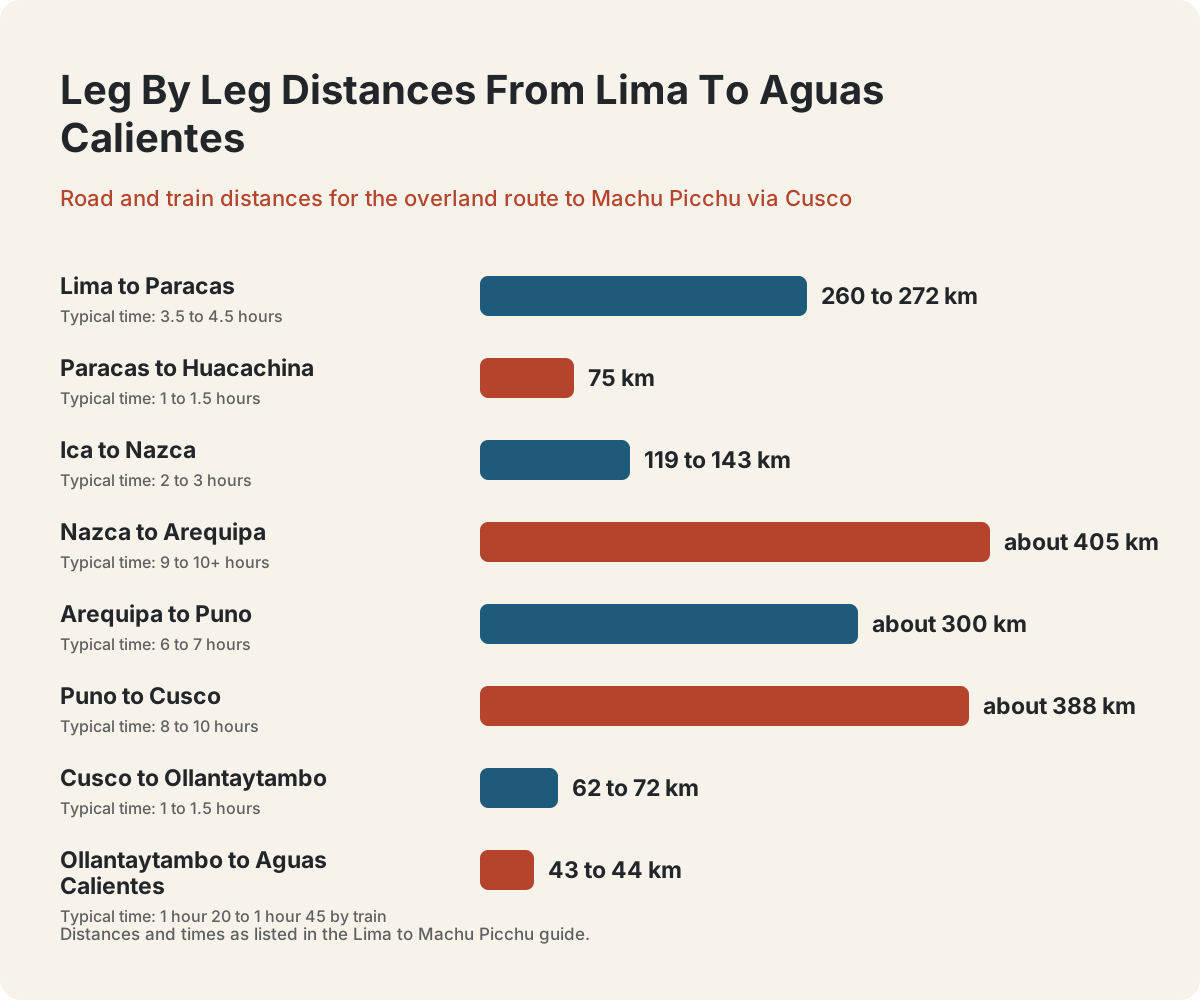
Broken into legs, the classic overland route looks like this:
| Leg | Road distance | Typical travel time |
|---|---|---|
| Lima to Paracas | 260 to 272 km | 3.5 to 4.5 hours |
| Paracas to Huacachina | 75 km | 1 to 1.5 hours |
| Ica to Nazca | 119 to 143 km | 2 to 3 hours |
| Nazca to Arequipa | about 405 km | 9 to 10+ hours |
| Arequipa to Puno | about 300 km | 6 to 7 hours |
| Puno to Cusco | about 388 km | 8 to 10 hours |
| Cusco to Ollantaytambo | 62 to 72 km | 1 to 1.5 hours |
| Ollantaytambo to Aguas Calientes | 43 to 44 km | 1 hour 20 to 1 hour 45 by train |
Two things jump out of that table. The first is that the coastal legs are short: Lima to Huacachina is barely a morning's drive, and the famous desert stops cluster close together. The second is the wall in the middle. Nazca to Arequipa and Puno to Cusco are each near-ten-hour mountain days, and that is where most itineraries either breathe or break. A planner who treats those two legs as full travel days, with nothing ambitious scheduled on arrival, has already solved half the trip.
The last two rows are where the geometry changes. Cars stop at Ollantaytambo, at 2,792 m, and from there the only public access to Aguas Calientes is the train along the Urubamba. There is no bus replacement and no road shortcut, which is why every Machu Picchu itinerary, however budget or however luxurious, converges on the same final 43 km of track. The in-depth breakdown of that last leg is in the guide to the Cusco to Machu Picchu train, which covers the operators, service levels and station logistics in detail.
What Is The Fastest Way To Get From Lima To Machu Picchu?
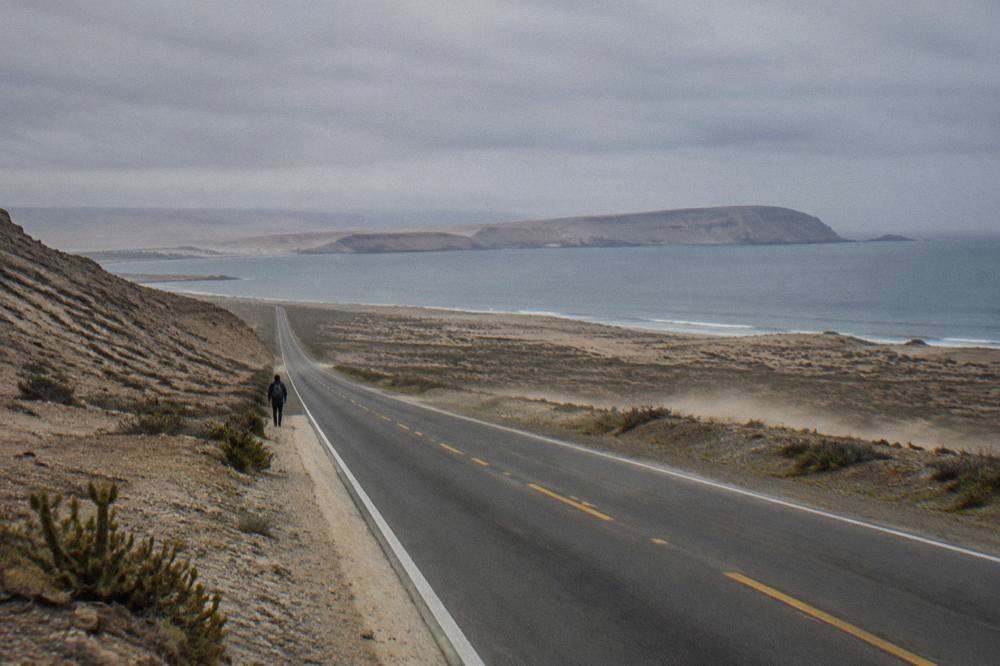
Flying is fastest. LATAM, JetSMART and Sky Airline all fly Lima to Cusco nonstop in about 1 hour 20 minutes to 1 hour 25 minutes, then a full-day Machu Picchu tour from Cusco adds roughly 12 hours including the train. Door to door, most travelers do Lima to Machu Picchu in one day, or two with a night in Cusco first.
The Lima to Cusco air corridor is one of the busiest domestic routes in South America, with LATAM running the highest frequency in sample periods, followed by JetSMART and Sky Airline. Fares swing widely by season and how far ahead you book, so there is no honest single number to print here; compare the three airlines directly for your dates. The flight itself covers roughly 584 to 587 km in 1 hour 20 to 1 hour 25 minutes, but altitude shapes the schedule more than distance: Cusco's airport sits at 3,310 m, among the highest commercial airports in the world, and its thin air means morning flights are generally more reliable while afternoon departures face higher disruption risk from cloud build-up, especially in the rainy season from November to March.
One planning note that catches people out: the current airport, Alejandro Velasco Astete, remains the operational commercial airport for Cusco, and the replacement Chinchero International Airport is still under construction at roughly 40 percent progress, with no confirmed opening date yet. Any advice about a "new Cusco airport" is premature for trips being planned now.
Once you land, the fastest finish is a packaged day tour. The Full-Day Group Tour from Cusco runs about 12 hours, rated 4.7 from 2,307 reviews, and bundles the bus to Ollantaytambo, the train to Aguas Calientes, the shuttle up the mountain and a guided citadel tour. Note that this listing shows no standard free-cancellation policy, unlike most on this route, so the door closes earlier on changes. Travelers who want a more comfortable train carriage can look at the "Full-Day Vistadome Train" tour, a 5.0-rated product from 317 reviews, from $419, with panoramic windows on the river section and free cancellation.
| Route | Typical total time | Best for |
|---|---|---|
| Fly Lima to Cusco, then full-day train tour to Machu Picchu | about 14 to 16 hours door to door | Short trips, tight schedules |
| Fly Lima to Cusco, night in Cusco, then tour | 2 days | Arriving rested at 3,399 m |
| Direct bus Lima to Cusco, then tour | 2 to 3 days | Budget travelers who dislike flying |
| Hop-on hop-off pass along the coast and altiplano, then tour | 7 to 14 days | Travelers who want the journey itself |
The train operators' own schedule pages are the authoritative source for exact departure times, which shift seasonally: PeruRail publishes its frequencies and Inca Rail lists journey times and stations on their official sites. The scheduled run from Ollantaytambo to Aguas Calientes takes roughly 1 hour 21 to 1 hour 42 depending on service. A full comparison of flight versus bus for the Lima to Cusco leg, including comfort and disruption trade-offs, is in the Lima to Cusco flight versus bus guide.
For the arrival in Cusco itself, a pre-booked airport transfer removes the first scramble. The "Private Transfer, Shared Rate" option runs 20 to 25 minutes from the airport into the city, rated 4.8 from 251 reviews, from $13 per group, and the "Private Pickup, Door To Door" alternative is from $14.99 at 4.5 from 98 reviews. Both carry free cancellation, which matters when flight schedules shift at a high-altitude airport.
Can You Do Lima To Machu Picchu Without Flying?
Yes, and many travelers do. A hop-on hop-off pass covers Lima to Cusco over as many days as you like, stopping at Paracas, Huacachina, Nazca, Arequipa and Puno, while a direct bus company covers Lima to Cusco in 21.5 to 24 hours. Either way, Machu Picchu itself is reached from Cusco by train or trek, never by bus.
The overland route splits into two very different products. The first is the plain seat: Cruz del Sur, Oltursa and other major lines run direct Lima to Cusco buses in the 21.5 to 24 hour range, generally as overnight departures in suite-class seats. A one-way seat on a comparable budget leg is cheap, and travelers who just want to be in Cusco can compare direct Lima to Cusco bus seats and book a single ticket. The second is the pass: Peru Hop, the hop-on hop-off tourist service, runs the full southern corridor from Lima to Cusco with hotel and hostel pickup and drop-off, so you skip the bus terminals with your bags.
The differences between the two are structural, not cosmetic. Peru Hop reports more than 395,000 passengers carried, and its current TripAdvisor listing shows about 20,295 reviews at 4.8 out of 5. A bilingual local host rides every bus, the coaches run a climate-control system rather than the open windows of an informal colectivo, and each passenger gets a blanket for the high-altitude legs. Passes are valid up to one year from first use, and you can change a departure time in the app up to 12 hours before the bus leaves, subject to availability. In practice that means you can decide in Paracas that you want an extra night in Huacachina and the itinerary bends, which a direct ticket never does.
The honest caveats matter as much as the features. A pass costs more than a bare Cruz del Sur or Oltursa seat before you tally the taxis and terminal time it replaces, so it is not the cheapest option for a traveler who just wants one direct seat. Some legs run long, and a couple of the corridor's stages are overnight or evening departures, so "hop-on hop-off" does not mean every day ends at sunset. And Peru Hop's line ends at Cusco: no bus of any kind reaches Machu Picchu, which is a train or a trek from there. For a deeper look at the trade-offs, the Peru Hop versus Cruz del Sur comparison and the Peru Hop reviews page break down the two models leg by leg.
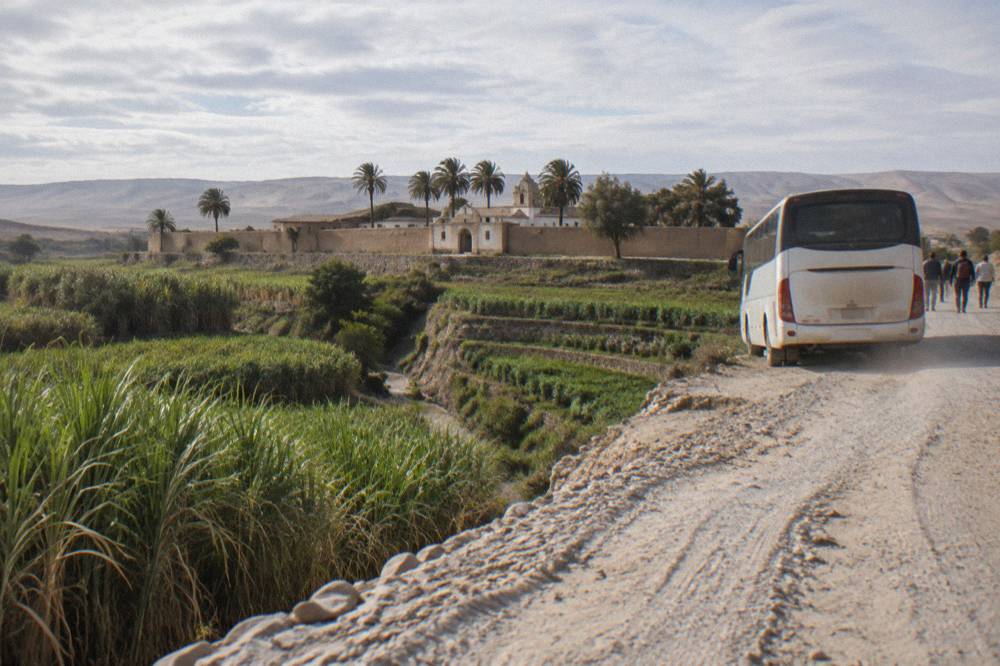
Safety is the question behind the question, and the official advisories are blunt. The US State Department notes that "Bus crashes are common, especially at night. Only use reputable transport companies, and where possible, avoid overnight travel, especially in mountainous and remote regions," and the UK FCDO carries identical wording in its Peru advice. The same US advisory permits its own staff to ride commercial buses at night along the Lima-Arequipa-Cusco corridor specifically, which is a reasonable signal of which overnight legs carry the most professional operations. Roads in Peru occasionally see strikes or protests, so check current conditions before any long travel day.
The middle-way option
If a full hop-on hop-off pass is more journey than you want but a 24-hour direct bus is too little, split the difference: a pass along the coast to Arequipa, then the scenic multi-stop run from Arequipa toward Puno and Cusco. Peru Hop publishes the timetables for every leg on its own site, so you can see exactly where the overnight sections fall before committing.
How Much Does Lima To Machu Picchu Cost?
The firm bookable prices on this route are the one-way Lima to Paracas bus from $19, the premium Paracas and Huacachina day trips from $67 and $119, the full-day Machu Picchu group tour from Cusco from $332, the Vistadome train day from $419, and the Cusco airport transfer from $13 per group. Flight and direct-bus fares move by date, so compare them live rather than trusting a printed number.
Cost on this corridor is dominated by three levers: how you cross Lima to Cusco, how comfortable the train is, and whether you bundle. The bookable pieces with verified prices look like this:
| Bookable piece | Price | Rating | Notes |
|---|---|---|---|
| Direct bus, one way, Lima to Paracas | from $19 | 4.2 from 53 reviews | about 3 hours, free cancellation |
| Premium Paracas and Huacachina day trip, sunset toast | from $67 | 4.9 from 9,650 reviews | 16 to 18 hours, free cancellation |
| Premium day trip, sunset toast, second operator | from $119 | 4.8 from 2,636 reviews | about 16 hours, free cancellation |
| Full-Day Group Tour, Machu Picchu from Cusco | from $332 | 4.7 from 2,307 reviews | 12 hours, no standard free cancellation |
| Full-Day Vistadome Train, Machu Picchu | from $419 | 5.0 from 317 reviews | about 16 hours, free cancellation |
| Private transfer, Cusco airport to hotel | from $13 per group | 4.8 from 251 reviews | 20 to 25 minutes, free cancellation |
What the table cannot show is the bundling effect. The "Full-Day Group Tour" from Cusco is the workhorse option, and its 4.7 rating across more than 2,300 reviews is the largest review pool of any Machu Picchu product on this site. It includes the bus to Ollantaytambo, the train, the shuttle up to the citadel and the guided tour, which are four separate purchases if you self-assemble the day. The trade-off is the cancellation policy: this listing shows no standard free cancellation, so it is the one product on the route where certainty about your dates should come before the booking. Its full details are on the Full-Day Group Tour page, where you can Check availability against your travel dates.
The Vistadome product answers a different question: not "how do I get there" but "can the train itself be a highlight." It is a 5.0-rated experience from 317 reviews, and it comes with free cancellation, which makes it the safer pick for travelers whose Cusco days might shift.
Flights are the one cost nobody can honestly quote in an article. LATAM, JetSMART and Sky Airline compete on the route, and fares vary by week, by season and by how early you book. The practical advice is to price the flight against the total cost of the overland alternative, not the bare bus fare: a pass that includes hotel pickups, hosted border-town stops and a week of accumulated experiences is not competing with a single seat, it is competing with a seat plus four taxis plus the stops you would otherwise pay for separately.
How Many Days Do You Need For Lima To Machu Picchu?
Realistically, ten days minimum: one or two in Lima, two or three on the coast at Paracas and Huacachina, two in Arequipa with Colca Canyon, one or two around Puno and Lake Titicaca, then Cusco and Machu Picchu. Rushed travelers manage it in seven, but skipping the acclimatization stops makes the 3,399 m arrival in Cusco noticeably harder.
The altitude argument is not a wellness footnote, it is the itinerary's backbone. Lima sits at 79 m and Paracas at 2 to 3 m, which is why the coast makes such a gentle opening act. Arequipa at 2,335 m is the natural acclimatization stop, and the standard guidance for the region is gradual ascent, rest on arrival, hydration, light meals and avoiding alcohol, with headache and nausea as the signals to slow down. Puno at 3,827 m is actually higher than Cusco at 3,399 m, so travelers who ride the full corridor arrive in Cusco pre-acclimatized and comfortable, while travelers who fly straight in land at altitude cold. That single difference decides whether the first day in Cusco is a walking day or a horizontal one.
| Trip length | What it looks like | What you sacrifice |
|---|---|---|
| 7 days | Lima, fly to Cusco, Machu Picchu, back | The entire coast and altiplano, plus easy acclimatization |
| 10 days | Lima, Paracas and Huacachina, Nazca flight, Arequipa, Puno, Cusco, Machu Picchu | Colca Canyon done properly, a second Titicaca day |
| 14 days | Everything above plus Colca Canyon, Copacabana and Isla del Sol, buffer days | Almost nothing; this is the shape the route wants |
| 18 days and up | Full corridor with La Paz extension | Only speed |
The coast deserves more of those days than first-time planners give it. The Paracas and Huacachina leg is the highest-rated day trip on this entire site: the "Premium Day Trip, Sunset Toast" option holds a 4.9 rating from 9,650 reviews, from $67, which is an extraordinary review pool for a one-day product. The second premium version of the same day, from $119 at 4.8 from 2,636 reviews, runs a similar route with a different operator and inclusions. Between them they cover the Ballestas Islands, the Paracas reserve and the Huacachina dunes, and the dune sunset alone justifies the stop. Deeper route planning for each leg is in the ten day Peru itinerary.
From Puno, two bookable legs finish the corridor. The "Route Of The Sun, Buffet Lunch" bus from Cusco to Puno runs about 11 hours with cultural stops along the way, at 4.7 from 633 reviews and from $50, and it works in either direction. Travelers with a Bolivia extension can take the "Copacabana And Isla Del Sol" full-day tour from Puno, from $130 at 4.8 from 30 reviews, or the Chivay to Puno scenic bus past Colca Canyon viewpoints, from $41.03. Which order you ride these in is a matter of direction: Lima first then Cusco, or Cusco first then the coast, both work; what does not work is squeezing the altiplano into a single transfer day.
Which Tickets And Rules Matter At Machu Picchu Itself?
Machu Picchu allows 4,500 visitors per day in the regular season and up to 5,600 on high-season dates in 2026, across three circuits with ten routes and timed hourly entry windows. Groups are capped at 16 per guide, tickets are nominal and personalized, and up to 1,000 in-person tickets are sold daily in Aguas Calientes.
The citadel is not a turn-up-and-walk-in site, and the rules tightened for 2026. Entry runs on three main circuits with ten sub-routes, including the panoramic Circuit 1, the classic Circuit 2 and the Circuit 3 options that carry Huayna Picchu climbing. Entries are issued in timed hourly windows across roughly 6:00 to 16:00 with a 30-minute grace period, so the hour on your ticket is a real constraint, not a suggestion. High-season dates in 2026 include January 1, April 2 to 5, June 19 to November 2, and December 30 to 31, when the daily ceiling rises to 5,600.
Because tickets are personalized, the practical sequence matters. Book the citadel entry, or a tour that includes it, before you lock the rest of the day's trains and transfers, because entry windows sell out on high-season dates while train seats usually hold longer. The one exception to advance booking is the in-person allocation in Aguas Calientes, up to 1,000 tickets daily, which suits travelers with flexible dates more than anyone on a fixed 12-hour tour schedule. Guided visits are effectively mandatory in practice given the group-size cap and circuit structure, so independent travelers should expect to hire a guide at or near the entrance rather than wandering solo.
The final practical piece is the shuttle bus from Aguas Calientes up to the citadel gate, which every full-day tour bundles and every independent traveler buys separately. Add it, the entry ticket, the train and the transfer to Ollantaytambo together and the appeal of the bundled 12-hour tour becomes obvious: the "Full-Day Group Tour" at from $332 is priced against the sum of those parts plus a guide, and its 4.7 from 2,307 reviews is the strongest signal on this route that the arithmetic holds up in practice. For travelers who prefer the premium train both ways, the Vistadome day at from $419 with free cancellation is the comparator.
For the return, everything runs in reverse, and one decision is worth making early: whether to end in Cusco or continue overland. The corridor works both directions, the Cusco to La Paz bus guide covers the Bolivia extension, and the border rules for that crossing, including the free online pre-registration Bolivia now requires, are worth reading before committing to a through ticket.
Common Questions About Getting From Lima To Machu Picchu
How far is Machu Picchu from Lima?
About 584 to 587 km by air between Lima and Cusco, but no road or train covers it directly. The full overland route runs roughly 260 to 272 km to Paracas, 75 km to Huacachina, about 405 km from Nazca to Arequipa, about 300 km from Arequipa to Puno and about 388 km from Puno to Cusco, then 62 to 72 km by road and a 43 km train leg to Aguas Calientes.
What is the fastest way to get from Lima to Machu Picchu?
Fly Lima to Cusco with LATAM, JetSMART or Sky Airline in about 1 hour 20 minutes to 1 hour 25 minutes, then take a full-day Machu Picchu tour from Cusco, roughly 12 hours including the bus, train and guided citadel visit. Door to door that is one long day, or two with a night in Cusco first.
Can you do Lima to Machu Picchu without flying?
Yes. A direct bus covers Lima to Cusco in 21.5 to 24 hours, or a hop-on hop-off pass covers the same corridor over multiple days with stops at Paracas, Huacachina, Nazca, Arequipa and Puno. Machu Picchu itself is reached from Cusco by train or trek, never by bus, as no road reaches Aguas Calientes.
How much does Lima to Machu Picchu cost?
The firm bookable prices are the one-way Lima to Paracas bus from $19, the premium Paracas and Huacachina day trips from $67 and $119, the full-day Machu Picchu group tour from Cusco from $332, the Vistadome train day from $419, and the Cusco airport transfer from $13 per group. Flight and direct-bus fares vary by date, so compare them live.
How many days do you need for Lima to Machu Picchu?
Ten days is the comfortable minimum: one or two in Lima, two or three on the coast, two in Arequipa for acclimatization at 2,335 m, one or two around Puno at 3,827 m, then Cusco at 3,399 m and Machu Picchu. Seven days is possible by flying, but you skip the coast and arrive at altitude without acclimatization.
Which tickets and rules matter at Machu Picchu itself?
Daily capacity is 4,500, rising to 5,600 on 2026 high-season dates, across three circuits with ten routes and timed hourly entry windows from roughly 6:00 to 16:00. Guide groups are capped at 16, tickets are nominal and personalized, and up to 1,000 tickets are sold in person daily in Aguas Calientes.