Peru Hop Reviews: What Riders Actually Say
Thousands of travelers have reviewed Peru Hop after riding the Lima to Cusco corridor. Here is what the reviews actually say, praise and complaints included.
Short answer
Riders reviewing Peru Hop describe well-organized trips with hotel pickup and bilingual hosts. Peru Hop reports 395,000+ passengers, and current TripAdvisor shows about 20,295 reviews at 4.8/5. The recurring complaints are long days on some legs and a higher cost than a bare bus seat. Most reviewers conclude the pass suits first-time visitors who want structure.
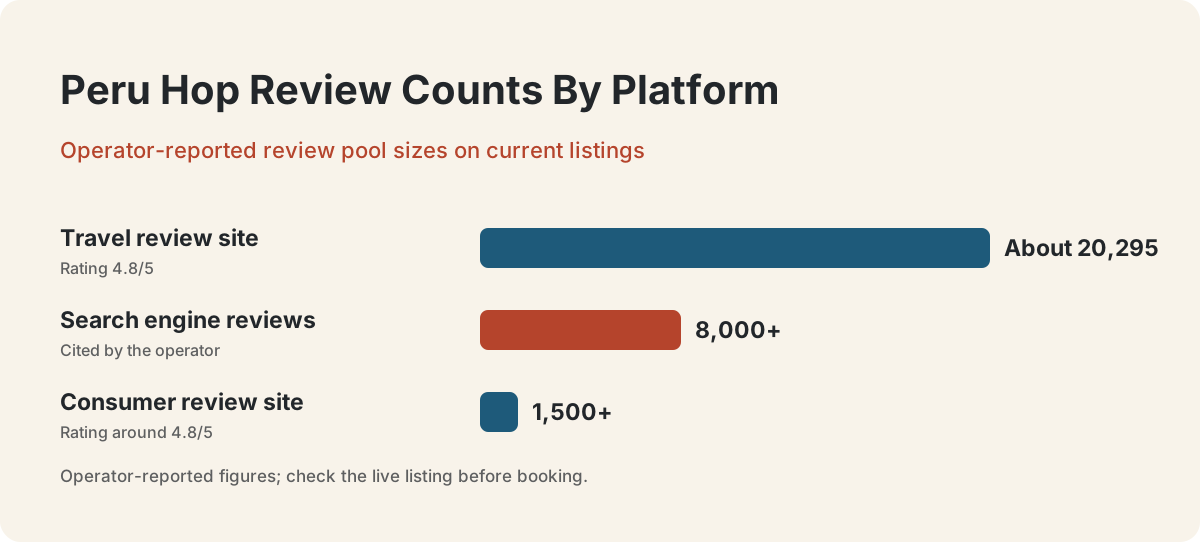
Peru Hop is the most-reviewed tourist bus service on the Lima to Cusco corridor, and the review pool is large enough to say something meaningful. Peru Hop reports 395,000+ passengers carried, and its current TripAdvisor listing shows about 20,295 reviews at 4.8/5, with roughly 19,000 TripAdvisor, 8,000+ Google and 1,500+ Trustpilot reviews cited by the operator. Those are operator-reported figures, but the platform snapshots line up with them. This guide reads the reviews the way a skeptical planner would: what riders praise, what they grumble about, and who the pass genuinely fits.
What Do Peru Hop Reviews Say Overall?
The overall pattern is strongly positive with a consistent set of caveats. Riders praise organization, hotel pickup, bilingual hosts and comfortable buses, while complaints cluster around long days, occasional wifi inconsistency and a price above a bare bus ticket. The balance of reviews from travelers who rode the full south route in 2026 leans clearly toward recommending it, especially for first-time visitors.
The clearest way to read a review pool this size is to look for repetition rather than extremes. One delighted review tells you little; several thousand telling the same story tells you plenty. Across the 2025 and 2026 review coverage, the same handful of phrases recur: everything ran on time, the hosts handled problems, the pickup meant no terminal chaos with luggage, and the trip felt organized from start to finish.
A September 2026 reviewer who rode Lima to Cusco in eight days called it "a great experience... very fast-paced, but very fun." Another the same month wrote of being "so impressed with the entire service on offer," and a third described an 18-day trip planned around the route as running smoothly throughout. These are not cherry-picked outliers. They are representative of the tone of the majority of recent coverage.
The negative tail is real but narrow. It rarely questions safety or competence. It questions pace, price and comfort on the longest legs, which is a fair thing to question before you commit.
| Review source | What Peru Hop reports / current listing shows |
|---|---|
| TripAdvisor | About 20,295 reviews at 4.8/5 |
| Trustpilot | Roughly 1,500+ reviews, around 4.8/5 |
| 8,000+ reviews cited by the operator | |
| Passengers carried | 395,000+ reported by Peru Hop |
Treat every figure in that table as operator-reported, and check the live listing before you book anything., which is exactly how the operator itself frames it. The numbers are still useful: a service carrying hundreds of thousands of passengers while holding ratings near 4.8 across four platforms is doing something right at scale.
Is Peru Hop Worth It According To Travelers?
Most reviewers who state a verdict say yes, with two conditions attached: you should want the stops along the way rather than a fast point-to-point ride, and you should value hand-holding over saving every sol. Reviewers who wanted one direct seat or the lowest possible price were the least satisfied, while those treating the pass as a structured tour were the most satisfied.
This is the question every review searcher is really asking, and the reviews answer it with unusual consistency. Travelers who frame the pass as a rolling tour of southern Peru, Paracas, Huacachina, Nazca, Arequipa, Puno, Cusco, report high satisfaction. Travelers who frame it as transportation, and who would happily have taken a direct Cruz del Sur bus, report lower satisfaction and occasionally outright regret.
One 2026 reviewer captured the first group neatly, calling the experience "a mix between à-la-carte and tailor-made," which is a fair description of how the hop-on hop-off model actually behaves. You choose your stopover nights, the host fills in the logistics, and the bus handles the corridors. A South African group riding Lima to Cusco in 2024, still cited in updated coverage, simply noted that "everything was on time."
The verdict logic is not subtle. If your trip is a two-week first visit to Peru and you want the coast and the altiplano without planning twelve separate bus tickets, the reviews say the pass earns its keep. If you are flying into Cusco for a week of ruins and heading home, the reviews say skip it, and the companion piece on Lima To Cusco routing covers the faster options.
There is also a companion tour worth knowing about here, because several of the pass's most-praised coast stops can be done in a single organized day if your schedule is tight. The trio below shows the day-trip option alongside two of the most-bookable products further along the route.
What Do Riders Consistently Praise?
Three things dominate the praise: door-to-door hotel pickup and drop-off that removes bus terminals from the trip, a bilingual local host on every bus, and onboard comfort including wifi, USB charging, a bathroom and reclining semi-cama seats. Reviewers repeatedly single out the pickup system as the single biggest quality-of-life improvement over ordinary bus travel.

The pickup point deserves the emphasis it gets in the reviews. Peru Hop picks up and drops off at your hotel or hostel in participating locations, so you skip the bus terminal with your bags. Anyone who has hauled a suitcase through Lima's Javier Prado terminal or Arequipa's terminal terrestre at dawn understands why reviewers mention this first. It also quietly solves a safety question, since the terminals are where most traveler-facing hassle in Peru actually happens.
The host system is the second pillar. A bilingual English and Spanish local host rides every bus, handles check-ins, rebooks the odd problem and acts as a walking FAQ. Reviewers traveling on their first Latin America trip credit the hosts with turning what could have been a stressful corridor into a guided one. The hosts also brief passengers on each stop, from where to change money in Puno to how the Nazca overflight day works.
Comfort claims are worth stating carefully because they are verified with nuance. Peru Hop buses run a climate-control system to keep the cabin at a steady temperature, and the service provides a blanket per passenger for the high-altitude legs, where the altiplano between Puno and Cusco sits above 3,800 meters. Buses come with wifi, USB charging, an onboard bathroom and reclining semi-cama seats, though a few reviewers note wifi and USB can be inconsistent. That caveat shows up often enough in the reviews that it belongs in the praise column with an asterisk.
| What reviewers praise | The verified detail behind it |
|---|---|
| No bus terminals | Hotel or hostel pickup and drop-off in participating locations |
| "Someone spoke English" | A bilingual local host on every bus |
| Comfortable buses | Reclining semi-cama seats, onboard bathroom, climate-control system |
| Warmth at altitude | A blanket provided per passenger |
| Staying connected | Wifi and USB charging, with some reviewer reports of inconsistency |
If the coast portion of that itinerary is the part that tempts you, it is also the part you can buy as a standalone product while keeping the rest of your trip self-planned. The premium day trip from Lima, with its sunset toast in Huacachina, is the single most review-backed version of that idea.
What Complaints Show Up In Peru Hop Reviews?
The recurring complaints are pace, price and predictability. Some journeys run very long or overnight, a few reviewers report wifi and USB ports that did not work, and the pass costs more than a bare seat on a premium direct line before you count anything else. Complaints about safety, organization or the hosts themselves are rare in the current review pool.

The long-day complaint is the most honest one in the pool, and Peru Hop's own route structure explains it. The full south route from Lima to Cusco is not a shuttle; it strings together 3 to 4 hour coast legs with 6 to 10 hour mountain corridors, and some departures are evening or overnight runs. A September 2026 reviewer who completed the full south route praised the service, the USB-A charging ports included, and then admitted flatly that "some of the journeys did feel very long." That is the caveat to weigh before booking, and it is the one this guide will stand behind: some legs run long or overnight, and no amount of onboard comfort shortens the Andes.
Price is the second complaint, and it is a matter of framing rather than dispute. A hop-on hop-off pass with pickup, host and stops costs more than a bare Cruz del Sur or Oltursa seat before totalling in taxis and tours. Reviewers who compared the pass against a single direct ticket felt the sting. Reviewers who compared it against the full cost of replicating the itinerary independently, tickets plus transfers plus tours plus the time spent planning, mostly did not.
| Complaint theme | How often it appears | The fair reading |
|---|---|---|
| Long or overnight legs | Recurring theme in recent reviews | Structure is a rolling tour, not a shuttle; check each leg's schedule before booking |
| Higher cost than a bare bus seat | Common among point-to-point travelers | The pass is not the cheapest option for someone who just wants one direct seat |
| Wifi or USB not working | Occasional reviewer reports | Bring a charged power bank; treat connectivity as a bonus |
| Fast pace on compressed itineraries | Noted by riders doing Lima to Cusco in about a week | Add stopover nights rather than cutting stops |
Notably absent from the 2025 and 2026 review coverage: reports of missed pickups, lost reservations or safety incidents attributable to the service. No major negative safety event specific to Peru Hop appears in the coverage reviewed for this guide.
How Does Peru Hop Compare With A Regular Bus Ticket?
Peru Hop trades price for structure. A direct bus gets you between two cities cheaply with no frills and no stops, while the pass layers hotel pickup, a bilingual host, scenic and cultural stops, and date flexibility onto the same corridors. Reviewers who wanted A to B preferred the direct lines; reviewers who wanted the middle of the country preferred the pass.
The comparison is worth making precisely, because the reviews often blur it. Cruz del Sur and Oltursa run direct Lima to Cusco services in roughly 21.5 to 24 hours, and both are premium lines with their own strong reputations. Premium long-distance lines like those, and Peru Hop, generally run air conditioning, while informal combis, colectivos and many economy public buses often do not. That distinction matters on a corridor that climbs from sea level at Lima to 3,399 meters at Cusco and passes above 4,800 meters on some altiplano passes.
Official advice backs the general approach. The US State Department's current Peru advisory notes that "bus crashes are common, especially at night. Only use reputable transport companies, and where possible, avoid overnight travel, especially in mountainous and remote regions," and the UK FCDO carries the same sentence on its own Peru page. Daytime travel on reputable companies is the standard recommendation for the south, and both the pass model and the premium direct lines fit it better than ad hoc night buses.
| Factor | Peru Hop pass | Direct premium bus (Cruz del Sur, Oltursa) |
|---|---|---|
| Boarding | Hotel or hostel pickup and drop-off | Terminal departure, arrive and queue yourself |
| Onboard host | Bilingual local host on every bus | Standard crew, Spanish-primary service |
| Route | Multi-stop, hop on and hop off at Paracas, Huacachina, Nazca, Arequipa, Puno | Direct point to point, few or no tourist stops |
| Flexibility | Change bus times in the app up to 12 hours before departure | Fixed ticket, changes per fare rules |
| Best fit | First-time visitors touring the south over 10 days or more | Travelers who need one city-to-city seat |
One point of honesty cuts against the pass: it is not the cheapest option for a traveler who just wants one direct seat, and it was never designed to be. If a single Lima to Cusco ticket is the actual goal, the budget route is to compare direct bus tickets on Busbud and book the reputable line with the best departure time. The full head-to-head, including comfort class details, is in the site's detailed Peru Hop versus Cruz del Sur comparison, and the wider cost question is covered in the breakdown of how much a Peru Hop pass costs.
There is also a middle path that the reviews hint at without naming: buying one scenic multi-stop service for a single corridor rather than a whole pass. The Puno to Cusco stretch is the classic candidate, because it can be ridden as a full-day "Route of the Sun" tour with cultural stops and buffet lunch included, at from $50 with a 4.7 rating from 633 reviews, and it covers what many reviewers single out as the pass's most scenic day.
How Flexible Is A Peru Hop Pass Once You Buy It?
More flexible than most travelers expect, with limits worth knowing. Passes are valid up to one year from first use, and you can change a bus time in the app up to 12 hours before departure, subject to availability. Luggage is not micromanaged either: no strict published weight limit, one suitcase in the hold plus a carry-on daypack.

Flexibility is the quiet star of the positive reviews, because it is what converts a bus product into a planning tool. A pass holder who falls in love with Arequipa can simply stay another night and take a later bus, within the one-year window and subject to seats being available. Reviewers who changed plans mid-route, weather, illness, a Nazca overflight grounded by wind, consistently report the host sorting it without drama.
The mechanics are simple. Bus times are managed in the app, with changes possible up to 12 hours before departure, subject to availability. The one-year validity runs from first use rather than from purchase, which matters for anyone buying ahead of a long trip. Note that high-season dates on popular legs can fill, so "flexible" means you can change dates easily, not that seats are guaranteed at zero notice.
A note of caution that no marketing page will volunteer: roads in Peru occasionally see strikes or protests, and current conditions are worth checking before any travel day. The reviews include rerouted and refunded trips during such periods handled by the operator, but the honest framing is that any road corridor in the Andes carries some schedule risk, not that any particular service is immune.
Peru Hop Pass Or Separate Tours: Which Fits Your Trip?
The pass makes sense when the corridor itself is your itinerary and you want the stops bundled with the transport. Buying separately makes sense when you are short on time, based in one city, or only want one or two specific experiences. Many reviewers who loved the pass had ten days or more; the satisfied short-trip travelers mostly booked individual day tours instead.
This is where the review pool becomes genuinely useful for planning, because it splits travelers into two camps whose members reviewed different products. The pass camp rode the corridor over one to three weeks and wanted Paracas, Huacachina, Nazca, Arequipa, Colca and Puno in one structure. The tour camp flew or bussed straight to Cusco or picked one or two highlights and bought those as standalone days.
The standalone route is easier than it has ever been, and the site's roster shows why. The coast's two signature stops compress into a single premium day trip from Lima: Paracas reserve and the Huacachina oasis with a sunset toast, from $119, rated 4.8 from 2,636 reviews over roughly 16 hours, with free cancellation. In Cusco, the full-day group tour of Machu Picchu runs from $332, holds a 4.7 from 2,307 reviews, and handles the bus, train and citadel guiding in one 12-hour package, though its listing shows no standard free-cancellation policy, so read it before booking. Between the two, the Colca Canyon to Puno scenic bus at from $41.03, rated 4.7 from 88 reviews, stitches the Arequipa and Puno legs together with viewpoints instead of a terminal transfer (see Colca Canyon Worth It).
| You should lean pass if... | You should lean separate tours if... |
|---|---|
| Your trip is 10 days or more along the south route | Your trip is a week or less |
| You want Paracas, Huacachina, Nazca, Arequipa and Puno | You want only one or two of those stops |
| You value hotel pickup and a bilingual host | You are comfortable in Spanish and in terminals |
| Your dates may shift mid-trip | Your dates are fixed and tight |
For the coast bundle specifically, the Paracas and Huacachina premium day trip is the review-backed pick, and the scenic Route of the Sun bus covers the single most-praised altiplano leg. Check availability if the coast day is the anchor of your plan.
For the Cusco end of the route, the most common single booking among short-trip travelers is the full-day Machu Picchu group tour, and it is the one product this site carries that reviewers on the corridor routes most often ask about by name.
What Is The Verdict On Peru Hop Reviews?
The reviews describe a service that does exactly what it promises: organized, hosted, hotel-to-hotel travel along the south corridor, at a price above a bare bus seat and with some long days built in. It is not a luxury product or a shuttle. It is structure, and for a first big trip through Peru, thousands of reviewers found that structure worth paying for.
Reading the whole pool rather than the loudest reviews, a consistent picture holds. Praise concentrates on the things a traveler cannot easily buy separately: pickup at the door, a bilingual host solving problems, and a route that turns a 24-hour bus corridor into a two-week tour. Complaints concentrate on things a traveler can predict in advance: long legs, occasional dead USB ports, and a total bill above the cheapest alternative. Nobody in the current coverage questions whether the service is reputable, which matches the official advisory framing that reputable companies on this corridor are the ones worth using.
Two verdicts, then, depending on your trip. If you have the days and you want the middle of the country, the pass model is well supported by the reviews, and the deeper question of whether it pays off is argued from both sides in the site's is Peru Hop worth it breakdown. If you are short on time, skip the corridor and buy the two or three standout days directly; the coast day trip and the Machu Picchu full-day tour between them cover the majority of what pass holders actually photograph.
Planning the full south route yourself? Peru Hop picks up at your hotel, runs a bilingual host on every bus, and lets you change bus times in the app up to 12 hours before departure. See Peru Hop passes and timetables
Whichever way you lean, the reviews support one simple planning rule: decide first whether your trip is about the corridor or the destinations, and the right product follows from that answer.
Common Questions About Peru Hop Reviews
Is Peru Hop worth the money?
Reviews say yes for travelers touring the south over 10 days or more who want the stops, the hotel pickup and the host included. It costs more than a bare seat on a premium direct line, so if you only need one city-to-city ticket, a direct bus is the better buy.
Is Peru Hop safe?
No major negative safety event specific to Peru Hop appears in the 2025 or 2026 coverage reviewed here. Peru Hop states its buses use GPS tracking, observe speed limits and run two drivers on long legs. Official advisories recommend reputable companies and daytime travel, which the service's model matches.
Does Peru Hop go to Machu Picchu?
No. Cusco is the end of the line, and Machu Picchu is reached from Cusco by train or trek, typically via Ollantaytambo. The reviews sometimes blur this, but the route itself stops at Cusco.
Can you change dates on a Peru Hop pass?
Yes. Passes are valid up to one year from first use, and you can change a bus time in the app up to 12 hours before departure, subject to seat availability on the new departure.
What do the negative Peru Hop reviews say?
Three themes: some journeys feel very long or run overnight, wifi and USB charging can be inconsistent, and the pass costs more than a direct ticket would. Complaints about the hosts, the pickups or the organization itself are rare in the current pool.