Is Peru Hop Worth It
An honest look at whether a Peru Hop pass pays off on the Lima to Cusco corridor, covering what the pass includes, safety, real review sentiment, and who should skip it.
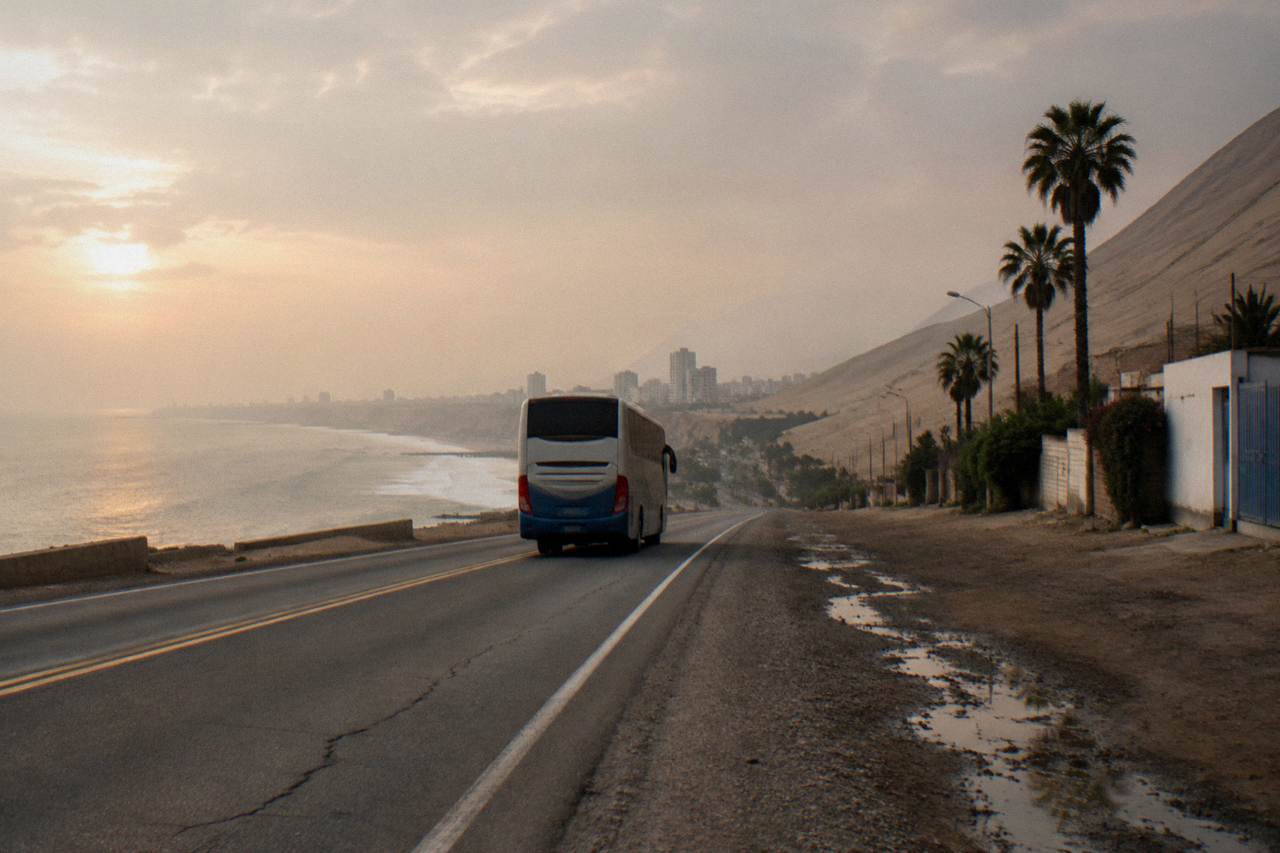
Is Peru Hop Worth It
For most first-time visitors working down the Lima, Paracas, Huacachina, Nazca, Arequipa, Puno and Cusco corridor, yes: the pass earns its price through hotel pickups, a bilingual host on every bus and the freedom to change travel dates in the app up to 12 hours before departure. It costs more than a bare Cruz del Sur or Oltursa seat, so a traveler who just wants one direct overnight ride should buy a normal ticket instead.
That is the short version, and it is the version that matters, because the pass is one of the most argued-about products in South American travel. Some of the argument is honest confusion about what the pass actually is. A Peru Hop pass is a hop-on hop-off tourist bus network, not a luxury coach line and not a tour company in the traditional sense. You buy a pass, you ride between its stops, and you decide how many nights to spend at each one before continuing.
The case for it rests on friction. Peru's southern corridor involves a chain of separate bus bookings, terminal logistics with luggage, and Spanish-only ticket counters at some operators. A pass collapses that into one product with door-to-door hotel pickup and drop-off in participating locations, so you skip the terminals with your bags entirely. A bilingual local host rides every bus, which matters when a road closure or a schedule change needs explaining quickly.
The case against it is price and pace. A Peru Hop pass costs more than the sum of the individual bus seats it replaces once you add up the equivalent Cruz del Sur or Oltursa fares, and some legs run long or land in the evening. That trade-off is real, and this article walks through it section by section rather than pretending it does not exist. For the full corridor breakdown, the Lima to Cusco bus guide lays out every stop and timing in detail, and the wider picture lives here on Lima To Cusco.
One thing to settle immediately: Peru Hop does not reach Machu Picchu itself. Cusco is the end of the line. From Cusco you reach Machu Picchu by train or trek, which is why so many pass holders bolt on a separate day tour. The Cusco to Machu Picchu train guide covers that leg separately.
What A Peru Hop Pass Actually Gets You
The pass buys transport between stops plus a service layer: hotel or hostel pickup and drop-off in participating locations, a bilingual English and Spanish host on every bus, a blanket per passenger, reclining semi-cama seats, an onboard bathroom, USB charging, wifi and a climate-control system that holds the cabin steady. Passes stay valid up to one year from first use, and bus times can be changed in the app up to 12 hours before departure.
That list is worth reading twice, because the parts travelers underrate are the ones that solve actual problems. The hotel pickup means you never stand in a terminal queue at 5 a.m. holding a suitcase. The host means someone is accountable for you on the bus, not just a driver with a manifest. The one-year validity means a two-week trip can stretch into a month without penalty if you fall in love with Arequipa or the canyon country.
The comfort claims are mostly what they sound like, with one honest footnote: a few reviewers note the wifi and USB charging can be inconsistent on some runs. The seats recline, the bathroom is onboard, and the climate-control system runs on the high-altitude Puno and Cusco legs too, where a blanket per passenger is genuinely welcome at 3,800 meters. Travelers worried about how the altitude on these roads affects the body should read up on altitude sickness on the bus routes before committing to any long itinerary.
On the high Andean stretch between Chivay and Puno the bus crosses terrain above 4,000 meters, with the Cruz del Condor viewpoint sitting roughly between 3,270 and 3,800 meters and Puno itself at 3,827 meters. That is where the pass's comfort layer stops being marketing and starts being practical. Nobody wants to negotiate a terminal rebooking with altitude symptoms at 3,800 meters; the app-based date change exists precisely for that traveler.
Peru Hop also states that its buses carry GPS tracking, run speed limits, and use two drivers on long legs. Those safety claims come from the operator itself rather than from an independent regulator statistic, which is how they should be read: plausible, operator-stated, and consistent with the general picture of a company that has carried, by its own reporting, 395,000+ passengers.
Peru Hop Versus Regular Buses And Day Tours
A Peru Hop pass competes with two different products at once: direct bus seats from operators like Cruz del Sur and Oltursa, and the guided day tours sold at each stop. The pass costs more than the equivalent bare seats, sometimes substantially once every leg is tallied, but it bundles hotel transfers, onboard hosting and schedule flexibility that a direct ticket does not include, while day tours along the route are bought separately either way.
The honest math depends on the trip shape. Here is how the layers compare in practice:
| Layer | Peru Hop pass | Direct bus seat (Cruz del Sur, Oltursa) | Separate day tour |
|---|---|---|---|
| Transport between stops | Included, hop-on hop-off | Bought per leg, terminal to terminal | Not included |
| Hotel pickup and drop-off | Included in participating locations | Taxi both ends, usually | Usually included from central points |
| Onboard host | Bilingual host on every bus | Crew only | Licensed local guide |
| Date changes | App, up to 12 hours before departure | Change fees or new ticket, per operator | Operator's policy, often 24 hours |
| Cost positioning | Costs more than the bare seats it replaces | Cheapest per leg | Adds cost per stop |
| Best for | Multi-stop first visits, flexibility | One or two direct legs, tight budgets | Specific sights you already know you want |
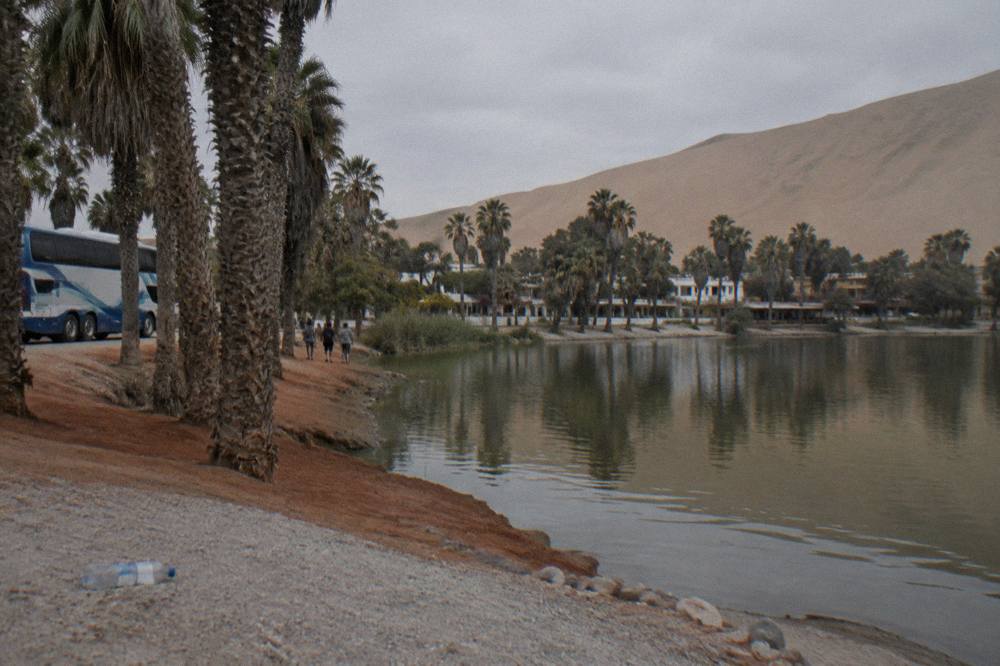
The premium day-tour layer deserves its own note, because this is where pass holders and independent travelers end up spending similar money anyway. The flagship coast excursion from Lima, the "Premium Day Trip, Sunset Toast", runs about 16 hours door to door, is rated 4.8 from 2,636 reviews, and starts from $119 with free cancellation. It is sold on the operator's live listing, and you can Check availability if the date math is what you are weighing.
A comparable version of that same coast day trip, the "Premium Day Trip, Peru Hop Run", starts from $67 and carries a 4.9 rating across 9,650 reviews, and it covers the same corridor the pass serves. So the pass and the day tours are complements, not substitutes: the pass moves you, the tours fill the days. Travelers who expect the pass to include guided sightseeing at every stop are the ones who feel oversold, and that expectation gap drives a meaningful share of negative verdicts online.
Where the pass does bundle genuine value is the inter-city guiding you would otherwise miss: the Route of the Sun style stops between Cusco and Puno, the Lagunillas viewpoint, and the short walk-and-look pauses the direct buses skip entirely. A direct Cusco to Puno bus covers roughly 388 kilometers in 6 to 8 hours with nothing but a rest stop. A scenic multi-stop service takes 9 to 11 hours and turns the same road into a sightseeing day with lunch. Neither is wrong; they are different products for different travelers, which the Peru Hop versus Cruz del Sur comparison breaks down seat by seat.
Is Peru Hop Safe?
The safety picture is solid but needs careful sourcing. Peru Hop runs daytime travel on the main southern corridor, and the operator states its buses carry GPS tracking, observe speed limits and use two drivers on long legs. The US State Department and the UK FCDO both warn that bus crashes in Peru are common at night and advise reputable companies and avoiding overnight journeys; the Lima to Arequipa to Cusco corridor is one US staff are permitted to ride.
The advisory language deserves to be quoted directly, because it is the strongest independent evidence on the whole topic. The US State Department advisory for Peru states: "Demonstrations occur regularly throughout the country. Public demonstrations can take place for political and economic issues. Demonstrations can shut down local roads, trains, and major highways. This often happens without warning or clear information on reopening times." The same page permits its own staff to travel at night with commercial bus companies along the Pan-American Highway, to Huaraz and on the Lima-Arequipa-Cusco corridor, which is a quiet but meaningful endorsement of the main tourist arteries.
The UK FCDO travel advice for Peru is blunter about buses: "Bus crashes are common, especially at night. Only use reputable transport companies, and where possible, avoid overnight travel, especially in mountainous and remote regions." Peru Hop's structure, daytime departures and hotel pickups, sits comfortably inside both advisories. The informal combis and colectivos that the advisories effectively warn about are a different world from either the hop-on hop-off network or the premium direct lines like Cruz del Sur and Oltursa, all of which generally run air conditioning.
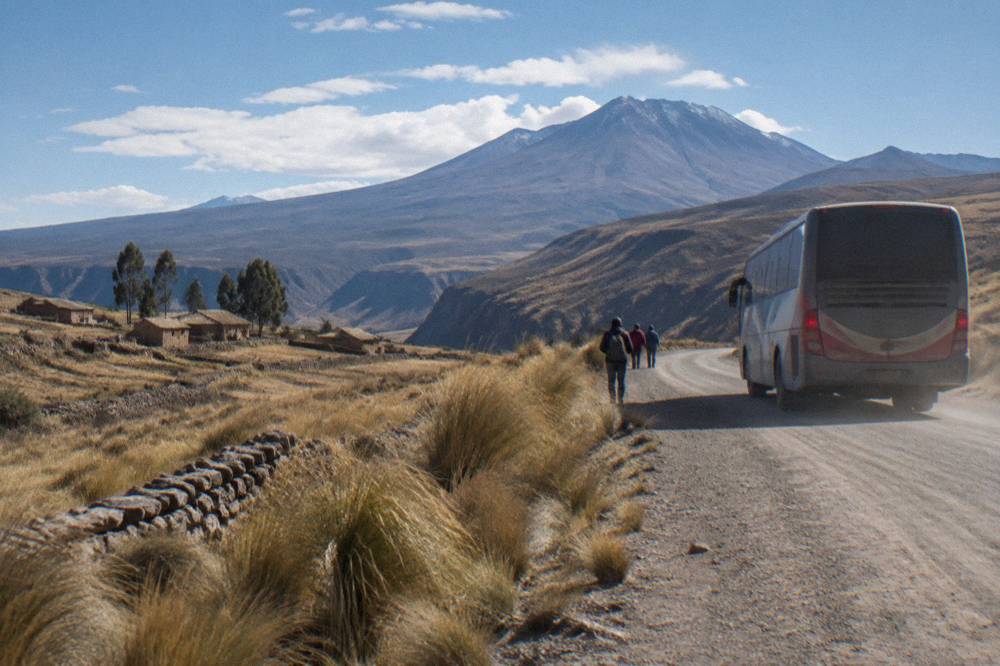
On the question of road disruptions, honesty requires a flat statement: no specific 2025 or 2026 route change, strike or blockade on the southern corridor can be verified from current reporting. Roads in Peru occasionally see strikes or protests, and the right move is checking current conditions before travel, not assuming either smooth roads or chaos. Operators including Peru Hop monitor transport authority alerts and re-route or refund where needed, which is one of the practical upsides of a staffed service over a bare ticket.
What Recent Reviews Say About Peru Hop
The review record is unusually strong for a bus product. Peru Hop reports roughly 19,000 TripAdvisor reviews, 8,000+ Google reviews and 1,500+ Trustpilot reviews, and its current TripAdvisor listing shows about 20,295 reviews at 4.8 out of 5. Recurring praise targets organization, hotel pickups, bilingual hosts and comfort, while the recurring complaints are long days, occasional delays and the price.
Reading a sample of recent traveler reviews, the pattern is easy to summarize. One guest who went Lima to Cusco in eight days called it "very fast-paced, but very fun." Another wrote of traveling with a friend from Lima to Cusco "and we are both so impressed with the entire service on offer." A third, reviewing an 18-day trip, said planning the itinerary around the route made a full trip around the country "so much easier." A fourth reviewer praised the comfort and USB charging but admitted "some of the journeys did feel very long."
That last quote is the one to take seriously, because it is the honest core of the negative case. The corridor is simply big. Lima to Paracas is roughly 260 to 272 kilometers and 3.5 to 4.5 hours of driving; Nazca to Arequipa is around 405 kilometers and 9 to 10 hours; Puno to Cusco is 388 kilometers more. No service makes those distances small, and a hop-on hop-off structure with pickups and stops adds hours on top of the drive time. Travelers who treat the pass as a time-saver are misreading it; it is a friction-saver.
The review record also contains a quiet signal about who the product is for. The happiest reviews come from travelers covering the whole south in one or two weeks, the ones hopping at multiple stops. The flattest reviews come from single-leg riders who bought a pass for one direct journey, which is exactly what the pass is not designed for. For a fuller treatment, the Peru Hop reviews page gathers the sentiment in one place.
When Peru Hop Is Not Worth It
The pass is a poor buy for three kinds of travelers: the budget rider who only wants one or two direct seats and would pay less buying them individually, the very short-stay visitor who will not hop anywhere, and anyone trying to reach Machu Picchu, Huaraz, Iquitos or Puerto Maldonado, because the pass simply does not serve those places. Cusco is the end of the line, and everything beyond it is a separate booking.
The budget case is the clearest. A one-way bus ticket from Lima to Paracas starts from $19 on this route, rated 4.2 from 53 reviews, and that is a single seat on a scheduled service. If your trip is Lima to Paracas and nothing else, the pass is paying for flexibility you will never use. Similarly, the Colca Canyon to Puno bus, the "Colca To Puno, Scenic Stops", starts from $41.03 at 4.7 from 88 reviews for the roughly 6.5-hour Chivay to Puno ride with viewpoint stops. Pieced together, a handful of such seats can undercut the pass, and pretending otherwise would be dishonest.
The short-stay case is just as real. If you have four days in Peru and the only thing that matters is Machu Picchu, you should fly Lima to Cusco and book a citadel day tour, full stop. The flagship option there, the "Full-Day Group Tour", covers the bus to Ollantaytambo, train, bus and a guided citadel tour in about 12 hours, rated 4.7 from 2,307 reviews and starting from $332, with no standard free-cancellation policy shown on the listing. That traveler gets nothing from a hop-on hop-off bus pass, and the faster route is mapped in the Lima to Machu Picchu planning guide.
The reach case needs stating bluntly because it trips people up. Peru Hop's network ends at Cusco. It does not run to Machu Picchu itself, nor to Huaraz in the north, nor to the jungle cities of Iquitos or Puerto Maldonado. If your itinerary is built around any of those, the pass covers only a fraction of your movement, and you will be buying flights or separate long-haul buses anyway. Check the how to get around Peru guide for the full mode-by-mode picture of the country.
The Verdict, By Traveler Type
The fair verdict splits cleanly by trip shape. Multi-stop first-timers on the southern corridor get real value from the pass, especially for the hotel transfers, the host and the 12-hour app flexibility. Single-leg or two-leg budget travelers, very short-stay visitors and anyone heading beyond Cusco should buy direct seats, flights or day tours instead and spend the difference on the experiences the pass never included anyway.
A two-week southern loop is the sweet spot, and the two-week Peru itinerary shows exactly how the stops line up. For that traveler, the pass converts a chain of logistics into one product and pays for itself in reduced hassle even where it loses on raw seat price. For a ten-day trip with a tighter loop, the ten-day Peru itinerary shows where trimming usually happens first: the altiplano legs, which are also the pass's most expensive ground to cover.

For the point-to-point rider who has now decided the pass is not the right tool, comparing and buying direct bus seats on the Lima to Cusco corridor is the straightforward alternative, and it keeps the budget where a bare seat leaves it.
Whichever way the verdict lands for your trip, the practical booking advice is the same either way. Match the product to the trip shape, not to the marketing. A pass solves a multi-stop problem; a seat solves a point-to-point problem; a day tour solves a sight problem. Most disappointing travel purchases in Peru, pass or no pass, come from buying the wrong layer for the wrong job, and no review score can fix that after the fact.
Common Questions About Peru Hop
Is Peru Hop Worth It?
Yes for multi-stop first-time travelers on the Lima to Cusco corridor, who get hotel pickups, a bilingual host on every bus and app-based date changes up to 12 hours before departure. No for single-leg budget riders, very short-stay visitors and anyone traveling beyond Cusco, where direct seats or flights cost less and fit better.
Does Peru Hop go to Machu Picchu?
No. Cusco is the end of the line, and Machu Picchu is reached from Cusco by train or trek as a separate booking, typically as a full-day guided tour from Cusco.
Is Peru Hop safe compared with local buses?
Peru Hop runs daytime travel on the main southern corridor with a bilingual host on every bus, and the operator states its coaches carry GPS tracking, observe speed limits and use two drivers on long legs. Both the US State Department and the UK FCDO advise using reputable companies and avoiding overnight bus travel in mountainous regions, which the network's structure follows.
How long is a Peru Hop pass valid?
Passes are valid up to one year from first use, and you can change a bus time in the app up to 12 hours before departure, subject to availability.
Is Peru Hop cheaper than regular buses?
No. The pass costs more than the equivalent bare Cruz del Sur or Oltursa seats, and it was never the cheapest option for a traveler who just wants one direct seat. Its value is in the bundled hotel transfers, hosting and flexibility rather than the raw fare.