Lima To Cusco By Bus: Routes, Times, And Prices
The Lima to Cusco bus run is one of South America's classic overland journeys: a road trip that climbs from sea level on the Pacific coast to 3,399 m in the Andes. Here is how the routes, times, and prices stack up.
Short answer
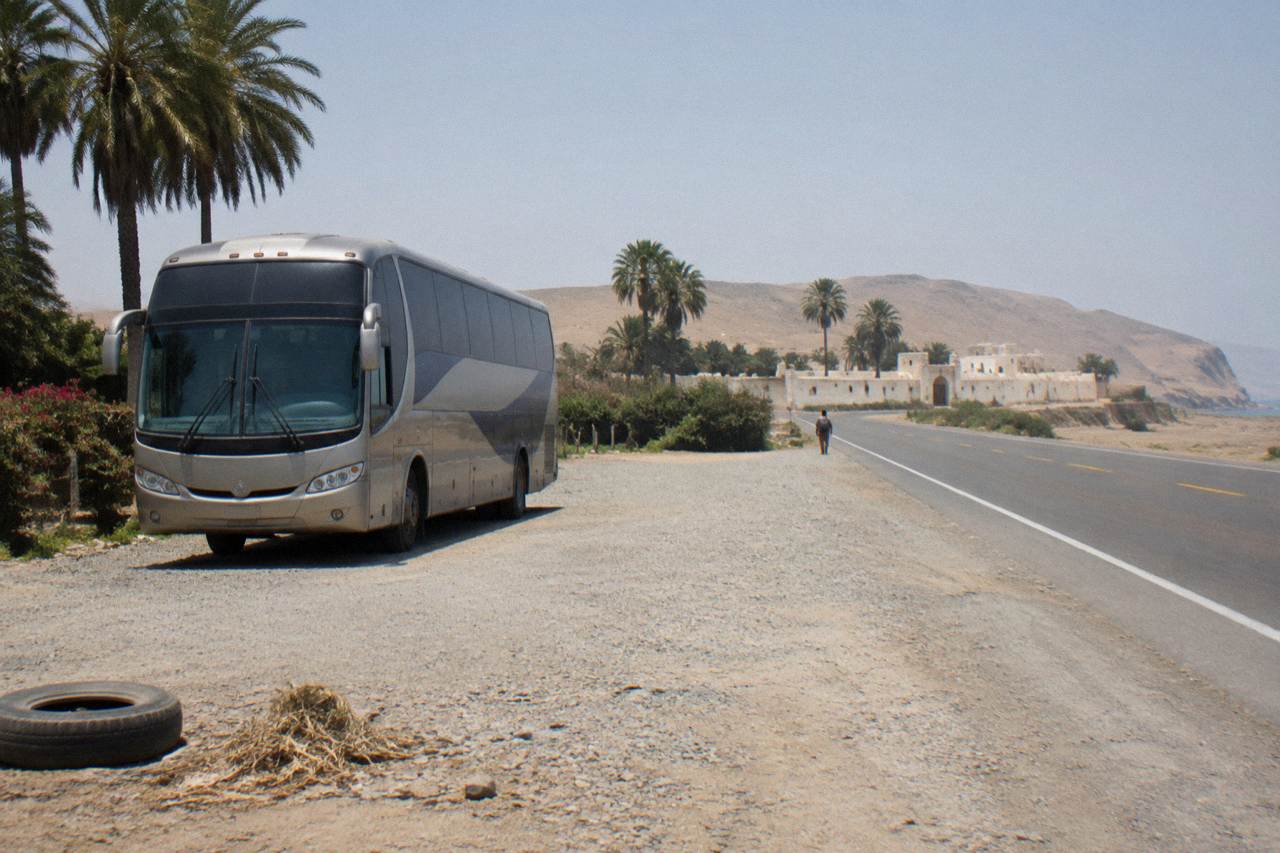
A direct Lima to Cusco bus takes roughly 21.5 to 24 hours with Cruz del Sur or Oltursa and runs several times daily. A hop-on hop-off pass spreads the same road over a week or more, stopping at Paracas, Huacachina, Nazca, Arequipa, and Puno. One-way Lima to Paracas bus tickets start at $19 on this route's roster.
The distance between Lima and Cusco is deceptive on a map. Straight-line it looks like a short hop down the map of Peru, but by road the journey crosses desert coast, two high mountain passes, and the altiplano plateau at nearly 4,000 m before dropping into the Inca capital at 3,399 m. Travelers compare two very different products on this corridor: the direct bus, which does the whole run in one long sitting, and the hop-on hop-off pass, which turns the same road into a week-long itinerary. This guide breaks down both, with the times, prices, and safety facts that actually matter when you are choosing.
What Are The Lima To Cusco Bus Options?
Travelers on this corridor choose between three approaches: a direct bus taking 21.5 to 24 hours with premium operators such as Cruz del Sur or Oltursa, a hop-on hop-off pass that breaks the route into hop legs with hotel pickup at each stop, or a split journey booked leg by leg with stopovers in Paracas, Arequipa, or Puno. Each suits a different budget and a different amount of time.
The direct bus is the simplest and the cheapest per kilometer. Cruz del Sur runs multiple daily departures from its Javier Prado terminal in Lima, with Suite-class seats that recline well back, and the journey clocks in at roughly 21.5 to 24 hours depending on traffic and stops. Oltursa runs comparable direct services on the same corridor. You board in Lima, you sleep through most of the climb, and you arrive in Cusco the following afternoon.
The hop-on hop-off model works differently. Peru Hop, the main operator running this format, sells a pass rather than a ticket. The bus follows a fixed circuit down the coast and up into the mountains, stopping at Paracas, Huacachina, Nazca, Arequipa, and Puno before finishing in Cusco, and you choose how many days to spend at each stop. A bilingual local host rides every bus, and pickup happens at your hotel or hostel rather than at a terminal, which matters when you are hauling a suitcase. Peru Hop reports 395,000+ passengers carried, and its TripAdvisor listing currently shows about 20,295 reviews at 4.8 out of 5.
The third option is the self-assembled version: book each leg separately with local operators, usually through a ticket aggregator, and design your own stopover pattern. It takes more planning and more time in bus terminals, but it gives you full control over where you pause and for how long. Our guide to getting around Peru covers the mechanics of booking local buses leg by leg if you want to go that route.
How Long Does The Bus From Lima To Cusco Take?
A direct Lima to Cusco bus takes roughly 21.5 to 24 hours with premium operators like Cruz del Sur, usually departing Lima in the afternoon and arriving in Cusco the following afternoon. A hop-on hop-off journey over the same road typically takes 7 to 10 days including stopovers, since the pass lets you break the route at Paracas, Huacachina, Nazca, Arequipa, and Puno.
The direct timing is remarkably consistent across operators because the road is the road. The first third, Lima down the Panamericana Sur to the Ica region, is flat desert running to Paracas at roughly 260 to 272 km out, a leg of about 3.5 to 4.5 hours in normal traffic. From there the route bends inland through Ica and Nazca, then climbs the long haul to Arequipa, a stretch of roughly 405 km from Nazca that takes 9 to 10 hours on its own.
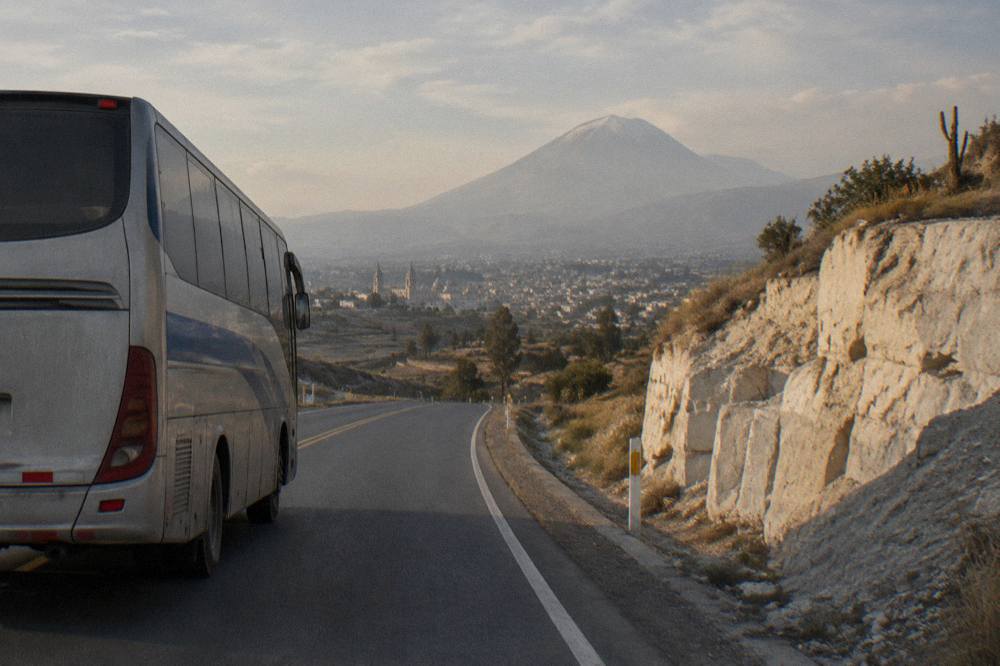
The mountain legs are where the hours add up. Arequipa sits at 2,335 m, and from there the road climbs to the altiplano: the Arequipa to Puno stretch is about 300 km and 6 to 7 hours, and Puno to Cusco is roughly 388 km taking 8 to 10 hours depending on whether you take a direct service or a scenic multi-stop bus. Add hotel pickups, terminal waits, and meal stops, and the hop-on hop-off version spreads comfortably across a week.
Time of departure matters more than most travelers expect. Afternoon departures on the direct services mean you sleep through the desert section and watch the Andes arrive in daylight, which is both safer and better for photography. The US State Department's current Peru advisory notes that demonstrations can shut down roads without warning, so building a buffer day into any bus itinerary is simply good planning.
If your real goal is the famous site at the end of the road, the practical pattern is bus to Cusco, then a booked day trip from there. The full-day Machu Picchu group tour from Cusco handles the bus to Ollantaytambo, the train, the ascent, and a guided citadel tour in a single 12-hour booking, Check availability if that fits your dates.
How Much Does A Lima To Cusco Bus Trip Cost?
A direct Lima to Cusco bus seat typically costs more than the cheapest option on this route, where the lowest verified fare is $19 one-way to Paracas, rated 4.2 from 53 reviews. Exact Cusco fares vary by season and class, so check the operator's live listing for current prices. A hop-on hop-off pass costs more than a bare direct seat but bundles hotel pickup, a host, and stopover transport.
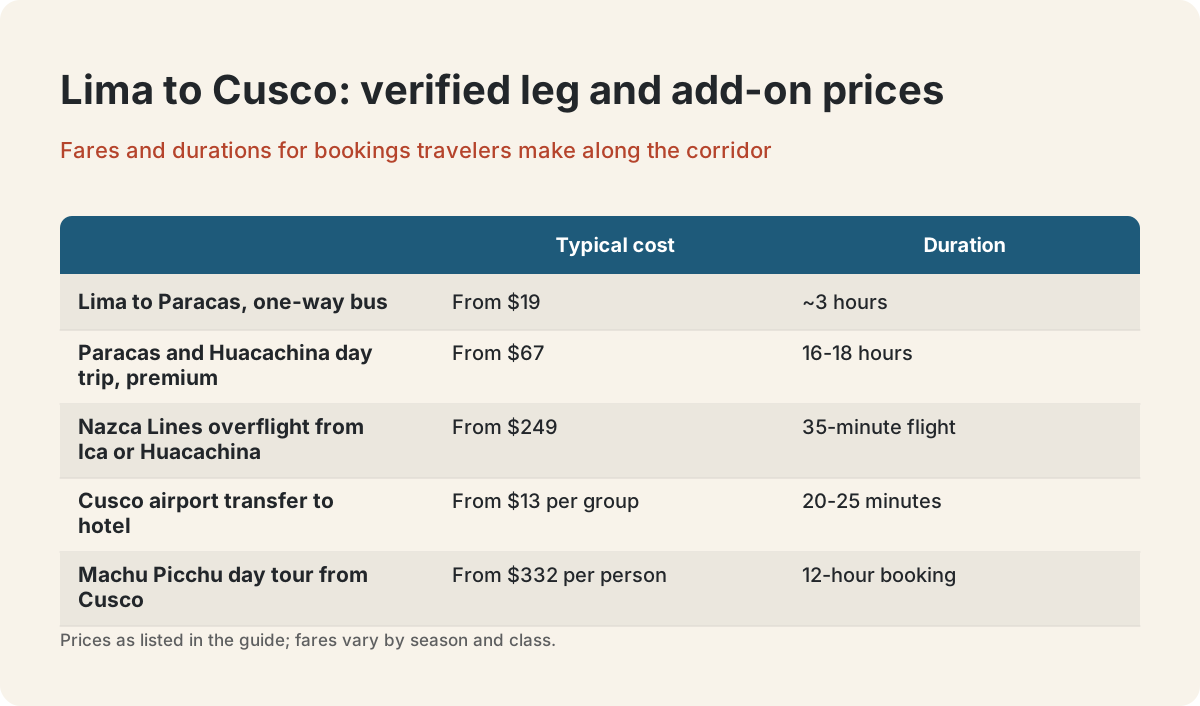
Start with what is actually fixed and verifiable. The one-way coastal leg, "Direct Bus, One Way" from Lima's Miraflores district to Paracas, is listed from $19 with free cancellation. That is the anchor price for the corridor, and it is the leg almost every itinerary includes. From there, costs depend entirely on how much of the route you buy in advance and how much you assemble yourself.
| Leg or add-on | Typical cost | What it covers |
|---|---|---|
| Lima to Paracas, one-way bus | From $19 | Single seat, ~3 hours, free cancellation |
| Paracas and Huacachina day trip, premium | From $67 | 16-18 hours, sunset toast, 4.9 from 9,650 reviews |
| Nazca Lines overflight from Ica or Huacachina | From $249 | 35-minute flight, half-day with transfer |
| Cusco airport transfer to hotel | From $13 per group | 20-25 minutes, private, free cancellation |
The stopover activities are where budgets diverge. A premium Paracas and Huacachina day trip runs from $67 on the listing rated 4.9 from 9,650 reviews, or from $119 on the operator's other premium listing, rated 4.8 from 2,636 reviews; both include the Ballestas Islands area and the dunes, and both allow free cancellation. The Nazca overflight is the big-ticket optional extra at from $249 for a 35-minute flight.
One honest caveat on the pass model: Peru Hop costs more than a bare Cruz del Sur or Oltursa seat before you total in the taxis, terminal transfers, and booked tours you would otherwise pay for separately. For a traveler who just wants one direct seat from Lima to Cusco, it is not the cheapest option. For a traveler stopping four or five times, the bundled pickup and host service usually closes the gap.
Budget for the arrival end too. Once the bus reaches Cusco at 3,399 m, most itineraries head straight on toward Machu Picchu, and the full-day group tour from Cusco runs from $332 per person, rated 4.7 from 2,307 reviews. Note that this particular tour shows no standard free-cancellation policy, unlike most of the roster, so it is the one booking on this list you should be certain about before you commit.
Which Bus Companies Run Lima To Cusco?
Cruz del Sur and Oltursa are the two premium direct operators, each running Lima to Cusco in roughly 21.5 to 24 hours with multiple daily departures. Civa runs connecting and direct options at lower price points. Peru Hop operates the hop-on hop-off alternative with hotel pickup, a bilingual host on every bus, and stops at Paracas, Huacachina, Nazca, Arequipa, and Puno.
Cruz del Sur is the name most Peruvians recommend first. Its direct Lima to Cusco services run from the Javier Prado terminal in Suite class, with seats that recline into near-flat beds, and journey times of about 21.5 to 24 hours across several daily departures. Oltursa matches it on the same corridor with comparable timings and a similar premium fleet. Both companies run climate control, onboard services, and the kind of driver protocols you want on a two-day mountain road.
Civa, including its Superciva and Econociva service tiers, runs direct and connecting options on the corridor at lower fares, generally with a trade-off in seat width and onboard service. For travelers optimizing purely on price, it is a legitimate choice on the flat coastal legs; on the mountain sections, the premium operators earn their premium.
| Operator | Format | Lima to Cusco time | Key differentiator |
|---|---|---|---|
| Cruz del Sur | Direct, premium | ~21.5-24 hours | Suite-class reclining seats, multiple daily departures |
| Oltursa | Direct, premium | ~21.5-24 hours | Comparable service tier to Cruz del Sur |
| Civa | Direct or connecting | Varies by service tier | Lower fares, economy tiers |
| Peru Hop | Hop-on hop-off pass | 7-10 days with stopovers | Hotel pickup, bilingual host, fixed stopover circuit |
The hop-on hop-off operator deserves its own paragraph because it is structurally different. Peru Hop does not sell you a seat on one bus; it sells a pass valid up to one year from first use, with in-app date changes possible up to 12 hours before departure, subject to availability. Buses come with wifi, USB charging, an onboard bathroom, and reclining semi-cama seats, though a few reviewers note the wifi and USB can be inconsistent on some runs. Peru Hop states that its buses carry GPS tracking, enforced speed limits, and two drivers on long legs; those safety claims are the operator's own and are worth reading as such.
Traveling the full corridor? A hop-on hop-off pass covers Lima to Cusco with hotel pickup at every stop, a bilingual host on board, and the freedom to spend as many days as you like in Paracas, Huacachina, Nazca, Arequipa, and Puno. See Peru Hop passes and timetables.
If you are comparing the two models in detail, our Peru Hop versus Cruz del Sur comparison works through the cost and comfort trade-offs leg by leg, and the overnight bus in Peru guide covers what the long night sections are actually like.
Is The Lima To Cusco Bus Safe?
Official travel advisories treat Peru's bus network as safe on reputable companies and risky on informal ones. The US State Department's September 2026 advisory states that bus crashes are common, especially at night, and recommends reputable transport companies, while the UK FCDO advises avoiding overnight travel in mountainous and remote regions where possible. The Lima-Arequipa-Cusco corridor is explicitly one of the routes US government employees may use at night with commercial bus companies.
The advisory language deserves to be read in full, because it is more specific than most travelers expect. The US State Department's current Peru advisory, reissued September 8, 2026, holds the country at Level 2, Exercise Increased Caution, and states: "Bus crashes are common, especially at night. Only use reputable transport companies, and where possible, avoid overnight travel, especially in mountainous and remote regions." The full advisory on the US Embassy site is worth reading before any long bus booking.
The same advisory carves out the corridor this guide covers. US government employees working in Peru are prohibited from nighttime road travel except on specific routes, and the Lima-Arequipa-Cusco corridor is one of the named exceptions where they may travel at night with commercial bus companies. That is a meaningful signal: the road itself passes the standard that professional risk assessors apply, provided you are on a reputable operator.
The UK's Foreign Office takes a similar line, advising "only use reputable transport companies" and warning against attempting to pass road blockades during protests. Roads in Peru occasionally see strikes or protests, so check current conditions before any long journey; there is no verified pattern of sustained closures on this corridor recently, but the general advice to stay flexible holds. Our is Peru bus travel safe article goes deeper on the statistics and the practical habits that matter.
Practical safety on this route reduces to four choices. Travel with a premium operator rather than an informal colectivo. Prefer daytime departures for the mountain sections, which the direct schedules largely accommodate anyway. Keep valuables in your daypack, not the hold luggage. And acclimatize sensibly: the bus climbs from sea level to Puno at 3,827 m, and altitude affects travelers more than crime does on this corridor. The altitude sickness on the bus routes guide covers medication and pacing.
Where Should You Stop Between Lima And Cusco?
The classic stopover chain runs Paracas, Huacachina, Nazca, Arequipa, and Puno, adding roughly 4 to 7 days to the journey. Paracas and Huacachina sit 3 to 5 hours from Lima, Nazca adds a 2 to 3 hour leg, Arequipa is 9 to 10 hours beyond Nazca, and Puno lies 6 to 7 hours past Arequipa before the final 8 to 10 hour run into Cusco.
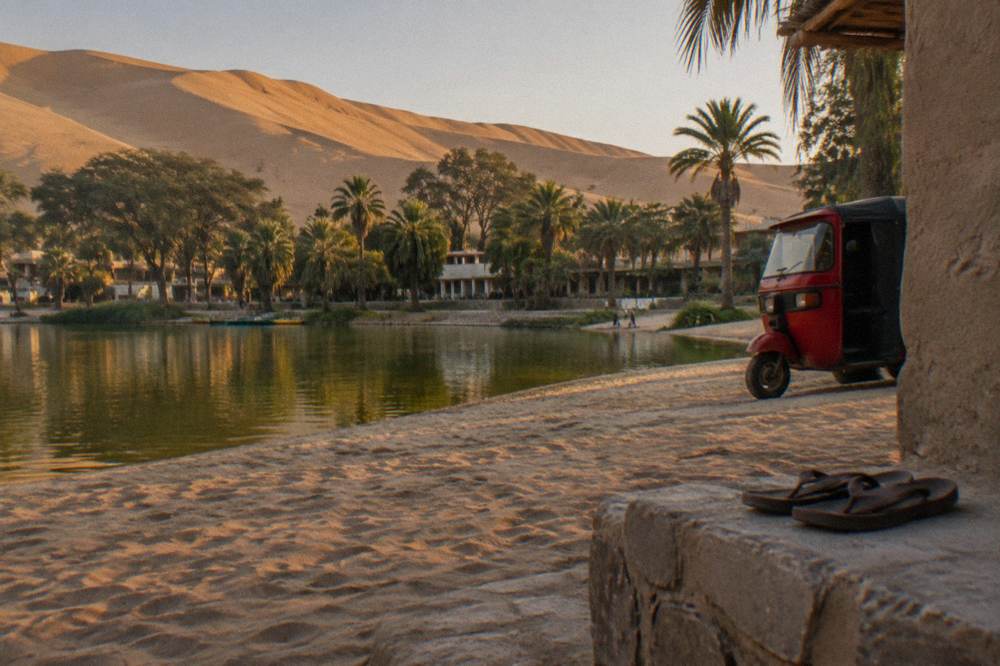
The first stop is the easiest sell. Paracas sits at essentially sea level, roughly 260 to 272 km from Lima, and the boat trips out to the Ballestas Islands are the standard first activity. Huacachina, the desert oasis near Ica at roughly 368 m, is 75 km and about an hour further, and its dune buggies and sandboarding are the corridor's most photographed afternoon. A premium day trip covering both from Lima runs 16 to 18 hours and includes a sunset toast; the listing rated 4.9 from 9,650 reviews starts at $67, while the operator's other premium version starts at $119 with a 4.8 rating from 2,636 reviews.
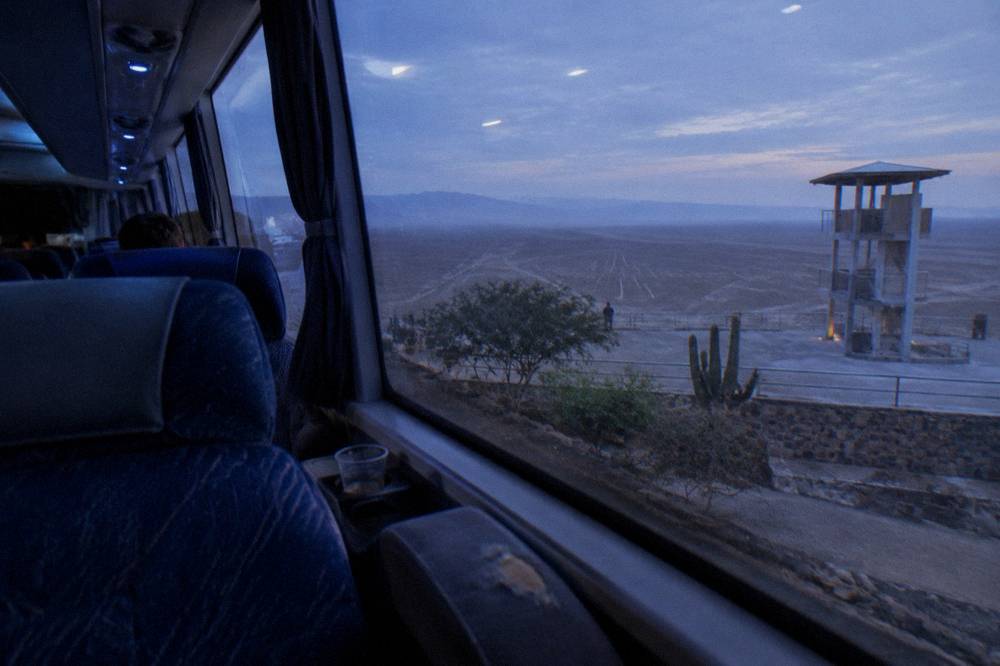
Nazca follows, 2 to 3 hours south of Ica, and it is where the corridor's signature splurge lives: the overflight of the Nazca Lines. The "Nazca Overflight From Ica" runs from $249 for a 35-minute flight, rated 4.7 from 4 reviews, a small review pool, so read the listing details rather than trusting a star average. The best way to see the Nazca Lines compares the flight against the viewing tower for travelers weighing the cost.
Arequipa is the stop that earns the most unanimous praise. The White City at 2,335 m is the natural acclimatization step before the altiplano, and most travelers spend two or three days here, using it as a base for Colca Canyon. From Chivay in the canyon, a scenic bus runs onward to Puno with viewpoint stops, from $41.03 and rated 4.7 from 88 reviews, which turns the transfer itself into a day of sightseeing. The Colca Canyon from Arequipa guide covers the canyon options, and the Arequipa to Puno bus guide covers the connecting leg.
Puno, at 3,827 m on the shore of Lake Titicaca at 3,812 m, is the last stop before Cusco. Travelers with a spare day cross into Bolivia for Copacabana and Isla del Sol, a 12-hour tour from Puno from $130, rated 4.8 from 30 reviews. The final Puno to Cusco leg, roughly 388 km, offers a choice between a direct 6 to 8 hour run and the scenic "Route of the Sun" with cultural stops and a buffet lunch, from $50 and rated 4.7 from 633 reviews.
| Stop | Elevation | Leg from previous stop | Typical time |
|---|---|---|---|
| Paracas | 2-3 m | ~260-272 km from Lima | 3.5-4.5 hours |
| Huacachina | ~368 m | ~75 km | 1-1.5 hours |
| Nazca | 520 m | ~120-140 km from Ica | 2-3 hours |
| Arequipa | 2,335 m | ~405 km from Nazca | 9-10 hours |
| Puno | 3,827 m | ~300 km from Arequipa | 6-7 hours |
| Cusco | 3,399 m | ~388 km from Puno | 6-10 hours |
Bus Or Flight: Which Makes Sense For Lima To Cusco?
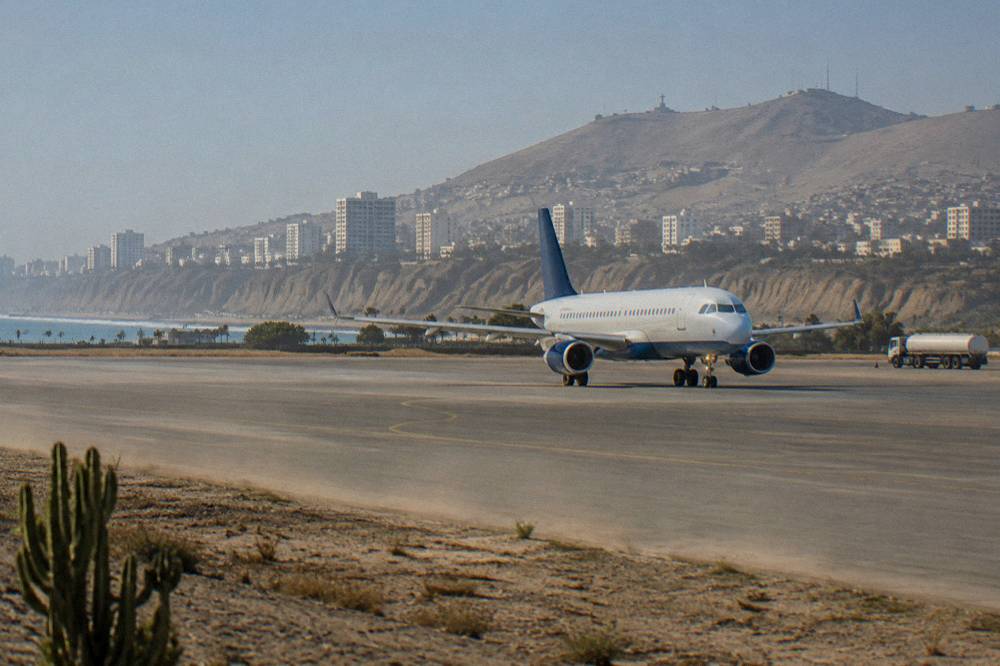
Flying covers the 584 to 587 km between Lima and Cusco in about 1 hour 20 minutes on direct flights with LATAM, JetSMART, or Sky Airline, against 21.5 to 24 hours by direct bus. The bus wins on seeing the country and on stopover value; the flight wins on time, and morning flights are more reliable than afternoon ones because Cusco's high-elevation airport at 3,310 m is prone to weather disruption later in the day.
The time arithmetic is stark. LATAM operates the highest frequency on the route, around 189 flights per week in recent schedules, with JetSMART and Sky Airline also flying nonstop, and the flight itself takes 1 hour 20 minutes to 1 hour 25 minutes. But the bus is not competing on raw speed; it is competing on what you get for the extra day. Travelers who stop at Paracas, Arequipa, and Puno effectively get a full southern Peru itinerary out of their transfer time, which no flight can offer.
The altitude argument cuts both ways. Flying from sea level straight into Cusco at 3,399 m gives your body no gradual adjustment, and many travelers feel it on arrival day. The bus route, by contrast, climbs through Arequipa at 2,335 m first, which is precisely the staged ascent that altitude guidance recommends. On the other hand, if your Peru time is short, a week of stopovers is a poor trade for two days in Cusco itself.
| Factor | Direct bus | Direct flight |
|---|---|---|
| Travel time | ~21.5-24 hours | ~1h 20m-1h 25m |
| Scenery and stopovers | The full southern circuit | None |
| Altitude adjustment | Gradual, via Arequipa | Sudden, sea level to 3,399 m |
| Reliability | Road conditions, occasional protests | Weather and wind at 3,310 m airport |
| Best for | Travelers with 7+ days | Travelers with under 5 days |
Cusco's airport deserves a note because it shapes flight reliability. Alejandro Velasco Astete International Airport sits at 10,860 ft, among the world's highest commercial airports, and the thin air means weight restrictions, slower climb-outs, and stricter weather limits. Morning fog and afternoon storm build-up in the rainy season from November to March cause delays and cancellations, so early flights are the dependable ones. The replacement Chinchero airport is under construction at roughly 40 percent progress but is not expected to open before late 2027 or 2028. Our Lima to Cusco flight versus bus guide runs the full comparison, and the fly into Lima or Cusco post covers arrival strategy.
For budget ticket comparisons on either mode, 12Go compares bus and train seats on the Lima-Cusco corridor as a direct-ticket alternative to a hop-on hop-off pass.
What Should You Know Before Booking And Riding?
Book direct seats with the premium operators a few days ahead in high season, choose afternoon departures so the mountain sections fall in daylight, keep valuables in your daypack, and plan a soft landing in Cusco: the bus terminal sits at 3,399 m, and a pre-booked private airport or terminal transfer from $13 per group removes the last logistics headache on arrival day.
Booking timing matters most in the dry season from May to October, when the stopover towns fill with travelers following exactly this route. Direct premium seats and hop-on hop-off dates both sell out in peak weeks, and the pass model's flexibility, changing a bus time in the app up to 12 hours before departure, only works subject to availability. Reserve the legs you are certain about, and leave slack in the middle. Every leg of this corridor has its own guide on Lima To Cusco, so you can check the individual stretch before committing to a full pass or a direct seat.
Packing for a 24-hour ride is straightforward but worth doing deliberately. A blanket per passenger is provided on the hop-on hop-off buses, and the climate-control system runs on the high-altitude legs, but layers still matter because mountain nights are cold regardless of the cabin. There is no strict published luggage weight limit on the pass; a standard suitcase goes in the under-bus hold plus one carry-on daypack. Keep documents, medication, and electronics in the daypack, since hold access is limited en route.
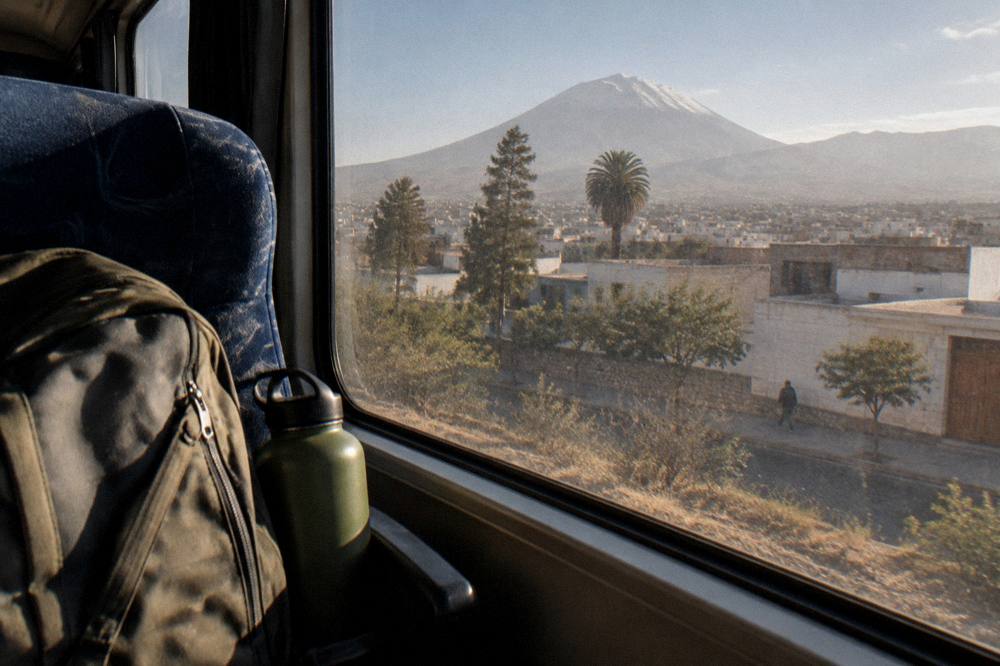
Arrival day in Cusco deserves its own plan. The city sits at 3,399 m, and the standard advice is to take the first day slowly: light meals, water, no alcohol, and an early night. Sorting your onward logistics in advance removes one more thing to think about at altitude. A private transfer from the airport to your hotel runs from $13 per group, rated 4.8 from 251 reviews, or from $14.99 for the door-to-door pickup version rated 4.5 from 98 reviews; both take 20 to 30 minutes and allow free cancellation.
The most common mistake on this corridor is over-scheduling the end. Travelers who compress every stop into a tight week arrive in Cusco with no buffer before their Machu Picchu date, and the citadel's timed entry windows, hourly with a 30-minute grace period under the 2026 rules, do not bend for a delayed bus. Build one spare day between your arrival in Cusco and any fixed-date booking downstream.
If Machu Picchu is the point of the whole journey, the full-day group tour from Cusco, from $332 and rated 4.7 from 2,307 reviews, is the roster's most-booked way to do it in a single day, covering the bus to Ollantaytambo, the train, the ascent, and a guided citadel tour in 12 hours.
Common Questions About The Lima To Cusco Bus
How long is the bus from Lima to Cusco?
A direct bus takes roughly 21.5 to 24 hours with premium operators like Cruz del Sur or Oltursa. A hop-on hop-off journey with stopovers at Paracas, Huacachina, Nazca, Arequipa, and Puno typically takes 7 to 10 days.
How much does a Lima to Cusco bus cost?
Direct fares vary by operator, class, and season, so check the operator's live listing for current prices. The verified anchor on this corridor is the one-way Lima to Paracas bus at from $19. Optional add-ons include the Paracas and Huacachina day trip from $67 and the Nazca overflight from $249.
Is it safe to take the bus from Lima to Cusco?
Official advisories recommend reputable transport companies and note that bus crashes are more common at night. The Lima-Arequipa-Cusco corridor is one of the routes US government employees may use at night with commercial bus companies, which is a meaningful safety signal for premium operators.
Is it better to fly or take the bus from Lima to Cusco?
Flying takes about 1 hour 20 minutes on LATAM, JetSMART, or Sky Airline. The bus takes 21.5 to 24 hours direct, but it offers gradual altitude adjustment and a stopover itinerary that no flight can match. Travelers with under five days should fly; travelers with a week or more get more from the road.
Where should you stop on the way from Lima to Cusco?
The classic chain is Paracas, Huacachina, Nazca, Arequipa, and Puno. Arequipa at 2,335 m is the recommended acclimatization stop before the altiplano, and Puno at 3,827 m is the last stop before the final 8 to 10 hour leg into Cusco.
Does the bus help with altitude sickness compared with flying?
Yes, in the sense that the road route ascends gradually through Arequipa at 2,335 m before reaching Puno at 3,827 m and Cusco at 3,399 m, which is the staged ascent altitude guidance recommends. Flying delivers you from sea level to 3,399 m in about 80 minutes with no adjustment period.