How To Get Around Peru
A direct bus from Lima to Cusco takes 21.5 to 24 hours. The flight takes about 1 hour 20 minutes. Everything else about getting around Peru sits between those two numbers, and picking the right mode for each leg is the single biggest planning decision you will make.
Short answer
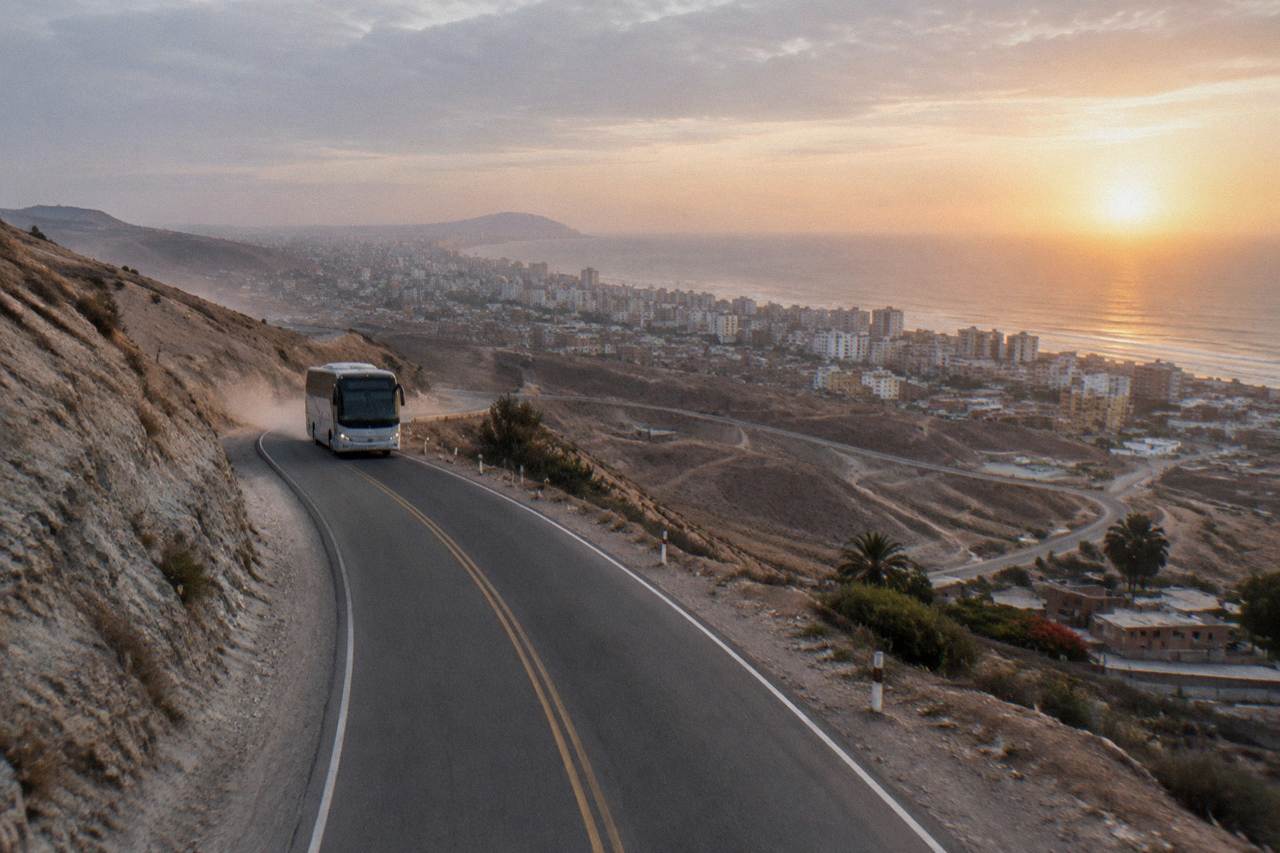
Peru gets around on four modes: domestic flights for the longest hops, long-distance buses as the budget backbone, a hop-on hop-off tourist pass for the southern coast-and-highlands corridor, and trains for the two scenic legs to Machu Picchu and Lake Titicaca. Most first-time visitors mix a pass along the south with one or two flights and short private transfers.
A direct bus from Lima to Cusco takes 21.5 to 24 hours on Cruz del Sur or Oltursa. The flight covers the same 585 kilometers in about 80 minutes. Between those extremes sits every transport decision a Peru trip involves, and the honest answer is that no single mode wins everywhere: the right choice changes with the leg, the altitude, the season and how much of the country you are trying to see.
This guide compares every mode on the routes tourists actually ride: the Lima to Paracas coast, the desert around Huacachina and Nazca, the climb to Arequipa and Puno, and the final push to Machu Picchu from Cusco. Prices and ratings below come from verified operator listings; where no price is shown here, the live listing carries the current figure.
How To Get Around Peru: The Short Answer
Peru moves on four modes: domestic flights for the longest hops, long-distance buses for the budget backbone, a hop-on hop-off tourist pass for the southern coast-and-highlands corridor, and trains for the two scenic legs to Machu Picchu and Lake Titicaca. For most first-time visitors the winning mix is a pass along the south, one or two flights to skip the longest overnight legs, and short private transfers at each end.
The reason the mix matters is distance. Lima sits at sea level on the Pacific, Cusco sits at 3,399 meters in the Andes, and the road between them crosses deserts, canyons and 4,000-meter passes. Nobody rides the whole corridor for fun twice. Travelers who pick the wrong mode for one long leg routinely lose a full day of a ten-day trip to a bus seat they did not need.
The default recommendation on this site is the bus pass for the southern corridor, and the reasoning is simple: the corridor's best stops, Paracas, Huacachina, Nazca, Arequipa, Colca, Puno, are strung along one route where a hop-on hop-off pass removes almost every logistics decision. Independent buses beat the pass only when you want a single direct seat with no stops. If you want to see every operator and schedule on one screen before committing, compare every mode and company in one search and then decide.
| Mode | Best for | Typical journey | Watch out for |
|---|---|---|---|
| Domestic flight | Long hops like Lima to Cusco | About 1h20-1h25 direct | Afternoon weather delays and weight limits at Cusco's altitude |
| Long-distance bus | Budget travel to nearly every town | 3h on the coast up to 24h Lima to Cusco | Overnight mountain legs carry higher risk |
| Hop-on hop-off pass | First-timers on the southern corridor | Multi-day, on your own dates | Costs more than a single direct seat |
| Train | Machu Picchu and the Cusco-Puno scenic leg | 1.5h to about 10h | Only two tourist corridors exist |
| Private transfer or taxi | Airport runs and short city hops | 15 minutes to 2 hours | Agree the fare before the car moves |
Is Flying The Fastest Way To Get Around Peru?
Yes, by a wide margin. Direct Lima to Cusco flights with LATAM, JetSMART and Sky Airline cover roughly 585 kilometers in about 1 hour 20 minutes, against 21.5 to 24 hours on the fastest direct bus. Flying also wins on Lima to Arequipa, and Juliaca serves the Puno side of Lake Titicaca. You pay for the speed, and you land straight at altitude.
Three airlines fly the Lima to Cusco route nonstop, and frequency is high: LATAM runs the most departures in a typical week, followed by JetSMART and Sky Airline. Seats are usually cheapest booked weeks ahead, and morning departures are the reliable ones. Cusco's airport sits at about 3,310 meters, which thins the air enough that hot afternoons bring weight and wind restrictions, and the valley's fog and afternoon cloud build-up mean late-day flights are the first to delay or cancel. Book the morning.
The altitude point deserves its own sentence. Flying from Lima at sea level into Cusco at 3,399 meters compresses the acclimatization problem into 80 minutes, and many travelers feel it on landing day. If your itinerary allows, a couple of days in Arequipa at 2,335 meters first softens the arrival; if it does not, plan a light first day in Cusco regardless of how you arrive.
One thing flights will not solve in the near term: the new Chinchero International Airport intended to replace Cusco's current field is still under construction, reported at roughly 40 percent progress, with operations not expected before late 2027 or 2028. Every flight you book for the next couple of years lands at the same crowded airport in the city. If you are weighing wings against wheels on the flagship route, the full breakdown is in the Lima to Cusco flight versus bus guide.
Why Do Most Travelers Use Long-Distance Buses?
Because geography does the deciding. Peru's mountains make rail rare and flights expensive on secondary routes, so buses reach nearly every town a tourist wants. Cruz del Sur and Oltursa run direct Lima to Cusco services in 21.5 to 24 hours, and a cheap one-way hop like Lima to Paracas covers the coastal highway in about 3 hours. The coast is fast; the climbs are long.
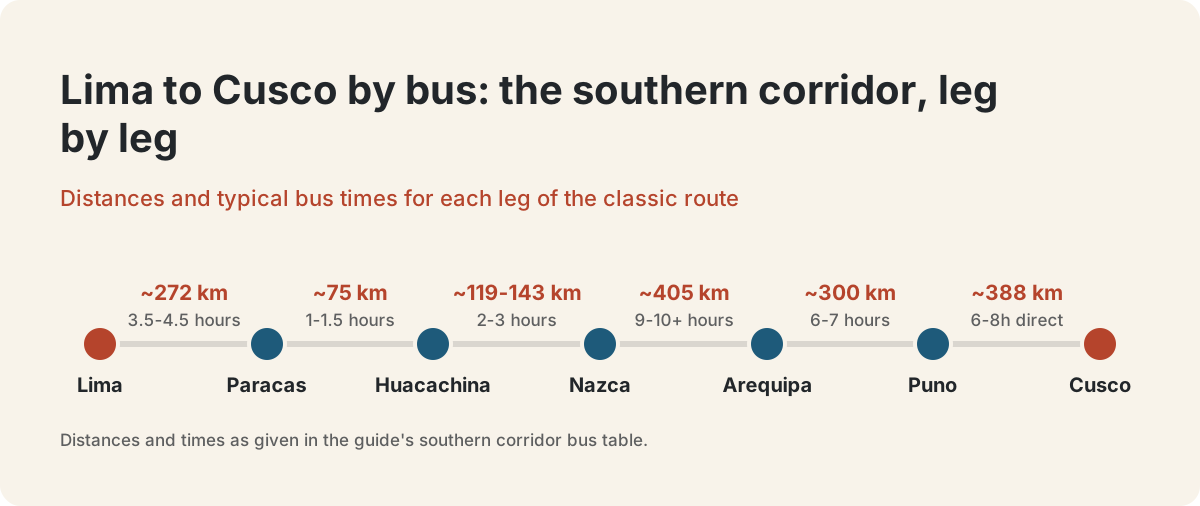
The southern corridor breaks into short, easy legs. Lima to Paracas is about 272 kilometers and 4 hours. Paracas to Huacachina is roughly 75 kilometers in 1 to 1.5 hours. Huacachina or Ica to Nazca runs 2 to 3 hours, and Nazca to Arequipa is the long one at roughly 405 kilometers and 9 to 10 hours. From Arequipa to Puno the road covers about 300 kilometers in 6 to 7 hours, and Puno to Cusco about 388 kilometers in 6 to 8 hours direct or 9 to 11 on the scenic multi-stop services.
| Leg | Distance | Typical bus time | Notes |
|---|---|---|---|
| Lima to Paracas | ~272 km | 3.5-4.5 hours | Flat coastal highway, multiple daily departures |
| Paracas to Huacachina | ~75 km | 1-1.5 hours | Short desert hop, easy same-day connection |
| Ica to Nazca | ~119-143 km | 2-3 hours | Viewing tower reachable by late afternoon |
| Nazca to Arequipa | ~405 km | 9-10+ hours | The corridor's longest single leg |
| Arequipa to Puno | ~300 km | 6-7 hours | Passes above 4,000 m; Lagunillas viewpoint stop |
| Puno to Cusco | ~388 km | 6-8h direct, 9-11h scenic | Scenic "Route of the Sun" services add cultural stops |
For the simple point-to-point legs, a direct ticket is all you need. The Direct Bus, One Way service from Lima's Miraflores district to Paracas holds a 4.2 rating across 53 reviews, takes about 3.5-4 hours, and allows free cancellation with free cancellation on the listing. On the coastal stretch where stops are thin, that kind of ticket beats any pass on price.
Where the pass earns its keep is the middle of the corridor, where the stops are the point. A hop-on hop-off operator like Peru Hop strings Paracas, Huacachina and Nazca together with hotel pickup, so you never drag a suitcase through a terminal, and the coastal legs land at sensible hours instead of pre-dawn. Deeper detail on the flagship corridor is in the Lima to Cusco by bus guide.
If you are buying single tickets rather than a pass, book the long mountain legs for daylight. The direct Lima to Cusco services depart in the evening and arrive a full day later; comfortable as the Suite seats are, that is 21.5 to 24 hours mostly in the dark, on the exact overnight mountain travel both the US State Department and the UK FCDO tell travelers to avoid where possible.
Is A Hop-On Hop-Off Bus Pass Right For You?
For first-time visitors following the classic Lima, Paracas, Huacachina, Nazca, Arequipa, Puno and Cusco route, a pass is usually the easiest default. Peru Hop picks up and drops off at your hotel, runs a bilingual host on every bus, and keeps passes valid for up to a year with date changes in the app up to 12 hours before departure. Independent buses remain cheaper for one direct leg.
The mechanics are what sell the pass. Buses run a climate-control system rather than a simple aircon claim, and a blanket is provided per passenger, which matters on the high-altitude Puno legs. A bilingual English and Spanish host rides every bus. Seats are reclining semi-cama with wifi, USB charging and an onboard bathroom, though a few reviewers note the wifi and charging ports can be inconsistent. Luggage is a standard suitcase in the hold plus one carry-on daypack; no strict published weight limit exists.
The flexibility is the real product. Passes stay valid for up to a year from first use, and you can change a departure in the app up to 12 hours before it leaves, subject to availability. If rain hits Paracas or you fall for Arequipa, you shift the next leg without renegotiating anything. Peru Hop reports more than 395,000 passengers carried, and its current TripAdvisor listing shows about 20,295 reviews at 4.8 out of 5, with recurring praise for organization and the hotel-to-hotel pickups.
The default pick for the southern corridor: hotel pickup, a bilingual host on every bus, passes valid up to a year and app date changes up to 12 hours before departure. Plan your Peru route with Peru Hop and skip every bus terminal.
Two honest caveats belong here. A pass costs more than a bare Cruz del Sur or Oltursa seat before you tally in the taxis, tours and terminal time it removes, so a traveler who just wants one direct seat should simply buy that seat. And some legs run long, or land in the evening, so check the timetable for the legs you care about rather than assuming every arrival is mid-afternoon.
For travelers who decide the pass is right, the remaining question is which direction and how many days, and that is really an itinerary question. The pattern most first-timers land on is Lima in, Cusco out, with the pass covering everything between and a flight or the pass's final leg handling the altitude jump.
One boundary worth knowing before you plan: Cusco is the end of the bus line. Peru Hop does not reach Machu Picchu itself, Huaraz, Iquitos or Puerto Maldonado; Machu Picchu is always a train or trek from Cusco, and the jungle and north are separate networks entirely.
Most pass routes end in Cusco for exactly that reason: it is the hub from which the country's biggest single attraction runs, and the day trip that bundles the whole thing is the natural next booking once your bus arrives.
Where Do Trains Fit Into Getting Around Peru?
Only on two corridors: Cusco to Machu Picchu via Ollantaytambo, and Cusco to Puno on the PeruRail Titicaca train. There is no Lima to Cusco railway of any kind. The Machu Picchu leg covers 43 to 44 kilometers in about 1.5 hours, while the Titicaca train takes roughly 10 hours and starts from $395. Trains are scenic extras, not a network.
Start by killing the most common misconception. No train connects Lima to Cusco, and none is planned; the mountains and the bus corridor won that argument decades ago. Trains exist for exactly two tourist journeys, and both are worth doing for the scenery rather than the speed.
The Cusco to Puno service is the "PeruRail Titicaca Train", a roughly 10-hour daylight ride across the altiplano from $395. Its listing shows 294 reviews, too few for a reliable star average, and no standard cancellation policy is displayed, so confirm terms on the live listing before paying. For a taste of that scenery at a fraction of the price, the "Route Of The Sun, Buffet Lunch" bus runs the reverse direction, Cusco to Puno, from $50 with 4.7 from 633 reviews, departing 6:10am and arriving 5:30pm with cultural stops and a buffet lunch along the way. The full stop-by-stop comparison, including the Titicaca train's listing details, sits in the Cusco to Puno bus guide.
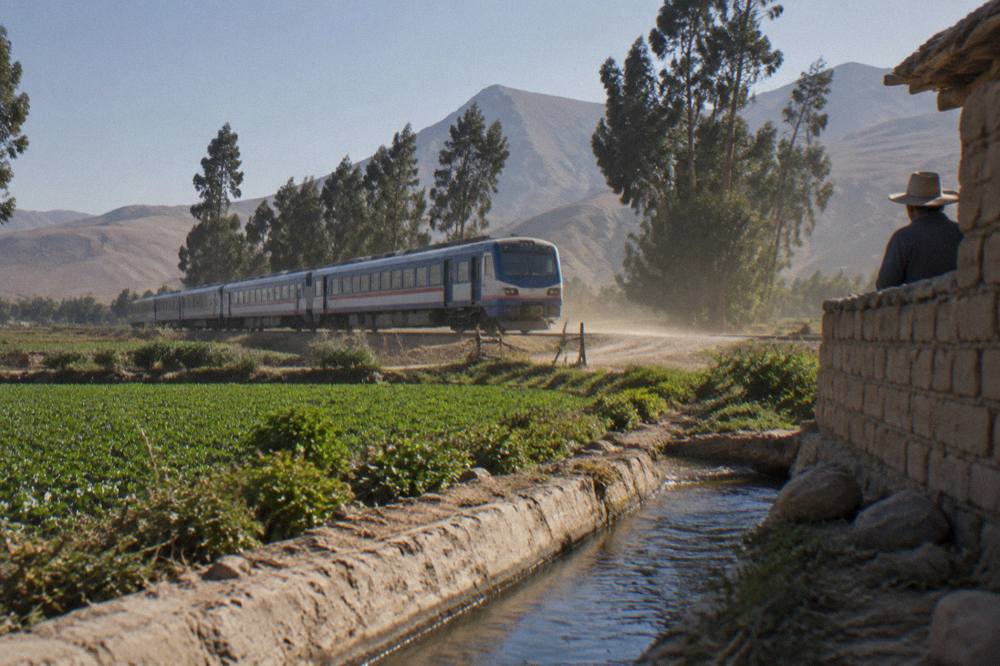
The Machu Picchu corridor is rail by necessity, not choice. From Ollantaytambo station, PeruRail and Inca Rail trains cover 43 to 44 kilometers to Aguas Calientes in roughly 1.5 hours, with multiple departures daily; current schedules are published at PeruRail's official schedule page. The road from Cusco to Ollantaytambo, 62 to 72 kilometers, takes 1 to 1.5 hours by bus or car, so door to door you are looking at half a day each way even before the citadel itself.
| Train leg | Distance | Typical time | Notes |
|---|---|---|---|
| Cusco to Ollantaytambo (road) | 62-72 km | 1-1.5 hours | Bus or private transfer, not a train |
| Ollantaytambo to Aguas Calientes | 43-44 km | About 1.5 hours | PeruRail and Inca Rail, multiple daily departures |
| Cusco to Puno (Titicaca train) | ~388 km corridor | About 10 hours | Daylight scenic service, from $395 |
| Cusco to Puno (scenic bus alternative) | ~388 km | 9-11 hours | From $50, stops and lunch included |
How Do You Get From Cusco To Machu Picchu?
Machu Picchu has no road, so every route is multimodal: bus or private transfer from Cusco to Ollantaytambo, 62 to 72 kilometers in 1 to 1.5 hours, then train to Aguas Calientes, then a shuttle up to the gate. Full-day tours from $332 bundle every link. Entry is capped and timed, so book through the official portal before you commit anything else.
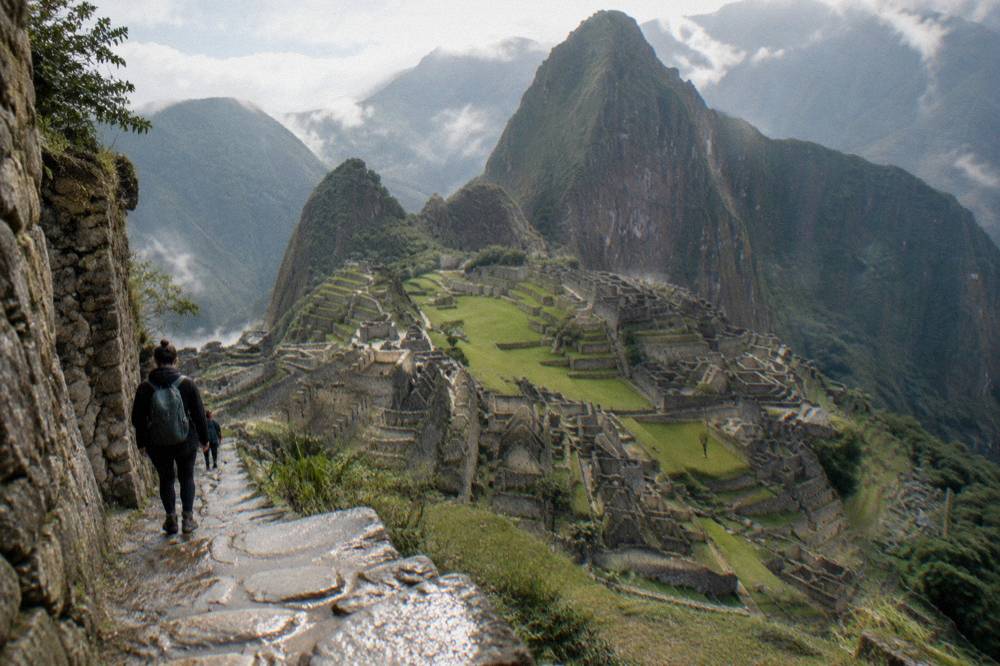
The ruins sit at 2,430 meters, comfortably lower than Cusco's 3,399, but there is no way to drive there. The citadel is reached from Aguas Calientes by a shuttle bus up a switchback road, and the whole chain, city to station to train to shuttle, is why a Machu Picchu day starts before dawn and ends after dark.
Entry is the part people underestimate. Daily capacity is 4,500 visitors in the regular season, rising to 5,600 on specific high-season dates, split across three main circuits with ten sub-routes, and entry windows are timed hourly with a short grace period. Tickets are sold through the official portal at tuboleto.cultura.pe, where you get 15 minutes to complete a purchase once you select tickets, and they are nominal, tied to your passport. Guide groups are limited to 16 people. A small pool of in-person tickets is sold daily in Aguas Calientes, but counting on that in high season is a gamble.
The simplest chain is a bundled day tour. The "Full-Day Group Tour" from Cusco, from $332 with 4.7 from 2,307 reviews, packs the bus to Ollantaytambo, the train, the shuttle and a guided citadel tour into about 12 hours; its listing shows no standard free-cancellation policy, so read the terms before booking. The same idea in more comfort is the "Full-Day Vistadome Train" tour, from $419 with a perfect 5.0 from 317 reviews, roughly 16 hours with panoramic train cars and free cancellation. Both are compared in detail, with the step-by-step logistics, in the Cusco to Machu Picchu train options breakdown and our dedicated guide to the route.
If you would rather assemble the chain yourself, the pieces are a Cusco to Ollantaytambo transfer (a private one starts at $60, with 5.0 from 22 reviews), any train ticket, the shuttle fare, and an entry ticket with a timed window that matches your arrival. Self-assembly saves money only if your dates are flexible; in high season the bundled tours frequently hold allocations individual buyers cannot get.
How Do You Handle Taxis, Transfers And City Transport?
Walk the historic centers, taxi the rest, and pre-book the airport runs. In Cusco a private transfer from the airport starts at $13 per group, 4.8 from 251 reviews, or $14.99 door to door. Agree the fare before the car moves, prefer taxis called by your hotel at night, and expect long arrival queues in peak season. A private transfer to Ollantaytambo starts at $60.
Cusco, Arequipa and Puno are compact, walkable cores surrounded by hilly sprawl, and the walks are the attraction until the altitude argues otherwise. The rule that matters: in Peruvian cities a taxi is a negotiation, not a meter. Agree the price before the doors close, keep small bills, and at night have your hotel call the car rather than hailing one.
Airport arrivals in Cusco are the one place to book ahead. Two nearly identical services cover it: the "Private Transfer, Shared Rate" at from $13 per group, 4.8 from 251 reviews, 20 to 25 minutes, and the "Private Pickup, Door To Door" at from $14.99, 4.5 from 98 reviews, 15 to 30 minutes. Both offer free cancellation. At 3,310 meters of airport elevation, the walk-up taxi queue after a red-eye is nobody's favorite first hour in Peru.
| Transfer | From | Rating and reviews | Typical time |
|---|---|---|---|
| Cusco airport private transfer, shared rate | $13 per group | 4.8 from 251 reviews | 20-25 minutes |
| Cusco airport private pickup, door to door | $14.99 | 4.5 from 98 reviews | 15-30 minutes |
| Private transfer Cusco hotels to Ollantaytambo station | $60 | 5.0 from 22 reviews | About 2 hours |
Beyond the cities, the same logic scales up. A private driver for a day in the Sacred Valley or to Colca costs more than a shared tour but buys a schedule you control; on the corridor legs, shared and scheduled services almost always make more sense than a private car for the same road.
What Does Getting Around Peru Actually Cost?
As planning ranges, count $19 to $50 for each long bus leg, $67 to $119 for a coast day trip, $249 for a Nazca overflight, $332 to $419 for an all-in Machu Picchu day, and $395 for the top-end Titicaca train. Airport transfers run $13 to $14.99, and a private Ollantaytambo transfer $60. A two-week loop mixes several of these, so budget by leg, not by trip.
The table below gathers the verified price floors from this site's tour roster, all currently live listings. "From" means the floor: dates, group size and season move real prices above these numbers, so treat them as the bottom of the range and check the live listing for the day you actually travel.
| Service | From price | What it covers |
|---|---|---|
| Bus, Lima to Paracas one way | $19 | About 3 hours, Miraflores departure, free cancellation |
| Paracas and Huacachina premium day trip | $67 | 16-18 hours, 4.9 from 9,650 reviews, sunset toast |
| Paracas and Huacachina premium day trip (full pass) | $119 | About 16 hours, 4.8 from 2,636 reviews, sunset toast |
| Nazca Lines overflight from Ica or Huacachina | $249 | 35-minute flight, 4.7 from 4 reviews |
| Colca Canyon (Chivay) to Puno bus | $41.03 | About 6.5 hours with scenic stops, 4.7 from 88 reviews |
| Cusco, Route of the Sun to Puno | $50 | 6:10am-5:30pm with buffet lunch, 4.7 from 633 reviews |
| Copacabana and Isla del Sol tour from Puno | $130 | 12 hours, 4.8 from 30 reviews |
| PeruRail Titicaca train, Cusco-Puno | $395 | About 10 hours, 294 reviews |
| Full-day Machu Picchu group tour from Cusco | $332 | About 12 hours, all transport and guide, 4.7 from 2,307 reviews |
| Machu Picchu full day by Vistadome train | $419 | About 16 hours, 5.0 from 317 reviews |
| Cusco airport private transfer | $13-$14.99 | 15-30 minutes, per group or door to door |
| Private transfer to Ollantaytambo station | $60 | About 2 hours, 5.0 from 22 reviews |
A budget traveler crossing the country overland on public and tourist buses can keep total transport for a two-week southern loop in the low hundreds of dollars. A comfort traveler who adds a flight, a bundled Machu Picchu day and the Titicaca train will spend several hundred more, and the difference is mostly comfort and saved days rather than access.
Is It Safe To Get Around Peru By Bus And Car?
On the main tourist corridors, yes, with precautions. Both the US State Department and the UK FCDO warn that bus crashes are common at night and advise using reputable companies and avoiding overnight travel in mountainous regions. Stick to named operators, ride the daylight legs, and check current conditions before any long drive, since roads in Peru occasionally see strikes or protests.
The UK FCDO's guidance is worth quoting directly: "Bus crashes are common, especially at night. Only use reputable transport companies, and where possible, avoid overnight travel, especially in mountainous and remote regions." The US State Department's Peru advisory carries the same sentence and restricts its own employees from nighttime road travel except on specific corridors, including the Lima-Arequipa-Cusco corridor, where employees may also use commercial buses at night. That corridor is where nearly every tourist bus in the country runs; the advisory's Level 4 zones are elsewhere, away from the southern route and from Cusco, the Sacred Valley and Machu Picchu.
In practice that guidance translates to three habits. Book with a named operator rather than the cheapest counter at a terminal: on this corridor that means Cruz del Sur, Oltursa, or a tourist service like Peru Hop, which states that its buses carry GPS tracking, run two drivers on long legs and enforce driver speed limits. Prefer daylight for the mountain legs where your schedule allows. And never try to pass or walk around a road blockade; turn around and let your operator reroute, which established companies do routinely.
Altitude is the other safety variable, and it is a transport issue more than a medical one. Puno at 3,827 meters and the Colca rim above 3,000 are higher than Cusco, and the standard advice is to climb gradually, rest on arrival, drink water, eat light and skip alcohol for the first night. Using Arequipa at 2,335 meters as an acclimatization stop before Puno is the classic move, and it is exactly what the bus corridor's shape encourages anyway.
Weather belongs in the same paragraph. A late-September 2026 alert flagged snow and winds above 4,000 meters on the Puno altiplano, the kind of event that delays high passes for hours rather than days. Dry season, May through October, is the reliable window; rainy season afternoons from November to March bring delays on mountain roads and the fog that cancels afternoon flights into Cusco.
How Do You Choose The Right Mix For Your Trip?
Match the mode to the leg, not the trip. Fly anything above eight hours of road when time is short, ride the pass when the stops are the point, take a direct bus for simple point-to-point hops, and save the trains for Machu Picchu and Titicaca. With two weeks or less, fly into Cusco and bus the coast; longer trips can go fully overland.
Three traveler profiles cover most cases. The two-week visitor flies Lima to Cusco, spends the first days at altitude seeing Machu Picchu, then buses or passes southbound back down the corridor toward Paracas, or reverses the order. The three-week-plus visitor does the corridor overland in both directions of experience, adding Colca and a Copacabana or Isla del Sol day from Puno, and flies only the longest leg. The single-destination visitor, Machu Picchu and nothing else, flies into Cusco and never rides a long-distance bus at all.
The one universal recommendation this site makes, built on Lima To Cusco coverage of every leg of the corridor, is to decide your stops before you decide your wheels. If your answer to "what do you want to see" is Paracas, Huacachina, Nazca, Arequipa and Puno, the pass is the tool. If it is only Machu Picchu, flights and a bundled day tour are, and a pass would be money and days spent reaching places you did not ask for. A ready-made sequence to test your plan against is the ten day Peru itinerary.
Whichever mix you choose, book the scarce pieces first: Machu Picchu entry and trains, the Titicaca train, and peak-season flights. Bus legs and airport transfers can be bought days ahead or on the day; the capped and timed things cannot.
Common Questions About Getting Around Peru
Is flying the fastest way to get around Peru?
Yes. Direct Lima to Cusco flights with LATAM, JetSMART and Sky Airline take about 1 hour 20 minutes against 21.5 to 24 hours by bus. Morning departures are the most reliable, since afternoon cloud and weight restrictions at Cusco's high-altitude airport cause most delays and cancellations.
Why do most travelers use long-distance buses?
Buses reach nearly every town in the country at prices flights cannot match, from $19 for Lima to Paracas to full-cruise sleeper services on the Lima to Cusco run. On the southern corridor the legs are short and frequent: about 4 hours Lima to Paracas, 1 to 1.5 hours Paracas to Huacachina, and 6 to 11 hours for the mountain legs to Puno and Cusco.
Is a hop-on hop-off bus pass right for you?
It is the easiest default if you are following the classic Lima to Cusco corridor and want the stops along the way. Peru Hop includes hotel pickup and drop-off, a bilingual host on every bus, blankets, wifi and reclining seats, and passes valid up to a year with app date changes up to 12 hours before departure. It costs more than a single direct bus seat, so point-to-point travelers should just buy the seat.
Where do trains fit into getting around Peru?
There is no Lima to Cusco railway. Trains serve two corridors: Ollantaytambo to Aguas Calientes for Machu Picchu, about 1.5 hours, and the Cusco to Puno Titicaca train, about 10 hours from $395. A scenic bus alternative to the latter, the Route of the Sun with buffet lunch, runs from $50.
How do you get from Cusco to Machu Picchu?
There is no road, so the route is always bus or private transfer to Ollantaytambo, train to Aguas Calientes, and shuttle up to the gate. Full-day tours from $332 bundle every link with a guide. Entry is capped at 4,500 to 5,600 visitors per day with timed windows, so book through the official government portal before arranging anything else.
Is it safe to get around Peru by bus and car?
Yes on the main tourist corridors, with precautions. US and UK travel advice warns that bus crashes are common at night and recommends reputable companies and avoiding overnight travel in mountainous regions. Use named operators like Cruz del Sur, Oltursa or Peru Hop, prefer daylight on mountain legs, and check current conditions before long drives, as roads occasionally see strikes or protests.