Lima To Cusco Flight Vs. Bus: Which Is Better
The flight takes 80 minutes. The bus takes three days and shows you half of southern Peru. The right answer depends entirely on how much time you have and what you came to see.
Short answer
A direct Lima to Cusco flight on LATAM, JetSMART or Sky Airline takes about 1 hour 20 minutes. A direct bus takes 21.5 to 24 hours, and a hop-on hop-off journey with stops at Paracas, Huacachina, Arequipa and Puno takes 8 to 12 days. Flying is faster; the bus sees far more of Peru.
Most travelers planning southern Peru face the same fork in the road within an hour of opening a map. The distance from Lima to Cusco is only about 584 to 587 kilometers, but the Andes sit in the middle of it, and that single geographic fact shapes the whole decision. One option compresses the journey into roughly 80 minutes at 33,000 feet. The other turns the same distance into a multi-day overland route through desert coast, colonial cities and high plains that many visitors later describe as the best part of the trip.
This guide compares the two honestly. It compares real flight times, current bus schedules, live tour prices and the exact advisory wording, side by side. published by foreign governments, so you can decide based on your calendar, your budget and your tolerance for mountain weather. The short version: if you have less than a week, fly. If you have ten days or more, the bus route is not a compromise, it is the destination.
Which Is Faster: Flying Or Taking The Bus From Lima To Cusco?
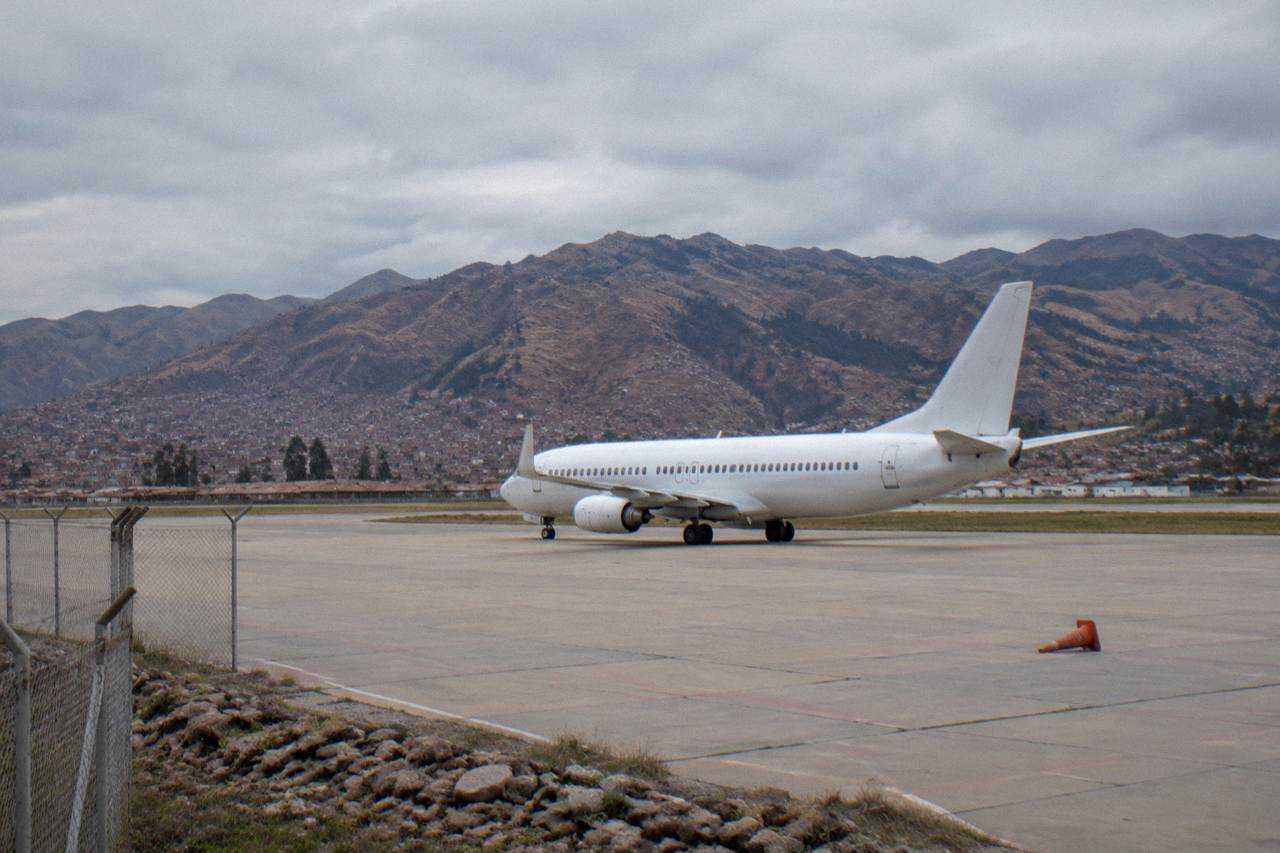
Flying wins on raw speed by a wide margin. Direct flights cover the 584 km between Lima and Cusco in about 1 hour 20 minutes, while a single nonstop bus journey takes roughly 21.5 to 24 hours, typically overnight in both directions. But door-to-door the gap narrows: airport transfers, early check-ins and Cusco's afternoon weather mean the flight costs most of a day too.
The flight time itself is remarkably consistent. LATAM and JetSMART list the route at 1 hour 20 minutes and Sky Airline at 1 hour 25 minutes, with occasional runs up to 1 hour 45 minutes depending on aircraft and routing. LATAM operates the highest frequency, around 189 flights a week in recent schedule samples, followed by JetSMART and Sky Airline. There is no train alternative on this corridor, a question covered in detail on our guide to Lima Cusco rail options.
The bus comparison is more complicated than a single number. A direct coach from Lima to Cusco on Cruz del Sur or Oltursa takes about 21.5 to 24 hours, departing from terminals like Javier Prado and arriving the next day. That is the floor. The route most travelers actually enjoy is the multi-stop version: Lima to Paracas, on to Huacachina and Nazca, down to Arequipa, across to Puno on Lake Titicaca, and finally over the altiplano to Cusco. Spread over eight to twelve days, it stops being transportation and becomes the itinerary.
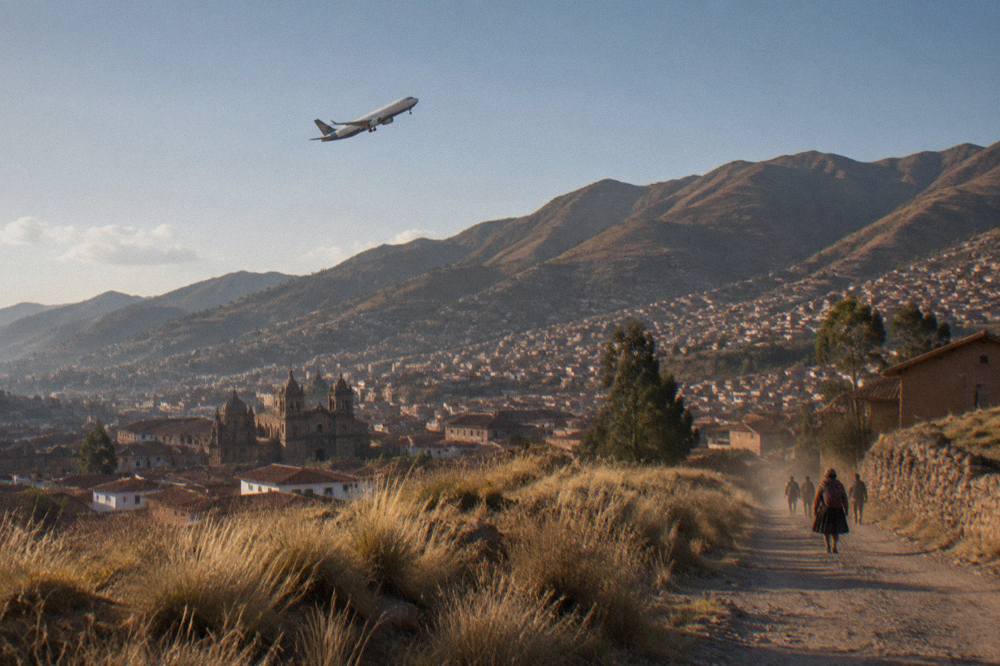
Here is the honest head-to-head:
| Factor | Direct flight | Direct bus | Multi-stop bus pass |
|---|---|---|---|
| Journey time | 1h 20m to 1h 25m | 21.5 to 24 hours | 8 to 12 days with stops |
| What you see | Clouds and brief Andean peaks | Night highway, daytime altiplano | Paracas, Huacachina, Nazca, Arequipa, Titicaca |
| Altitude exposure | 79 m to 3,399 m in one morning | Gradual, mostly while you sleep | Fully gradual, with acclimatization days |
| Weather risk | Afternoon fog and storms cancel flights | Road conditions, occasional protests | Same, spread across more days |
| Best for | Short trips, Machu Picchu focus | Budget, one destination | Trips of ten days or more |
One point that surprises first-time visitors: the flight does not actually save you as much time as the timetable suggests. Most people book a morning flight to dodge Cusco's weather, which means a 4 a.m. hotel departure in Lima, and the altitude hit on arrival often flattens the first afternoon anyway. The bus arrives slower but acclimatized, a trade-off worth understanding before you book anything.
How Reliable Is The Lima To Cusco Flight?
Direct flights are flown by LATAM, JetSMART and Sky Airline, and the schedule is dense enough that seats are rarely the problem. The problem is Cusco itself. The airport sits 3,310 meters above sea level, among the world's highest commercial airports, so morning fog and afternoon storm build-up delay or cancel afternoon departures far more often than dawn flights.
Cusco's Alejandro Velasco Astete airport has a single runway of roughly 3,400 meters, long by any standard, because the thin air at that elevation reduces lift and engine thrust. Weight restrictions follow from the same physics: on hot afternoons, baggage can be offloaded to keep the aircraft within performance limits. Terrain around the valley makes it effectively a one-runway operation, so when weather closes the field, everything stacks up behind it.
The practical pattern, confirmed across recent schedule and delay data, is that morning flights are reliable and afternoon flights carry meaningfully higher disruption risk. Low cloud in the valley and afternoon convection, especially in the November to March rainy season, are the usual culprits. Operations have been extended well beyond daylight hours in recent years, but the weather physics have not changed. If your flight cancels late in the day, you may overnight in Lima and lose a Machu Picchu day at the other end, a cascade worth pricing in.
None of this makes flying a bad choice. It makes it a choice with a known failure mode, and the failure mode is concentrated in the afternoon. Book the first or second departure of the day, keep a buffer day before any Machu Picchu entry ticket, and the flight is as dependable as mountain aviation gets. Travelers comparing schedules across airlines can compare Lima to Cusco airfares before committing, since the three carriers price the same 80 minutes very differently depending on day and season.
Once you have settled the arrival question, the decisions waiting in Cusco come into focus, and a few of them are worth lining up early:
The trio above covers the three bookings most Lima-to-Cusco travelers eventually make: the Machu Picchu day tour that anchors the whole trip, the Paracas and Huacachina day trip if you only detour from Lima, and the airport transfer that solves the first 20 minutes in Cusco.
What Does The Bus Route From Lima To Cusco Actually Look Like?
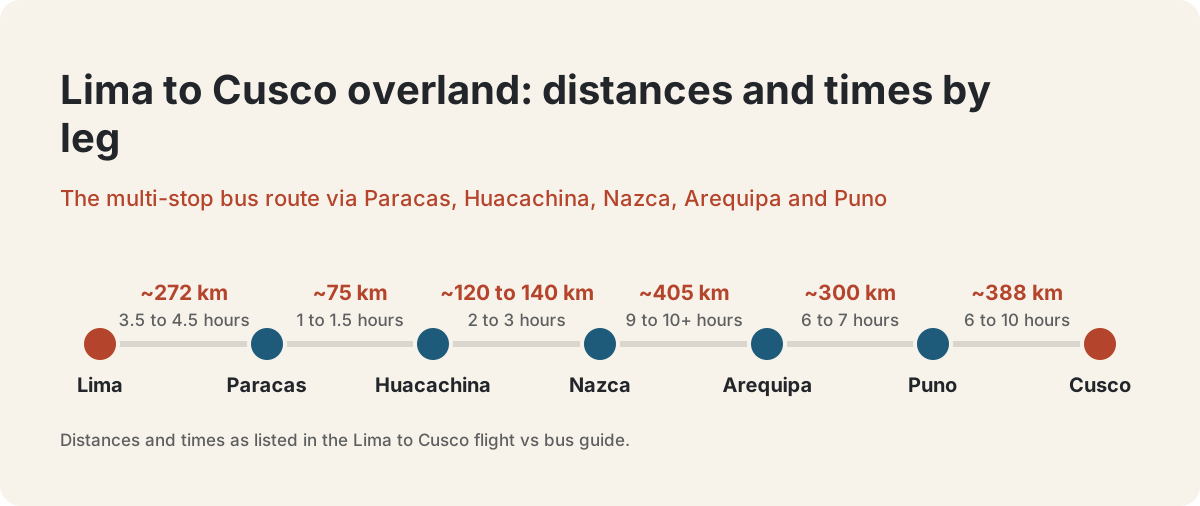
The full route runs Lima to Paracas, Paracas to Huacachina, Huacachina to Nazca, Nazca to Arequipa, Arequipa to Puno, then Puno to Cusco, roughly six legs over well over 1,000 kilometers. Hop-on hop-off passes let you pause anywhere along it, while a single direct coach covers the same ground in one 21.5 to 24 hour push.
Each leg is a normal, bookable bus journey in its own right, and the individual timings are more humane than the total suggests:
| Leg | Distance | Typical time |
|---|---|---|
| Lima to Paracas | ~272 km | 3.5 to 4.5 hours |
| Paracas to Huacachina | ~75 km | 1 to 1.5 hours |
| Huacachina/Ica to Nazca | ~120 to 140 km | 2 to 3 hours |
| Nazca to Arequipa | ~405 km | 9 to 10+ hours |
| Arequipa to Puno | ~300 km | 6 to 7 hours |
| Puno to Cusco | ~388 km | 6 to 10 hours depending on stops |
The two long legs, Nazca to Arequipa and Arequipa to Puno, are the ones that test resolve. The Nazca leg is typically run overnight by public operators, arriving in Arequipa in time for a white-city morning. The Arequipa to Puno leg is genuinely scenic, crossing high passes and the Lagunillas viewpoint; one published tourist departure leaves around 05:45 and arrives near 13:00 with the viewpoint stop, about seven and a quarter hours all in.
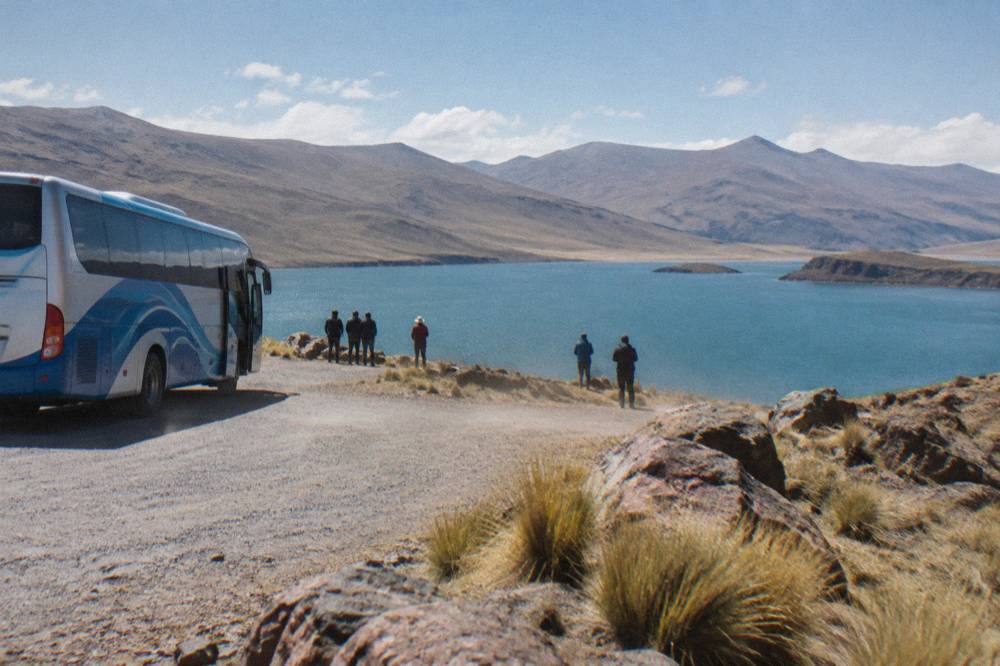
This is where hop-on hop-off services earn their keep. Peru Hop runs the corridor with hotel and hostel pickup and drop-off in participating locations, so you skip bus terminals with your luggage, and a bilingual local host rides every bus. Passes are valid up to one year from first use, and you can change a bus time in the app up to 12 hours before departure, subject to availability. The buses come with wifi, USB charging, an onboard bathroom and reclining semi-cama seats, though a few reviewers note the wifi and USB can be inconsistent on some runs.
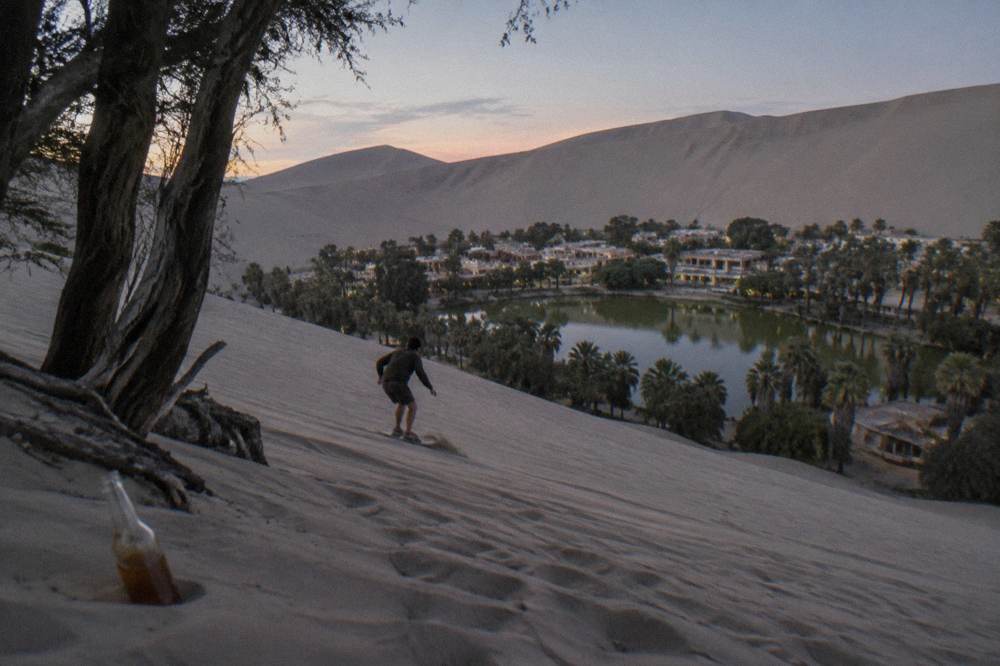
The honest trade: some legs run long, and a couple of departures are evening or overnight runs, so the romantic image of pure daylight sightseeing is not quite the full picture. But the structure is real. You wake up in Paracas, take a boat to the Ballestas Islands, sandboard in Huacachina by afternoon, and the itinerary plans itself around the timetable rather than around terminal logistics.
For travelers who only want one taste of the coast without committing to the pass, there is a middle path. The "Premium Day Trip, Sunset Toast" from Lima runs the Paracas reserve and Huacachina oasis in a single long day, about 16 hours door to door, from $119, and it rates 4.8 from 2,636 reviews on the live listing. It compresses the first two legs of the bus route into one bookable day from the capital, which suits anyone whose calendar cannot absorb a week of coastal wandering.
If the coast hooks you, the rest of the route opens up from there. Our Lima to Cusco by bus guide walks the same corridor stop by stop for travelers who want the full overland picture rather than the flight comparison.
What Does Each Option Really Cost Once You Add Everything Up?
The flight is one fare plus transfers. The bus is a cheaper ticket plus the stops that become the trip: the Paracas and Huacachina day trip from $67, the Nazca overflight from $249, and the full-day Machu Picchu group tour from $332 once you reach Cusco. Compared honestly, the bus route costs less per day of experience, but it is not a budget shortcut.
Airfare on the corridor moves with season, and the budget carriers sometimes undercut the walk-up price of a long-haul bus seat by very little. The costs that actually differentiate the two plans are the experiences bolted onto the bus route, plus the Machu Picchu outlay that lands on both plans at the end. Here is the realistic spend for the pieces this site has verified prices on:
| Item | From price | Notes |
|---|---|---|
| Lima to Paracas bus, one way | $19 | 4.2 from 53 reviews, free cancellation |
| Paracas and Huacachina premium day trip from Lima | $67 | 4.9 from 9,650 reviews, ~16 to 18 hours |
| Nazca Lines overflight from Ica or Huacachina | $249 | 4.7 from 4 reviews, 35-minute flight |
| Full-day Machu Picchu group tour from Cusco | $332 | 4.7 from 2,307 reviews, 12 hours |
| Cusco airport private transfer | $13 per group | 4.8 from 251 reviews, 20 to 25 minutes |
A word of caution on the arithmetic. It is tempting to total the bus column, compare it to a single airfare and declare flying cheaper. That comparison is fair only if you genuinely value the stops at zero. Most people who take the coastal route do it precisely because Paracas, Huacachina, Arequipa and Titicaca are things they wanted to see; priced separately as day tours from Lima, those same experiences would cost more than the bus-route version of them. The honest framing is that the bus route is not cheaper than a flight, it is a different trip that happens to include your transportation. More of these guides are collected on Lima To Cusco.
The Peru Hop cost question deserves the same honesty. A hop-on hop-off pass costs more than a bare Cruz del Sur or Oltursa seat before you tally in the taxis and terminal transfers it replaces, and it is not the cheapest option for a traveler who just wants one direct seat. Its value is in the hotel pickups, the host, the timetable that strings the stops together, and the free date changes. If your plan is Lima straight to Cusco with nothing in between, the pass is the wrong product and a flight or a direct coach is the right one.
Either way, the trip's biggest single cost lands in Cusco, not on the road to it. Machu Picchu is the reason most people make this journey at all, and the most common way to do it from Cusco is the "Full-Day Group Tour", which handles the bus to Ollantaytambo, the train, the connection to Aguas Calientes and a guided citadel tour in a single 12-hour day, from $332, rated 4.7 from 2,307 reviews. Note that this listing does not show a standard free-cancellation policy, unlike most of the roster, so check the terms on the operator's live listing before booking.
Entry tickets to the citadel itself are sold through the official Ministry of Culture portal at tuboleto.cultura.pe, on timed hourly windows with a 15-minute purchase window once you select, and daily capacity runs 4,500 in regular season up to 5,600 on high-season dates. Guided groups are capped at 16 people. Booking the tour version bundles all of that friction into one transaction, which is why it remains the default for short-trip travelers. For the full breakdown of the rail leg, see our guide to getting from Lima to Machu Picchu.
Is The Bus From Lima To Cusco Safe?
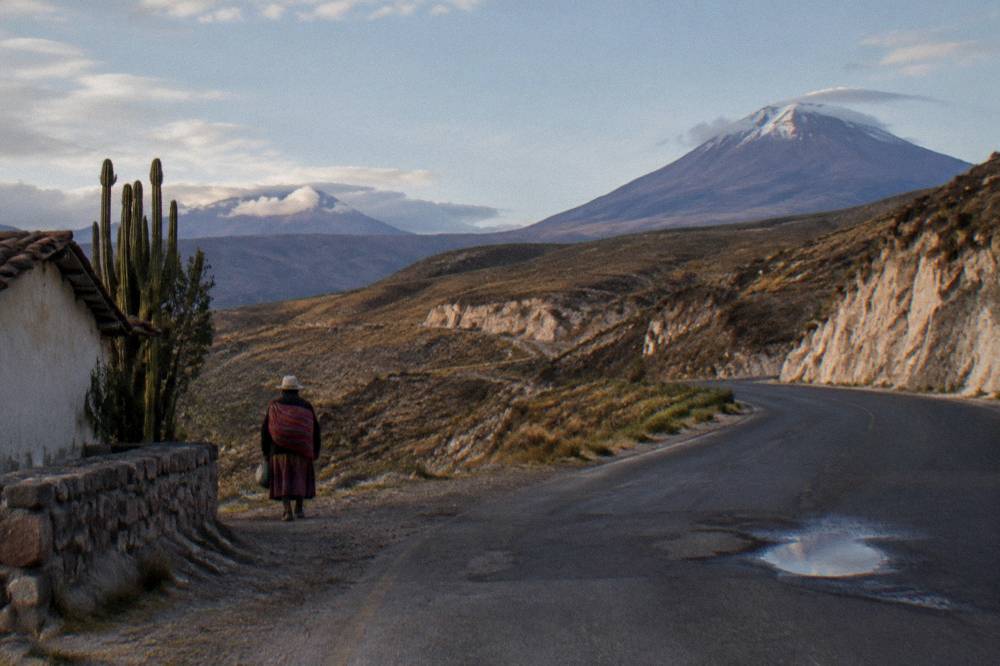
Peru's foreign advisories are blunt: bus crashes are common, especially at night, and travelers should use reputable companies and avoid overnight travel in mountainous and remote regions where possible. Daytime commercial buses on the Lima-Arequipa-Cusco corridor are explicitly treated as the safer exception. The multi-stop route also climbs gradually, from 79 meters in Lima to 3,399 in Cusco, which most bodies tolerate better than an 80-minute jump.
The UK FCDO's published advice for Peru states it in one line: "Bus crashes are common, especially at night. Only use reputable transport companies, and where possible, avoid overnight travel, especially in mountainous and remote regions." The US State Department carries the same sentence in its Peru advisory, and adds that US government employees, who are otherwise prohibited from nighttime road travel in Peru, may ride commercial buses at night on the Pan-American Highway, to Huaraz, and on the Lima-Arequipa-Cusco corridor. That carve-out is about as close to an official endorsement of the corridor's main bus companies as a government document gets.
The safety ladder on this route, in practice, looks like this. Premium long-distance lines, Cruz del Sur, Oltursa and Peru Hop, generally run climate-controlled coaches with professional drivers; informal combis, colectivos and many economy public buses often do not, and that is where the advisory language is really aimed. Peru Hop states that its buses carry GPS monitoring, enforce speed limits and use two drivers on long legs, claims that reflect the operator's own published material rather than independent verification. Its buses also run a climate-control system and provide a blanket per passenger, which matters on the high passes.
The altitude argument is the part most flight-comparison articles skip. Here is what each plan does to your body:
| Place | Elevation | Exposure on the bus route | Exposure if you fly |
|---|---|---|---|
| Lima (Miraflores) | 79 m | Start, sea level | Start, sea level |
| Paracas | ~2 to 3 m | Day 1 stop | Skipped |
| Huacachina | ~368 to 404 m | Day 2 stop | Skipped |
| Arequipa | 2,335 m | Day 3 or 4, gentle step | Skipped |
| Puno | 3,827 m | Day 5 to 7, highest step | Skipped |
| Cusco | 3,399 m | Arrive acclimatized | Full jump in 80 minutes |
Flying from Lima to Cusco moves you from sea level to 3,399 meters before lunch. The bus route, done over a week, climbs the same wall in stages, with Arequipa as a widely recommended acclimatization stop before the altiplano. The difference is not theoretical: headaches, nausea and lost first days are the standard cost of the fast ascent, and our altitude sickness on the bus routes guide covers the practical mitigations, medication timing and warning signs in detail.
One caveat belongs here in plain terms. Roads in Peru occasionally see strikes or protests, and closures can happen without warning on any corridor. No specific 2026 disruption pattern on this route is verifiable in current reporting, so the right move is simply to check conditions shortly before travel, keep a buffer day before anything non-refundable, and book services with free-cancellation terms where the option exists.
When Does Flying From Lima To Cusco Make More Sense?
Flying wins when your trip runs under about a week, when Machu Picchu is the only real destination, or when a tight international connection leaves no slack for a missed mountain departure. In those cases book the first morning flight, expect about 1 hour 20 minutes in the air, and treat the arrival afternoon as altitude adjustment rather than sightseeing time.
There is a class of traveler for whom the bus route is simply the wrong product. If you have flown 15 hours to reach Lima and have nine days total, spending six of them on coastal buses to save one flight leaves you with one rushed Machu Picchu day and a lot of pavement. The arithmetic of short trips favors the air corridor without apology, and the flight-versus-bus question then reduces to which morning departure to book and what to do with the first flat afternoon in Cusco.
The flight also wins on schedule certainty in one specific sense: a three-day weather delay on the bus route is almost unheard of, but a canceled afternoon flight simply moves you to the next morning, and a buffer day absorbs it. If your Machu Picchu tickets are date-locked and your total trip is short, the buffer day is not optional. Book it or accept the risk knowingly.
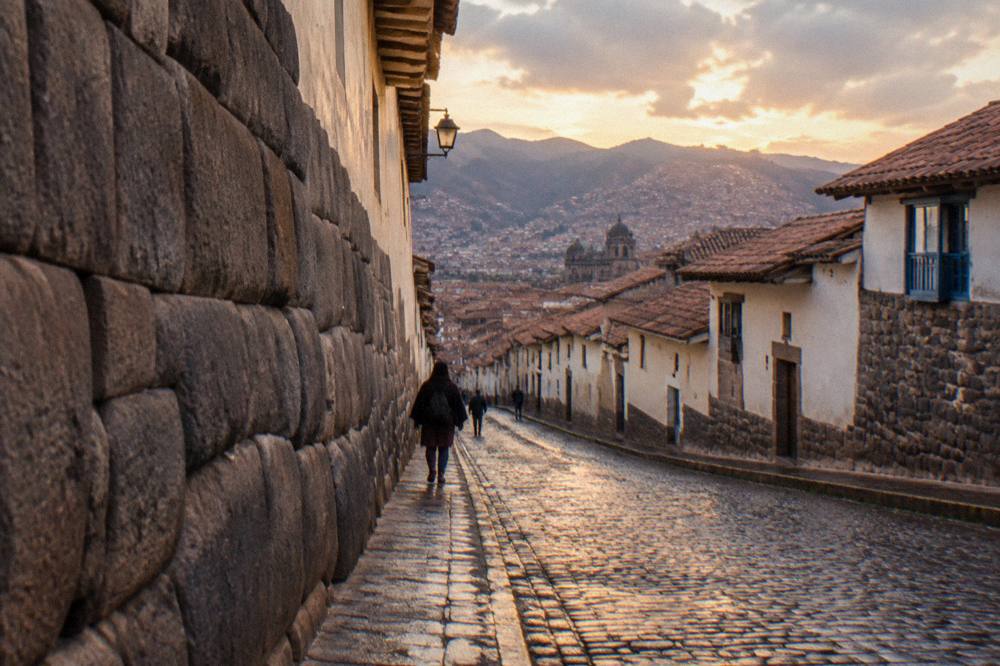
Arrival logistics are the one piece flight travelers routinely under-plan. Cusco's airport is a 20 to 25 minute drive from the historic center, and the standard taxi negotiation at 3,400 meters after a red-eye is nobody's favorite first hour in Peru. The "Private Transfer, Shared Rate" option solves it for from $13 per group, rated 4.8 from 251 reviews, meeting you inside the terminal; a comparable door-to-door pickup runs from $14.99 and rates 4.5 from 98 reviews. Both carry free cancellation.
The last flight-specific fact worth knowing is about the airport's future. The replacement Chinchero International Airport, under construction in the hills above the Sacred Valley, sits at roughly 40 percent physical progress with operations now targeted for late 2027 or 2028 after repeated delays. Until it opens, CUZ remains the only commercial field, which means every schedule, delay pattern and weight restriction described above stays the operating reality for anyone planning in the current cycle.
So Which Should You Choose: The Flight Or The Bus?
Choose the flight if Peru is a short stop and Machu Picchu is the goal; choose the bus if you have ten days or more and the coast, Arequipa and Titicaca are part of the point. The strongest version of the answer is both: bus down through Paracas and the altiplano, then fly the return leg from Cusco to Lima, or continue overland into Bolivia.
The both-directions plan is the one experienced travelers converge on, and it is worth spelling out. Southbound, the terrain ascends gradually and every stop is a highlight, so the bus route gets the slow, scenic direction. Northbound, from Cusco back to Lima, there is nothing new to see at ground level and the flight compresses a 21-hour ride into 80 minutes. One direction by land, one by air, is the pattern that wastes nothing.
For the overland half, the decision usually comes down to pass versus piece-it-together. A pass such as Peru Hop trades a higher headline cost for hotel pickups, a host on every bus, a year of validity and app-based date changes; the piece-it-together version trades convenience for control and a lower floor price. Both run the same roads and stop at the same places, and our Peru Hop reviews page digs into what recent passengers actually report on both sides of that trade.
Whatever you choose, the destination at the end of the corridor is the same, and it is the part of the plan with the least schedule slack. Machu Picchu operates on timed entries, capped daily capacity and a purchase system that gives you 15 minutes to complete a transaction once you begin. Book the mode of transport that fits your calendar, then lock the citadel day before you lock anything else.
Before you decide, here are the three questions that settle most remaining doubts:
Common Questions About Flying Vs. Busing From Lima To Cusco
How long is the flight from Lima to Cusco?
Direct flights on LATAM, JetSMART and Sky Airline take about 1 hour 20 minutes to 1 hour 25 minutes, with occasional runs up to around 1 hour 45 minutes. The route covers roughly 584 to 587 kilometers. Add airport transfers and early check-in and the realistic door-to-door cost is most of a day.
Is the bus from Lima to Cusco safe?
Foreign advisories warn that bus crashes are common in Peru, especially at night, and recommend reputable companies. Commercial buses on the Lima-Arequipa-Cusco corridor are specifically cited as the exception where US government employees may travel at night. Premium operators, climate-controlled coaches and daytime travel are the standard advice.
Can I break up the bus journey with stops?
Yes, and that is the point of the route. The standard stops are Paracas, Huacachina, Nazca, Arequipa and Puno, each a normal bus leg of one to ten hours. Hop-on hop-off passes let you pause anywhere on a pass valid up to one year, with app-based date changes up to 12 hours before departure.
Is flying better or worse for altitude sickness?
Flying is worse for altitude adjustment. The flight moves you from sea level in Lima to 3,399 meters in Cusco in about 80 minutes, while the bus route climbs in stages, with Arequipa at 2,335 meters as a natural acclimatization stop. Plan a quiet first afternoon in Cusco either way, and see our altitude guide for medication timing and warning signs.
What is the cheapest way to get from Lima to Cusco?
For a single traveler going point to point, a direct economy coach seat is the cheapest, at the cost of roughly 21.5 to 24 hours on board. If you factor in the stops, a one-way Lima to Paracas bus starts from $19 and the coastal legs are similarly inexpensive, but the pass products that string them together cost more than a bare seat.
Which airlines fly directly from Lima to Cusco?
Three airlines operate the route nonstop in current schedules: LATAM, JetSMART and Sky Airline. LATAM runs the highest frequency at around 189 flights a week in recent samples. Morning departures are the most reliable, since afternoon cloud and storms over the Cusco valley cause most delays and cancellations.