Peru And Bolivia Itinerary: How To Link The Two Countries
Linking Peru and Bolivia on one trip is mostly a routing problem: the coast, the altiplano and the border at Kasani all run in one long line from Lima to La Paz.
Short answer
A workable Peru and Bolivia itinerary needs 14 to 21 days: about a week for Lima, Paracas, Huacachina, Nazca and Arequipa, then Arequipa to Puno at 3,827 m, the Kasani border crossing near Copacabana at 3,841 m, and La Paz roughly 145 to 155 km beyond. The Copacabana and Isla del Sol day tour runs from $130 and takes 12 hours.
Linking Peru and Bolivia in a single trip is less a question of courage than of sequence. The geography does most of the planning for you: Lima sits on the coast at 79 m, the desert towns of Paracas and Huacachina line up along the Panamericana Sur, Arequipa rests at 2,335 m in the southern Andes, and from there everything climbs onto the altiplano toward Puno, Lake Titicaca and the Bolivian border. Get the order wrong, mainly by ascending too fast, and altitude illness reshapes the trip for you. Get it right, and the two countries connect along a scenic overland corridor packed with coast, canyon and altiplano.
This guide lays out a full routing, week by week, with the distances, elevations and crossing logistics that decide where you sleep each night. It also flags the few things worth booking ahead, from the entire Lima to La Paz overland route in detail to the day tours that sell out in high season.
How Many Days Do You Need For Peru And Bolivia?
Two weeks is the honest minimum, and 18 to 21 days is the comfortable answer. The core corridor alone, Lima to La Paz, covers a huge stretch of road with an elevation swing from 79 m to 3,841 m, and the acclimatization stops that make it safe, Arequipa and Puno, need real nights, not drive-bys. Add Machu Picchu and you are firmly in three-week territory.
The binding constraint is altitude, not distance. Lima to Paracas is only about 260 to 272 km, but Huacachina sits near 368 m, Nazca around 520 m, and Arequipa at 2,335 m: that first week is your body's rehearsal. Puno at 3,827 m and Copacabana at 3,841 m come only after Arequipa has given you a few nights at moderate elevation. Travelers who fly from Lima straight to Juliaca, near 3,825 m, skip that ladder and pay for it with headaches and lost days.
A second constraint is the border. The Kasani and Yunguyo crossing between Puno and Copacabana handles roughly 140 to 155 km of road plus exit and entry formalities, and it closes in the evening: the Peru side operates about 07:30 to 18:00 and the Bolivia side 08:30 to 19:00. Miss the window and you are sleeping in Puno an extra night, which is pleasant but not the plan.
| Trip length | What fits | What gets cut |
|---|---|---|
| 10 to 12 days | Lima, Paracas, Huacachina, Arequipa, Puno, Copacabana, La Paz | Nazca overflight, Colca Canyon, any Cusco time |
| 14 days | Adds Nazca and one Cusco block with Machu Picchu | Colca Canyon, Isla del Sol overnight |
| 18 to 21 days | Full coast, Arequipa, Colca, Titicaca with Isla del Sol, Cusco and Machu Picchu, La Paz | Almost nothing |
Budget-conscious travelers sometimes ask whether Bolivia can be tacked onto a short Peru trip by flying. It can, but flying Puno or Juliaca to La Paz lands you at 3,650 m or higher with no acclimatization at all, which is the exact risk the overland routing exists to avoid. If your total time is under two weeks, our advice is to save Bolivia for its own trip rather than compress both countries into a sprint.
What Route Links Lima To La Paz?
The spine is Lima to Paracas to Huacachina to Nazca to Arequipa, then Arequipa to Puno either directly or through Colca Canyon, and finally Puno across the Kasani border to Copacabana and on to La Paz. Direct driving time totals roughly 40 hours across the whole corridor, but no one drives it straight; the stops are the point.
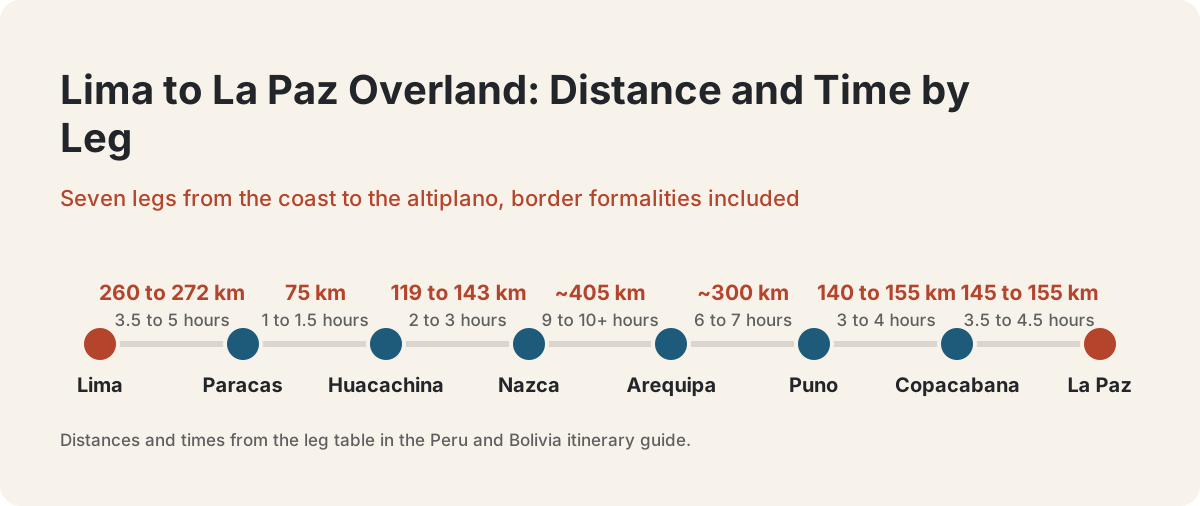
Each leg has its own character. Lima to Paracas runs about 3.5 to 4.5 hours on the road, though door-to-door often stretches to 5 with Lima traffic. Paracas to Huacachina is a short 75 km hop of 1 to 1.5 hours. Huacachina to Nazca, usually booked from Ica, covers about 120 to 140 km in 2 to 3 hours. The long one is Nazca to Arequipa: roughly 405 km and 9 to 10 or more hours on services like Cruz del Sur or Tepsa, an overnight or full-day leg that most travelers sleep through. Arequipa to Puno direct is about 300 km and 6 to 7 hours, and from Puno it is 3 to 4 hours door to door across the border to Copacabana, then another 3.5 to 4.5 hours, including the Tiquina Strait ferry, to La Paz.
| Leg | Distance | Typical time | Notes |
|---|---|---|---|
| Lima to Paracas | 260 to 272 km | 3.5 to 5 hours | Flat coastal highway |
| Paracas to Huacachina | 75 km | 1 to 1.5 hours | Desert leg, easy half-day |
| Huacachina or Ica to Nazca | 119 to 143 km | 2 to 3 hours | Viewing tower stop possible |
| Nazca to Arequipa | ~405 km | 9 to 10+ hours | Overnight or long day |
| Arequipa to Puno | ~300 km | 6 to 7 hours | Scenic stops, e.g. Lagunillas |
| Puno to Copacabana | 140 to 155 km | 3 to 4 hours | Includes border formalities |
| Copacabana to La Paz | 145 to 155 km | 3.5 to 4.5 hours | Includes Tiquina ferry |
The hop-on-hop-off way to run this corridor is Peru Hop, which serves Paracas, Huacachina, Nazca, Arequipa, Puno and Cusco with hotel or hostel pickup and drop-off, so you skip the bus terminals with your bags. A bilingual English and Spanish host rides every bus, the fleet runs a climate-control system with reclining semi-cama seats, wifi, USB charging and an onboard bathroom, though a few reviewers note the wifi and USB can be inconsistent. Passes are valid up to one year, and you can change a departure in the app up to 12 hours before the bus leaves, subject to availability. Peru Hop states its buses carry GPS tracking, speed limits and two drivers on long legs.
Moving through Peru and Bolivia without juggling a dozen tickets?
A hop-on-hop-off pass covers the whole corridor, with pickup at your hotel and a host who handles border paperwork at Kasani. See Peru Hop routes and passes.
The honest caveat: a pass costs more than a bare Cruz del Sur or Oltursa seat before you tally in the taxis and terminal hassles it removes, and some legs run long or overnight, so a traveler who just wants one direct seat from A to B is better off buying that seat outright. For the full picture, our Peru Hop reviews breakdown covers the trade-off. Roads in Peru occasionally see strikes or protests, so check current conditions before each long leg.
For the crossing itself, three bookable services carry most of the routing weight on this itinerary, from the scenic bus south to the Titicaca day tours that anchor the border region.
Week One: Lima, Paracas, Huacachina And Nazca
Spend two nights in Lima, then move down the coast: a night in Paracas for the Ballestas Islands, a night or two in Huacachina for the dunes, and a short stop in Nazca for the overflight before the long haul to Arequipa. The whole first week stays at low desert elevation, which is exactly why it opens the itinerary.
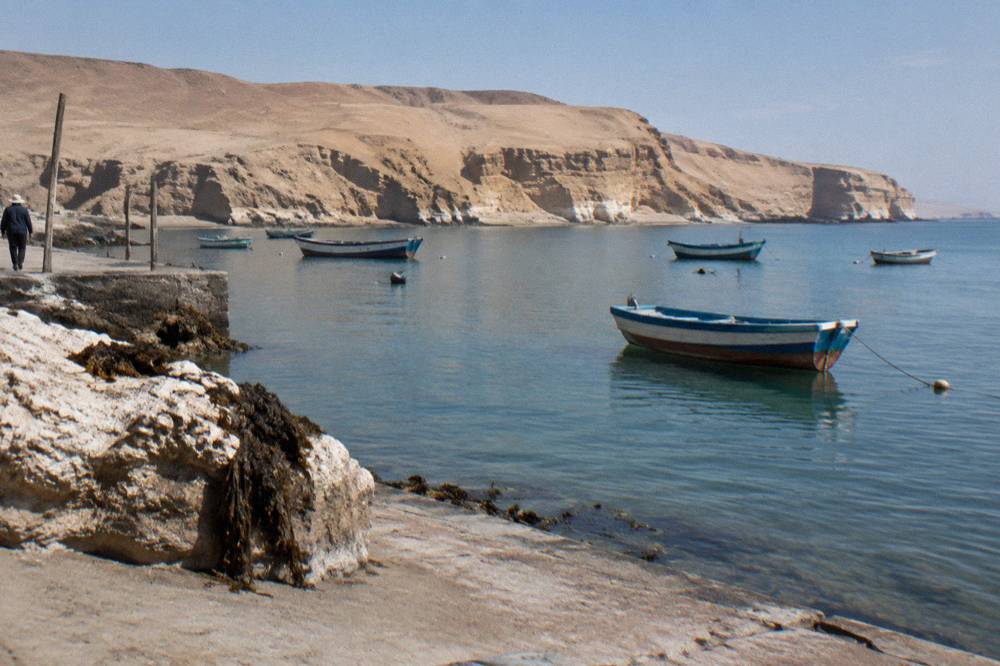
Paracas is the first real decision point. The direct bus from Lima's Miraflores district takes about 3 hours and runs from $19 one way, rated 4.2 from 53 reviews, with free cancellation. From Paracas you can join the combined Paracas and Huacachina premium day trip, which runs 16 to 18 hours door to door from Lima and includes the sunset toast on the dunes: the "Premium Day Trip, Peru Hop Run" version is rated 4.9 from 9,650 reviews and starts at $67, while the "Premium Day Trip, Sunset Toast" version, rated 4.8 from 2,636 reviews, starts at $119. Travelers who want the coast without a week of logistics usually pick one of these and move on.
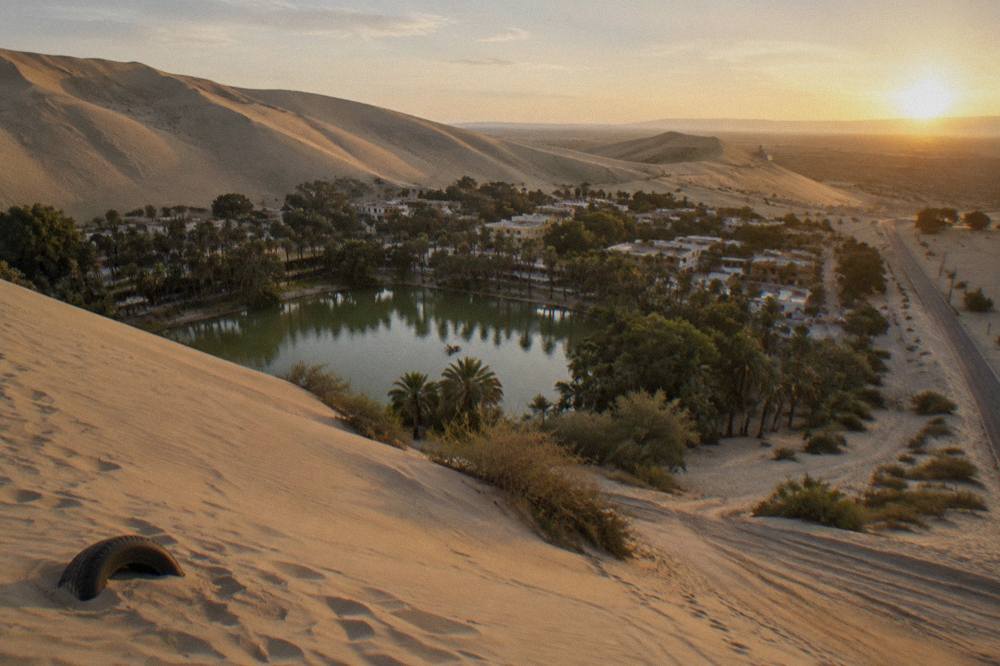
Huacachina deserves at least one full day. The oasis sits near 368 m, ringed by dunes that draw sandboarders and dune-buggy rides, and the short distance from Paracas, 75 km, means an afternoon arrival still leaves time on the water-free lagoon loop before a dune tour at sunset. Our is Huacachina worth it piece covers the trade-offs honestly, including the crowds in high season.
Nazca is the optional spice of week one. The overflight of the Nazca Lines from Ica or Huacachina runs 35 minutes in the air with transfer, costs from $249, and carries a 4.7 rating from a small pool of 4 reviews, so treat that number as what it is: four people's verdicts. If the budget or stomach says no, the roadside viewing tower off the Panamericana gives a modest ground-level look for a fraction of the cost. Either way, most travelers sleep in Nazca and board the 9 to 10-hour bus to Arequipa the next morning, turning the longest leg of the trip into a daytime or overnight ride. For more on this stretch, see the Huacachina to Arequipa via Nazca routing.
Week Two: Arequipa, Colca Canyon, Puno And Lake Titicaca
Give Arequipa two or three nights at 2,335 m as your acclimatization base, then choose between a Colca Canyon side trip or a direct scenic bus to Puno at 3,827 m. Puno needs two nights minimum: one to breathe, one for the lake. This is the week the itinerary earns its altitude discipline.
Arequipa rewards the stop beyond the physiology. The white volcanic-stone colonial core, the Santa Catalina monastery and a food scene that rivals Lima's make the two or three nights feel short, and the city's elevation is the gentle step up your body needs before the altiplano. From here the fork in the road matters. Direct Arequipa to Puno buses run about 300 km in 6 to 7 hours, with Peru Hop's published example departing around 05:45 and arriving near 13:00 with a Lagunillas viewpoint stop, about 7.25 hours total.
The scenic alternative on the Cusco side of the lake is the "Route Of The Sun, Buffet Lunch" bus from Cusco to Puno, a 6:10 am to 5:30 pm day that packs Andahuaylillas, Racchi and La Raya into one 11-hour ride rated 4.7 from 633 reviews, from $50, with free cancellation. Travelers running this itinerary north to south, Lima to La Paz, usually meet that route only if they loop through Cusco first; we cover the full mechanics in the Cusco to Puno bus guide. Travelers heading south from Cusco toward the lake can also compare notes in our Cusco to Lake Titicaca tours rundown.
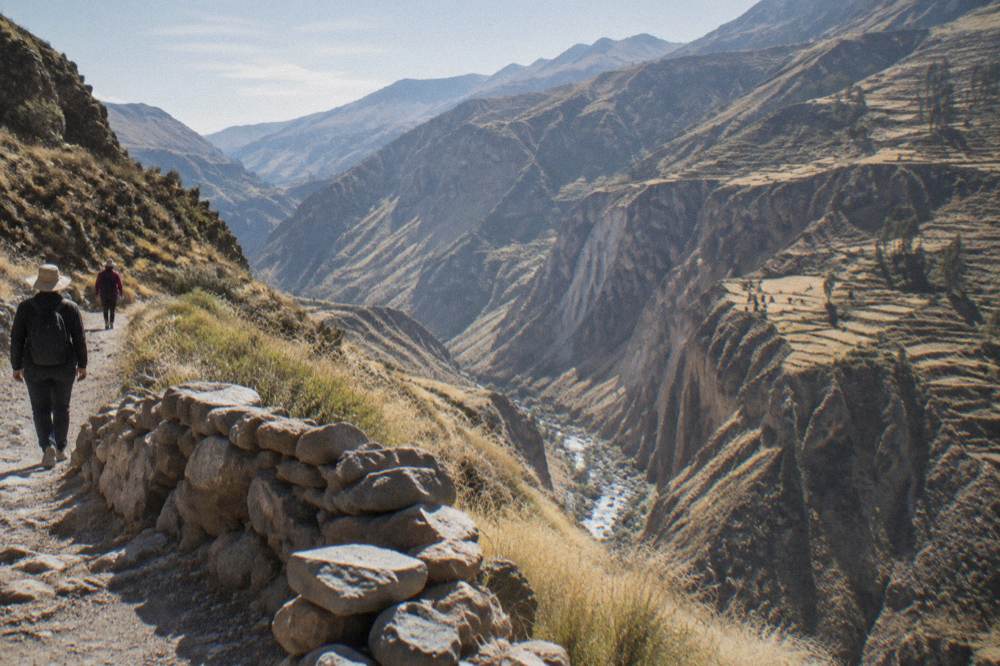
Colca Canyon is the other fork, and it is a big one: the Cruz del Condor mirador sits around 3,270 m, with rim elevations from 3,000 to 4,000 m and passes en route reaching about 4,800 to 4,910 m. Chivay, the canyon's service town, rests at 3,635 m. Condor sightings run best in the dry season, April to November, in the morning thermal window roughly 7 to 10 am. The canyon deserves its own planning, and our Colca Canyon from Arequipa guide covers it in depth. If you continue from Chivay toward Puno, the Turist Bus "Colca To Puno, Scenic Stops" service covers that link in about 6.5 hours, rated 4.7 from 88 reviews and priced from $41.03.
Puno itself is unglamorous and essential. Two nights lets you arrive, breathe, and then get on the water. From Puno the headline day tour is "Copacabana And Isla Del Sol" into Bolivia, a 12-hour full-day circuit rated 4.8 from 30 reviews, from $130, with free cancellation. The tour handles the border paperwork and the boat legs in one booked day, which matters because the crossing is where independent logistics get fiddly.
Ready to lock in the lake day before the border run?
There is also a premium rail option between Cusco and Puno: the PeruRail Titicaca train covers the route in about 10 hours, from $395, with 294 reviews on its listing, too few for a reliable star figure, so read the recent guest comments rather than trusting a rating. Its cancellation policy is not shown on the listing, so confirm before booking. We compare it against the bus in the Cusco to Arequipa train and Titicaca train write-ups.
Crossing The Border: Puno To Copacabana And Isla Del Sol
The Kasani and Yunguyo crossing is the only practical land route from Puno into Bolivia: about 2 hours to the border, 30 to 90 minutes for both exit and entry stamps, and 10 to 45 minutes on to Copacabana, for 3 to 4 hours door to door. Cross mid-morning to mid-afternoon, roughly 10:00 to 15:00, when queues are shortest.
The mechanics are simple but unforgiving of bad timing. The Peru-side post operates about 07:30 to 18:00 and the Bolivia side about 08:30 to 19:00; a 2024 remodel on the Peruvian side improved flow, and no procedural changes were reported in 2026 sources. Tourist buses that run this corridor, including the hop-on services, assist with the paperwork, which is one of their genuine advantages here. Independent travelers walk the same two windows themselves.
Visa rules shifted in your favor recently. As of December 1, 2025, US, UK, EU, Canadian and Australian tourists are visa-free for tourism stays up to 90 days within a 12-month period, and the old US $160 reciprocity fee no longer applies. What is mandatory instead is free SIGEMIG online pre-registration through the Bolivian migration authority before arrival, plus a passport with roughly 6 months of validity and standard proof of onward travel. Policies can change by decree, so confirm shortly before you travel.
| Crossing item | Detail |
|---|---|
| Border posts | Kasani/Yunguyo, Peru side 07:30 to 18:00, Bolivia side 08:30 to 19:00 |
| Best crossing window | Roughly 10:00 to 15:00 |
| Puno to border | ~2 hours |
| Formalities | 30 to 90 minutes typical for both stamps |
| Border to Copacabana | 10 to 45 minutes |
| Bolivia visa, US/UK/EU/CA/AU | Visa-free up to 90 days since December 1, 2025 |
| Required before entry | Free SIGEMIG online pre-registration |
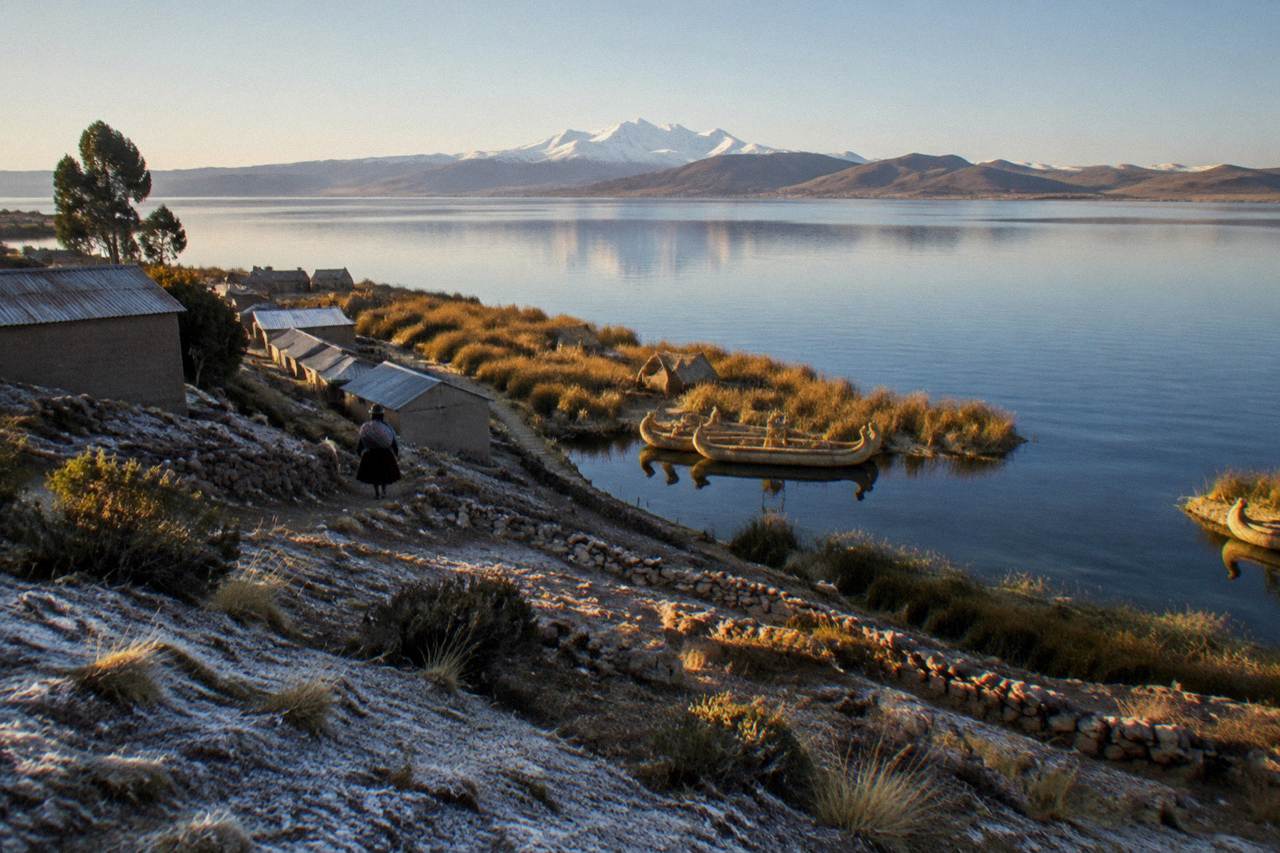
Copacabana at 3,841 m is the reward: a small lakeside town that works as both a destination and a springboard. Boats leave the pier for Isla del Sol typically around 08:30 and 13:30 daily, the crossing takes 1.5 to 2 or more hours, and round-trip tickets run about 30 to 40 BOB. The south end of the island, Yumani, is reliably accessible; the north end around Challapampa saw community disputes in the past but has been open since about 2022, with the full north-south ridge walk reported available. Community fees of roughly 10 to 15 BOB apply per checkpoint and vary locally, so carry small Bolivian notes.
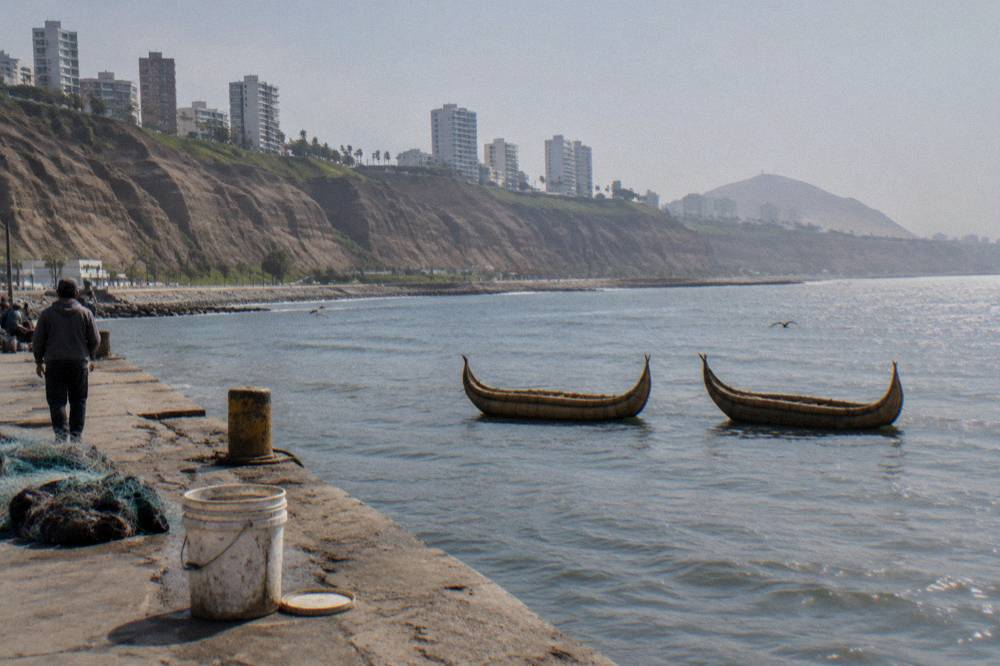
If you would rather not assemble the boat, border and island legs yourself, the organized day tour from Puno wraps all of it into one departure.
From Copacabana, La Paz is 145 to 155 km and 3.5 to 4.5 hours, including the odd but memorable vehicle barge across the Tiquina Strait. Bolivia saw widespread road blockades from early May through late June 2026, but they were largely lifted by June 24 and no ongoing closures on the Puno-Copacabana-La Paz corridor were reported through September 2026. The general rule stands anyway: roads occasionally see strikes or protests, so check current conditions before the leg. Our puno to la paz bus guide has the schedule detail.
Where Do Cusco And Machu Picchu Fit?
If Machu Picchu is on the list, and for most travelers it is, insert a Cusco block of three to four nights between week one and the lake, using Arequipa only as the altitude step. Cusco sits at 3,399 m, Ollantaytambo at 2,792 m and the ruins themselves at 2,430 m, so the Sacred Valley actually eases you downward before the climb back up.
The cleanest southbound order is Lima and the coast, then Arequipa for acclimatization, then Cusco, then Puno and the border. Buses connect Arequipa and Cusco, and the altiplano leg from Cusco to Puno is where the "Route Of The Sun" scenic bus earns its keep, turning a 388 km transfer into a day of archaeological stops with a buffet lunch included. From $50, rated 4.7 from 633 reviews, it is one of the few transfers on this itinerary travelers describe as a sight in itself.
Machu Picchu has real quotas now, and that is the number that should worry planners. Daily capacity is 4,500 in regular season and up to 5,600 on specific high-season dates: January 1, April 2 to 5, June 19 to November 2, and December 30 to 31 in 2026. Entry runs on three main circuits with ten sub-routes, timed hourly windows from roughly 6:00 to 16:00 with a 30-minute grace period, and guide groups capped at 16 people. Tickets are nominal and personalized, sold mainly through the official Ministry of Culture portal, the official ticketing site, with about 15 minutes to complete a purchase once you select. Up to 1,000 in-person tickets a day remain available in Aguas Calientes as a fallback. Our Lima to Machu Picchu guide walks the full chain.
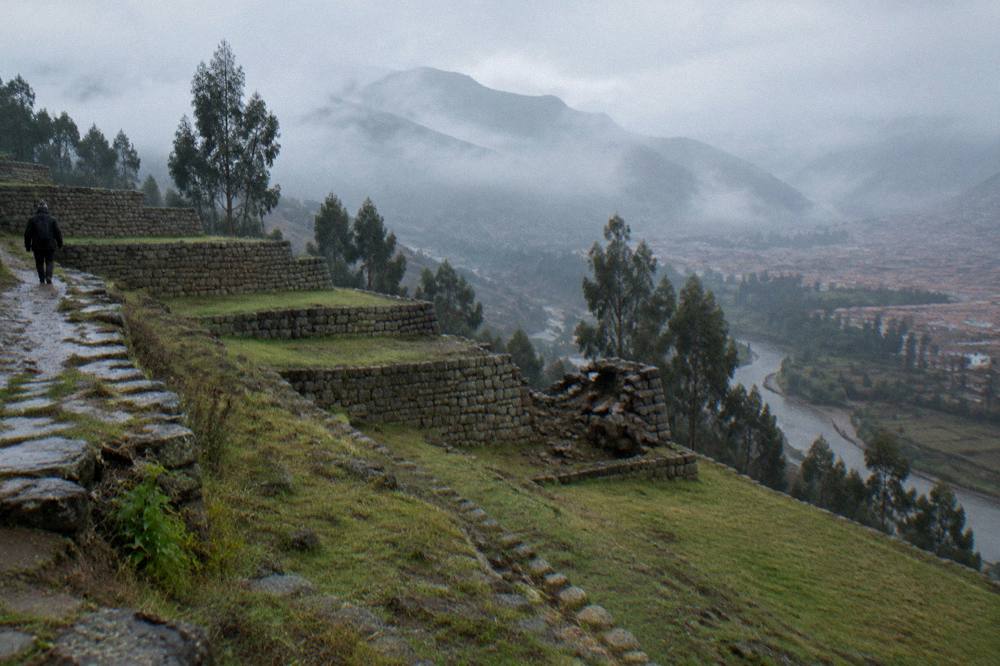
Two bookable formats dominate. The "Full-Day Group Tour" from Cusco is a 12-hour door-to-citadel day by bus, train and guided tour, from $332, rated 4.7 from 2,307 reviews; note that no standard free-cancellation policy is shown on its listing, so check the terms before committing. The "Full-Day Vistadome Train" version runs about 16 hours with panoramic glass carriages, from $419, rated a perfect 5.0 from 317 reviews, with free cancellation. For the train mechanics, timetables and station choices, see the Cusco to Machu Picchu train breakdown. The stone fact worth knowing is Ollantaytambo: the rail journey from there to Aguas Calientes is only about 43 km but takes 1 hour 20 minutes to 1 hour 45 minutes on most services, a deliberate slow descent along the Urubamba.
What Should You Book Ahead, And What Does It Cost?
Book ahead only what is capacity-limited or fixed-date: Machu Picchu entry circuits, the Nazca overflight if you want it, Titicaca day tours in the May-to-October dry season, and border-day transport. Buses and city hotels can mostly wait. Expect roughly $150 to $400 per person in booked tour and entry costs beyond lodging and transport, depending on how many of the big three you take.
| Booked item | Price | Rating and reviews | Duration | Cancellation |
|---|---|---|---|---|
| Copacabana and Isla del Sol day tour from Puno | From $130 | 4.8 from 30 reviews | 12 hours | Free |
| Cusco Route of the Sun scenic bus to Puno | From $50 | 4.7 from 633 reviews | ~11 hours, 6:10 am to 5:30 pm | Free |
| PeruRail Titicaca train, Cusco to Puno | From $395 | 294 reviews, too few for a star claim | ~10 hours | Not shown on listing |
| Nazca Lines overflight from Ica or Huacachina | From $249 | 4.7 from 4 reviews | 35-minute flight plus transfer | Free |
| Machu Picchu full-day group tour from Cusco | From $332 | 4.7 from 2,307 reviews | 12 hours | No standard policy shown |
| Machu Picchu full-day Vistadome train tour | From $419 | 5.0 from 317 reviews | ~16 hours | Free |
The eSIM question comes up on long corridor trips, and it is worth solving before day one: coverage along the Panamericana is decent but drops in the canyon and altiplano stretches, so download offline maps for each leg in advance. For payment and ticketing, carry cash for the small BOB fees on Isla del Sol, for the Tiquina ferry and for community checkpoints; cards are useless there.
If you want the train experience on the altiplano without driving any of it yourself, the PeruRail Titicaca service is the splurge that replaces a whole day of road.
Safetywise, both the US State Department and the UK FCDO advise the same thing for Peruvian roads, and the wording is theirs: "Bus crashes are common, especially at night. Only use reputable transport companies, and where possible, avoid overnight travel, especially in mountainous and remote regions." US government employees in Peru are prohibited from nighttime road travel except on specific corridors, and they may ride commercial buses at night along the Pan-American Highway, to Huaraz and on the Lima-Arequipa-Cusco corridor, a useful signal about which routes carry the most professional traffic. The current US advisory is Level 2, exercise increased caution, with Cusco's tourist sites outside the restricted zones, and the UK FCDO Peru page carries the matching guidance. Our is Peru bus travel safe piece translates the advisories into plain planning terms.
How Do You Adjust The Itinerary For Less Time?
Cut from the coast, never from the altitude ladder. A 12-day version drops Nazca and Colca and keeps Lima, Paracas or Huacachina, Arequipa, Puno, Copacabana and La Paz. Never cut Arequipa or the Puno nights to save a day, because those stops are what make the 3,800 m elevations survivable, and a ruined day at altitude costs more than any saved hotel night.
The sequence is the skeleton; everything else is negotiable. Travelers with three weeks can run the full chain and add a Sacred Valley detour, an overnight on Isla del Sol or a La Paz side trip toward Uyuni, which is where most Bolivia itineraries continue. Travelers flying home from La Paz should still schedule the altiplano ascent gradually on the way in; altitude does not care about your return flight.
Two adjustments fail often enough to name. First, inserting Cusco between the coast and Arequipa, which means two altitude jumps close together and a tired arrival in Puno. Second, booking a same-day border crossing plus an Isla del Sol boat plus a La Paz bus in one calendar day; the border window and boat schedule make it fail by mid-afternoon. If time is tight on the Bolivia side, sleep in Copacabana and take the first morning boat to the island's south end before continuing to La Paz.
Whatever the length, these three services cover the heaviest decision points on the corridor: the lake-and-border day, the scenic altiplano bus and the premium train.
The final planning note is about direction. This itinerary runs southbound, Lima to La Paz, because that order climbs the altitude ladder in the right steps. Run it in reverse, La Paz to Lima, and you start at 3,650 m on day one, which many travelers tolerate but few enjoy. If Bolivia comes first for flight reasons, plan two quiet days in La Paz before any bus, and see the cusco to la paz bus guide for the reverse routing. However you chain it, Lima To Cusco covers every leg of this corridor in detail, one route at a time.
Common Questions About Peru And Bolivia Itineraries
How many days do you need for Peru and Bolivia?
Fourteen days is the practical minimum for Lima, the coast, Arequipa, Puno, Copacabana and La Paz. Eighteen to 21 days lets you add Nazca, Colca Canyon, Cusco and Machu Picchu without cutting the acclimatization stops that the altiplano elevations require.
Where do you cross the border between Peru and Bolivia?
At Kasani and Yunguyo, between Puno and Copacabana. It is about 2 hours from Puno to the posts, 30 to 90 minutes for stamps and 10 to 45 minutes on to Copacabana. The Peru side operates roughly 07:30 to 18:00 and the Bolivia side 08:30 to 19:00, so cross between about 10:00 and 15:00.
Do US citizens need a visa for Bolivia?
No. Since December 1, 2025, US, UK, EU, Canadian and Australian tourists are visa-free for up to 90 days within a 12-month period, and the old US $160 reciprocity fee no longer applies. Free SIGEMIG online pre-registration before arrival is mandatory, and you should confirm the rules shortly before travel as they can change by decree.
Where do Cusco and Machu Picchu fit?
Insert a three to four night Cusco block between the coast or Arequipa and Puno. Cusco sits at 3,399 m and Machu Picchu at 2,430 m, so the Sacred Valley eases you downward before the altiplano climbs again. The Cusco to Puno scenic bus then turns the onward leg into a day of stops.
Is it better to go Lima to La Paz or La Paz to Lima?
Southbound, Lima to La Paz, because the elevation ladder climbs gradually from 79 m through Arequipa at 2,335 m to the altiplano above 3,800 m. Starting in La Paz means day one at 3,650 m, which most travelers handle poorly without a couple of quiet days first.
What should you book ahead on this route?
Only the capacity-limited pieces: Machu Picchu circuits on timed entries, the Titicaca day tours in the May to October dry season, and the border-day transport. Buses and most hotels can be arranged as you go, and the PeruRail Titicaca train from $395 is worth booking early for choice of seats.