Arequipa To Puno By Bus
The 300 km climb from Arequipa's white volcanic city to Puno on the shore of Lake Titicaca is one of the most scenic bus legs in southern Peru, and it is short enough to do comfortably in a single day.
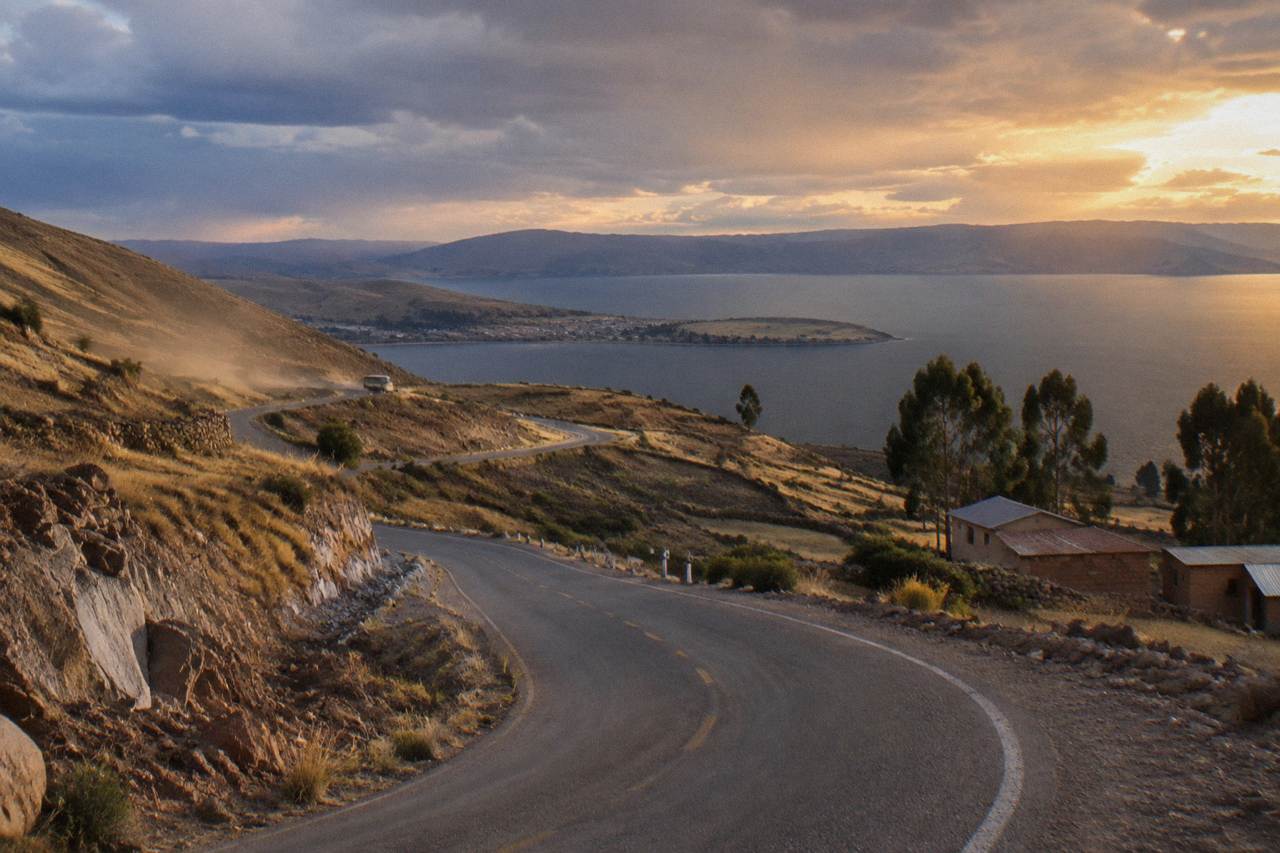
Short answer
Direct Arequipa to Puno buses cover roughly 300 km in 6 to 7 hours, climbing from 2,335 m in Arequipa to 3,827 m in Puno. Scenic services such as Peru Hop stop at Lagunillas, departing Arequipa around 05:45 and arriving about 13:00. A Colca Canyon detour via Chivay, at 3,635 m, adds a night but turns the transfer into a highlight.
The road from Arequipa to Puno covers roughly 300 km, climbing from the white volcanic city at 2,335 m to the lake port at 3,827 m. It is one of the few long-distance legs in southern Peru where a direct daytime bus genuinely beats flying: there is no commercial airport at Puno, the nearest being Juliaca at roughly 3,825 m, and the highway itself passes through some of the emptiest, widest high plains in the country.
This Lima To Cusco guide lays out every practical option for the leg: which companies run it, what a direct seat versus a scenic service actually gives you, how the Colca Canyon detour works, what tickets cost on the bookable alternatives this site carries, and how to handle the altitude jump that ends the ride.
The Arequipa To Puno Bus Route At A Glance
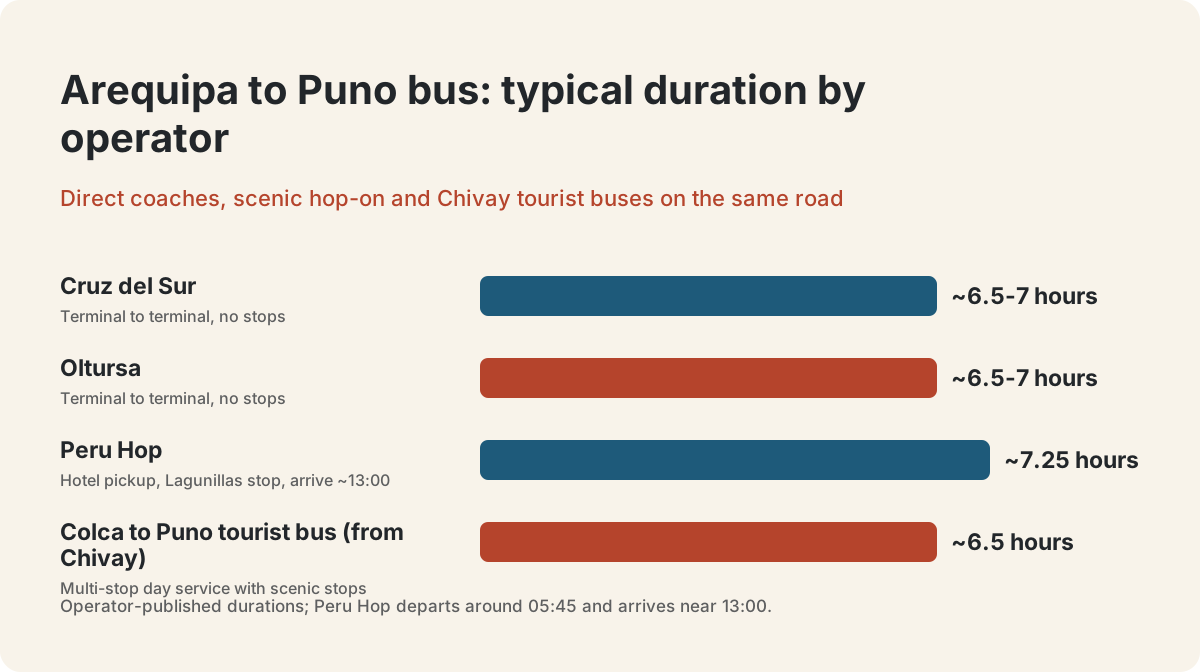
The direct Arequipa to Puno bus runs about 300 km and takes 6 to 7 hours on the standard highway, with no change of vehicle. Scenic hop-on services cover the same road in about 7.25 hours because they stop, most notably at the Lagunillas viewpoint. Arequipa sits at 2,335 m and Puno at 3,827 m, so the leg is a steady climb, not a mountain pass slog.
Most of the route follows the main southern highway northeast out of the Arequipa region onto the altiplano, the high plateau that stretches between the Andean cordilleras. After the first hour the scenery changes character completely: the green terraced valleys around Arequipa give way to treeless golden plains, grazing alpacas and vicuñas, and long sightlines to distant ridgelines. Passes along the wider corridor reach roughly 4,800 m on some Colca-area routes, but the direct Puno road stays on gentler high-plateau grades.
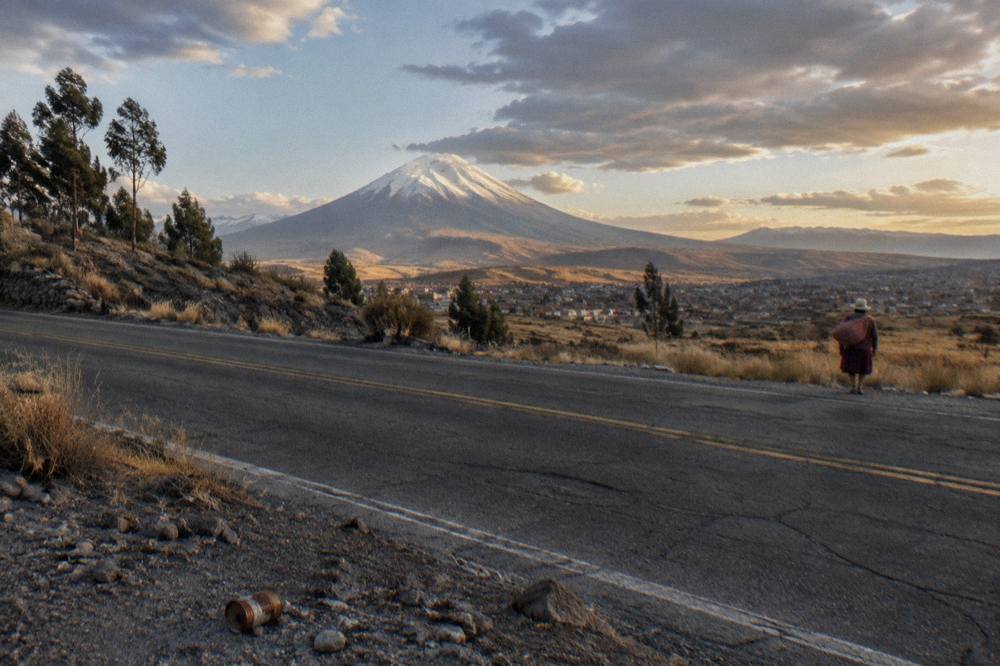
Two practical facts shape every decision on this leg. First, almost every service departs in the early morning, because drivers and operators prefer to finish the climb in daylight: the UK Foreign Office advises that bus crashes are common, especially at night, and recommends reputable companies and avoiding overnight travel in mountainous regions. Second, the arrival elevation matters more than the drive itself. You step off the bus at 3,827 m, nearly 1,500 m higher than Arequipa, and many travellers feel that difference within hours of checking in.
Planning the leg as part of a bigger southern loop? The natural chain is Lima to the coast, then Huacachina to Arequipa via Nazca, then this leg to Puno, then onward to Cusco or into Bolivia. The Lima to Arequipa bus guide covers the two long legs that come before this one, and the Puno to Cusco bus guide covers what comes after.
Which Companies Run The Arequipa To Puno Bus
Three kinds of operator serve the corridor: premium direct lines such as Cruz del Sur and Oltursa running scheduled Arequipa to Puno departures, the hop-on hop-off tourist service Peru Hop with its daily scenic departure at around 05:45, and bookable multi-stop tourist buses that link Colca Canyon to Puno directly. Direct premium seats and scenic services cover the same 300 km road; the difference is stops, pickup style and price.
Cruz del Sur and Oltursa both run the corridor with full-size coaches, reserved seating and terminal-to-terminal service from Arequipa's main terminals to Puno. These are the names most Peruvians and regular travellers default to, and both are considered reputable lines by the standards quoted in official travel advice. The trade-off is simple: you haul your own luggage to the terminal, the service makes no photo stops, and everything is in Spanish by default.
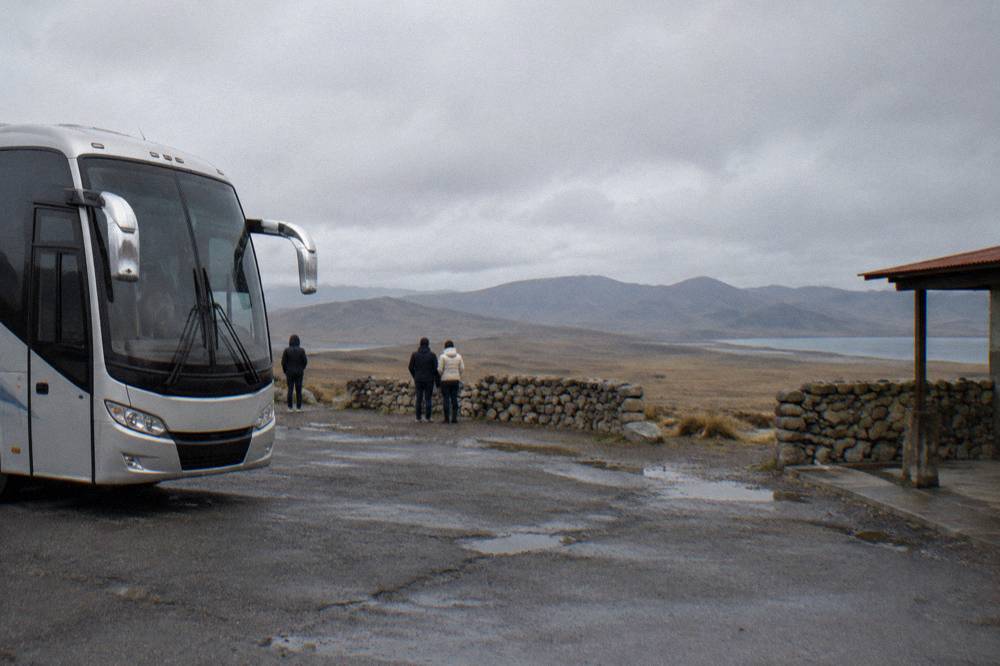
Peru Hop takes a different approach on the same road. It picks up and drops off at your hotel or hostel in participating locations, so you skip the bus terminal with your bags, and a bilingual English and Spanish host rides every bus. Its published Arequipa to Puno leg departs around 05:45, stops at the Lagunillas viewpoint, and arrives in Puno near 13:00, about 7.25 hours door to door. Peru Hop states that its buses run GPS tracking, speed limits and two drivers on long legs, and the service carries reclining seats, an onboard bathroom, USB charging and a blanket per passenger; a few reviewers note the wifi and USB can be inconsistent. One honest caveat: a hop-on pass costs more than a bare premium-line seat before you count the taxis and tours the pickup style saves you, and some legs run long.
The third option is the tourist bus that leaves from the Colca Canyon side, covered in the next section. For travellers who want to compare every operator on the corridor in one place, including the safety and comfort differences between premium lines, there is a fuller comparison in the Peru bus companies compared guide.
| Operator | Type | Route style | Typical duration | Booked through |
|---|---|---|---|---|
| Cruz del Sur | Direct premium coach | Terminal to terminal, no stops | ~6.5-7 hours | Operator site or terminal |
| Oltursa | Direct premium coach | Terminal to terminal, no stops | ~6.5-7 hours | Operator site or terminal |
| Peru Hop | Hop-on hop-off tourist service | Hotel pickup, Lagunillas scenic stop, ~05:45 departure | ~7.25 hours, arrive ~13:00 | Pass booked online |
| Colca to Puno tourist bus | Multi-stop day service | Chivay origin, scenic stops to Puno | ~6.5 hours | Tour listing |
If you already know you want a booked, ticketed service with stops rather than a plain transfer, the three options below are the ones this site carries for the altiplano corridor: the Colca Canyon link, the Cusco side's scenic Route of the Sun, and the PeruRail Titicaca train for the luxury alternative.
Direct Bus Or A Colca Canyon Stop: Comparing The Two Ways
The direct bus is the right call for one simple goal: reach Puno in a day. The Colca Canyon route is better if you have a spare night, because it adds roughly 160 to 190 km of driving from Arequipa to Chivay at 3,635 m, a canyon night, and then a scenic bus onward to Puno of about 6.5 hours. Both arrive at the same 3,827 m lake shore, just on different schedules.
The trade-off is time versus highlights. Arequipa to Chivay alone takes 3 to 4 hours by road, crossing passes well above 4,000 m before dropping into the canyon's market town. From Chivay, tour vehicles reach the Cruz del Condor viewpoint, whose mirador sits at roughly 3,270 m with rim elevations stretching higher, and mornings between roughly 7 and 10 a.m. give the best odds of condors riding the thermals. Dry season, April through November, brings the clearest skies for viewing. The direct bus gives you none of this: its single scheduled highlight is Lagunillas, a twin lake stop on the altiplano that is genuinely photogenic but brief.
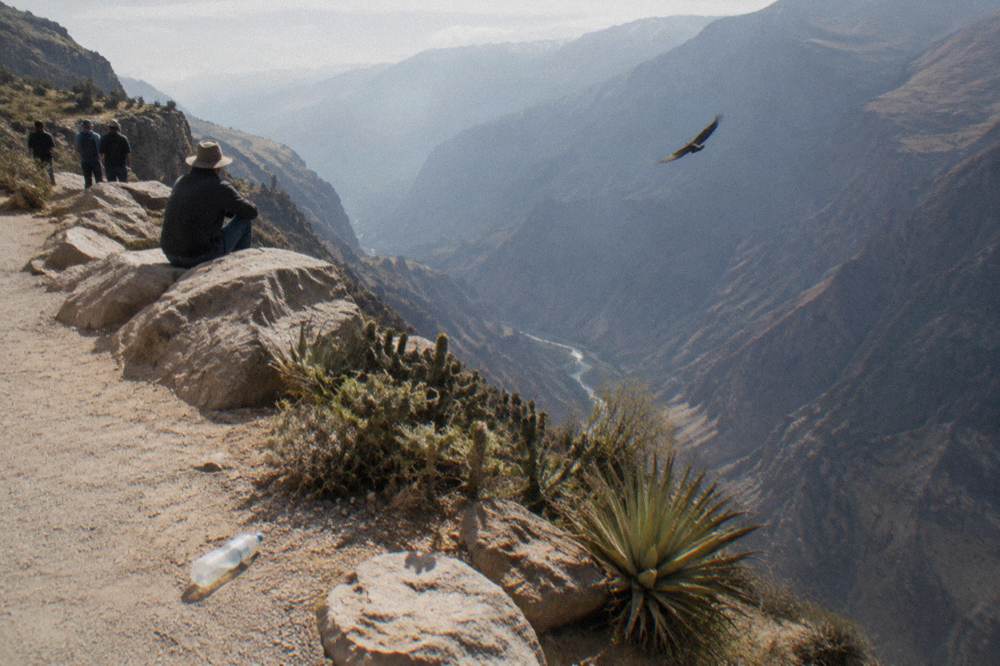
For many travellers the deciding factor is not scenery but logistics. A direct seat means one booking, one morning and no hotel changes. The Colca route means booking an Arequipa canyon tour or transfer, a night in Chivay or Yanque, and then a separate onward ticket. The one product that removes that friction is the Turist Bus Colca Canyon (Chivay) to Puno service, rated 4.7 from 88 reviews and running from about $41.03: it takes you from the canyon directly to Puno with tourist stops en route, so the canyon and the lake connect without returning to Arequipa. The Colca Canyon from Arequipa guide covers the first half of that pairing in detail, including where to sleep and how long the condor stop takes.
| Factor | Direct Arequipa to Puno bus | Colca Canyon route via Chivay |
|---|---|---|
| Time needed | One morning, 6-7 hours on the road | Two days minimum |
| Nights away from Arequipa | Zero | One, in Chivay or Yanque |
| Highest sleeping elevation | Puno, 3,827 m | Chivay, 3,635 m, then Puno |
| Signature stop | Lagunillas viewpoint | Cruz del Condor, mornings |
| Best for | Fastest possible transfer, tight schedules | Travellers with a spare night |
| Altitude rhythm | Big single jump in one day | Stepped climb, gentler arrival |
One planning note worth weighing: the stepped altitude of the Colca route is not just scenery, it is acclimatisation. Sleeping at 3,635 m in Chivay before reaching Puno's 3,827 m gives your body an intermediate night that the direct bus denies it. Travellers sensitive to altitude sometimes choose the canyon detour for exactly that reason, then feel fresher for Titicaca's islands the next day.
The scenic bus is the one product on this route that turns a transfer into a day of sightseeing, and it books with free cancellation if your plans are still moving.
What The Drive Is Actually Like: Stops, Scenery And Road Conditions
Expect a long, steady climb onto open high plains, roughly two hours of twisting departure roads out of the Arequipa valley, then hours of straight, empty plateau driving with vicuñas and distant volcanoes. The Lagunillas stop, on services that make it, sits at the highest scenic stretch. The road is paved throughout, and the main risks are weather and occasional protest closures, not terrain or surface quality.
The first stretch is the most varied. Leaving Arequipa, the highway threads between volcanic peaks, including the snow-capped El Misti and Chachani, and the road hugs valley walls with real curves and drops. Once the highway tops out onto the altiplano the driving becomes almost metronomic: long straights, big skies, and roadside herds of alpaca and vicuña. Services that stop at Lagunillas, a pair of mirror-flat lakes ringed by wind-scoured grass, usually pause for 15 to 20 minutes of photos and coca tea.
Roads in Peru occasionally see strikes or protests, and blockades can close highways with little notice; check current conditions before any travel day. On the advisory side, the US State Department's Peru travel advisory notes that demonstrations occur regularly, can shut down local roads, trains and major highways, and often happen without warning or clear information on reopening times. The same advisory permits its own staff to travel at night on commercial buses along the Lima-Arequipa-Cusco corridor specifically, which tells you something about which roads carry the most trafficked, best-patrolled bus routes in the country. All Arequipa-Puno services run daytime anyway.
Weather is the practical variable. A late-September 2026 alert flagged possible snow and wind in Puno-area altiplano above 4,000 m, the kind of short-notice notice that matters on high passes even when the direct road sits lower. Dry season mornings are crisp and clear; rainy season, roughly November through March, brings afternoon storms and occasional holds. Book the earliest departure available and you almost certainly arrive before weather does.
What An Arequipa To Puno Bus Ticket Costs
Direct premium-line seats on the corridor are bought from the operators themselves, and this site carries no price for those bare tickets. The bookable tourist alternatives carry firm prices: the Colca Canyon to Puno scenic bus from $41.03, the Cusco Route of the Sun service from $50, and the PeruRail Titicaca train from $395. A hop-on pass is priced separately by Peru Hop and no figure appears on this site.
That is the honest state of the market. For a bare direct seat, the comparison-and-booking platforms that aggregate Peruvian bus inventory are the practical route for most travellers, and Busbud's Lima to Cusco corridor listings let you compare the direct operators' schedules and fares in one place as a budget, direct-ticket alternative to a hop-on pass. Terminal walk-up purchase is also routine in Arequipa, though in high season, May through August, buying a day or two ahead is wise.
| Booked option (this site's roster) | Firm price | Rating and reviews | Duration | Cancellation |
|---|---|---|---|---|
| Colca Canyon (Chivay) to Puno scenic bus | From $41.03 | 4.7 from 88 reviews | ~6.5 hours | Free cancellation |
| Cusco Route of the Sun to Puno (other end of corridor) | From $50 | 4.7 from 633 reviews | ~11 hours, 06:10-17:30 | Free cancellation |
| PeruRail Titicaca train, Cusco to Puno or reverse | From $395 | 294 reviews, too few for a star claim | ~10 hours | Policy not shown |
| Premium direct bus seat (Cruz del Sur, Oltursa) | Not carried on this site | Not applicable | ~6.5-7 hours | Varies by operator |
Two cautions on reading that table. The Route of the Sun and the PeruRail train both run on the Cusco to Puno half of the corridor, not from Arequipa; they are listed because most travellers booking this leg are building the full southern loop and price the two halves together. And the train's review pool, 294 reviews, is too small for a headline star rating, so it carries none here: judge it on its route and service class rather than a number.
Budget realistically beyond the seat. A taxi to Arequipa's terminal, a night in Puno on arrival, lake tours booked at the shore, and food along the way all add up, and the altiplano's simple restaurants are cheap but not free. Travellers who book a hop-on pass typically fold the hotel pickup and the guided stops into that single price; travellers buying bare seats pay each of those pieces separately, sometimes at tourist rates.
Altitude On The Route: From 2,335 M In Arequipa To 3,827 M In Puno
The leg ends well over a kilometre higher than it begins, at 3,827 m in Puno, with the lake surface at 3,812 m. The standard guidance is gradual ascent, rest on arrival, hydration, light meals and no alcohol for the first night. Arequipa at 2,335 m is itself a useful acclimatisation stop, and the Colca route's intermediate night in Chivay at 3,635 m softens the jump further.
Altitude sickness on this corridor is common enough to plan around, and it is the single biggest cause of ruined first nights in Puno. Headache, nausea, poor sleep and breathlessness on stairs are the usual symptoms; most resolve with rest and fluids within a day. Severe symptoms, worsening headache, persistent vomiting, confusion, warrant getting help, and Puno's clinics deal with altitude cases routinely. The full symptom ladder and medication question are covered in the altitude sickness on the bus routes guide, which is worth reading before any leg that ends above 3,800 m.
| Point on the corridor | Elevation | What it means for you |
|---|---|---|
| Arequipa | 2,335 m | Mild altitude, good acclimatisation base |
| Highest Colca-area passes | ~4,800-4,910 m | Crossed by vehicle, not slept at |
| Chivay | 3,635 m | Intermediate sleeping altitude |
| Cruz del Condor mirador | ~3,270-3,800 m | Morning viewpoint, brief exposure |
| Lake Titicaca surface | 3,812 m | The lake itself |
| Puno | 3,827 m | Arrival elevation, first night here |
On the bus itself, the practical moves are small ones: a window seat, water, light food rather than a heavy Arequipa farewell lunch, and no alcohol on the drive. Take the first afternoon in Puno slowly, and save the lake's islands for the following day. Anyone with a history of severe altitude illness, or a heart or lung condition, should talk to a doctor before the trip; the standard CDC-aligned advice on gradual ascent applies fully here.
One detail from the fresh reporting that surprises people: the altiplano is cold at night even in dry season, because the thin air holds no heat after sunset. Pack a warm layer for the ride regardless of month, and expect the arrival evening in Puno to feel wintry even after a warm Arequipa morning. Peru Hop provides a blanket per passenger on its buses, which is a small comfort worth noting on a corridor where the cabin temperature drops with every hour of climb.
Is Bus Travel On This Corridor Safe?
Yes, within the normal bounds of Peruvian long-distance travel, provided you use reputable daytime services. The official advisory language is blunt: bus crashes are common, especially at night, so use reputable companies and avoid overnight travel where possible, especially in mountainous and remote regions. Every scheduled Arequipa to Puno service runs in daylight, and the corridor is one of the country's principal tourist routes.
The UK FCDO's Peru travel advice puts it in one sentence: "Bus crashes are common, especially at night. Only use reputable transport companies, and where possible, avoid overnight travel, especially in mountainous and remote regions." The US State Department's current Peru travel advisory carries the same message, adding that its own employees are prohibited from nighttime road driving except on specific corridors, among them the Lima-Arequipa-Cusco corridor, where they may ride commercial buses at night. This leg sits squarely on that approved corridor's southern stretch. The FCDO's full Peru page is the reference to check before any booking, since advisory levels and area-specific warnings shift.
On the operator side, the premium lines and the tourist services share a few practices worth knowing. Peru Hop states that its buses carry GPS tracking, enforce speed limits and use two drivers on long legs; these are the operator's own claims rather than independently audited statistics, but they align with what the service is built around, which is daytime, guide-supervised, door-to-door travel. No Peru Hop-specific safety incident surfaced in 2025 or 2026 coverage of the corridor, and review pools, roughly 20,295 TripAdvisor reviews at 4.8 out of 5 by Peru Hop's own reporting, lean heavily on organisation, pickups and host quality.
Door-to-door on the altiplano
Peru Hop picks up and drops off at your hotel in participating locations, with a bilingual host on every bus and a climate-control system for the high-elevation legs. Passes stay valid for up to a year from first use, and you can change a bus time in the app up to 12 hours before departure, subject to availability. Book via Peru Hop's official site.
The honest caveats belong in the same breath. A hop-on pass is not the cheapest option for a traveller who just wants one direct seat, and some legs on Peru's southern circuit run long or push into the evening. Roads in Peru occasionally see strikes or protests, so keep a buffer day before any fixed commitment in Cusco, and check conditions on the morning of travel.
Onward From Puno: Trains, Buses And The Bolivia Border
From Puno the corridor forks three ways: east to Cusco by bus in roughly 388 km and 8 to 10 hours, or by the PeruRail Titicaca train in about 10 hours from $395; north into Bolivia toward Copacabana in roughly 140 to 155 km and 3 to 4 hours through the Kasani border; or straight onto the lake, with Uros and Isla del Sol tours departing daily. Puno is a hub, not a dead end.
The Puno to Cusco bus is the most common next leg, and the scenic version of it, the Cusco Route of the Sun service, runs the reverse direction from Cusco at 06:10 arriving around 17:30, with cultural stops and a buffet lunch included; it is rated 4.7 from 633 reviews and books from $50 with free cancellation. The same road runs both ways, so the stopping pattern and timing hold in either direction, and the Cusco to La Paz bus guide lays out the full two-country chain for travellers continuing overland.
The train is the splurge on this corridor's other half. The PeruRail Titicaca Train links Cusco and Puno in roughly 10 hours, from $395, with an observation car, a bar and full meal service across the high plains; its review pool of 294 is too small for a headline rating, so take it on itinerary value rather than a star figure. The same altiplano scenery you crossed by bus rolls past the windows, viewed from a dining car rather than a coach seat, and the Chivay reference point above sits on the connecting road most travellers use to reach the train's Cusco end.
North toward Bolivia, the Copacabana and Isla del Sol day tour from Puno covers roughly 12 hours and includes the boat crossings; it is rated 4.8 from 30 reviews and books from $130. Since December 2025, US, UK, EU, Canadian and Australian tourists have been visa-free for Bolivia for stays up to 90 days, with free SIGEMIG online pre-registration required before arrival, so the border itself is now paperwork-light for most nationalities. Widespread blockades disrupted Bolivian roads from early May through late June 2026, but routes including the Peru links had reopened by late June, and no sustained closure affecting the Puno-Copacabana corridor has been reported since. Check conditions close to travel, as always on this continent.
If the southern loop is the plan, the timing question usually resolves to a night count: most travellers give Puno two nights, one for the Uros floating islands and one for Taquile or Isla del Sol, then board east. Dry season, May through October, is the preferred window for lake weather and clear altiplano skies, and the Isla del Sol boats from Copacabana pier at roughly 08:30 and 13:30 set the rhythm for any day trip across the water.
Here are the three bookable services that cover this corridor and its onward legs, gathered for a final comparison.
Common Questions About The Arequipa To Puno Bus
How long is the bus from Arequipa to Puno?
The direct Arequipa to Puno bus covers roughly 300 km in about 6 to 7 hours. Scenic services with a Lagunillas stop, such as Peru Hop's, take around 7.25 hours, departing Arequipa near 05:45 and arriving in Puno around 13:00.
Which companies run the Arequipa to Puno bus?
Cruz del Sur and Oltursa run direct premium coaches on the corridor, Peru Hop runs a daily scenic hop-on service with hotel pickup and a bilingual host, and tourist buses link Colca Canyon to Puno directly from Chivay.
What does an Arequipa to Puno bus ticket cost?
Direct premium-line seats are sold by the operators themselves, and this site carries no price for them. Among the bookable tourist services, the Colca Canyon to Puno scenic bus starts at $41.03 and is rated 4.7 from 88 reviews.
Should you stop at Colca Canyon between Arequipa and Puno?
If you have a spare night, yes. The detour adds a 3 to 4 hour drive from Arequipa to Chivay at 3,635 m, a canyon night, and a roughly 6.5 hour scenic bus onward to Puno. The stepped altitude also makes the final arrival at 3,827 m gentler than the direct bus's single-day jump.
Is bus travel on the Arequipa to Puno corridor safe?
Yes, using reputable daytime services. Official advisories note that bus crashes are common, especially at night, and recommend reputable companies and avoiding overnight travel in mountainous regions. Every scheduled Arequipa to Puno service runs in daylight on one of the country's principal tourist corridors.
Is there a train from Arequipa to Puno?
No. The rail option on this corridor is the PeruRail Titicaca train, which links Cusco and Puno, not Arequipa and Puno. It takes about 10 hours and starts at $395; from Arequipa the only realistic public options are bus, or a private transfer.