Lima To Arequipa By Bus
Arequipa sits 2,335 m up at the foot of El Misti, roughly 900 km down the Panamericana Sur from Lima. Almost everyone arrives by bus, and the ride can be one long overnight seat or a multi-day coastal itinerary.
Short answer
The bus from Lima to Arequipa covers roughly 900 km of the Panamericana Sur in about 17 to 19 hours of total driving. Cruz del Sur, Oltursa, Civa and Peru Hop all serve the corridor. Most travelers split the run at Paracas, Huacachina or Nazca, and Arequipa at 2,335 m doubles as the acclimatization stop before the altiplano.
Arequipa is the first big stop on Peru's southern corridor, a white-stone city at 2,335 m under the volcano El Misti, roughly 900 km by road from Lima. Nearly every traveler headed toward Cusco, Lake Titicaca or Colca Canyon passes through it, and almost all of them get there by bus. This is the corridor Lima To Cusco covers end to end, and the Lima to Arequipa leg is where the trip stops being a coastal dash and starts being a journey.
How Long Is The Bus From Lima To Arequipa?
The bus from Lima to Arequipa covers roughly 900 km of the Panamericana Sur and takes about 17 to 19 hours of driving in total. Direct overnight services do it in a single seat, while most travelers split the run at Paracas, Huacachina or Nazca, turning the haul into a two or three day coastal itinerary before the climb into the sierra.
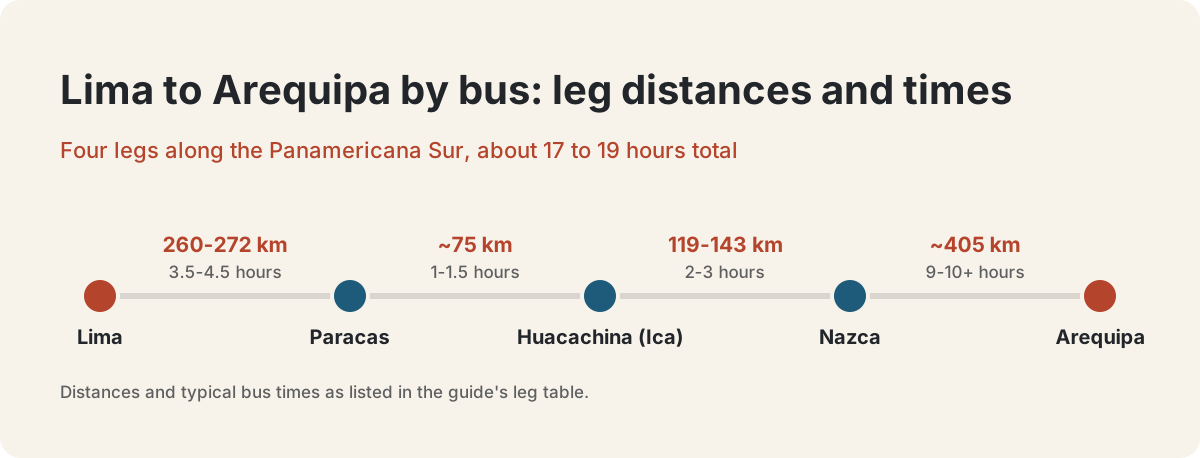
The distance breaks into four well-defined legs. Lima to Paracas runs 260 to 272 km and typically takes 3.5 to 4.5 hours, though Lima traffic can stretch the door-to-door time toward five. Paracas to Huacachina is the shortest hop at roughly 75 km and 1 to 1.5 hours across coastal desert. The Ica to Nazca stretch covers about 119 to 143 km in 2 to 3 hours, with redBus averaging around 2 hours 51 minutes on that segment. The final leg is the beast: Nazca to Arequipa is roughly 405 km, with typical bus times of 9 to 10 or more hours, and averages near 10 hours 15 minutes on scheduled lines like Cruz del Sur and Tepsa.
| Leg | Distance | Typical bus time | What you pass |
|---|---|---|---|
| Lima to Paracas | 260-272 km | 3.5-4.5 hours | Coastal desert, dune fields south of Cañete |
| Paracas to Huacachina | ~75 km | 1-1.5 hours | Fishing towns and the Ica desert edge |
| Ica to Nazca | 119-143 km | 2-3 hours | Flat desert plains, the Nazca viewing tower |
| Nazca to Arequipa | ~405 km | 9-10+ hours | Coastal desert climbing to 2,335 m |
A direct service covers the same corridor without the intermediate stops, and the arithmetic above is why it lands in a similar 17 to 19 hour window. What changes is what you do with those hours. A direct overnight bus trades sightseeing for a single seat and one arrival. A split ride trades a little money and a couple of days for the Ballestas Islands, a desert oasis and the Nazca Lines, all of which sit directly on the route. There is no scenic argument for the direct seat, only a scheduling one.
Which Bus Companies Run Lima To Arequipa?
Cruz del Sur, Oltursa and Civa all run the southern corridor with direct and connecting services between Lima and Arequipa, and Peru Hop covers the same ground as a hop-on-hop-off tourist pass with hotel pickup. The three scheduled lines sell ordinary seats from Lima terminals, while Peru Hop sells a pass you activate once and use at your own pace along the route.
Cruz del Sur is the flagship option for the long southern runs, with premium seating classes and multiple daily departures from Lima terminals such as Javier Prado. Oltursa sits in the same premium tier, running the corridor with full-cama and semi-cama seats and its own lounge-and-boarding ritual. Civa spans the budget and midrange space under several brands, including Superciva, Econociva and Excluciva, which is useful when the premium lines sell out in high season. Peru Hop is the different animal: a guided hop-on-hop-off service that stops at Paracas, Huacachina, Nazca, Arequipa, Puno and Cusco, with a bilingual local host on every bus and hotel or hostel pickup so you never carry your bags through a terminal.
| Operator | Style | Best for |
|---|---|---|
| Cruz del Sur | Premium scheduled line, multiple daily departures | Travelers who want one direct overnight seat |
| Oltursa | Premium scheduled line, full-cama comfort | Long-haul riders who value sleep |
| Civa (Superciva/Econociva/Excluciva) | Budget to midrange scheduled services | Filling gaps when premium lines sell out |
| Peru Hop | Hop-on-hop-off pass with hotel pickup | Travelers splitting the coast into stops |
On safety, the official advice is consistent and worth quoting directly. The US State Department advisory for Peru states: "Demonstrations occur regularly throughout the country. Public demonstrations can take place for political and economic issues. Demonstrations can shut down local roads, trains, and major highways." The same advisory notes that US government employees, who are otherwise prohibited from nighttime road travel in Peru, "may travel at night with commercial bus companies along the Pan-American Highway, to Huaraz, and on the Lima-Arequipa-Cusco corridor." That corridor exception is the telling detail: the Lima-Arequipa route is one of the few roads where official guidance treats a commercial night bus as an accepted mode. The UK FCDO travel advice for Peru puts it plainly: "Bus crashes are common, especially at night. Only use reputable transport companies, and where possible, avoid overnight travel, especially in mountainous and remote regions." The practical synthesis is to book the reputable names above, prefer their premium classes on the long Nazca-Arequipa leg, and check current road conditions before departure, since roads in Peru occasionally see strikes or protests.
Prefer a hotel pickup to a bus terminal? Peru Hop collects passengers at their Lima hotel or hostel, runs a climate-control system and a bilingual host on every bus, and lets you hop off at Paracas, Huacachina or Nazca and reboard a later departure. See Peru Hop passes and timetables
Should You Split The Trip At Paracas, Huacachina Or Nazca?
Yes, in most cases. Splitting the Lima to Arequipa run at Paracas, Huacachina and Nazca costs one or two extra days but removes the 10-hour Nazca-Arequipa night leg from your first days in Peru, and every stop sits directly on the route. Travelers with tight schedules and an early Cusco connection are the main group better served by the direct overnight bus.
The first split point is Paracas, the jumping-off point for the Ballestas Islands and the Paracas National Reserve. The standard way to buy just this leg is a one-way bus ticket from Lima: the "Direct Bus, One Way" service from Miraflores runs about 3 hours for from $19, rated 4.2 from 53 reviews with free cancellation, which makes it a low-commitment way to test the coastal route before committing to anything longer.
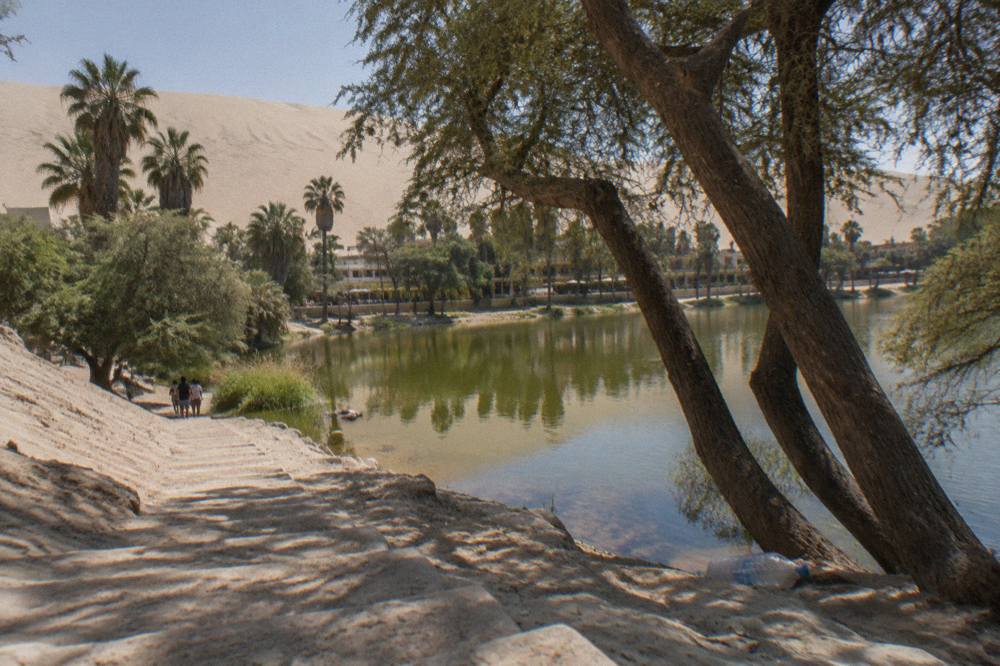
From Paracas the next hop is 75 minutes to Huacachina, the desert oasis built around a lagoon at roughly 368 m elevation, ringed by dunes you can ride by sandboard or dune buggy. Huacachina is the classic overnight stop because the buggy tours run in the late afternoon and the town is small enough to walk end to end. Nazca follows, 2 to 3 hours south, where the viewing tower gives a free ground-level look at a few of the lines and the full overflight is a separate purchase: the "Nazca Overflight From Ica" option runs from $249 for a 35-minute flight, rated 4.7 from 4 reviews with free cancellation. Our Huacachina to Arequipa via Nazca guide covers that final combined stretch in detail, and the Lima to Paracas bus guide does the same for the first leg.
| Stop | Why break here | Typical stay |
|---|---|---|
| Paracas | Ballestas Islands boats, national reserve | 1 night |
| Huacachina | Oasis lagoon, dune buggy and sandboarding | 1 night |
| Nazca | Lines viewing tower or overflight, then the long leg south | 1 night |
This split-itinerary style is exactly what a hop-on-hop-off pass is engineered for, since you reboard when you are ready rather than re-booking each leg: Peru Hop stops at all three towns plus Arequipa on its southern route. For travelers who already know they will continue from Arequipa toward Colca Canyon and Lake Titicaca rather than looping back, the site's featured onward options are worth a look at this planning stage.
Where The Bus Arrives And What Comes After Arequipa?
Buses from Lima arrive at Arequipa's main terminal on the edge of the city, from where a short taxi or transfer ride covers the historic center. At 2,335 m, Arequipa is the natural acclimatization stop before the altiplano: the standard onward route climbs to Chivay at 3,635 m for Colca Canyon, then continues to Puno at 3,827 m on Lake Titicaca.
The arrival itself is the easy part. Terminals in Arequipa cluster with the usual dispatch of taxis and transfer desks, and the center is close enough that most hotels are minutes away. The thing that actually matters on arrival is altitude. Lima sits at sea level, Huacachina is barely higher, and Arequipa is your first real elevation at 2,335 m, per the city's published altitude figures. Spend at least a night here before climbing further: the recommended pattern is gradual ascent, rest on arrival, hydration, light meals and no alcohol, which becomes far more important in Puno, nearly 1,500 m higher again.
| Place | Elevation | Role in the trip |
|---|---|---|
| Lima (Miraflores) | 79 m | Sea-level start |
| Huacachina | ~368 m | First night, desert oasis |
| Nazca | 520 m | Lines stop, long leg south |
| Arequipa | 2,335 m | Acclimatization stop, 1-2 nights |
| Chivay | 3,635 m | Colca Canyon base |
| Puno | 3,827 m | Lake Titicaca, altiplano |

What comes after Arequipa is where most itineraries earn their shape. The classic continuation runs Arequipa to Chivay, roughly 160 to 190 km in 3 to 4 hours, for one or two nights around Colca Canyon, where the Cruz del Condor viewpoint sits at approximately 3,270 to 3,800 m and condors fly best on dry-season mornings between 7 and 10 a.m. From Chivay, the "Colca To Puno, Scenic Stops" bus closes the loop: a roughly 6.5-hour ride rated 4.7 from 88 reviews, from $41.03, with free cancellation, connecting the canyon directly to the Titicaca side without backtracking through Arequipa. You can see it as the Colca to Puno scenic bus on our tour page and Check availability for your dates, and the wider picture is in our Colca Canyon from Arequipa guide.
Booking that Chivay to Puno seat early is the one forward-planning move that pays off on this leg. Canyon-town transport has limited capacity compared with the Lima corridor, and high-season mornings at Cruz del Condor fill the connecting services first. Travelers who wait until they are already in Chivay sometimes find the next scenic departure is a day later than planned.
Bus Or Plane: Which Way To Reach Arequipa?
The bus wins for anyone with three or more days, because the coastal stops are genuinely on the route and the overnight leg doubles as a hotel night. Flying wins only when Arequipa is a pure transit stop on a tight schedule, since the flight skips everything between the two cities and lands you at altitude with no gradual adjustment.
The honest comparison is not about the seat, it is about the itinerary. If Arequipa is your destination and you have time, the split bus route turns transit days into the Ballestas Islands, Huacachina's dunes and the Nazca Lines, none of which require a detour. If you are flying into Peru for a short trip and Machu Picchu is the priority, the calculus flips: hours matter more than scenery, and the altitude argument loses force because Cusco, at 3,399 m, is higher than Arequipa anyway. Our flight versus bus comparison for the Lima-Cusco leg runs the same trade-off with the corridor's full flight picture.
On cost, the bare scheduled bus seat is the cheapest way to cover the corridor, and that is where the one caveat about the hop-on-hop-off option belongs: before you total in the taxis, terminals and day tours a bare seat does not include, a Peru Hop pass costs more than a Cruz del Sur or Oltursa ticket for the same kilometres. It is not the cheapest option for a traveler who just wants one direct seat to Arequipa. What the pass buys instead is the structure: pickups, hosts, and the freedom to change your mind about where to stop. Travelers who value that structure find it cheap; travelers who do not, do not.
One scheduling point tilts many decisions: the long Nazca-Arequipa leg is overwhelmingly an overnight ride on scheduled lines. If the idea of a night bus does not appeal, the split itinerary is not optional comfort, it is the only way to keep every leg in daylight. That single fact converts more coastal itineraries than any price argument.
What The Ride Is Actually Like
The first two-thirds of the Lima to Arequipa ride is flat coastal desert, with the Panamericana Sur running straight through dune fields and dry plains, and the final third climbs from Nazca's 520 m to Arequipa's 2,335 m as the terrain turns to rocky sierra. Onboard, premium services mean reclining seats, an onboard bathroom and USB charging, with wifi that reviews say can be inconsistent.
The scenery changes almost on schedule. Leaving Lima, the highway hugs grey coastline before opening into the dunefields south of Cañete. Paracas brings the first red-sand cliffs, Huacachina the first proper dunes, and the Ica-Nazca stretch is the flattest, bleakest and, fans of lunar landscapes would say, best part of the drive. After Nazca the road leaves the plain and starts climbing through dry river valleys, and most riders wake on the overnight leg to find desert replaced by high scrub and the cone of El Misti as the bus descends into Arequipa.
Onboard comfort is where the premium tiers justify their fares. Reclining semi-cama and full-cama seats, onboard bathrooms and USB charging are standard on the corridor's premium lines, and Peru Hop buses run a climate-control system to keep the cabin at a steady temperature, with a blanket per passenger for the altitude chill on the night legs. Peru Hop states that its buses carry wifi, though a few reviewers note wifi and USB performance can be inconsistent, so download anything you want before departure. A bilingual English and Spanish host rides every Peru Hop bus, which matters on a route where scheduled-line crews mostly work in Spanish. One September 2026 review on Peru Hop's listing captures the pace honestly: "We went from Lima to Cusco in 8 days, so it was very fast-paced, but very fun." The same is true of the coast: the stops are short, and the hours between them are long.
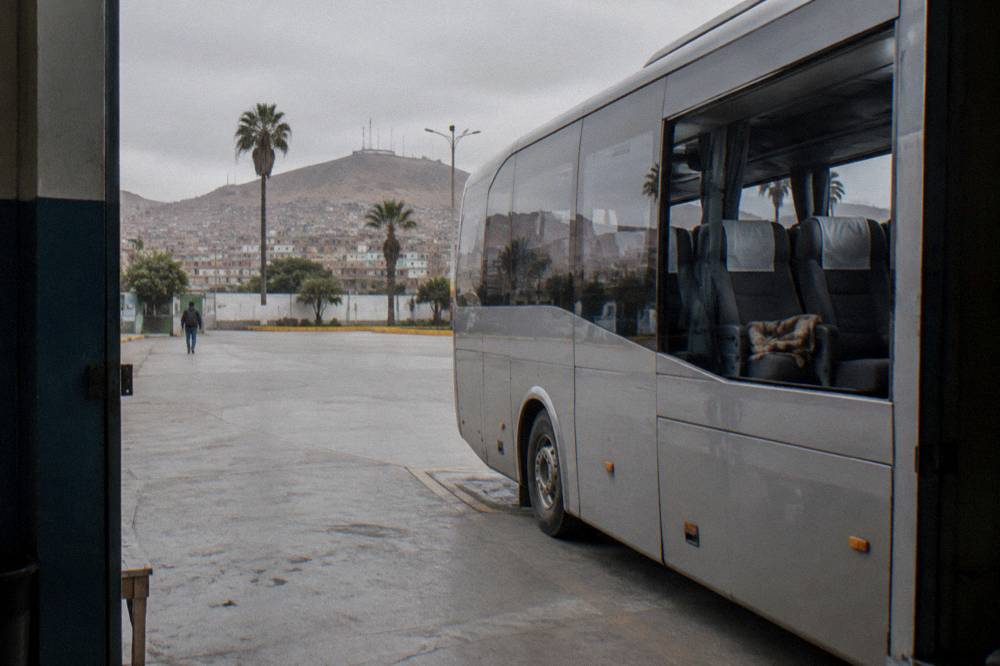
Pack for two climates. The desert days run warm and bright, and the overnight leg, especially the final climb above 2,000 m, runs cold enough that the blanket is not decorative. Layers, a refillable bottle and something to watch offline cover most complaints. Motion sickness is rarely an issue on the dead-flat desert legs but worth planning for on the climb after Nazca, which has sustained curves.
Booking, Luggage And Practical Tips
Book the Nazca-Arequipa leg and any high-season canyon connections in advance, carry your main bag in the hold and a daypack onboard, and check current road conditions a day or two before departure. Hop-on-hop-off passes stay flexible for up to a year from first use, with app-based time changes possible up to 12 hours before a departure.
Timing first. The Lima end of the corridor has enough daily departures that same-week booking usually works outside peak weeks, but the long Nazca-Arequipa overnight services and anything connecting into Colca Canyon town transport are worth reserving ahead. If you are comparing direct scheduled seats across the corridor's operators rather than a pass, you can compare direct Lima to Arequipa bus tickets on a single search surface as a budget, direct-ticket alternative to a hop-on-hop-off pass.
On luggage, the premium lines tag and stow checked bags in the under-bus hold, and Peru Hop does not publish a strict weight limit: a standard suitcase goes in the hold plus one carry-on daypack. Keep your passport, tickets and anything you want overnight in the daypack, because hold bags are inaccessible mid-ride on the long leg. On flexibility, Peru Hop passes are valid up to one year from first use, and you can change a bus time in the app up to 12 hours before departure, subject to availability. That is the feature that suits an itinerary you have not fully fixed yet.
A few last practical notes. Keep your ticket and passport accessible at terminal entries, where staff match passengers to manifests. Sit on the left side of the bus leaving Lima for the better coastal views, and do not plan anything time-critical for the arrival evening in Arequipa after an overnight leg; altitude plus a night upright is a poor opening combination. And if a paro or blockade is reported anywhere on your route, treat it as a scheduling fact, not a safety crisis: operators reroute or refund, and the general advice is simply to check current conditions before travel.
Onward From Arequipa: Colca Canyon And Puno
From Arequipa, the standard onward route runs to Chivay for Colca Canyon in 3 to 4 hours, then to Puno in roughly 6.5 hours more by scenic bus, with the direct Arequipa-Puno alternative covering about 300 km in 6 to 7 hours. For travelers who reach Puno from the Cusco side instead, a scenic Route of the Sun bus and the PeruRail Titicaca train are the two established options.
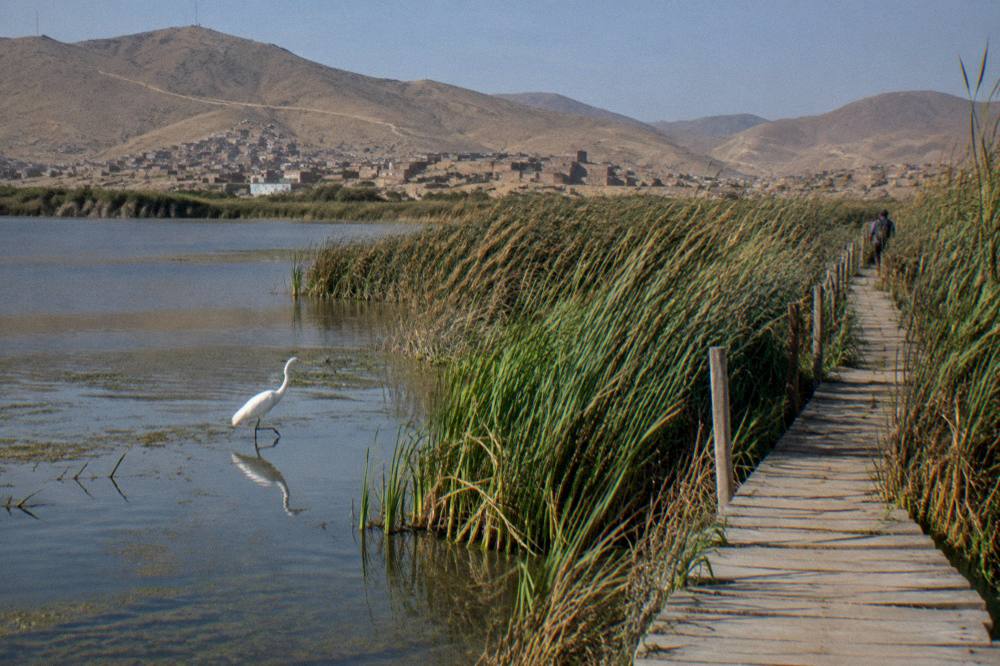
The direct Arequipa to Puno leg is well documented: about 300 km, typically 6 to 7 hours, with published departures around 5:45 a.m. arriving near 1:00 p.m., roughly 7.25 hours including a Lagunillas viewpoint stop. Most travelers prefer the Colca detour because Chivay at 3,635 m and the Cruz del Condor viewpoint between 3,270 and 3,800 m are the reason the region is on the map at all, and condor sightings peak on dry-season mornings between April and November. Our Arequipa to Puno bus guide lays out both versions of that leg.
If your itinerary runs in the other direction, with Cusco first and Titicaca afterward, the Cusco-side connections matter just as much. The "Route Of The Sun, Buffet Lunch" service from Cusco to Puno covers the leg in about 11 hours, from 6:10 a.m. to 5:30 p.m., rated 4.7 from 633 reviews, from $50 with free cancellation, and it stops at the Inca sites along the Ruta del Sol rather than driving them past.
The train is the other Cusco-Puno option and a different category of trip entirely. The PeruRail Titicaca train covers roughly 10 hours from $395, with 294 reviews on its listing and cancellation terms not shown, so read the policy on the live listing before committing. It is the splurge: a full-day, dining-car crossing of the altiplano for travelers who want the journey itself to be the event.
From Puno the corridor keeps going: Copacabana and Isla del Sol sit 140 to 155 km away across the Kasani border, with door-to-door times of 3 to 4 hours, and the whole-day "Copacabana And Isla Del Sol" tour from Puno runs from $130, rated 4.8 from 30 reviews. Bolivia's border posts at Kasani operate roughly 7:30 a.m. to 6:00 p.m. on the Peru side and 8:30 a.m. to 7:00 p.m. on the Bolivia side, so daytime crossings are the only plan. Whether your loop ends in Cusco or runs on toward La Paz, the Arequipa stop is the hinge: it is where the coast ends, the altiplano begins, and the pace of the trip changes for good.
Whether you ride the whole corridor in one overnight push or hop off at every oasis, these are the three onward services this site recommends most often for the Arequipa-to-Titicaca stretch.
Common Questions About The Lima To Arequipa Bus
How long is the bus from Lima to Arequipa?
About 17 to 19 hours of total driving across roughly 900 km, whether you take a direct overnight service or chain the legs. The Nazca to Arequipa segment alone runs roughly 405 km and 9 to 10 or more hours, so that final leg dominates the schedule. Splitting the trip at Paracas, Huacachina or Nazca spreads the same distance over two or three days.
Which bus companies run Lima to Arequipa?
Cruz del Sur, Oltursa and Civa run the corridor as scheduled lines, with premium seating on the first two and the Superciva, Econociva and Excluciva brands under Civa. Peru Hop covers the same route as a hop-on-hop-off pass with hotel pickup and a bilingual host on every bus, stopping at Paracas, Huacachina, Nazca, Arequipa, Puno and Cusco.
Should you split the trip at Paracas, Huacachina or Nazca?
Usually yes. Every stop sits directly on the Panamericana Sur, so splitting adds sightseeing, not detours, and it removes the 10-hour overnight leg from your first days in the country. The main case against is a tight schedule: if you need to be in Arequipa or Cusco within a day or two of landing, the direct overnight seat is the better tool.
Is it safe to take an overnight bus from Lima to Arequipa?
Official guidance says to use reputable transport companies and, where possible, avoid overnight travel in mountainous regions, but the same US advisory permits its own government employees to ride commercial night buses on the Lima-Arequipa-Cusco corridor specifically. Booking the premium scheduled lines is the standard approach. Roads in Peru occasionally see strikes or protests, so check current conditions before you travel.
What comes after Arequipa on the southern route?
The standard continuation is Chivay at 3,635 m for Colca Canyon, then a roughly 6.5-hour scenic bus to Puno at 3,827 m on Lake Titicaca, from $41.03 with free cancellation. Arequipa itself at 2,335 m is the acclimatization stop, so plan at least one night there before climbing higher.
Does Peru Hop go from Lima to Arequipa?
Yes, Arequipa is a scheduled stop on Peru Hop's southern route, along with Paracas, Huacachina, Nazca, Puno and Cusco. Passes are valid up to a year from first use and bus times can be changed in the app up to 12 hours before departure. Peru Hop does not serve Machu Picchu itself; that is a train or trek from Cusco.