Puno To Cusco Bus: Routes, Times, And Prices
The bus from Puno to Cusco covers roughly 388 km of high altiplano, and the choice between a direct public service and a multi-stop tourist bus changes both the price and the experience. Here is what each option costs, how long it takes, and what the altitude does to the ride.
Short answer
The Puno to Cusco bus covers about 388 km and takes 6 to 8 hours direct, or around 11 hours on a tourist service with cultural stops and lunch. Direct public tickets cost the least, while the Route of the Sun tourist bus runs from $50 including a buffet lunch. Puno sits at 3,827 m, so altitude is the biggest comfort factor.
The road from Puno to Cusco is one of the highest scheduled bus rides most travelers will ever take. It runs roughly 388 km across the altiplano, a high plateau of grassland, herds of alpaca and distant snow-capped peaks, and it connects two of the most visited cities in southern Peru. Puno sits at 3,827 m above sea level on the shore of Lake Titicaca. Cusco is lower, at 3,399 m, so for once the bus actually descends toward its destination.
Most travelers reach this leg late in a southern Peru itinerary, often after visiting Lake Titicaca and before heading to Machu Picchu. That makes the choice of bus matter more than it would on a routine transfer: the difference between a direct public bus and a tourist service with stops is the difference between a blank eight hours and a day that doubles as sightseeing.
What Is The Puno To Cusco Bus Journey Like?
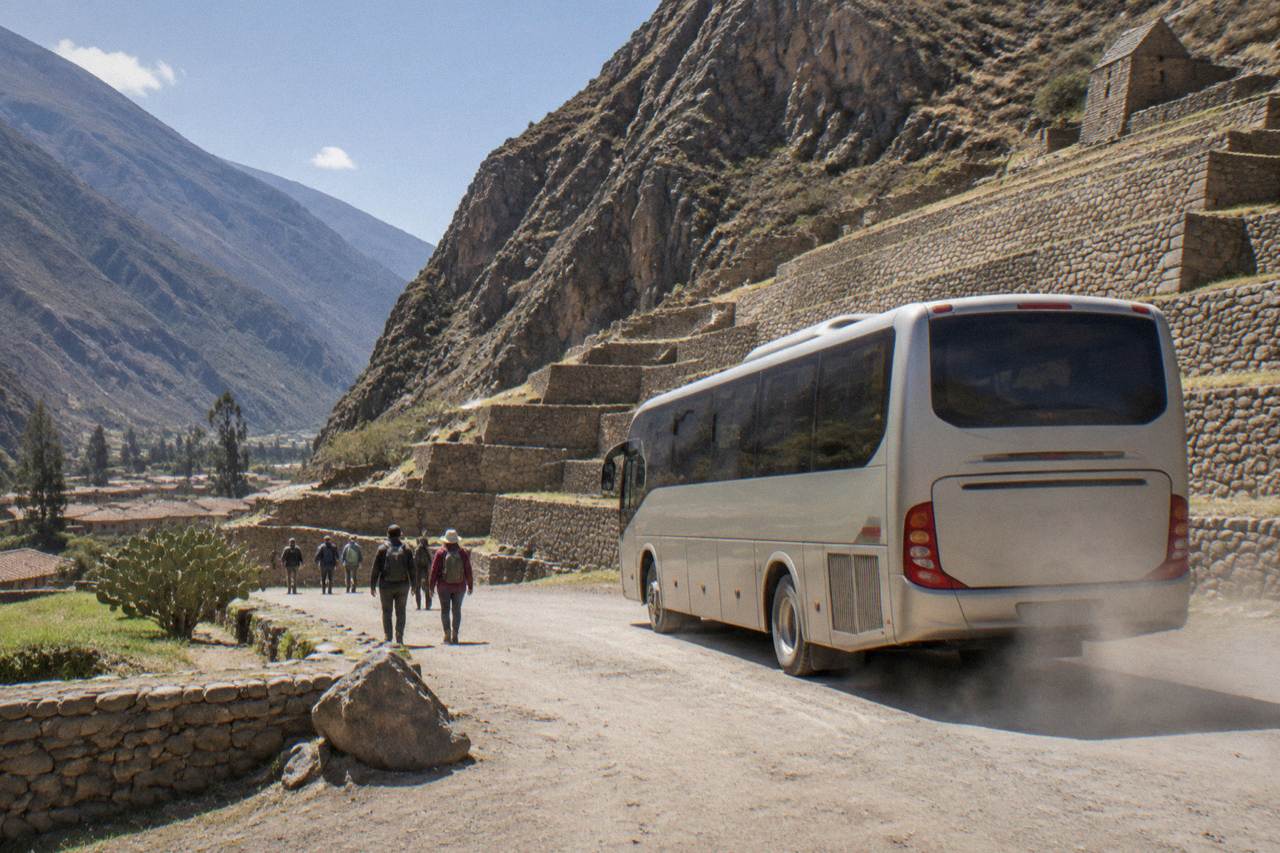
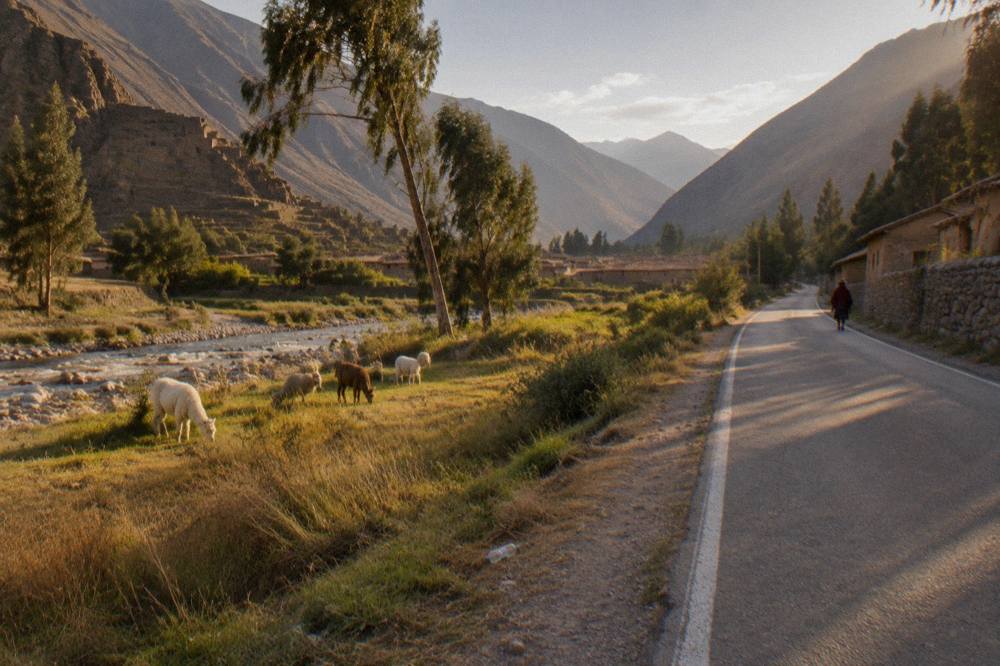
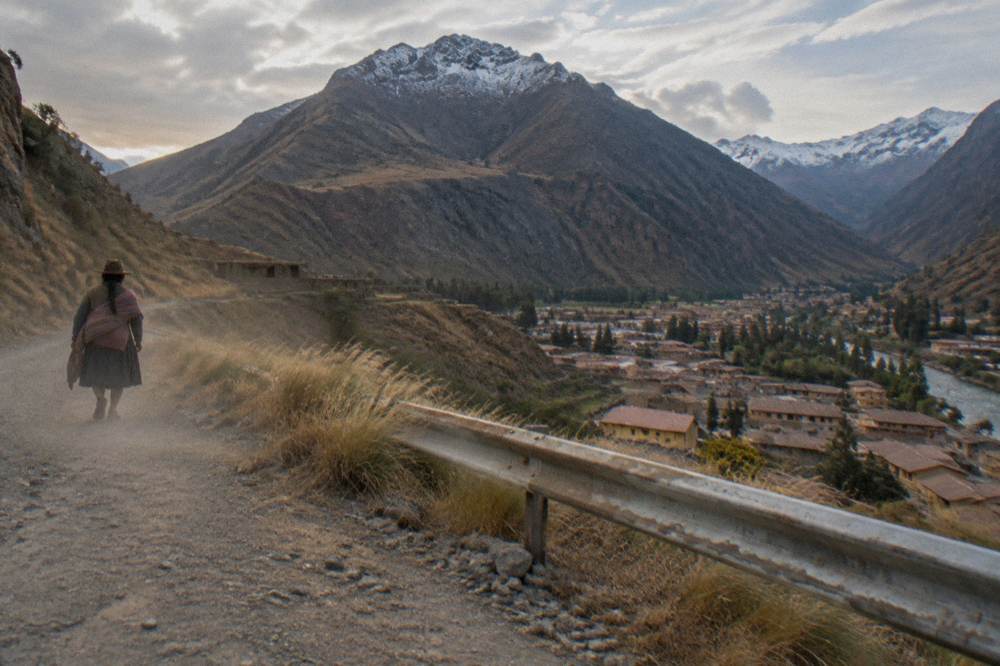
The ride crosses open altiplano for most of its 388 km, passing small adobe villages, herds of alpaca and llama, and two mountain passes above 4,300 m before dropping into the Cusco valley. There is very little traffic, the road is fully paved, and scenery changes slowly from flat golden plains to eroded hills. It is a long, exposed, frequently beautiful ride, best done in daylight.
The first hours out of Puno are the flattest and, for some travelers, the most monotonous. The altiplano around Lake Titicaca is wide open, treeless and often wind-scoured, with the horizon sitting a very long way off. Grazing animals appear in clusters: alpaca and llama dominate, watched by the occasional herder on foot. Because the plain sits above 3,800 m for most of the way, the light is intense and the weather can swing from warm sun to brief hail within an hour.
The middle of the route climbs over passes that top 4,300 m, where the landscape turns to bare rock and patches of ichu grass. Villages like Santa Rosa appear as clusters of mud-brick houses, and services are genuinely sparse between the two cities. That emptiness is part of the appeal for many riders, but it is also why almost every guide to this route recommends daytime travel: there is simply nothing lit up out there after dark.
The final stretch descends into the Cusco valley, and the temperature rises noticeably as the bus drops from the plateau toward 3,399 m. Approach traffic into Cusco can slow the last stretch, and the bus terminates at or near the city center rather than at a distant terminal, depending on the operator.
How Long Does The Bus From Puno To Cusco Take?
A direct public bus takes roughly 6 to 8 hours over about 388 km, while tourist buses with cultural stops take around 9 to 11 hours. The Route of the Sun tourist service runs about 11 hours, a full-day Ruta del Sol run with guided stops along the way (roughly 11 hours door to door) and a buffet lunch. Direct services run faster but show you nothing but road.
The time spread is real and worth planning around. A Google Maps driving estimate for the route is about 6 hours 20 minutes, which is what a private car with no stops achieves. Public buses in the 6 to 8 hour range add terminal time, passenger pickups and one rest stop. Tourist services deliberately add hours: the stops are the product.
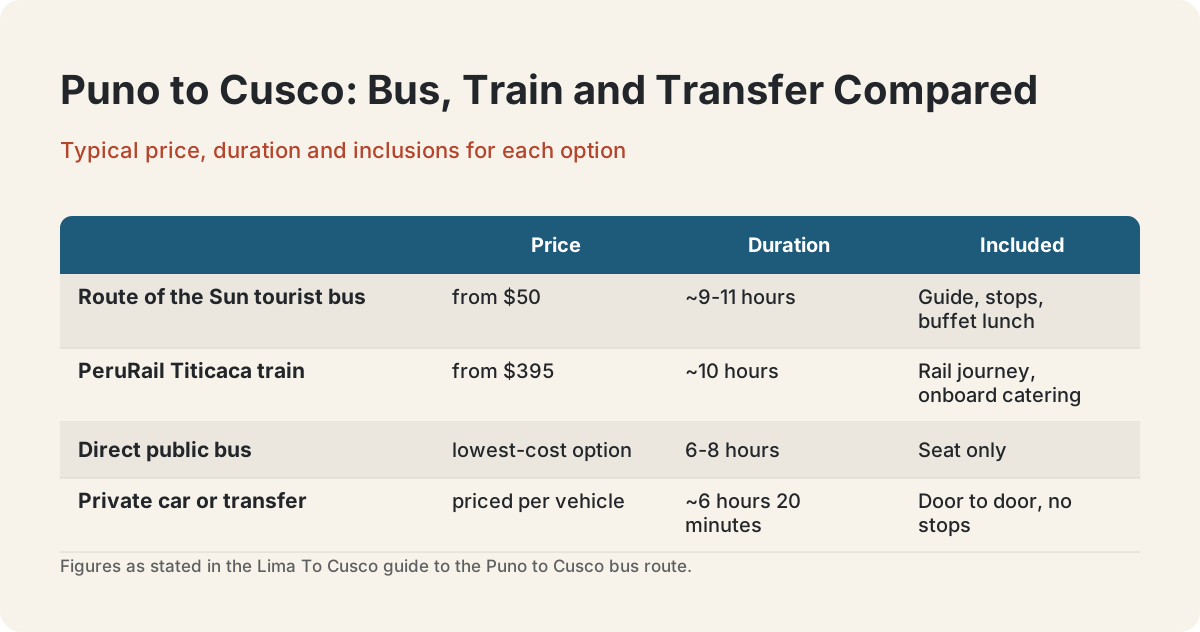
| Option | Typical duration | Character of the ride |
|---|---|---|
| Private car or transfer | ~6 hours 20 minutes | Fastest, no stops unless requested |
| Direct public bus | 6-8 hours | Point to point, one rest stop |
| Tourist bus (Route of the Sun style) | ~9-11 hours | Four cultural stops plus buffet lunch |
| PeruRail Titicaca train | ~10 hours | Rail route, meals served on board |
The tourist-bus stops on this route are the reason many travelers pick it. The standard Route of the Sun itinerary includes Pucará, a colonial-era town known for its ceramics and its pre-Inca museum, the La Raya pass at around 4,335 m, the Temple of Wiracocha at Raqchi, and the Church of San Pedro Apóstol in Andahuaylillas, often called the Sistine Chapel of the Americas. Each stop runs 20 to 40 minutes with a guide.
For travelers coming the other direction, the same corridor is covered in the Cusco to Puno bus guide, which lists the same stops in reverse order. If you are still deciding how the altiplano fits into a bigger trip, the Cusco to Lake Titicaca tours overview explains the trade-offs between day tours and overnight stays in Puno.
What Does The Puno To Cusco Bus Cost?
Direct public bus tickets cost the least of any option on this route, typically a fraction of tourist-bus pricing. The Route of the Sun tourist bus with buffet lunch runs from $50 with free cancellation. The PeruRail Titicaca train starts at $395, and private transfers price per vehicle. Tourist services bundle guiding, stops and lunch into one figure.
The pricing gap between a public seat and a tourist seat is large enough that it is worth being clear about what you are buying. A direct public ticket is a seat on a bus. A tourist-bus ticket from $50 includes an English-speaking guide, four cultural stops, entrance contributions at some sites, and a buffet lunch midway through the day. For travelers who would otherwise pay separately for a guide and lunch in Cusco or Puno, the bundled price closes quickly.
| Option | Price | What is included |
|---|---|---|
| Route of the Sun tourist bus | from $50 | Guide, four cultural stops, buffet lunch |
| PeruRail Titicaca train | from $395 | Rail journey, onboard catering, entertainment |
| Direct public bus | lowest-cost option, check the terminal | Seat only |
| Private transfer | priced per vehicle, ask the operator | Door to door, no stops unless arranged |
The Route of the Sun service carries a 4.7 rating from 633 reviews on its live listing, which is a substantial pool for an altiplano day trip, and it offers free cancellation. The PeruRail Titicaca train listing shows 294 reviews, too few for a stable star rating, so judge it on the itinerary and the onboard experience rather than a score. The train is a full-day journey of around 10 hours, priced from $395, and its cancellation policy is not shown on the listing, so confirm it before booking if your dates are loose.
If you arrived in Puno overland from the Colca side rather than from Cusco, the same operator family runs the Colca to Puno leg: the Turist Bus Colca Canyon (Chivay) to Puno service, "Colca To Puno, Scenic Stops", covers the canyon-to-altiplano run in about 6.5 hours from $41.03, rated 4.7 from 88 reviews with free cancellation. It is a useful pairing if you are building an Arequipa, Colca, Puno, Cusco sequence rather than a simple two-city hop.
Budget travelers comparing only ticket prices should also read the is Peru Hop worth it discussion, because a hop-on-hop-off pass is priced as a multi-leg product and cannot be compared to a single seat. For point-to-point tickets only, one option is to compare schedules and fares through a ticket aggregator such as 12Go's Peru bus listings, which works as a budget alternative when all you want is one direct seat.
Tourist Bus Or Direct Bus: Which Fits Your Trip?
Take the tourist bus if this is your only day on the altiplano and you want the cultural stops, the guide and lunch handled; take a direct public bus if you are short on days, on a tight budget, or already toured the sites from the Cusco side. The tourist option costs more and takes three extra hours, but it converts a transfer into a sightseeing day.
The honest way to frame the choice is by what your itinerary loses. The Route of the Sun's four stops are genuinely interesting, and Raqchi's temple complex is one of the more impressive Inca ruins accessible without a separate tour. But if you are arriving in Cusco with limited days before a Machu Picchu entry, an 11-hour day that ends at 5:30pm eats a full day that a 6 to 7 hour direct bus would partly free up. Travelers doing the route in reverse should note the same logic in the Cusco to Arequipa bus guide, which combines altiplano and canyon legs.
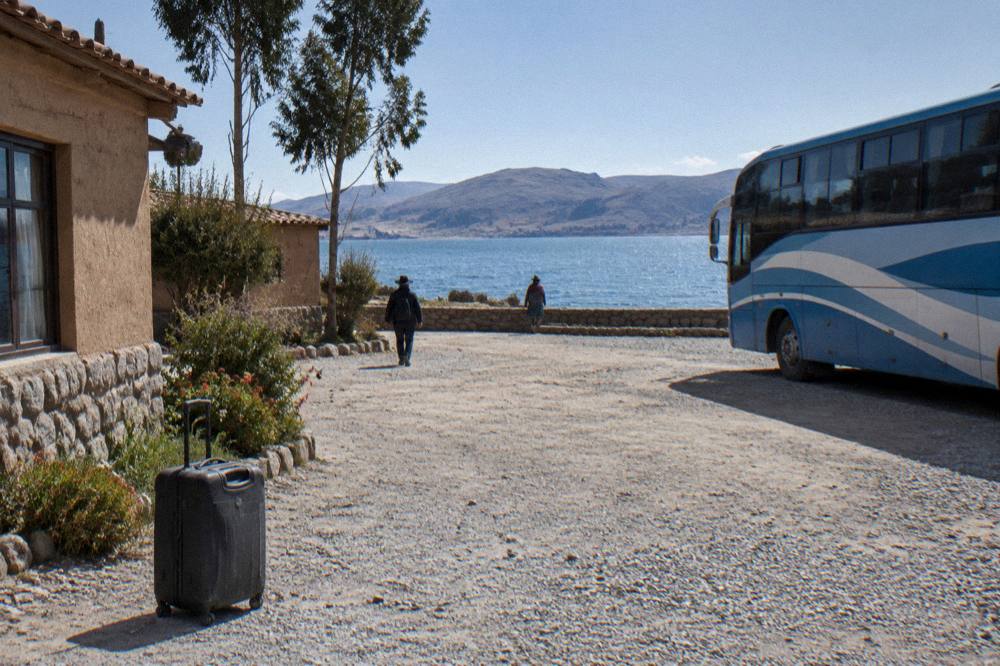
Peru Hop runs the Puno to Cusco leg as part of its hop-on-hop-off southern route, and its buses pick up and drop off at your hotel or hostel in participating locations, so you skip the terminal with your bags. A bilingual English and Spanish host rides every bus, and passes are valid up to one year from first use, with date changes in the app up to 12 hours before departure. The honest caveat: it costs more than a bare premium seat before you total in taxis and tours, and it is not the cheapest option for a traveler who just wants one direct seat on one day.
Is The Puno To Cusco Bus Ride Safe?
The route is paved, well-travelled and considered safe by the standards of southern Peru's tourist corridors, but both the US State Department and the UK FCDO advise using reputable companies and avoiding overnight travel in mountainous regions. The Lima, Arequipa, Cusco corridor is one of the few where US government employees may ride commercial buses at night. Daytime departures remain the safer default.
The official advisory language is specific and worth reading directly. The US State Department's Peru advisory notes that "demonstrations can shut down local roads, trains, and major highways" and often happen without warning, and its current guidance states that "bus crashes are common, especially at night. Only use reputable transport companies, and where possible, avoid overnight travel, especially in mountainous and remote regions." The same advisory permits US government employees to travel at night on commercial buses along the Lima-Arequipa-Cusco corridor, which includes this route by extension. The UK FCDO publishes matching wording on its Peru travel advice page.
Practical safety on this leg comes down to three choices. First, book a daytime departure: the scenery is the point, and the advisory language on night travel is unambiguous. Second, use a known operator, whether a premium line, a tourist service or a hop-on-hop-off company, rather than an informal departure from a street corner. Third, keep your day bag with you and your main luggage stowed, as on any long bus ride in the region.
Getting from Puno to Cusco without a terminal run: Peru Hop runs the Puno to Cusco leg with hotel pickup and drop-off, a bilingual host on every bus, reclining seats, wifi and USB charging, with passes valid up to one year and date changes in the app up to 12 hours before departure. Some legs run long, and it is not the cheapest single-seat option.
Peru Hop states that its buses use GPS tracking, enforced speed limits and two drivers on long legs; those are operator claims rather than independently verified statistics, but they align with the advisory guidance to use reputable companies. The comparative comfort point also has limits: premium lines like Cruz del Sur and Oltursa generally run air conditioning on this corridor, and the real gap is between scheduled premium operators and informal combis, not between premium operators themselves.
How Does The Altitude Affect The Journey?
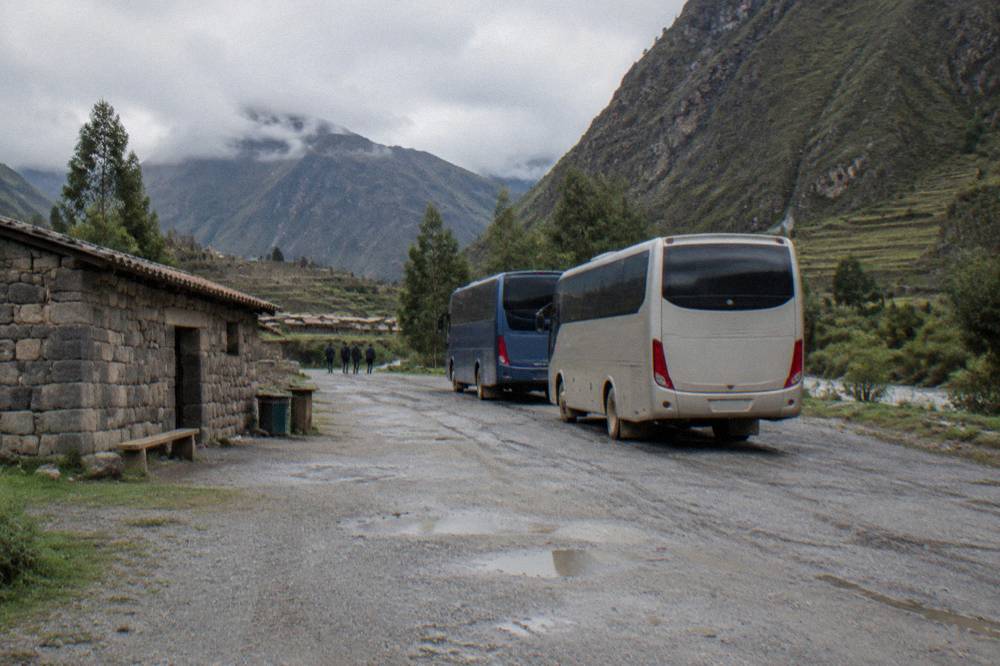
Puno, at 3,827 m, is higher than Cusco at 3,399 m, and the route crosses passes above 4,300 m, so this leg can be the altitude peak of a whole Peru trip. Standard guidance is to ascend gradually, rest on arrival, hydrate, eat light and avoid alcohol. Travelers who started at Arequipa, 2,335 m, generally adjust better than those who flew into Juliaca at about 3,825 m.
The good news about this direction of travel is that Cusco is lower than Puno. If you have spent a night or two on Lake Titicaca, the descent toward the Cusco valley gives your body a small break. The bad news is the middle: La Raya and the other high points of the route sit several hundred meters above anything in either city, and the bus spends time up there regardless of how you feel.
Symptoms worth taking seriously are headache, nausea, dizziness and unusual fatigue, all standard altitude sickness markers consistent with CDC-aligned guidance. If they appear on this bus, tell the guide or host: tourist services on this corridor deal with altitude complaints routinely, and oxygen is commonly carried. Severe or worsening symptoms are a reason to seek medical care in Cusco rather than sleep it off. The site's fuller treatment of the subject, including medication timing, is in the altitude sickness on the bus routes guide.
| Point on the route | Elevation |
|---|---|
| Puno | 3,827 m |
| La Raya pass | ~4,335 m |
| Raqchi | ~3,500 m |
| Cusco | 3,399 m |
Should You Take The Train Instead Of The Bus?
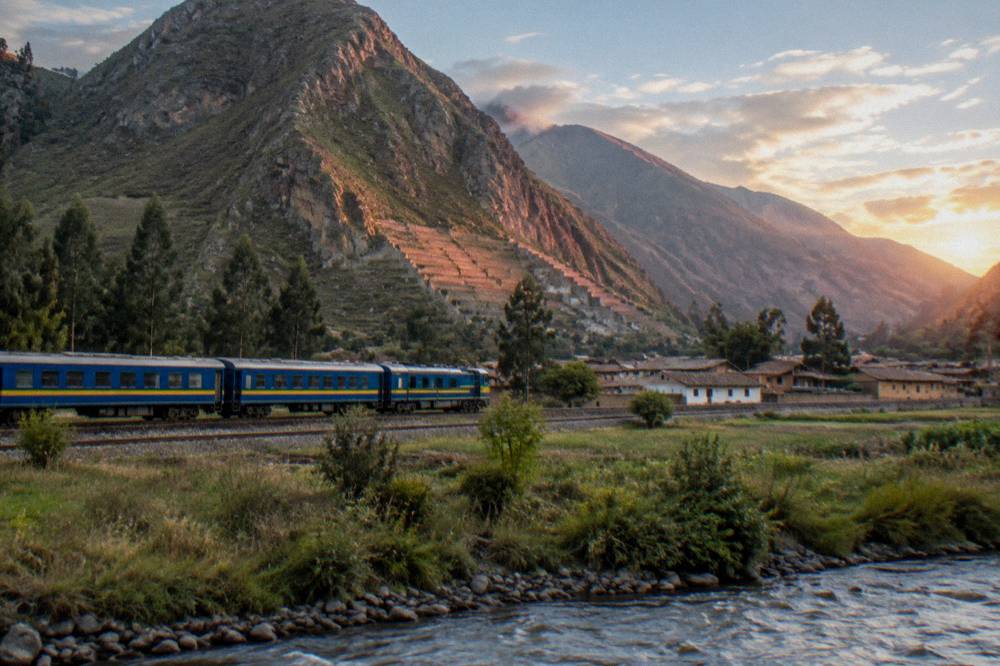
The PeruRail Titicaca train covers the same corridor in about 10 hours from $395, turning the transfer into a full-day experience with onboard catering, live music and observation cars. The bus is faster, dramatically cheaper and offers the cultural stops. The train is a splurge for rail enthusiasts and travelers who want the day itself to be the activity, not a practical way to save time.
The train's listing shows 294 reviews, which is too few a pool for a reliable star claim, so treat the onboard experience as the selling point rather than a rating. At roughly $395 to start against $50 for the tourist bus, the price difference is close to eight times, and the train takes about as long as the Route of the Sun bus. What the train adds is comfort and spectacle: the PeruRail Titicaca service positions itself as a sightseeing product, with an observation bar car and included meals, and this site's longer assessment of whether that trade is worthwhile is in the is the Titicaca train worth it piece.
There is no wrong answer here so much as a wrong reason. If you are choosing the train to save time, you are not: both take most of a day. If you are choosing it because a day on a train through the altiplano with a drink in hand sounds like a good day, it probably will be. Travelers connecting to Machu Picchu immediately afterward should note the arrival time and the Cusco to Machu Picchu train logistics, because a same-evening connection onward is not realistic from either mode.
When Is The Best Time To Take This Bus?
Dry season, May through October, gives the clearest skies and the most reliable road conditions, and it is also when the altiplano is at its most scenic, with sharp light over the plains and snow on the distant peaks. Rainy season, November through March, brings afternoon storms and occasional weather alerts above 4,000 m. Morning departures in any month are the safest scheduling choice.
The altiplano is a high desert, and the seasonal difference is less about rain volume than about visibility and comfort. In dry season the passes are dry, the light is intense, and the long views that make this route worth doing are actually visible. In the wet months, afternoon cloud build-up can hide the scenery for hours at a stretch, and localized weather alerts for snow and wind above 4,000 m appear periodically, as one did for the Puno region in late September 2026.
Booking timing matters most around Peru's peak travel months, when tourist buses on this corridor fill ahead of time. The tourist services run one or two departures a day at most, unlike public lines, so in July and August it is worth securing a seat a few days out. The Route of the Sun booking carries free cancellation, which makes early booking low-risk, and the best month to visit Peru piece puts this corridor into country-wide context if your dates are still flexible.
How Does The Puno To Cusco Leg Fit A Longer Peru Route?
Most travelers slot this leg between Lake Titicaca and Machu Picchu, on day six to nine of a classic southern route. Coming from Arequipa and Colca first, at 2,335 m, gives a natural altitude ramp into Puno. The same tourist-bus corridor links Cusco, Puno and Colca, so the three legs can share operators, and a hop-on-hop-off pass covers the whole sequence if you want flexibility over speed.
The classic sequence is Lima, Paracas and Huacachina, Nazca or Arequipa, Colca Canyon, Puno and Lake Titicaca, then this bus to Cusco, then Machu Picchu. Each step climbs gradually, which is exactly what altitude guidance recommends, and it is why so many itineraries put Cusco late rather than early. Travelers who plan to continue toward Bolivia should know that Copacabana sits at 3,841 m, essentially the same altitude as Puno, and the border at Kasani typically processes tourists in 30 to 90 minutes; the Puno to La Paz bus guide covers that crossing in full.
If you are assembling the Colca leg from the Arequipa side, the "Colca To Puno, Scenic Stops" bus at from $41.03, rated 4.7 from 88 reviews, is the natural feeder into this route, and it also pairs with the Colca Canyon from Arequipa planning guide for the canyon nights themselves. Sites like this one, Lima To Cusco, cover each leg separately for a reason: the southern route is a sequence of decisions, and the Puno to Cusco bus is only one of them.
Peru Hop's pass structure is built for exactly this kind of sequence, letting you hop off at Puno for Titicaca and reboard for Cusco on a later date, and its timetable treats the altiplano legs as daytime scenic runs. The trade-off, as with the single leg, is cost and pace: a pass costs more than a chain of bare seats, and some legs run long. For a full three-week loop, the Peru itinerary for 3 weeks shows where each decision point sits.
Common Questions About The Puno To Cusco Bus
How long is the bus from Puno to Cusco?
About 388 km. Direct public buses take 6 to 8 hours, while tourist buses with cultural stops take around 9 to 11 hours. The Route of the Sun tourist service runs about 11 hours, from roughly 6:10am to 5:30pm, including four stops and a buffet lunch.
What is the best bus from Puno to Cusco?
The Route of the Sun tourist bus suits most first-time visitors: it runs from $50, carries a 4.7 rating from 633 reviews, includes a guide, four cultural stops and lunch, and offers free cancellation. Budget travelers who only need a seat do fine on a direct public service.
Is there a train from Puno to Cusco?
Yes. The PeruRail Titicaca train covers the corridor in about 10 hours from $395, with onboard catering and an observation car. Its listing shows 294 reviews, too few for a stable rating, and its cancellation policy is not shown on the listing, so confirm before booking.
Is the Puno to Cusco bus safe?
The route is paved and busy with tourist traffic, and official advisories from the US State Department and UK FCDO permit night travel on commercial buses along this corridor while still recommending reputable companies and daytime travel where possible. Morning departures are the safer default, and demonstrations can occasionally close roads without warning, so check conditions before you travel.
Will I get altitude sickness on the Puno to Cusco bus?
Possibly, since the route crosses passes above 4,300 m, higher than either city. Gradual ascent from Arequipa at 2,335 m helps, and standard guidance is rest, hydration, light meals and no alcohol. Tourist services on this corridor deal with altitude complaints routinely and commonly carry oxygen; severe symptoms call for medical care in Cusco.
Should I book the Puno to Cusco bus in advance?
In dry season and around peak months, yes, especially for tourist services, which run only one or two departures a day. The Route of the Sun booking carries free cancellation, so an early reservation is low-risk. Direct public buses rarely sell out days ahead outside major holidays.