Bolivia Hop: How It Connects With Peru Hop
Bolivia Hop is the sister network of Peru Hop, carrying travelers from Puno across the Kasani border to Copacabana and La Paz. Here is how the two passes connect, what the border involves, and how the hop-on-hop-off model compares with buying ordinary bus tickets.
Short answer
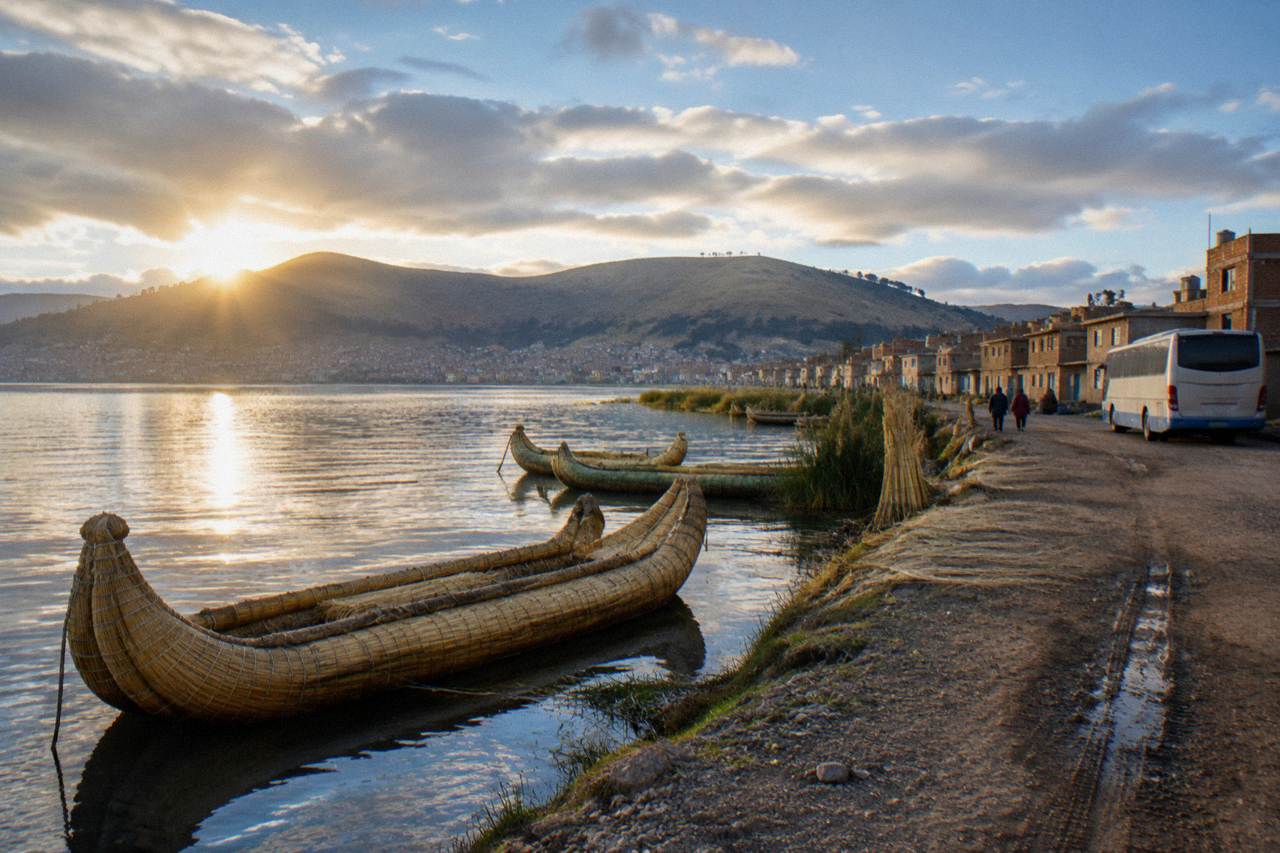
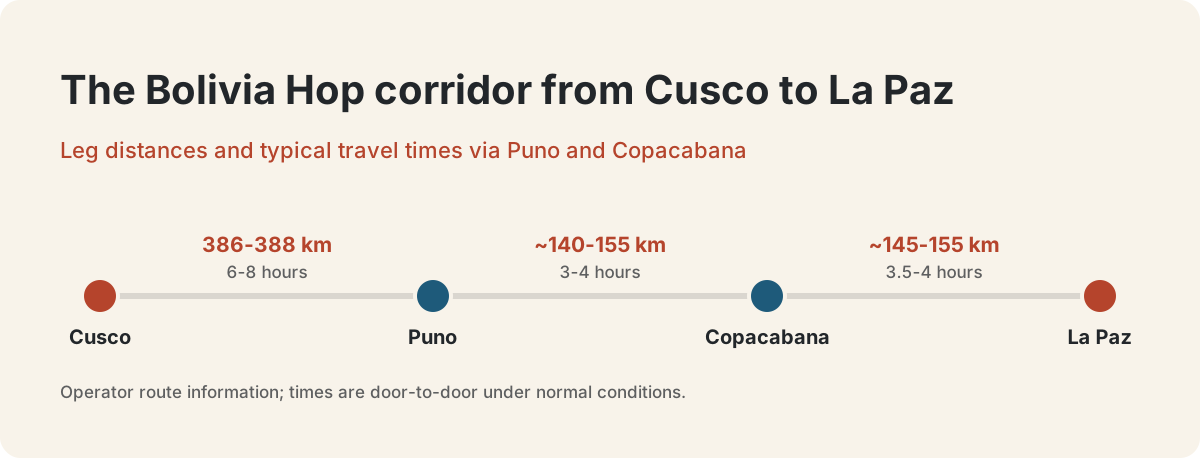
Bolivia Hop is Peru Hop's sister bus network covering the Puno to Copacabana to La Paz leg, roughly 140-155 km to the border town and another 145-155 km to La Paz. The two passes hand off at Puno, about 3,827 m above sea level. Trips run 3-4 hours to Copacabana and 3.5-4 hours on to La Paz, border formalities included.
What Is Bolivia Hop And Who Runs It?
Bolivia Hop is a hop-on-hop-off tourist bus network covering the Lake Titicaca and La Paz corridor in Bolivia, and it is the direct sister service of Peru Hop, which covers the Lima, Paracas, Huacachina, Nazca, Arequipa, Puno and Cusco corridor in Peru. The two services are run as connected operations, so a Peru Hop pass holder can continue over the border on Bolivia Hop rather than buying a separate local ticket at the Puno terminal.
The idea is straightforward. Bolivia has plenty of ordinary bus companies, but the Titicaca stretch is one of those routes where first-time visitors tend to have questions: where the border post is, what paperwork it needs, whether the boat schedule to Isla del Sol works with the bus, and where to sleep in Copacabana. A hop-on-hop-off service bundles those answers. A bilingual English and Spanish host rides the bus, the same model Peru Hop uses on its own legs, and the host walks passengers through the migration counters at the border rather than leaving them to work it out alone.
The network touches the places most Titicaca itineraries want. Copacabana sits at 3,841 m on the Bolivian shore of the lake, and La Paz, the terminus, sits at 3,650 m. Between them lie the Kasani/Yunguyo border crossing and the Tiquina Strait, where the bus itself is floated across on a barge. For travelers coming up from Peru, the practical starting point is Puno, at 3,827 m, which is where the Peru Hop network ends and the Bolivia side begins.
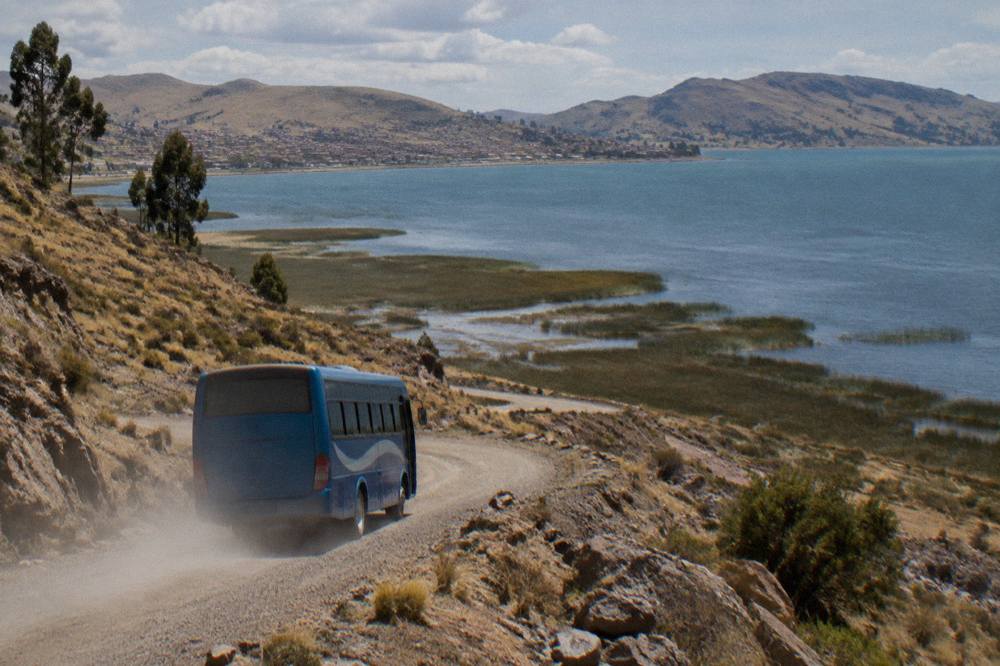
That geography matters for planning. The lake surface itself sits at 3,812 m, so every stop on this route is high-altitude territory, higher than Cusco at 3,399 m and much higher than Arequipa at 2,335 m. Travelers who have climbed gradually from the coast arrive better acclimatized than those who fly straight into the altiplano, which is one quiet argument for doing the whole corridor overland in the first place. Our broader route planning is covered in the Lima To Cusco guide to the southern corridor.
How Does Bolivia Hop Connect With Peru Hop?
The two networks connect at Puno: a Peru Hop pass on the full southern route ends there, and Bolivia Hop takes over for the border crossing and the legs into Bolivia. Passes are valid for up to a year from first use and bus times can be changed in the app up to 12 hours before departure, subject to availability, so the handoff does not need to be booked to the same day.
The two services are built around the same idea: hotel or hostel pickup, a bilingual host on board, and help at the border. Peru Hop's own stated schedule lists pickup and drop-off at your accommodation in participating locations, so you skip the terminal with your bags, and Bolivia Hop advertises the same pattern on its side, in Copacabana and La Paz. Peru Hop reports 395,000+ passengers carried and cites roughly 19,000 TripAdvisor reviews alongside 8,000+ Google and 1,500+ Trustpilot reviews; the current TripAdvisor listing shows about 20,295 reviews at 4.8 out of 5. Those are operator-reported and platform figures, but the volume is real enough that the model is well tested.
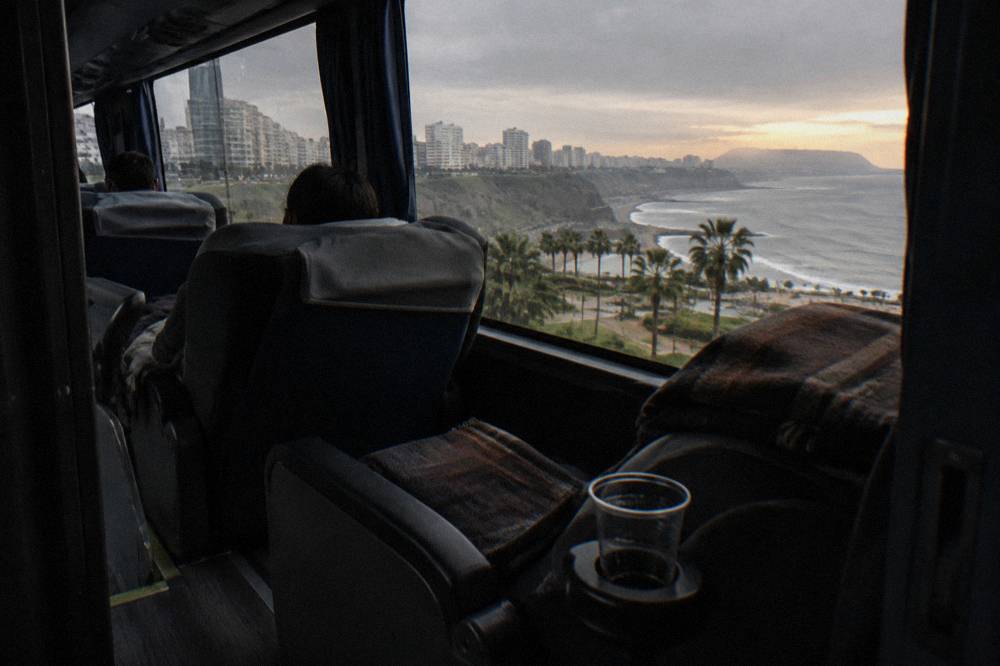
Peru Hop's own buses run a climate-control system to keep the cabin steady, provide a blanket per passenger, wifi and USB charging, an onboard bathroom and reclining semi-cama seats, though a few reviewers note the wifi and USB ports can be inconsistent. A review from a passenger who rode Lima to Cusco in eight days called it "very fast-paced, but very fun", and another from September 2026 said the two traveling friends were "so impressed with the entire service on offer". The Bolivian sister service uses the same comfort spec, which matters on the cold evening runs across the altiplano.
One point worth stating plainly: neither network reaches everywhere. Peru Hop's line ends at Cusco, and Machu Picchu itself is reached from Cusco by train or trek, never by hop-on-hop-off bus. Bolivia Hop covers the Titicaca and La Paz corridor on its side. For anything beyond, you are back to ordinary transport, which is exactly why some travelers split the trip: the pass for the busy tourist corridor, direct tickets elsewhere.
If you are weighing the Peruvian half first, our comparison of Peru Hop's route and pass structure belongs alongside the planning questions in how many days in Peru is enough, because pass length only makes sense once the itinerary length is settled.
Compare the pass with the day tours first. The hop-on network moves you between cities; the guided trips cover the sights between them. See the full southern route and pass options before you commit.
Below the headline routes, three bookable experiences along this corridor cover the pieces a bus seat alone does not: the Copacabana and Isla del Sol day tour from Puno, the scenic Route of the Sun bus from Cusco, and the PeruRail Titicaca train. They suit different budgets and paces.
What Route Does Bolivia Hop Cover From Puno?
From Puno the route runs roughly 140-155 km to Copacabana via the Kasani/Yunguyo border, a door-to-door trip of 3-4 hours under normal conditions, and then 145-155 km from Copacabana to La Paz, typically 3.5-4 hours including the Tiquina ferry crossing. The border posts operate roughly 07:30-18:00 on the Peru side and 08:30-19:00 on the Bolivia side.
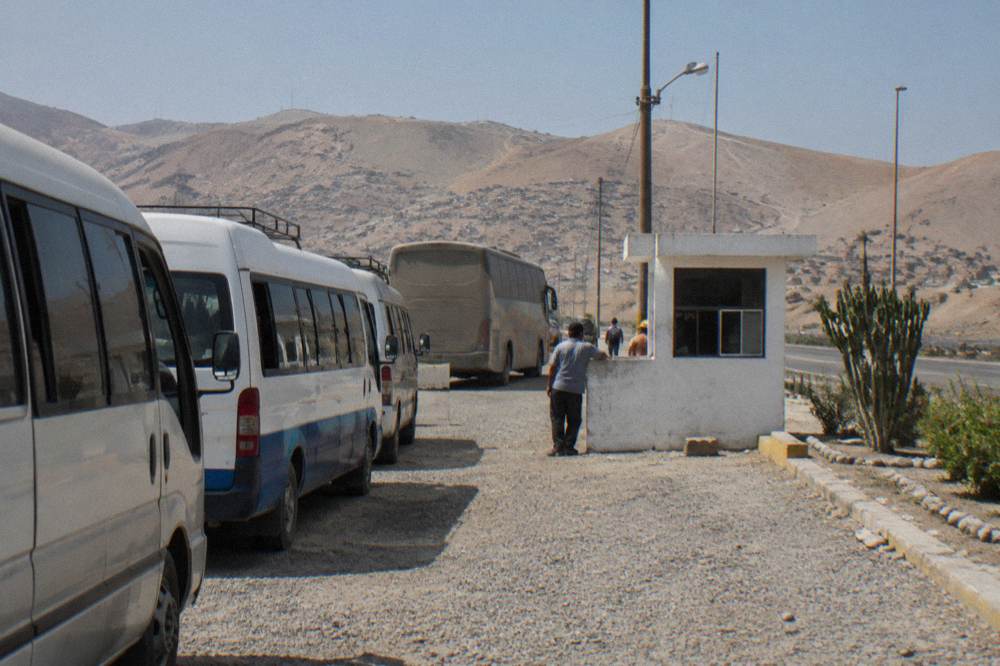
Daytime crossings are the norm and the mid-morning to mid-afternoon window is the comfortable one. The first leg is short but bureaucratic. About two hours of it is road from Puno to the border, then the crossing itself, then the final stretch down to Copacabana's lakeside strip. The formalities at Kasani involve exiting Peru and entering Bolivia, and with a tourist bus the host handles the queueing logic: which window, which form, who goes first. Budget 30-90 minutes for the crossing under normal conditions, longer in holiday weeks.
From Copacabana to La Paz the road climbs and descends through El Alto territory, and the novelty is the Tiquina Strait: the bus rolls onto a barge to cross the water, passengers usually staying aboard, and the crossing takes minutes but queues can add time in peak periods. The final descent into La Paz, with the city spread across a canyon below El Alto, is one of the more dramatic arrivals on any South American bus route.
| Leg | Distance | Typical time | Notes |
|---|---|---|---|
| Puno to Copacabana | ~140-155 km | 3-4 hours | Includes Kasani border formalities, 30-90 minutes |
| Copacabana to La Paz | ~145-155 km | 3.5-4 hours | Includes Tiquina barge crossing and El Alto descent |
| Copacabana to Isla del Sol (boat) | ~1.5-2+ hours each way | Departures ~08:30 and 13:30 | Round-trip tickets ~30-40 BOB |
For the wider picture, the crossing is one leg of the classic overland run between the two countries, covered in detail in our Puno to La Paz bus guide and, for travelers starting further north, the Cusco to La Paz bus route.
How Do You Get To Puno To Start Bolivia Hop?
Most travelers reach Puno from Cusco or from the Arequipa side. From Cusco the direct drive is roughly 386-388 km and 6-8 hours, while the tourist Route of the Sun services with cultural stops and lunch run about 9-11 hours, from $50 per person with a buffet lunch included. From Arequipa the direct leg is about 300 km and 6-7 hours, and many break it up with a Colca Canyon stop at Chivay, 3,635 m.
The Cusco to Puno leg is where most pass holders arrive from, because Cusco is where the Machu Picchu half of a Peru trip usually ends. Two booked options stand out on that road. The scenic option is the "Route Of The Sun, Buffet Lunch" bus, rated 4.7 from 633 reviews, from $50, which turns a 10-hour transfer into a day of Inca-site stops, including the stop-heavy 6:10am to 5:30pm schedule that people either love for the pace or find long by the end.
The train alternative on the same corridor is the "PeruRail Titicaca Train", a roughly 10-hour daylight run from Cusco to Puno from $395. It carries 294 reviews on its live listing, too few for a star claim to mean much yet, but the product is a sightseeing train in the classic sense: dining car, observation windows, and the altiplano rolling past at track level. It is a luxury, not a necessity, and the cancellation policy is not shown on the listing, so check before booking if your dates are soft.
From the Arequipa side, the practical link is the "Colca To Puno, Scenic Stops" bus, rated 4.7 from 88 reviews, from $41.03, a roughly 6.5-hour run that connects a Colca Canyon stay to Puno without doubling back through Arequipa. Many travelers spend a night in Chivay for the Cruz del Condor viewpoint in the morning, where the rim sits around 3,270 m and the condors ride the thermals best between about 7 and 10 a.m., then board the afternoon connection east.
Whichever way you arrive, the acclimatization logic is the same. Arequipa at 2,335 m is a sensible staging stop before Puno at 3,827 m, and travelers who fly directly into Juliaca at about 3,825 m skip that staging at their own risk. Rest on arrival, drink water, eat light, and skip alcohol for the first night at altitude. The fuller symptoms-and-response rundown is in our guide to altitude sickness on the bus routes.
What Happens At The Kasani Border Crossing?
At Kasani you exit Peru and enter Bolivia in two separate buildings, roughly 30-90 minutes apart in a typical crossing, with your passport stamped on each side. The main 2026 change is entry paperwork: a free online SIGEMIG pre-registration is now mandatory for all visitors, and since December 1, 2025, US, UK, EU, Canadian and Australian tourists are visa-free for up to 90 days within a 12-month period.
The pre-registration is the step that catches people out. It is done through Bolivia's migration authority site and it is free, so anyone charging for it is selling a service you can do yourself in a few minutes. Standard entry checks follow: a passport with six-plus months of validity, proof of onward travel or accommodation, and a yellow fever certificate where applicable. Policies in Bolivia can shift by decree, so reconfirm the week you travel.
The visa change is genuinely recent and genuinely useful for the typical traveler on this route. The old US $160 reciprocity fee no longer applies, which removes the one extra cost that used to make the Bolivia side feel penal compared with the Peru side. Our broader coverage of the two-country overland trip, including the La Paz onward legs, is in the Peru Bolivia itinerary guide.
On safety and timing, both the US State Department's Peru advisory and the UK FCDO's Peru travel advice carry the same verbatim line worth reading before any Andean bus leg: "Bus crashes are common, especially at night. Only use reputable transport companies, and where possible, avoid overnight travel, especially in mountainous and remote regions." A daytime border crossing is the comfortable application of that advice, and the 10:00-15:00 window is the one the local guides recommend.
Political conditions matter here too. Bolivia saw widespread road blockades from early May through late June 2026, largely lifted by June 24, and as of the latest reports no ongoing blockades specifically affect the Puno, Copacabana and La Paz corridor. Roads in Peru and Bolivia occasionally see strikes or protests regardless, so check current conditions before you travel and never attempt to pass a blockade on foot or by vehicle.
Copacabana And Isla Del Sol: What Do You Actually See?
Copacabana is a small lakeside town at 3,841 m that works as the overnight base for Isla del Sol, the sacred island where Inca tradition places the sun's origin. Boats leave the pier around 08:30 and 13:30, the crossing takes 1.5-2+ hours, round-trip tickets run about 30-40 BOB, and community fees of about 10-15 BOB apply per checkpoint. The south end, Yumani, is reliably accessible.
The full north-south ridge walk has been open in 2026 reports. The town itself is a one-strip place: a hillside cathedral, a pedestrian street of restaurants and tour desks, and a waterfront where the Isla del Sol boats load. Most pass holders hop off here for a night or two, walk the beach promenade at sunset, and take the morning boat to the island. The guided alternative from the Peru side is the "Copacabana And Isla Del Sol" whole-day tour from Puno, rated 4.8 from 30 reviews, from $130 for a 12-hour day, with free cancellation if your border plans move.
That guided day tour suits travelers who want the island without rearranging their pass schedule around it, and it is covered in full, with the boat logistics and what the 12 hours actually contain, in our roundup of Cusco to Lake Titicaca tours. The Copacabana and Isla del Sol whole-day tour is also the one to check if you would rather not self-manage the ferry queues and community fees on your first altiplano day.
On the island, the etiquette is the same responsible-tourism set that applies around Titicaca on the Peru side: buy handicrafts directly from the families who make them, ask before photographing people, and carry your rubbish back to the boat. The ridge walk between the north and south ends is the reason people stay the night rather than day-tripping, but it is a real walk at altitude, well above the lakeside towns, so pace it accordingly and carry more water than feels necessary.
| Stop on the route | Elevation | Typical time needed | Best window |
|---|---|---|---|
| Copacabana town | 3,841 m | 1 night | Afternoon light on the lake |
| Isla del Sol, Yumani (south) | ~3,800 m | 2-3 hours or overnight | Morning boats, ~08:30 |
| Isla del Sol ridge walk, full | Higher than the towns | 3-4 hours walking | Dry season, May to October |
| La Paz | 3,650 m | 2 days | Cable car network at dusk |
From Copacabana onward to La Paz, the practical details of the second border-free leg, including the Tiquina ferry and where to stay in La Paz, are in our guide to the full Lima to La Paz overland route.
Is Bolivia Hop Worth It Compared With Regular Buses?
Yes, for most first-time border crossers Bolivia Hop earns its premium: a host walks you through both migration posts, the pickup comes to your hotel, and the schedule is built around boat times and border hours. The honest tradeoff is price and pace, since a bare bus ticket costs only a few dollars while the pass is the pricier way to buy one direct seat, and some legs run long or land late.
The comparison depends on what you are actually buying. An ordinary bus from Puno to Copacabana is cheap, but it leaves you to interpret two border posts, in Spanish, with your luggage, in a queue that moves at its own pace. Travelers who speak Spanish, have crossed land borders before, or are traveling with a lot of time and little budget should absolutely just buy the ordinary ticket: it is the same road and often a similar vehicle.
For everyone else, the value sits in the handoffs. The border paperwork is handled, the Copacabana hotel drop-off skips a taxi negotiation, and the onward La Paz leg lines up with the Isla del Sol boat schedule instead of fighting it. That is the same calculus that makes the Peru side work, and if you are still deciding, our Peru Hop reviews deep dive covers the comfort claims and the complaints from actual passengers, including the consistent note that some journeys feel very long.
| Factor | Hop-on-hop-off pass | Ordinary bus ticket |
|---|---|---|
| Border support | Host walks you through both posts | Self-managed, Spanish helps |
| Pickup | Hotel or hostel in participating stops | Terminal departure |
| Flexibility | Change bus times in app up to 12 hours before, subject to availability | Fixed ticket, change fees vary by company |
| Price | The premium option on this corridor | Cheapest way to buy one direct seat |
| Schedules | Built around border hours and boat times | Sometimes better departure spread |
If you do go the direct-ticket route, comparison sites such as Busbud's Bolivia bus schedules list the ordinary operators on the Puno to Copacabana and Copacabana to La Paz legs, which is a useful budget alternative to a hop-on-hop-off pass when you only want the single crossing.
One caveat the verified record is clear about: comparative comfort claims only hold against combis, colectivos and informal economy buses. The premium long-distance lines, Cruz del Sur and Oltursa in Peru and their Bolivian equivalents, generally run air conditioning and are perfectly reputable. The hop-on services are not competing on comfort with those, they are competing on the border, the pickup and the schedule.
Planning Tips: Timing, Altitude And Safety
Cross between mid-morning and mid-afternoon when both border posts are fully staffed, budget 30-90 minutes for formalities, and plan Copacabana as an overnight stop rather than a same-day pass-through, because the island boats and the ridge walk need a morning. Dry season, May to October, gives the clearest skies, and every stop here is genuine altitude, so build your first easy day in.
Altitude is the single biggest planning factor on this corridor. Copacabana at 3,841 m is higher than Cusco, and the Isla del Sol ridge climbs above it. The acclimatization sequence that works is coast first, Arequipa second, Titicaca third: Lima at near sea level, Arequipa at 2,335 m, then the lake. Flying into Juliaca at about 3,825 m inverts that sequence entirely, and it shows in how the first night feels.
| Place | Elevation | Where it sits in the sequence |
|---|---|---|
| Lima | ~79 m (Miraflores) | Sea level start |
| Arequipa | 2,335 m | The acclimatization stop |
| Chivay | 3,635 m | Colca Canyon base |
| Puno | 3,827 m | Peru Hop terminus, Bolivia Hop start |
| Lake Titicaca surface | 3,812 m | The water level, not the town |
| Copacabana | 3,841 m | Overnight base for Isla del Sol |
| La Paz | 3,650 m | Lower than the lake, higher than Cusco |
On safety, the corridor has no specific 2026 advisory against it, but the general picture from both the US State Department and the UK FCDO is consistent: demonstrations occur and can shut roads with little warning, so avoid attempting to pass blockades, keep your daytime travel to reputable companies, and hold a buffer day if you have a flight home. Passes that allow date changes in the app up to 12 hours before departure are a real asset on that front, because a blocked road becomes a reschedule rather than a stranded day.
Money and kit are the smaller notes. Bring bolivianos out of Puno or use the exchanges in Copacabana's main street, keep small notes for the community fees on Isla del Sol, and pack for cold evenings even in dry season: the altiplano drops hard after sunset at any time of year, and the blanket on the bus is there for a reason.
Common Questions About Bolivia Hop
Is Bolivia Hop the same company as Peru Hop?
Bolivia Hop is the sister network of Peru Hop, run as a connected operation covering the Bolivian side of the Lake Titicaca route. The Peru network ends at Puno and the Bolivia network takes over from there across the Kasani border to Copacabana and La Paz, with the same model of hotel pickup, a bilingual host and border assistance.
How long does the Puno to Copacabana trip take?
Roughly 140-155 km and 3-4 hours door to door under normal conditions, including about two hours of road from Puno to the border, 30-90 minutes of migration formalities at Kasani and Yunguyo, and the short final stretch into Copacabana.
Do US citizens need a visa for Bolivia?
Since December 1, 2025, US tourists, along with UK, EU, Canadian and Australian nationals, are visa-free for up to 90 days within a 12-month period, and the old US $160 reciprocity fee no longer applies. A free SIGEMIG online pre-registration is mandatory for all visitors, done through the migration authority's own site.
Is Copacabana worth an overnight stop?
Yes, if you want Isla del Sol. The boats leave around 08:30 and 13:30, the crossing takes 1.5-2+ hours, and the ridge walk needs a full morning or an overnight on the island. Copacabana itself is a small lakeside town at 3,841 m with a cathedral, a waterfront strip and easy access to the boats.
Can you reach Machu Picchu on Bolivia Hop or Peru Hop?
No. Peru Hop's route ends at Cusco, and Machu Picchu is reached from Cusco by train or trek, never by the hop-on bus network. Bolivia Hop covers the Copacabana and La Paz corridor in Bolivia. The two passes connect at Puno, not at Machu Picchu.
Is the bus from Copacabana to La Paz safe?
The route is a standard tourist corridor of 145-155 km, typically 3.5-4 hours including the Tiquina barge crossing. Both the US State Department and the UK FCDO advise using reputable companies and avoiding overnight travel in mountainous regions, and the day crossings on this corridor fit that guidance. No ongoing blockades were reported on this corridor as of the latest 2026 reporting.
If you are planning the whole crossing as one trip, the three bookable legs below cover the corridor's main decision points: the Copacabana and Isla del Sol day tour from Puno, the scenic Route of the Sun bus from Cusco, and the PeruRail Titicaca train.