Cusco To La Paz By Bus
Crossing from Cusco to La Paz means three legs, one border, and some of the highest road in South America. Here is how the route actually works, hour by hour, and where the trip is worth pausing.
Short answer
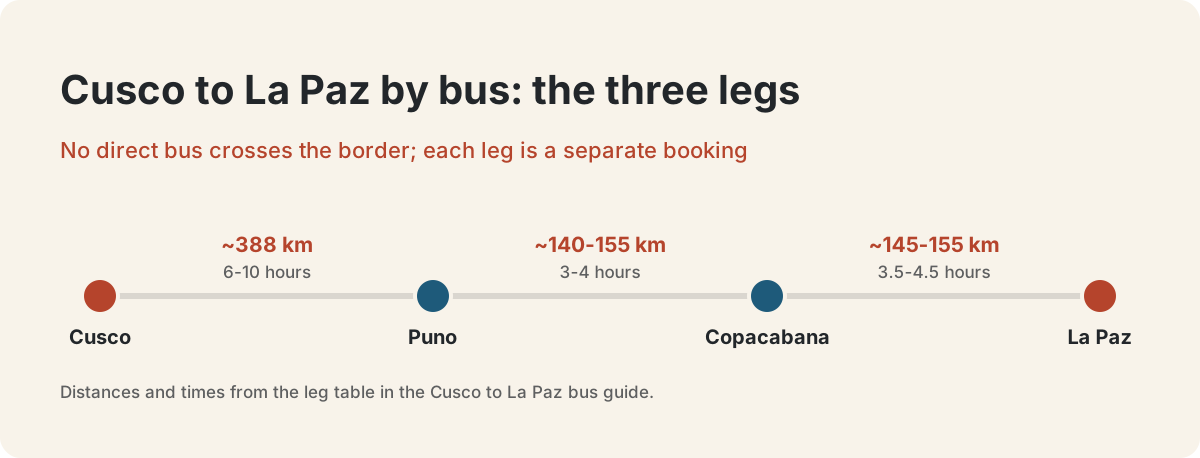
There is no direct Cusco to La Paz bus. The route runs Cusco to Puno, about 388 km and six to ten hours, then Puno to Copacabana, roughly 140 to 155 km and three to four hours across the Kasani border, then Copacabana to La Paz, about 145 to 155 km and around four hours. Most travelers split the journey over two or three days at Lake Titicaca.
Cusco To La Paz By Bus
How Long Is The Bus From Cusco To La Paz?
There is no single direct bus from Cusco to La Paz, so the trip is split into stages: Cusco to Puno takes six to ten hours over roughly 388 km, Puno to Copacabana takes three to four hours including border formalities at Kasani, and Copacabana to La Paz takes roughly four hours with the Tiquina Strait ferry crossing. Door to door, most travelers spread the journey over two or three days.
The reason is geography, not operator laziness. Cusco sits at about 3,399 m, Puno at 3,827 m, and Copacabana on the Bolivian shore at 3,841 m, so the whole route rides the altiplano plateau between those elevations from start to finish. No bus company sells a through ticket across the Peru-Bolivia border here, so every itinerary is a chain of separate bookings stitched together, usually with a night in Puno and another in Copacabana.
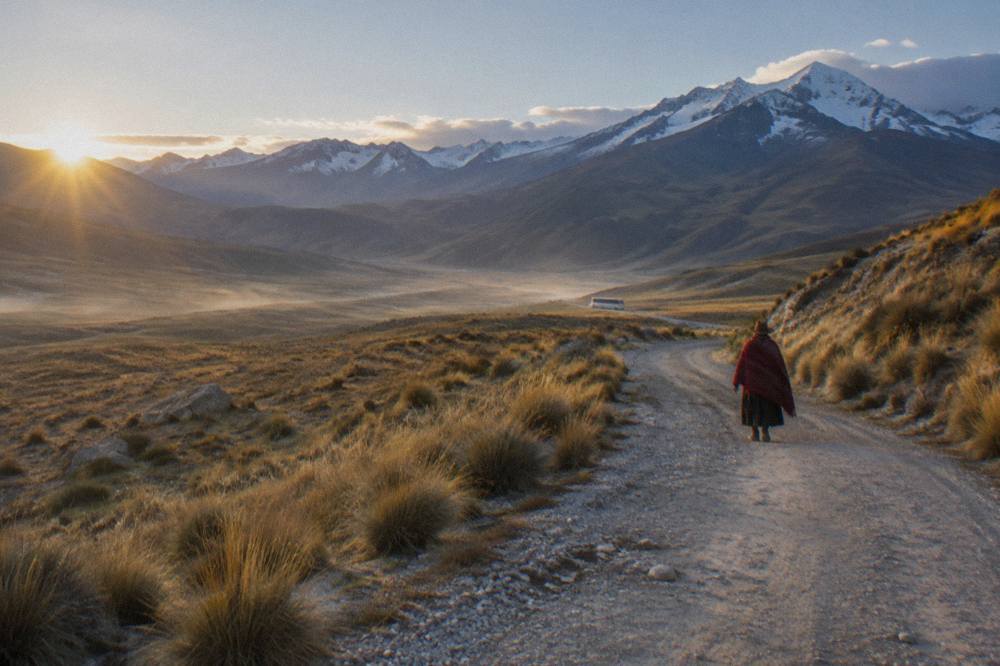
The first leg is the longest and the most varied. Direct public buses cover Cusco to Puno in roughly six to eight hours, while tourist services with cultural stops, the style sold as the "Ruta del Sol," stretch that to nine or eleven hours because they break the drive at Andahuaylillas, Raqchi and La Raya rather than racing it. The final two legs are shorter but slower than their distances suggest: the border alone can eat 30 to 90 minutes, and the Tiquina Strait between Copacabana and La Paz is crossed on a barge, not a bridge.
| Leg | Distance | Typical time | Notes |
|---|---|---|---|
| Cusco to Puno | ~388 km | 6-10 hours | Direct buses fastest; scenic services add stops |
| Puno to Copacabana | ~140-155 km | 3-4 hours | Includes ~2 hours to the border plus formalities at Kasani |
| Copacabana to La Paz | ~145-155 km | 3.5-4.5 hours | Includes the Tiquina Strait ferry crossing |
| Total door to door | Three legs, no through-ticket | 2-3 days realistic | Chain of separate bookings |
If you want the Cusco to Puno leg broken down in detail, the Cusco to Puno bus guide covers every operator and stop, and the reverse direction is covered in the Puno to Cusco bus guide.
What The Journey Looks Like Day By Day
A sensible three-day plan runs Cusco to Puno on day one, arriving with the afternoon for acclimatization, Puno to Copacabana on day two with the border crossing timed for late morning, and Copacabana to La Paz on day three after a morning on Isla del Sol or the lakeshore. Two days works if you compress the lake into transit stops; anything faster means reaching La Paz at night, which both the US and UK travel advisories warn against.
Day one is the big drive. Buses leave Cusco from terminals near the historic center between about 6 a.m. and 10 a.m.; the tourist "Route of the Sun" services leave around 6:10 a.m. and reach Puno near 5:30 p.m. after a buffet lunch and four archeological stops. Public buses do it in roughly half the time. Either way you arrive in Puno at altitude, so plan a quiet evening: the city sits at 3,827 m, well above Cusco, and many travelers feel the difference on the first night.
Day two is the crossing. Most Puno to Copacabana services leave early to mid-morning, reach the Peruvian exit post at Kasani in about two hours, and then roll into Copacabana within an hour of clearing Bolivian entry, provided the queue is short. Aim to cross between 10:00 and 15:00, which is the window border staff themselves recommend for the smoothest processing; the posts operate roughly 07:30 to 18:00 on the Peru side and 08:30 to 19:00 on the Bolivia side. Arrive in Copacabana by early afternoon and you still get a sunset over Lake Titicaca from the shore.
Day three is the short final leg. Buses leave Copacabana through the morning, cross the Tiquina Strait by barge, and descend into La Paz in roughly four hours, with the approach through El Alto often adding traffic time. Book the morning departure: arriving in La Paz by early afternoon gives you daylight for the taxi or teleférico ride down into the valley before evening.
For the onward options after La Paz, or the full two-country loop in reverse, the Peru and Bolivia itinerary guide lays out how these legs fit a wider trip, and the broader picture of every connection in the region is in the how to get around Peru guide.
The Kasani Border Crossing Step By Step
Crossing at Kasani and Yunguyo means two short stops: Peru exit stamps at the migraciones post, then a short drive to the Bolivian entry office, with formalities typically taking 30 to 90 minutes in total. Bring your passport with at least six months validity, your pre-registered SIGEMIG confirmation for Bolivia, and printed proof of onward travel, since border officers ask for it. Cross in daylight, between roughly 10:00 and 15:00, when both posts are fully staffed.
The mechanics are simpler than most travelers fear. On the Peru side your bus stops at the Kasani migraciones office and everyone lines up for an exit stamp; on the Bolivia side, a few minutes down the road at Yunguyo, the entry process happens in a separate building. Tourist-oriented services, including the hop-on-hop-off buses that run this corridor, have a host who walks the group through both offices and helps with paperwork, which matters more than it sounds when the forms are in Spanish and the queue is moving.
| Step | What happens | Typical time |
|---|---|---|
| Puno to the border | Drive to Kasani on the Peru side | ~2 hours |
| Peru exit | Exit stamp at the Kasani migraciones post | Part of the 30-90 minute window |
| Bolivia entry | Short drive to Yunguyo, entry formalities and SIGEMIG check | Part of the 30-90 minute window |
| Border to Copacabana | Final drive into Copacabana | 10-45 minutes |
| Post opening hours | Peru side ~07:30-18:00, Bolivia side ~08:30-19:00 | Aim for 10:00-15:00 |
The paperwork that matters most is Bolivia's SIGEMIG online pre-registration, which is free, done through the Bolivian migration authority's system before you travel, and required of every nationality. Since December 2025, US, UK, EU, Canadian and Australian tourists enter Bolivia visa-free for tourism stays up to 90 days in a 12-month period, and the old US $160 reciprocity fee no longer applies. Officers may also ask for proof of onward travel and accommodation. Policies shift by decree in Bolivia, so confirm requirements shortly before you travel.
Two practical notes from travelers who cross regularly. First, do not attempt the border at night or on the last departures of the day, since processing slows and a missed stamp becomes a next-morning problem. Second, keep your Bolivian entry slip somewhere safe: hotels in La Paz routinely ask for it, and losing it creates friction when you leave the country.
Where To Break The Trip: Puno And Lake Titicaca
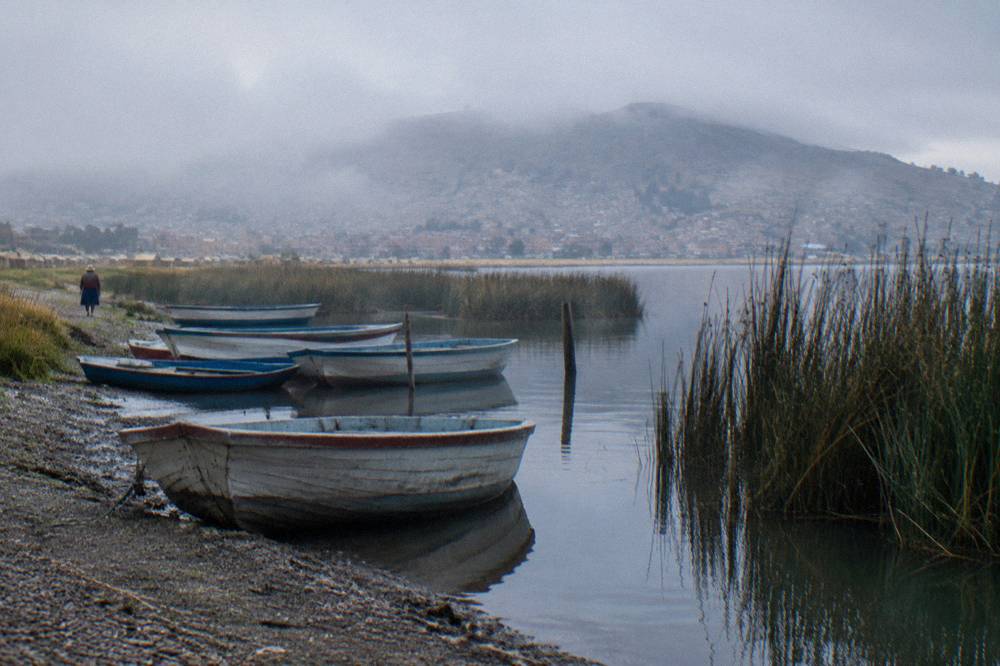
Puno is the natural overnight stop and the base for Lake Titicaca itself, with the Uros floating islands reachable on half-day boats of two to four hours and full-day combinations to Taquile common. Copacabana, the second stop, sits at 3,841 m on the Bolivian shore and is the jumping-off point for Isla del Sol, reached by boats leaving the pier at roughly 08:30 and 13:30 daily. Both towns reward at least a full day.
Puno is functional rather than beautiful, but its position makes it. From the port, half-day trips to the Uros floating reed islands run about two to four hours, and full-day versions add Taquile island with its weaving communities and community-led entry fees. The etiquette that the lake's communities ask for is straightforward: buy handicrafts directly from families, ask permission before photographing people, and pay the small landing contributions where they apply. Some tours bundle these fees, some do not, so check the inclusions before booking.
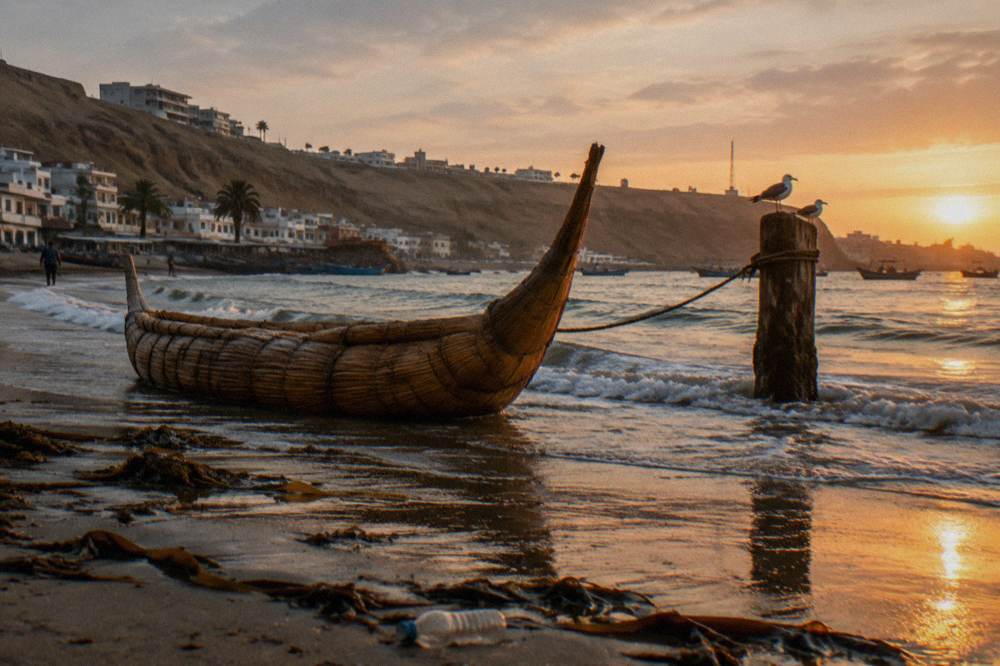
Copacabana is the more scenic base, and it converts neatly from a stopover into a destination. Boats to Isla del Sol leave the pier at roughly 08:30 and 13:30, take 1.5 to 2 hours or more across, and cost about 30 to 40 bolivianos round trip, with community fees of roughly 10 to 15 bolivianos at checkpoints on the island. The south end at Yumani is reliably accessible; the north end at Challapampa saw community disputes in earlier years but reports through 2026 describe the full north-south ridge walk as open, with access best confirmed locally on the day.
The guided way to see the Bolivian side without organizing any of this yourself is the "Copacabana And Isla Del Sol" whole-day tour from Puno, from $130 for 12 hours, currently 4.8 from 30 reviews, with free cancellation. It pairs the crossing logistics with the island boat and is the tour this site features for this route. The Cusco to Lake Titicaca tours guide compares it against the alternatives.
If you would rather make day one of the trip itself the sightseeing, the "Route Of The Sun, Buffet Lunch" tourist bus from Cusco covers Andahuaylillas, Raqchi, La Raya and Sicuani with lunch included, from $50 for roughly 11 hours, 4.7 from 633 reviews, with free cancellation. It is slower than a public bus and most riders consider the stops worth the hours.
Between the two, the deciding question is simple: whether your priority on the lake is the Bolivian island scenery, which points to the Copacabana day tour, or turning the longest drive of the trip into a sightseeing day, which points to the Route of the Sun bus. Plenty of travelers do both, using the tourist bus to reach Puno and the day tour to see the lake before continuing on.
Which Bus Companies Run This Route
Several companies cover this route: Peruvian and Bolivian local operators run the Cusco to Puno, Puno to Copacabana, and Copacabana to La Paz legs, while hop-on hop-off tourist buses serve the whole corridor. Peru Hop covers the Peru side as far as Cusco and Puno, and its sister service Bolivia Hop continues across the border to La Paz, with a host assisting at Kasani.
On the Peru side, the tourist option is Peru Hop, the hop-on hop-off pass that picks up and drops off at your hotel or hostel in participating locations so you skip the bus terminal with your bags. A bilingual local host rides every bus, buses come with wifi, USB charging, an onboard bathroom and reclining semi-cama seats, though a few reviewers note wifi and USB can be inconsistent, and passes are valid up to one year with date changes in the app up to 12 hours before departure, subject to availability. The honest caveat: a pass costs more than a bare Cruz del Sur or Oltursa seat before you tally in the taxis and tours it bundles, and some legs run long or overnight, so it is not the cheapest route if all you want is one direct seat.
Traveling the whole corridor? A hop-on hop-off pass covers the Peru side door to door, then connects onto Bolivia Hop for the border and La Paz, with hotel pickup, a bilingual host on every bus and a group escort through the Kasani paperwork. See pass details and routes at Peru Hop
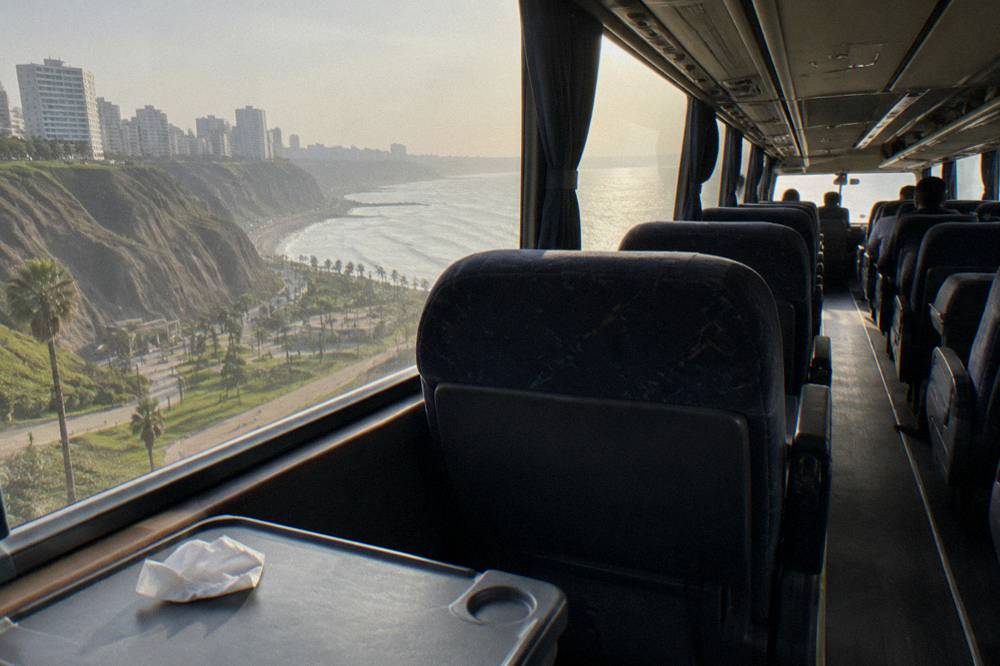
Cruz del Sur and Oltursa run the direct Lima-Arequipa-Cusco corridor with premium equipment, and on Cusco to Puno you can also take the local public lines, which are cheap and frequent but offer none of the pickup or hosting advantages. Across the border, Copacabana to La Paz runs on local companies with several daily departures; all of them share the Tiquina ferry, so the choice between them is schedule, not comfort.
The train alternative exists for exactly one leg. PeruRail runs the Titicaca train between Cusco and Puno, a roughly 10-hour daytime journey from $395 with an observation car and lunch; its listing currently shows 294 reviews, too few for a reliable star rating. Schedules are published at PeruRail's official schedule page. It is a splurge day, not a practical transfer, but for the right traveler it replaces the least interesting bus leg with the most memorable one on the route.
If you are weighing the hop-on hop-off approach against conventional buses in detail, the Peru Hop vs Cruz del Sur comparison and the Bolivia Hop guide both break the trade-offs down.
What The Trip Costs
Three legs have firm prices: the Cusco-Puno tourist bus from $50, the Copacabana and Isla del Sol day tour from Puno from $130, and the PeruRail Titicaca train from $395. Public bus fares on the Cusco-Puno, Puno-Copacabana and Copacabana-La Paz legs vary by operator and season; buy locally or online and treat per-seat figures as planning ranges, confirming when booking. The border itself costs nothing beyond your time.
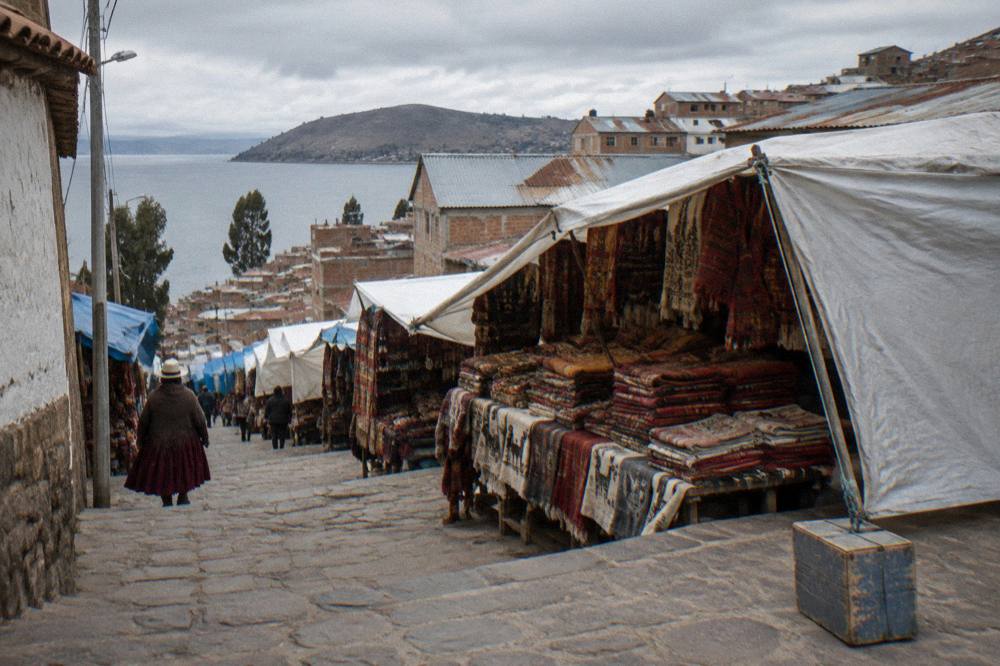
The big swing factor is the Copacabana stop. Skip it entirely and the journey compresses into two days with barely any lake time; give it two nights and you add an Isla del Sol boat, community fees of roughly 10 to 15 bolivianos per checkpoint, and a Copacabana hotel, in exchange for the scenery most people make this trip for. Dry season from May to October is the preferred window for weather and the busiest for bookings, so lake tours fill ahead of time in those months.
| Item | Firm price on this route | Notes |
|---|---|---|
| Cusco to Puno tourist bus, stops and lunch | from $50 | 4.7 from 633 reviews, ~11 hours, free cancellation |
| Copacabana and Isla del Sol day tour from Puno | from $130 | 4.8 from 30 reviews, 12 hours, free cancellation |
| PeruRail Titicaca train, Cusco to Puno | from $395 | ~10 hours, 294 reviews, cancellation policy not shown |
| Isla del Sol boat, round trip | ~30-40 bolivianos | Local purchase at Copacabana pier |
| Island community checkpoints | ~10-15 bolivianos each | Confirm locally on the day |
For the public bus legs themselves, a fare search tool is the practical way to compare every operator at once; Busbud lists the Cusco-Puno and Bolivia legs with live schedules as a budget, direct-ticket alternative to a hop-on hop-off pass.
Altitude And Safety On The Route
Every overnight stop on this route sits at altitude, and the sleep elevation climbs: Cusco at about 3,399 m, Puno at 3,827 m, Copacabana at 3,841 m, before La Paz at 3,650 m. The standard guidance is gradual ascent, rest on arrival, hydration, light meals and avoiding alcohol. Both the US State Department and UK FCDO advise using reputable transport companies and avoiding overnight bus travel where possible, especially in mountainous and remote regions.
Altitude deserves respect here more than on almost any other bus route in South America, because you sleep higher each night. Flying directly into Juliaca, at about 3,825 m, carries more risk than arriving overland from Cusco, which is one quiet argument for taking this corridor slowly rather than shortcutting it with flights. Symptoms to watch for are headache, nausea and fatigue that resolve with rest; anything severe means descending and getting medical help. Carry coca tea, drink water, and go easy on day one in Puno even if you feel fine.
On road safety, the official advisory language is worth reading in the source rather than in paraphrase. The US State Department's Peru travel advisory notes that "Bus crashes are common, especially at night. Only use reputable transport companies, and where possible, avoid overnight travel, especially in mountainous and remote regions." US government employees working in Peru are prohibited from nighttime road driving except on specific corridors, among them the Lima-Arequipa-Cusco corridor, where they may also travel at night with commercial bus companies. The UK FCDO's Peru advice carries the same sentence about bus crashes and overnight travel.
Beyond that, the practical rules are unglamorous. Book reputable companies, keep valuables in your daypack rather than the hold luggage, and photograph your passport and entry stamps. Roads in Peru and Bolivia occasionally see strikes or protests, so check current conditions before travel; when something does disrupt the schedule, established operators monitor official alerts and reroute or refund rather than push through a blockade, and you should never try to pass one on foot or by vehicle. The dedicated altitude sickness on the bus routes guide goes deeper on symptoms and medication.
Bolivian Entry Requirements And Visa Rules
US, UK, EU, Canadian and Australian tourists are visa-free for stays up to 90 days within a 12-month period, and the US $160 reciprocity fee no longer applies. Visitors must complete free SIGEMIG pre-registration before arrival, carry a passport typically valid six months or more, and show proof of onward travel and accommodation. A yellow fever certificate applies where relevant. Confirm before travel, as Bolivian policy can shift by decree.
The SIGEMIG step is the one that catches people. It is free and done through the Bolivian migration authority's online system, but it must be completed before you reach the border, and Kasani officers do check the confirmation. Build ten minutes into your pre-trip routine for it, print the confirmation or save it offline, and the border becomes routine.
Beyond the visa question, there were no procedural overhauls at Kasani reported through 2026. The 2024 remodel of the Peruvian-side post improved flow, hours remain roughly 07:30 to 18:00 on the Peru side and 08:30 to 19:00 on the Bolivia side, and tourist buses assist with paperwork. One regional note: Bolivia saw widespread road blockades across parts of the country from early May through late June 2026, largely lifted by June 24, and none were specifically reported on the Puno-Copacabana-La Paz corridor. That history is a reminder to check current conditions rather than a reason to expect disruption.
Common Questions About The Cusco To La Paz Bus Route
How long is the bus from Cusco to La Paz?
There is no direct bus. The route runs Cusco to Puno, roughly 388 km and six to ten hours, then Puno to Copacabana, about 140 to 155 km and three to four hours including the Kasani border, then Copacabana to La Paz, 145 to 155 km and around four hours with the Tiquina ferry. Realistically it takes two or three days.
Do I need a visa to cross from Peru to Bolivia at Kasani?
US, UK, EU, Canadian and Australian tourists are visa-free for tourism stays up to 90 days within a 12-month period, and the old US $160 reciprocity fee no longer applies. Every nationality must complete the free SIGEMIG online pre-registration before arrival, and officers may ask for proof of onward travel and accommodation.
Where should I overnight between Cusco and La Paz?
Puno is the standard first night and the base for Uros floating island boats of two to four hours. Copacabana is the second stop, at 3,841 m on the Bolivian shore, with boats to Isla del Sol leaving the pier at roughly 08:30 and 13:30 daily.
Is the night bus safe on this route?
Both the US State Department and the UK FCDO advise using reputable transport companies and avoiding overnight travel where possible, especially in mountainous and remote regions. Daytime departures on all three legs are widely available, and the border posts close in the early evening, so the route naturally favors daylight travel.
What documents do I need at the Kasani border?
A passport with typically six months or more validity, your SIGEMIG pre-registration confirmation, and printed proof of onward travel and accommodation. Keep the Bolivian entry slip you are given, since hotels in La Paz routinely ask for it.
The corridor between Lima To Cusco and La Paz is the single most-traveled overland route in the region for good reason: it chains three manageable legs, one straightforward border, and the highest navigable lake in the world into one trip. Take it in daylight, break it at the lake, and the bus becomes the best part of the journey rather than the price of it.