Puno To La Paz By Bus
Roughly 7 to 9 hours and two bus legs separate Puno from La Paz, with a border crossing at Kasani and a ferry over the Tiquina Strait in between. Here is how the route actually works, step by step.
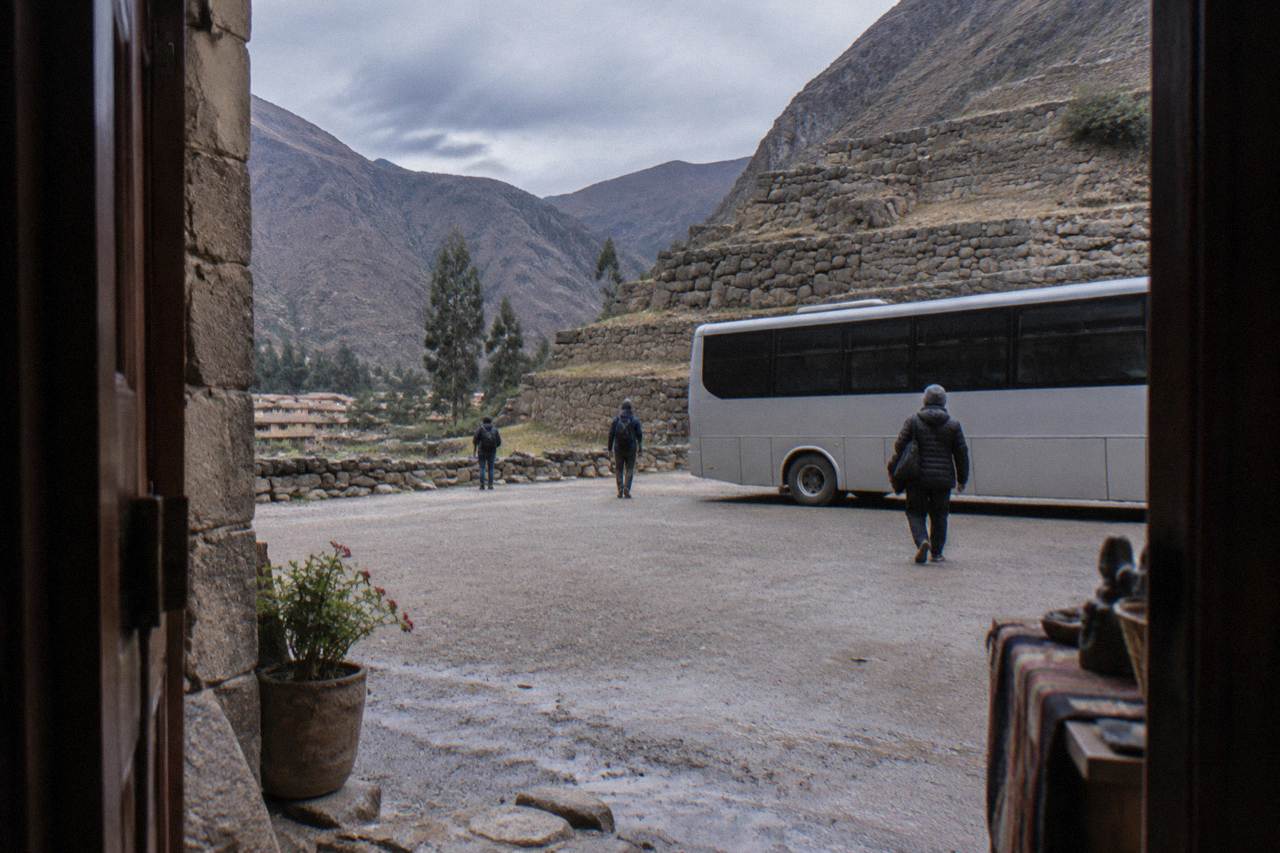
Short answer
The Puno to La Paz bus takes 7 to 9 hours door to door across two legs, crossing at Kasani and Yunguyo and pausing at Copacabana and the Tiquina ferry. Most Western nationalities now enter Bolivia visa-free for up to 90 days after free SIGEMIG online registration.
How Long Does The Puno To La Paz Bus Take?
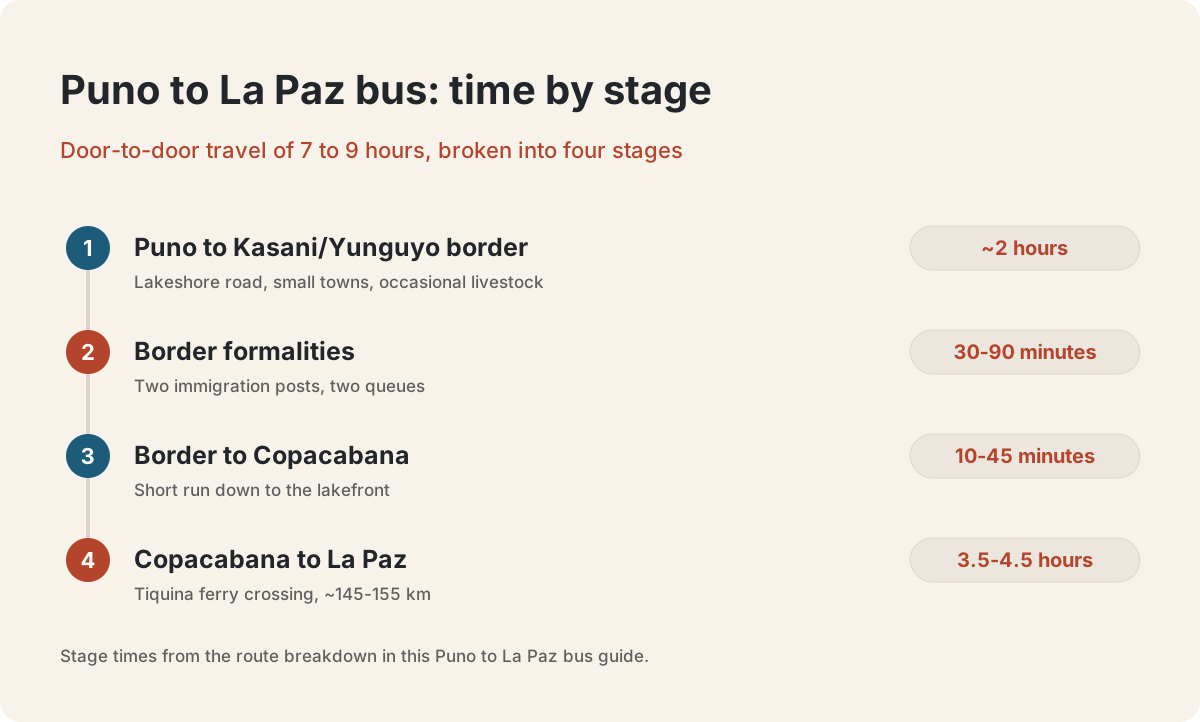
Expect 7 to 9 hours of door-to-door travel to reach La Paz. The first leg, Puno to Copacabana, runs 140 to 155 km and takes 3 to 4 hours, sometimes 4 to 5, including 30 to 90 minutes of border formalities at Kasani and Yunguyo. The second leg, Copacabana to La Paz, covers 145 to 155 km in 3.5 to 4.5 hours and includes the Tiquina Strait ferry crossing.
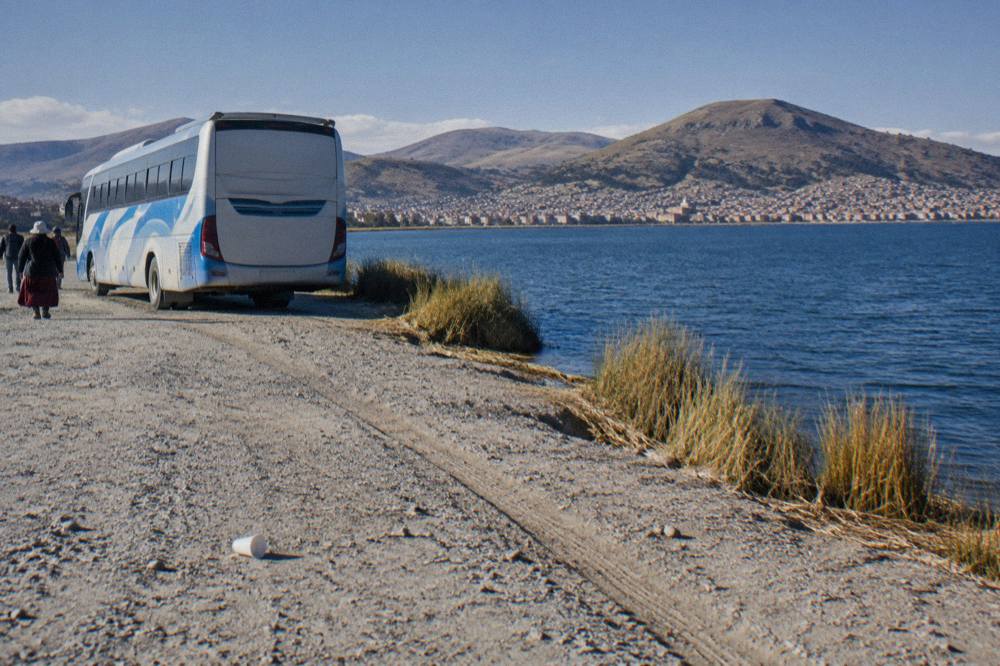
That total assumes a smooth day. Queues at the border, a late morning departure out of Puno, or the El Alto traffic on the descent into La Paz all stretch the clock, which is why most timetables sell this as a full day of travel rather than a half day. Travelers who break the journey in Copacabana overnight turn it into two short, easy hops instead.
The geometry of the route explains the time. Puno sits at 3,827 m on the Peruvian shore of Lake Titicaca, Copacabana sits at 3,841 m on the Bolivian shore of the same lake, and La Paz sits down at roughly 3,650 m in its canyon. You are never climbing a pass or descending a huge escarpment. The road simply follows the lakeshore south to the border, then cuts across rolling altiplano to the strait where the lake itself has to be crossed by barge.
| Leg | Distance | Typical time | What dominates the clock |
|---|---|---|---|
| Puno to the Kasani/Yunguyo border | Most of the 140-155 km first leg | ~2 hours | Lakeshore road, small towns, occasional livestock on the highway |
| Border formalities | 0 km | 30-90 minutes | Two immigration posts, two queues, sometimes a currency desk |
| Border to Copacabana | The short remainder of the leg | 10-45 minutes | A short run down to the lakefront |
| Copacabana to La Paz | ~145-155 km | 3.5-4.5 hours | The Tiquina ferry crossing and the El Alto approach to La Paz |
One planning note worth internalizing early: the two legs are bought and run separately unless you are on a through tourist service. A direct tourist bus with border assistance strings both legs together with the paperwork handled for you, while local buses mean two tickets, two terminals and doing the immigration dance yourself. That trade-off is the single biggest decision on this route, and it comes next.
What Are Your Options For The Puno To La Paz Bus?
You have three realistic choices: a direct tourist bus with border assistance, a self-connected pair of local buses through Yunguyo, or a Copacabana stopover split across two days. The direct tourist service is the stress-free option and the one most first-time visitors choose. Local buses are cheaper but put the border paperwork entirely on you. The stopover turns the crossing into a Lake Titicaca trip in its own right.
The route guides across Lima To Cusco cover the legs on either side of this crossing in depth, but the Bolivia side deserves its own breakdown because the border changes the math. On a tourist through-bus, a guide walks the group through both migration posts, tells you exactly which window to stand at, and the bus waits for stragglers. On local transport you exit Peru at one shed, walk a few hundred meters, register at Bolivian migration yourself, then find the onward minibus to Copacabana. None of it is hard. It is simply slower with luggage at 3,800 m, and a mistake in the paperwork queue can cost an hour.
| Option | Best for | The honest trade-off |
|---|---|---|
| Direct tourist bus with border assistance | First-time visitors, anyone with bags and no Spanish | One ticket, one seat, paperwork guided; costs more than local buses |
| Two local buses via Yunguyo | Budget travelers, confident independent crossers | Cheapest; you manage both immigration queues and a terminal change at Copacabana |
| Copacabana stopover, then onward bus | Anyone who wants Isla del Sol or a night on the lake | Splits 7-9 hours into two easy hops; adds a night of accommodation |
Bolivia Hop, the Bolivia-focused sister service to the hop-on style passes used in Peru, runs tourist crossings on this corridor and handles the border steps for passengers; the site's full Bolivia Hop guide breaks down its passes and stopovers separately. If you are weighing the whole overland route rather than just this leg, the Cusco to La Paz bus run adds the Cusco-Puno stretch and the Puno crossing into one itinerary.
Whichever option you lean toward, three bookable products on this route recur in travelers' plans: the Copacabana and Isla del Sol day tour out of Puno, the Cusco-to-Puno scenic bus, and the Titicaca train. They are worth a look side by side before you commit to a plan.
What Happens At The Kasani And Yunguyo Border Crossing?
You exit Peru at Yunguyo and enter Bolivia at Kasani, roughly two hours after leaving Puno. Formalities typically take 30 to 90 minutes total. The Peruvian post runs about 07:30 to 18:00 and the Bolivian post about 08:30 to 19:00, and crossing between 10:00 and 15:00 gives you the widest safety margin on both sides. Bring your passport, an onward plan and your SIGEMIG registration.
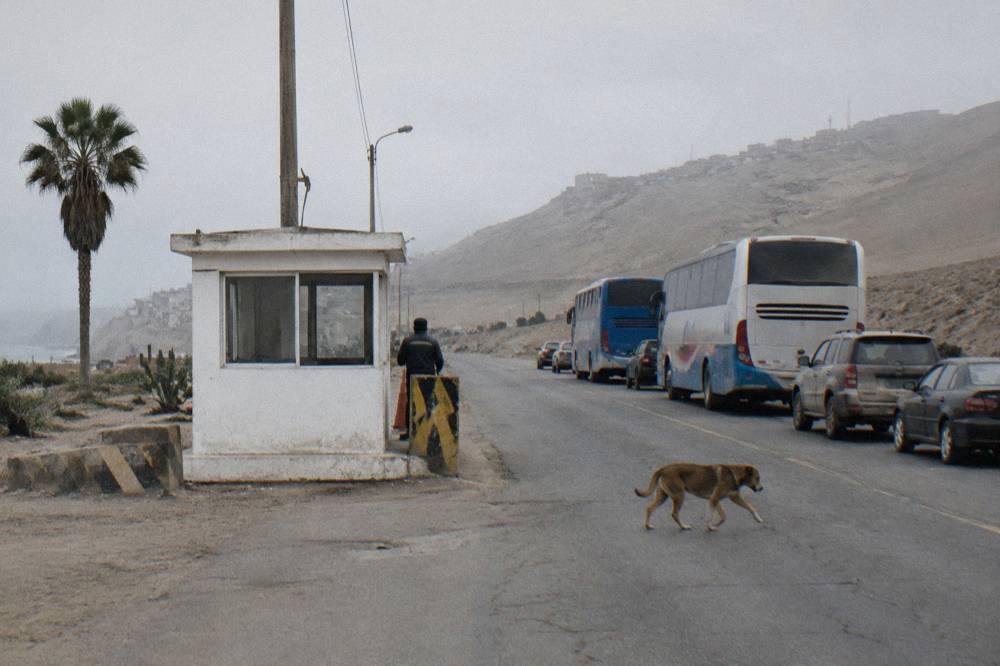
The crossing is a short walk between two national posts, and tour buses park while passengers process through both. Step-by-step guidance on timing, queues and what to have ready is documented in detail at this Puno to Copacabana border walkthrough, which matches what operators on the corridor publish. The essentials: exit stamp from Peru first, then the Bolivian entry desk, where the officer will look for your printed or digital SIGEMIG pre-registration if your nationality requires it.
| Border step | What happens | Time to budget |
|---|---|---|
| Peru exit (Yunguyo) | Passport exit stamp, sometimes a small queue of buses discharging passengers | 10-30 minutes |
| Walk between posts | A few hundred meters on foot with your bags | 5-10 minutes |
| Bolivia entry (Kasani) | Passport check, SIGEMIG registration lookup, entry stamp | 15-60 minutes |
| Reboard and drive on | Bus or minibus down to Copacabana lakefront | 10-45 minutes |
Visa rules shift by decree in Bolivia, so confirm your own nationality's requirements close to departure; nationality-by-nationality detail for 2026 is maintained at this Bolivia visa requirements tracker. The other thing the border desk occasionally asks about is a yellow fever certificate, relevant for travelers continuing into lower Bolivia, worth carrying if your route includes the Amazon side of the country.
Currency is the last border practicality. There are money changers around the posts, but rates on the altiplano are rarely better than what you get in Puno or La Paz itself. Change a small amount if you want bolivianos for the Copacabana lakefront, and do the serious exchanging in La Paz where competition keeps spreads honest.
Should You Break The Journey In Copacabana?
Most travelers should. Copacabana is a small lakeside town at 3,841 m, directly on the bus route, and its boats to Isla del Sol leave from the pier at roughly 08:30 and 13:30 daily. Stopping overnight costs you nothing in route logic, since every bus between Puno and La Paz passes through the town anyway, and it converts a 7 to 9 hour transfer day into a relaxed two-day lake trip.
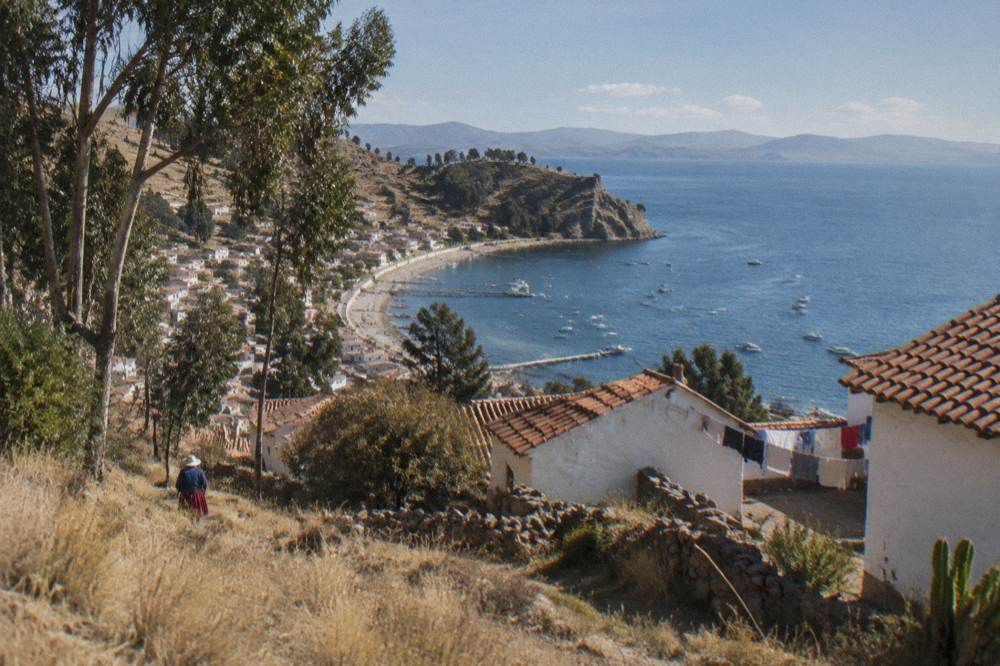
The boats cost roughly 30 to 40 bolivianos round trip and take 1.5 to 2 hours or more to reach the island, and community checkpoint fees of about 10 to 15 bolivianos apply at each control as you walk. The southern end around Yumani is the reliably accessible side, and the full north-south ridge walk has been reported open in current coverage. None of the walking is technical, but at island altitude the ridge route is a genuine half-day on foot, so bring water and start early while the light is still clean.
If you would rather not assemble the boat, the fees, the border timing and the walk yourself, the Copacabana and Isla del Sol whole-day tour from Puno bundles the crossing, the boat and the island into a single 12-hour day. It is rated 4.8 from 30 reviews and runs from $130 per person, with free cancellation if your plans move.
Copacabana itself is small enough to see in an evening: a lakefront arc of restaurants, a modest cathedral that draws pilgrims from across the altiplano, and a beach strip that catches the afternoon light. Travelers continuing to La Paz the next morning can catch an early boat to Isla del Sol and still make an afternoon bus, which is exactly how most overland itineraries thread this stop.
The onward bus from Copacabana to La Paz is a local affair from the lakefront, and it includes one of the route's small novelties: at the Tiquina Strait the entire bus drives onto a barge to cross the water, passengers usually staying aboard or stepping off for the few minutes of the crossing. It is a favorite photo stop and a reminder of how matter-of-fact infrastructure gets at altitude. Check availability on the tour's live listing if a guided version of the whole crossing appeals.
What Does The Trip Cost?
The only firm, verified prices on this route are for the bookable products: the Copacabana and Isla del Sol day tour from $130, the Cusco-Puno scenic bus from $50, the Titicaca train from $395, and the Colca-to-Puno bus from $41.03. Bus tickets for the crossing itself are not on this site's verified roster, so check the operators' live listings rather than trusting a number quoted in a forum or a stale blog post.
That is an honesty point worth dwelling on, because the internet is full of confident-sounding fares for the Puno-La Paz leg that nobody can stand behind. What can be planned in hard numbers is everything around the crossing. The Isla del Sol boat, the community fees, the tour products and the getting-to-Puno services all carry figures this site has verified, and the table below is the full set.
| Item on the route | Verified figure | What you get |
|---|---|---|
| Copacabana and Isla del Sol day tour from Puno | From $130, rated 4.8 from 30 reviews | 12-hour guided day, boat, border timing, free cancellation |
| Isla del Sol boat from Copacabana pier | ~30-40 BOB round trip | Departures around 08:30 and 13:30, 1.5-2+ hour crossing |
| Isla del Sol community checkpoints | ~10-15 BOB per checkpoint | Paid in cash as you pass each control |
| Cusco to Puno Route of the Sun bus | From $50, rated 4.7 from 633 reviews | ~11 hours, guided stops, buffet lunch, free cancellation |
| PeruRail Titicaca train, Cusco to Puno | From $395, 294 reviews, too few ratings for a star claim | ~10 hours, full-day rail journey, cancellation policy not shown |
| Colca Canyon (Chivay) to Puno bus | From $41.03, rated 4.7 from 88 reviews | ~6.5 hours with scenic stops, free cancellation |
For the bus seats themselves, budget travelers can find fares for both legs at the terminal in Puno or through the operators' own channels, and the total is usually a fraction of the guided options. The saving is real, but so is the trade-off: you own the border queues, the terminal changes and the boat logistics, all at 3,800 m, in a country whose language and currency you may not know yet.
One cost pattern worth flagging: the guided products cluster around two price tiers, a bus-tier near $50 that covers scenic road legs with lunch and commentary, and a tour-tier near $130 for the full Titicaca day. The train sits apart at $395 as a premium experience day rather than a transport decision, and it makes sense only when the journey itself is the point of the day.
Is The Puno To La Paz Bus Route Safe?
The route is considered a standard tourist corridor, with no ongoing blockades reported on the Puno-Copacabana-La Paz stretch in current coverage after Bolivia's May-June 2026 unrest was lifted in late June. The general risks are the ones official advisories flag for both countries: road protests can close highways with little warning, and overnight bus travel in mountainous regions carries elevated crash risk. Daytime crossings on this corridor are the norm and the safer choice.
The UK Foreign Office puts it in plain language, in wording shared almost word for word by the US advisory: "Bus crashes are common, especially at night. Only use reputable transport companies, and where possible, avoid overnight travel, especially in mountainous and remote regions." The US advisory adds that demonstrations "can shut down local roads, trains, and major highways" often "without warning or clear information on reopening times," per the current Peru travel advisory. Both advisories are aimed at whole countries, not this corridor, but the practical read for this route is simple: travel in daylight, use established operators, and never try to drive or walk past a blockade.
On the Bolivia side specifically, widespread blockades ran from early May through late June 2026, disrupting interdepartmental routes including corridors around La Paz, and were largely lifted by June 24, 2026, with passenger services resumed and no corridor-specific closures reported since in available coverage. That is recent enough history to treat as a live lesson: roads in Peru and Bolivia occasionally see strikes or protests, so check current conditions in the day or two before you cross, and keep one buffer day if you have a flight out of La Paz.
Petty theft is the day-to-day reality rather than dramatic incidents. Keep bags in sight at the Puno terminal, keep your passport on your body through the border walk rather than in a checked bag, and treat the Copacabana lakefront the way you would any busy tourist strip. Altitude is honestly the bigger health variable on this route than crime: Puno, Copacabana and La Paz all sit well above 3,600 m, with a ferry ride and a ridge walk in between, and a full day of them will find anyone who arrived from sea level yesterday.
How Do You Get To Puno From Cusco?
The Cusco to Puno leg runs roughly 386 to 388 km and takes about 6 to 8 hours on a direct bus or 9 to 11 hours on a scenic multi-stop service. The two main bookable choices are the Route of the Sun guided bus, from $50 at 4.7 from 633 reviews, and the PeruRail Titicaca train, from $395 for about 10 hours. Hop-on passes and plain public buses cover the same ground at other price points.
The direct public buses are the cheap, fast option and run several times daily. What most visitors to this site choose instead is one of the two experience products, because the Cusco-Puno road passes Andahuaylillas, Raqchi and La Raya, and a guided service turns a transfer day into a sightseeing day. The Route of the Sun bus is the budget-friendly version: departures around 6:10 am, arrival around 5:30 pm, stops at the major sites, and a buffet lunch folded into the ticket. It is rated 4.7 from 633 reviews and starts at $50 with free cancellation, a fair price for eleven hours that do not feel like eleven hours.
The train is the other flavor. The PeruRail Titicaca service covers Cusco to Puno in about 10 hours with lunch and an observation car, and its live listing shows 294 reviews, too few for a reliable star claim, with fares from $395 and no standard free-cancellation policy shown. It is a full-day event for travelers who want the altiplano to arrive through a window at table height, and a poor fit for anyone optimizing cost or schedule.
Getting to Puno the flexible way: Peru Hop picks up and drops off at your hotel in participating locations, puts a bilingual English and Spanish host on every bus, and keeps passes valid for up to one year, with date changes in the app up to 12 hours before departure. Its Peru route ends at Cusco, so the Bolivia crossing is a separate ticket.
The hop-on style pass is the middle path. Peru Hop's bus pass covers the Cusco side with hotel pickups, a climate-control system that runs on the high-altitude legs, and onboard wifi, USB charging, a bathroom and reclining seats, though a few reviewers note the wifi and charging can be inconsistent. The honest caveat: it costs more than a bare Cruz del Sur or Oltursa seat once you tally everything, and some legs run long or finish in the evening, so a traveler who just wants one direct seat to Puno is usually better served buying exactly that. The site's Cusco to Puno bus guide compares every option on that leg in detail.
What If You Are Coming From The Arequipa Side?
Arequipa sits at 2,335 m, which makes it the natural acclimatization stop before the 3,800 m altiplano, and the road north covers roughly 300 km direct to Puno in 6 to 7 hours. The scenic alternative threads through Colca Canyon country: Chivay at 3,635 m, the Cruz del Condor viewpoint at roughly 3,270 m, and a connecting bus onward to Puno in about 6.5 hours.
The Colca detour is the one version of arrival into Puno that doubles as a headline experience. Condor sightings are best in the dry season from April through November and in the morning between about 7 and 10 am, when the thermals over the canyon are strongest. The Chivay-to-Puno bus that stitches the canyon to the lake is rated 4.7 from 88 reviews, runs from $41.03, and takes about 6.5 hours with scenic stops along the way, including the high passes above 4,800 m that make this route a gradual, well-graded introduction to altitude.
Coming up from Arequipa also changes how your body meets the border. Travelers who climb through the canyon acclimatize at Chivay before Puno, while travelers who fly into Juliaca at about 3,825 m land straight at full altitude with no ramp. If your itinerary allows, the Arequipa-Colca-Puno sequence is the gentlest on-ramp to this crossing, and the direct Arequipa-Puno leg, around 7 hours on a service with a Lagunillas viewpoint stop, is the fast version. More depth on that canyon approach sits in the site's Colca Canyon from Arequipa guide.
For anyone stitching the whole country together, the backpacking route through Peru and the Peru-Bolivia itinerary pages show where this crossing sits in a longer overland plan, and the Puno to Cusco bus guide covers the same territory in the opposite direction for return trips.
When Is The Best Time To Cross?
Cross in the dry season, May through October, and cross in the morning. Dry season brings the clearest skies over the lake and the most reliable road conditions on both sides of the border, and a departure that reaches Kasani between 10:00 and 15:00 hits both border posts at their staffed, unhurried best. Rainy season from November through March is workable but adds fog on the lake and a higher chance of weather disruptions.
The morning advice is partly bureaucratic and partly photographic. The border posts run roughly 07:30 to 18:00 on the Peru side and 08:30 to 19:00 on the Bolivia side, and crossing near the middle of that window leaves margin on both ends. Late afternoon arrivals that miss a post's hours can strand you in Yunguyo or Copacabana for the night, which is only a problem if you did not plan on it.
Altitude should shape your clock as much as the calendar. Puno at 3,827 m and Copacabana at 3,841 m sit on the lake, while La Paz lies lower in its canyon at roughly 3,650 m, but all of them punish travelers who arrived from sea level the same day. Build at least one night in Puno before the crossing, hydrate, keep the first day's meals light, and save any celebration for La Paz, where the canyon floor sits below the lake shore. Travelers who add Isla del Sol to the crossing day should treat the ridge walk as the day's only major exertion.
With the route, the border, the costs and the timing laid out, here again are the three bookable products that most travelers pair with this crossing.
Common Questions About The Puno To La Paz Bus
How long does the Puno to La Paz bus take?
About 7 to 9 hours door to door. Puno to Copacabana takes 3 to 4 hours including 30 to 90 minutes of border formalities, and Copacabana to La Paz takes 3.5 to 4.5 hours including the Tiquina ferry crossing.
What happens at the Kasani and Yunguyo border crossing?
You exit Peru at Yunguyo, walk a few hundred meters, and enter Bolivia at Kasani. Formalities typically take 30 to 90 minutes. The Peru side operates about 07:30 to 18:00 and the Bolivia side about 08:30 to 19:00, and crossing between 10:00 and 15:00 gives the widest margin. Have your SIGEMIG registration ready.
Do you need a visa for Bolivia as a US or UK citizen?
No. US, UK, EU, Canadian and Australian tourists are visa-free for up to 90 days within a 12-month period under the policy effective December 1, 2025, and the old US $160 reciprocity fee no longer applies. Free SIGEMIG online pre-registration through migracion.gob.bo is mandatory, and passports should carry six months or more of validity.
Should you break the journey in Copacabana?
Most travelers should. Every bus on the route passes through the town, boats to Isla del Sol leave the pier at roughly 08:30 and 13:30, and an overnight stop converts a long transfer day into a relaxed two-day lake trip. A guided Copacabana and Isla del Sol day tour from Puno, from $130, bundles the whole thing into 12 hours if you would rather not stop.
Is the Puno to La Paz bus route safe?
Yes, as a daytime crossing on a standard tourist corridor. Official advisories for both countries warn that bus crashes are more common at night and that demonstrations can close roads with little warning, so use reputable operators and travel in daylight. Bolivia's May-June 2026 blockades were lifted in late June, and no corridor-specific closures are reported in current coverage.
What does the trip cost?
Verified bookable figures on this route: the Copacabana and Isla del Sol tour from $130, the Cusco-Puno scenic bus from $50, the Titicaca train from $395 and the Colca-to-Puno bus from $41.03. Isla del Sol boats run about 30 to 40 BOB round trip with community fees of 10 to 15 BOB per checkpoint. Bus tickets for the crossing itself sit on the operators' live listings.