Peru Bus Companies Compared
Four companies dominate the buses travelers actually book between Lima, Paracas, Arequipa, Puno and Cusco, and each one wins a different kind of trip. Here is what the schedules, the safety advisories and the verified prices actually show.
Short answer
Peru Hop suits first-time overlanders who want hotel pickup and a bilingual host on a hop-on hop-off pass. Cruz del Sur and Oltursa run the fastest direct Lima to Cusco buses, about 21.5 to 24 hours. Economy lines like Civa are cheaper but plainer. Verified corridor fares run from $19 one way to $50 for scenic services.
Peru's southern corridor links the coast to the altiplano by road, but the booking question trips up almost everyone: which of the Lima To Cusco corridor's many operators actually deserves your money? The honest answer is that no single company wins every trip. A backpacker hopping between Paracas, Huacachina and Arequipa over two weeks wants something completely different from a traveler who just needs the fastest possible seat from Lima to Cusco.
This comparison sticks to what is verifiable: published schedules, official safety advisories from the US State Department and the UK FCDO, the operators' own equipment claims where they are confirmed, and firm prices from the bookable services on this site. Cruz del Sur and Oltursa fares vary by date and seat class; check the operator's booking page.
Which Peru Bus Companies Should You Actually Book?
The short version: Peru Hop for hop-on hop-off flexibility and hotel pickup, Cruz del Sur or Oltursa for the fastest direct Lima to Cusco seat, Civa or similar economy lines for the lowest fares, and the two premium day-trip operators if you only want the coast. Each of those recommendations matches a specific traveler, not a blanket ranking, and the table below shows exactly where each one earns its place. What none of them can do is reach Machu Picchu by road: Cusco is the end of the bus line, and the ruins are train or trek territory from there.
The companies that matter on the Lima, Paracas, Huacachina, Nazca, Arequipa, Puno and Cusco circuit are few. Peru Hop runs a hop-on hop-off tourist pass with hotel pickups and stops at Paracas, Huacachina, Nazca, Arequipa, Puno and Cusco. Cruz del Sur and Oltursa, the two premium long-distance lines, run direct Lima to Cusco buses in roughly 21.5 to 24 hours with multiple daily departures. Civa, with its Superciva, Econociva and Excluciva brands, connects the same cities at lower prices, per its published timetables. Below that tier sit the informal combis and colectivos that fill local routes, and those are a different category of transport entirely.
| Company | Best for | What you give up | Verified basics |
|---|---|---|---|
| Peru Hop | First-time overlanders, multi-stop trips, anyone who wants hotel pickup and an English-speaking host | Costs more than a bare premium-line seat before you tally taxis and tours; some legs run long | Hop-on hop-off pass, stops at Paracas, Huacachina, Nazca, Arequipa, Puno, Cusco |
| Cruz del Sur | The fastest direct Lima to Cusco seat, Suite class comfort | No hopping off, terminal departures, you manage your own connections | Direct Lima-Cusco in about 21.5-24 hours, multiple daily departures |
| Oltursa | Direct Lima to Cusco comfort, a serious alternative to Cruz del Sur | Same trade-offs as any direct line: no intermediate stops | Direct Lima-Cusco in about 21.5-24 hours |
| Civa (Superciva, Econociva, Excluciva) | The lowest fares on the same corridors | Plainer equipment, terminal logistics, variable comfort | Direct or connecting Lima-Cusco options |
| Informal combis and colectivos | Short local hops only | No luggage hold security, frequent crowding, often no air conditioning | Local routes only; not recommended for the southern corridor |
Notice what that table does not say. It does not rank any operator as safest or best, because No official government statistic ranks one bus operator above another on safety, so treat any such claim with caution. It also does not print a Peru Hop price, because the operator sells passes rather than single seats and its pricing is not published in our facts file. For a head-to-head with Peru's most famous premium line, read the deeper Peru Hop vs Cruz del Sur comparison.
Peru Hop vs Cruz del Sur vs Oltursa: Who Does What Best?
Peru Hop wins trips with three or more stops and anyone nervous about terminals; Cruz del Sur and Oltursa win the single direct seat between two big cities; and the choice usually comes down to how many places you actually want to see. A hop-on hop-off pass is a different product from a bus ticket: it bundles pickup, a host, flexible dates and stops into one booking, while a premium-line ticket is exactly one seat on exactly one bus. Neither is a scam; they solve different problems.
The mechanics matter as much as the brands. Peru Hop picks up and drops off at your hotel or hostel in participating locations, so you skip the bus terminal with your bags, and a bilingual local host rides every bus. Passes are valid up to one year from first use, and you can change a bus time in the app up to 12 hours before departure, subject to availability, according to the operator's own how-it-works pages. Cruz del Sur and Oltursa work the other way: you go to the terminal, in Lima typically Javier Prado, you choose a class such as Suite, and you ride direct. For a one-way dash from Lima to Cusco with no stops, that direct model is genuinely the better fit.
The first-timer's shortcut on this corridor
Peru Hop reports 395,000+ passengers carried, with a bilingual host on every bus, hotel pickup and drop-off, and passes you can re-time in the app up to 12 hours before departure. One honest caveat: it costs more than a bare Cruz del Sur or Oltursa seat before you count the taxis and tours a pass absorbs.
The premium lines do hold their own on the flagship route. Cruz del Sur's published Lima to Cusco timetable shows departures in Suite class with journey times in the 21.5 to 24 hour range, and you can verify current departures on the operator's own Lima-Cusco booking page. Oltursa matches the corridor with its own premium equipment. Peru Hop's honest weakness is pace: some legs run long or into the evening, and a reviewer on a 2026 trip noted that "some of the journeys did feel very long." That is the real trade for pickup flexibility and built-in stops.
If your trip is really just Lima plus one coastal highlight, a day tour can beat any bus booking outright. The premium Paracas and Huacachina options on this site are exactly that: the "Premium Day Trip, Sunset Toast" runs about 16 hours from $119 with a 4.8 rating across 2,636 reviews, and its sister "Premium Day Trip, Peru Hop Run" starts from $67 with a 4.9 across 9,650 reviews. For travelers who want the desert coast without sleeping in a bus seat, those are worth a look before you buy any pass.
For everything that comes after the coast, the corridor keeps going overland: the Lima to Cusco by bus route guide breaks down the full multi-day journey, and the guide to overnight buses in Peru covers what a 20-plus hour leg actually feels like.
What Do Official Safety Advisories Say About Peruvian Buses?
Both the US State Department and the UK FCDO publish the same core advice: use reputable companies and avoid overnight bus travel where possible, and both explicitly allow nighttime travel on commercial buses along the Lima-Arequipa-Cusco corridor for US government employees. That corridor carve-out is the single most useful line in either advisory for southern Peru travelers, because it tells you the main tourist route is treated differently from remote mountain roads.
The UK FCDO's wording is blunt: "Bus crashes are common, especially at night. Only use reputable transport companies, and where possible, avoid overnight travel, especially in mountainous and remote regions." The FCDO Peru travel advice page carries that guidance. The US State Department advisory, reissued in September 2026 at Level 2, repeats the crash warning and adds detail on US government employee rules: they are prohibited from nighttime driving except on specific corridors, and they "may travel at night with commercial bus companies along the Pan-American Highway, to Huaraz, and on the Lima-Arequipa-Cusco corridor."
Two practical readings follow from that. First, the reputable-companies rule points straight at the named premium lines and Peru Hop and away from informal combis, which matches the equipment reality: premium long-distance lines generally run air conditioning, while informal combis, colectivos and many economy public buses often do not. Second, schedule the mountain legs for daylight. The Puno to Cusco and Arequipa to Puno stretches cross altiplano above 3,800 meters, and the direct Lima to Cusco buses are unavoidable overnight rides, which is a real argument for splitting the journey.
None of that is a reason to skip the corridor; it is a reason to book operators that monitor conditions and to keep a buffer day before a Machu Picchu entry ticket. Roads in Peru occasionally see strikes or protests, so check current conditions before travel. If safety is your deciding factor, the question of whether Peru bus travel is safe gets the fuller treatment in its own article, and for onward planning the how to get around Peru guide covers planes and trains alongside the buses.
The premium Paracas and Huacachina day trip from Lima pairs naturally with the safety point above: it is a single daytime booking on one vehicle rather than two separate legs you connect yourself, it carries free cancellation, and the operator's live listing shows the current price and departure details. If you would rather compare it against the cheaper Peru Hop-run version first, both cards in the band above are live.
How Much Do Bus Seats Cost On The Main Routes?
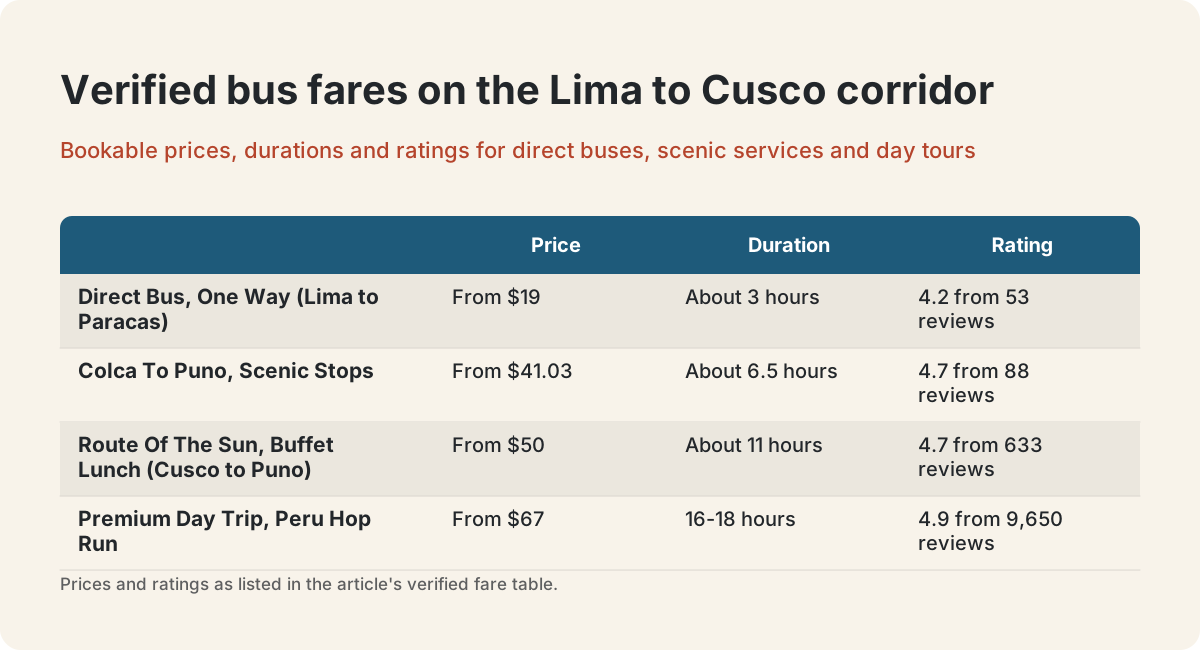
Verified bookable fares on this corridor run from $19 one way for the direct Lima to Paracas bus, to $41.03 for the scenic Colca Canyon to Puno service, to $50 for the Route of the Sun bus from Cusco to Puno, while premium day tours start from $67. Premium-line seat prices for Cruz del Sur and Oltursa vary by class and season and are not published in our research, so check the operator's own booking page for the date you want rather than trusting any round number on a blog.
That range tells you where the value sits. The "Direct Bus, One Way" from Lima's Miraflores district to Paracas costs from $19, holds a 4.2 rating from 53 reviews, takes about 3 hours, and carries free cancellation. It is the cheapest verified way to reach the coast, and for a traveler who only wants Paracas it beats every multi-stop product on price alone.

The scenic services cost more and deliver more. The "Route Of The Sun, Buffet Lunch" from Cusco to Puno runs from $50, rated 4.7 from 633 reviews, and turns an 11-hour transit day into a guided string of archaeological stops with lunch included. The "Colca To Puno, Scenic Stops" bus from Chivay does the same trick on the Arequipa side, from $41.03 with a 4.7 from 88 reviews. Those two are the strongest arguments in the whole market for treating a bus ride as a tour rather than a transfer, and they explain why the premium lines' bare seats are not the only comparison that matters.
| Verified option | Price | Rating and reviews | Duration | Free cancellation |
|---|---|---|---|---|
| Direct Bus, One Way (Lima to Paracas) | From $19 | 4.2 from 53 reviews | About 3 hours | Yes |
| Colca To Puno, Scenic Stops | From $41.03 | 4.7 from 88 reviews | About 6.5 hours | Yes |
| Route Of The Sun, Buffet Lunch (Cusco to Puno) | From $50 | 4.7 from 633 reviews | About 11 hours | Yes |
| Premium Day Trip, Peru Hop Run (Paracas and Huacachina) | From $67 | 4.9 from 9,650 reviews | 16-18 hours | Yes |
| Premium Day Trip, Sunset Toast | From $119 | 4.8 from 2,636 reviews | About 16 hours | Yes |
Two prices deliberately missing from that table: Peru Hop passes, because the operator's pass pricing is not part of our verified facts, and Cruz del Sur and Oltursa seats, because those change by class and date. If you want to compare bare seat prices across operators for a specific date, a budget direct-ticket comparison search is the practical alternative to a hop-on hop-off pass, and it is the right tool when you already know your exact dates and stops.
Which Companies Cover This Southern Peru Bus Corridor?
The corridor splits into six legs, Lima to Paracas at about 4 hours, Paracas to Huacachina at 1 to 1.5, Ica to Nazca at 2 to 3, Nazca to Arequipa at 9 to 10-plus, Arequipa to Puno at 6 to 7, and Puno to Cusco at 6 to 10, and different operators are strongest on different legs. Peru Hop is the only company selling all of them as one connected pass; the premium lines mostly sell the long direct pieces; and the scenic specialists own the two altiplano legs where the stops are the point.
The distances are modest but the hours add up. Lima to Paracas is roughly 260 to 272 km and 3.5 to 4.5 hours of driving before Lima traffic, with Peru Hop's own itineraries showing about 6 to 7 hours door to door once pickups and stops are counted. Paracas to Huacachina is a short 75 km hop. The standard Ica to Nazca leg runs 119 to 143 km over 2 to 3 hours. Then the corridor lengthens: Nazca to Arequipa is about 405 km and typically 9 to 10-plus hours, and Arequipa to Puno is about 300 km in 6 to 7 hours, with Peru Hop publishing a 05:45 to 13:00 run that stops at the Lagunillas viewpoint. Puno to Cusco closes the trip at roughly 388 km, anywhere from 6 to 8 hours direct to 9 to 11 hours on the multi-stop Ruta del Sol style services.
| Leg | Distance | Typical time | Strongest operator type |
|---|---|---|---|
| Lima to Paracas | 260-272 km | 3.5-4.5 hours driving; 6-7 with pickups | Direct bus lines, Peru Hop, or a booked day tour |
| Paracas to Huacachina | ~75 km | 1-1.5 hours | Any service connecting the two on the same day |
| Ica to Nazca | 119-143 km | 2-3 hours | Direct public and tourist buses |
| Nazca to Arequipa | ~405 km | 9-10+ hours | Premium lines and hop-on hop-off passes |
| Arequipa to Puno | ~300 km | 6-7 hours | Scenic services with viewpoint stops |
| Puno to Cusco | ~388 km | 6-10 hours | Direct buses or the multi-stop Ruta del Sol |
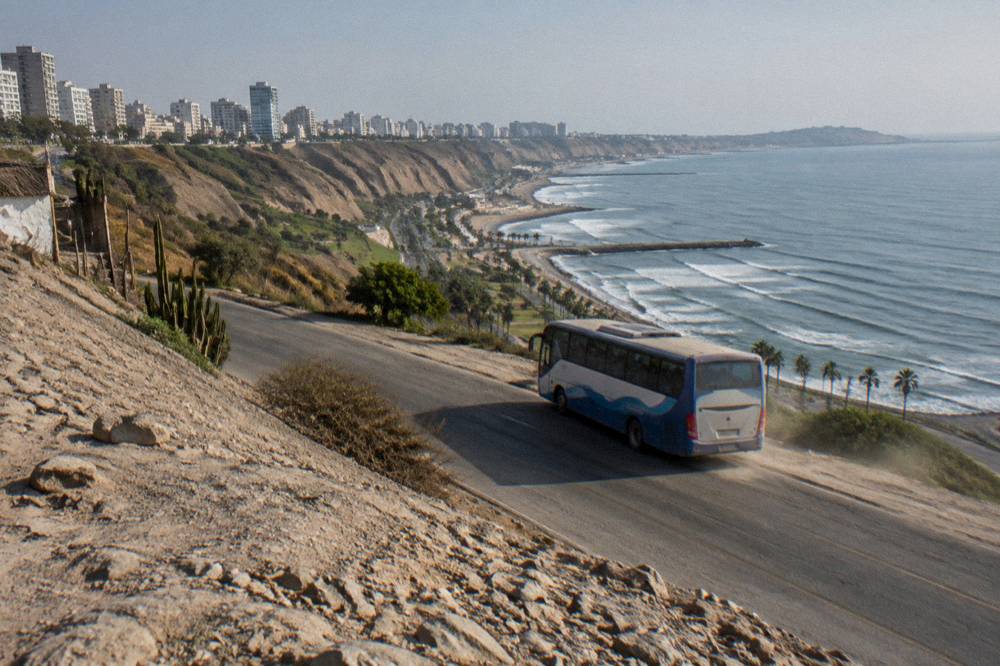
The leg-by-leg view also explains the day-tour market. Lima to Paracas to Huacachina and back is a lot of connecting for two short hops, which is exactly the gap the premium coast day trips fill: the "Premium Day Trip, Peru Hop Run" bundles the whole coast loop into one 16 to 18 hour booking from $67, rated 4.9 across 9,650 reviews. You can see its current dates and price on the operator's live listing. And if the corridor's end is really your goal, remember the bus stops at Cusco: from there, the "Full-Day Group Tour" to Machu Picchu runs from $332 with a 4.7 from 2,307 reviews, though that listing shows no standard free-cancellation policy, so read the terms before you commit.
What Comfort And Service Do You Get On Board?
On Peru Hop, the verified equipment list includes wifi, USB charging, an onboard bathroom, reclining semi-cama seats and a blanket per passenger, plus a bilingual host and hotel pickup on every leg; on the premium lines you get air-conditioned suites; on economy services you get the seat. The gap between tiers is real but smaller than the gap between any formal operator and the informal combis, which often lack climate control altogether.
Peru Hop's on-board claims are confirmed on the operator's own buses page: wifi, USB charging, an onboard bathroom, reclining semi-cama seats, and a blanket for each passenger, with the climate-control system running on the high-altitude Puno to Cusco leg too. A few reviewer reports note that wifi and USB can be inconsistent, which is worth knowing before you plan a working session on a 10-hour leg. The service layer is the bigger differentiator: a bilingual local host on every bus, and hotel or hostel pickup and drop-off in participating locations, which removes the terminal entirely from your day. Peru Hop states that its buses carry GPS tracking and observe speed limits with two drivers on long legs; those safety claims are the operator's own and are presented here as such.
The premium lines answer with hardware. Cruz del Sur's Suite class is the reference standard for the direct Lima to Cusco run, and Oltursa fields comparable equipment on the same corridor; both, like Peru Hop, run air conditioning as standard, while informal combis and colectivos often do not. Peru Hop does not publish a strict luggage limit; a standard suitcase goes in the under-bus hold plus one carry-on daypack, per the operator's terms and traveler reports. That is a meaningful point on a corridor where you will want layers for altiplano passes above 4,000 meters even in dry season.
Comfort also has a seasonal dimension the equipment lists never mention. Dry season from May to October gives the clearest skies for the Cruz del Condor viewpoint in Colca, where mornings between 7 and 10 are best for condor thermals, and it is the preferred window for the whole southern route. The best month to visit Peru question matters more here than on most pages, because a rainy-season night bus over a 4,000 meter pass is a different product from the same seat in July.
How To Choose The Right Bus Company For Your Trip?
Pick by trip shape, not by brand: three or more stops and you want Peru Hop's pass, two cities in one booking and you want Cruz del Sur or Oltursa direct, one coastal highlight and you want a day tour, and tight budgets want the verified $19 to $50 services. Every rule below falls out of the facts already covered, so treat this as the decision layer rather than new information.
Start with your stop count. If your itinerary reads Lima, Paracas, Huacachina, Arequipa, Puno, Cusco, a hop-on hop-off pass is structurally the right product: it handles six bookings as one, moves your dates in the app up to 12 hours before departure, and drops you at hotels instead of terminals. If it reads Lima to Cusco full stop, buy one direct premium seat and fly or ride straight through, and consider whether flying beats the bus for your dates given the 21.5 to 24 hour road time. If it reads Lima plus one or two days, book a day tour and skip the corridor entirely.
Second, decide whether your bus hours are transit or sightseeing. The altiplano legs are the only place in the country where the slow bus is arguably the better trip: the Route of the Sun and the Colca to Puno scenic services both convert a transit day into an itinerary, and the viewpoints they stop at, Lagunillas and Cruz del Condor, are not reachable any other way. On the coast, by contrast, the road hours are just hours, and the desert is the destination rather than the drive.
Third, book the arrival end before you land. Cusco sits at 3,399 meters, and Alejandro Velasco Astete airport at 3,310 meters is one of the world's highest commercial airports, so the last thing most travelers want after a 24 hour ride is a taxi negotiation. The "Private Transfer, Shared Rate" from Cusco airport to your hotel runs from $13 per group with a 4.8 from 251 reviews and free cancellation; its door-to-door competitor starts at $14.99 with a 4.5 from 98 reviews. Either one removes the last friction of the corridor.
Finally, whatever you book, keep a buffer. Timed entry windows now govern Machu Picchu, with daily capacity set at 4,500 in regular season and up to 5,600 on specific high-season dates, so a bus delay the day before a citadel ticket is the one mistake this corridor does not forgive. Build a spare day into Cusco, book the operators above rather than the cheapest informal option, and the southern route rewards the planning generously.
Common Questions About Peru Bus Companies
Which Peru bus companies should you actually book?
Peru Hop for hop-on hop-off flexibility and hotel pickup, Cruz del Sur or Oltursa for the fastest direct Lima to Cusco seat, Civa and similar economy lines for the lowest fares, and the premium day-trip operators for a single coastal highlight. No single company wins every trip shape.
Is Peru Hop better than Cruz del Sur?
Neither is better overall; they are different products. Peru Hop sells a hop-on hop-off pass with hotel pickup, a bilingual host and built-in stops at Paracas, Huacachina, Nazca, Arequipa, Puno and Cusco. Cruz del Sur sells one fast, comfortable direct seat, about 21.5 to 24 hours from Lima to Cusco. Multi-stop travelers usually come out ahead on the pass; single-journey travelers usually come out ahead on the direct seat.
Is it safe to take overnight buses in Peru?
The US State Department and UK FCDO both advise using reputable transport companies and avoiding overnight travel where possible, especially in mountainous and remote regions. Notably, US government employees are permitted to travel at night on commercial buses along the Lima-Arequipa-Cusco corridor specifically. Book premium lines, avoid informal combis, and keep a buffer day before any fixed-date ticket.
How much does a bus from Lima to Paracas cost?
The verified direct one-way bus from Lima's Miraflores district to Paracas costs from $19, holds a 4.2 rating from 53 reviews, takes about 3 hours, and includes free cancellation. Premium coast day trips that cover Paracas and Huacachina start from $67.
Do Peru buses have air conditioning and bathrooms?
Premium long-distance lines such as Cruz del Sur, Oltursa and Peru Hop generally run air conditioning. Peru Hop buses also carry wifi, USB charging, an onboard bathroom, reclining semi-cama seats and a blanket per passenger, though some reviewers note wifi and USB can be inconsistent. Informal combis and colectivos, and many economy public buses, often lack climate control.
Can a bus take me all the way to Machu Picchu?
No. Cusco is the end of the bus corridor; Machu Picchu is reached from Cusco by train or trek via Ollantaytambo and Aguas Calientes. The verified full-day group tour from Cusco runs from $332 with a 4.7 rating from 2,307 reviews, and it shows no standard free-cancellation policy, so check the terms on the live listing before booking.