Peru Hop Vs. Cruz Del Sur: Which Bus Is Better
Peru Hop sells a hop-on-hop-off pass across the whole southern route; Cruz del Sur sells a seat on a direct bus. The better choice depends on whether your trip is one marathon leg or a string of stops.
Short answer
Peru Hop suits travelers breaking the Lima to Cusco journey into stops at Paracas, Huacachina, Nazca, Arequipa and Puno, with hotel pickup and a bilingual host on every bus. Cruz del Sur suits travelers who want one direct seat, roughly 21.5 to 24 hours Lima to Cusco, on a premium long-distance line. A pass wins on multi-stop trips; a single ticket wins on speed.
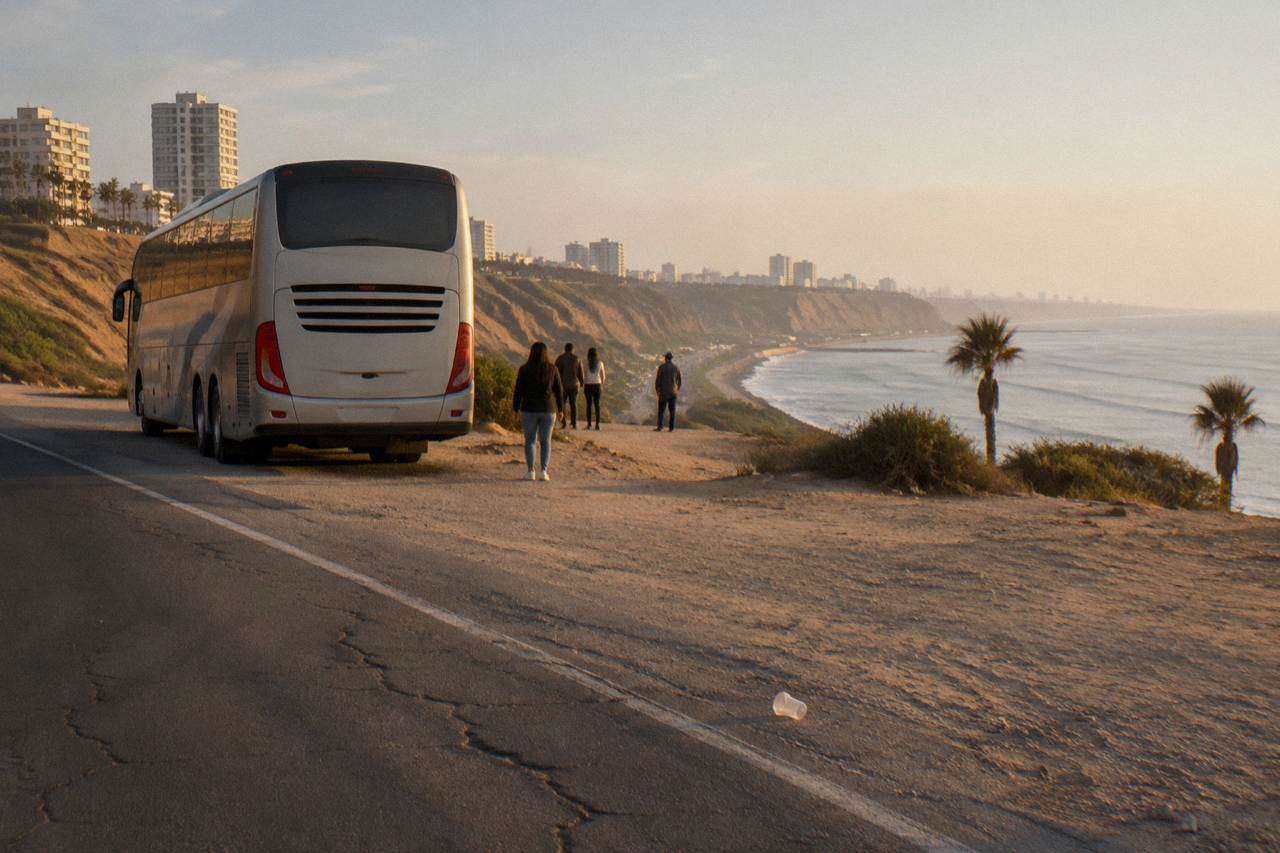
The Lima to Cusco corridor is served by two very different products that both get called "the bus." Peru Hop is a hop-on-hop-off pass built around stops: Paracas, Huacachina, Nazca, Arequipa, Puno, then Cusco. Cruz del Sur is a traditional long-distance line that runs direct Lima to Cusco buses, roughly 21.5 to 24 hours on the road, from terminals like Javier Prado, with multiple daily departures in its Suite class.
Comparing them is not really comparing two companies on the same product. It is comparing two travel styles. One is built for the traveler who treats the journey south as the trip itself. The other is built for the traveler who needs to be in Cusco, efficiently, and would rather save the days for Machu Picchu than for a desert oasis. This guide lays out where each model wins, where each one is weak, and which type of traveler each actually fits.
What Is The Actual Difference Between Peru Hop And Cruz Del Sur?
The core difference is what you are buying: Peru Hop sells a multi-stop pass with hotel pickup and onboard hosts across the whole southern route, while Cruz del Sur sells point-to-point seats on a premium direct line, including a Lima to Cusco service of roughly 21.5 to 24 hours. One is a framework for a ten-day trip; the other is a single ticket for a single leg.
Cruz del Sur operates like any major long-distance carrier. You pick an origin, a destination and a class, and the company moves you between terminals. On the Lima to Cusco corridor it runs multiple daily departures, and its Suite class is a fully flat-bed style seat aimed at overnight travel. The company publishes its own schedules and sells through its own site as well as ticket aggregators, and its Lima to Cusco timetable is listed directly on its official Lima to Cusco page.
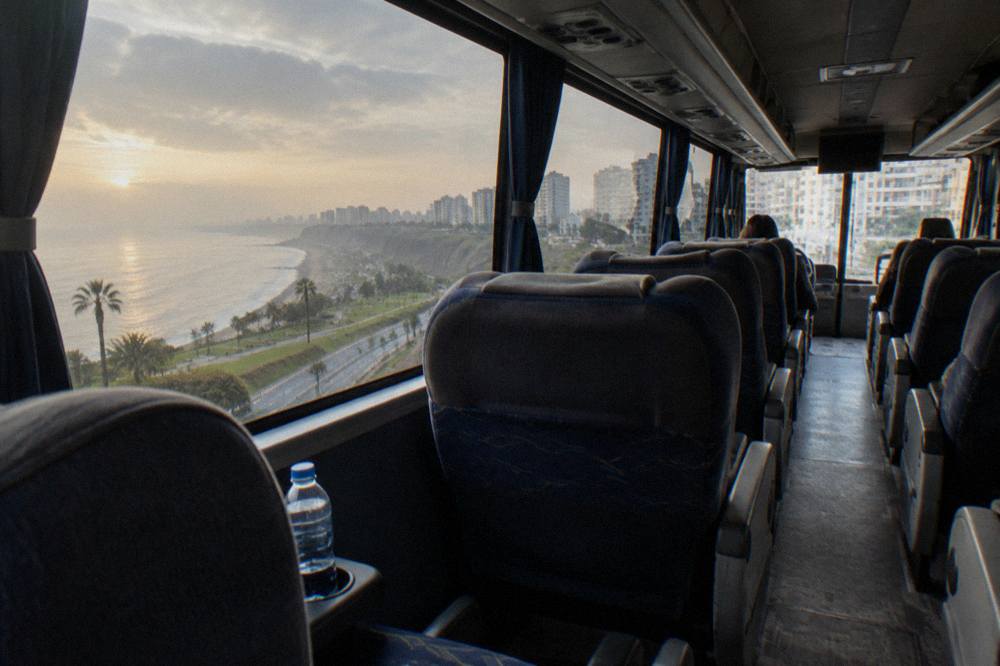
Peru Hop operates on a different logic entirely. The pass covers a sequence of legs along the same corridor, and you decide where to hop off and how long to stay. Peru Hop picks up and drops off at your hotel or hostel in participating locations, so you skip the bus terminal with your bags. A bilingual local host rides every Peru Hop bus, and passes are valid up to one year from first use, with date changes in the app up to 12 hours before departure, subject to availability.
Neither model is objectively superior. If your Peru trip is two weeks and you want to see the coast, Arequipa and Titicaca on the way to Cusco, the pass structure matches your itinerary almost perfectly. If you have eight days total and Machu Picchu is the goal, sitting through ten days of scheduled stops to reach Cusco makes no sense at all, and a direct seat, or a flight, is the rational choice.
The distinction matters most in the middle cases. A traveler with twelve days, four planned stops and a tight budget will weigh the two products very differently from a traveler with nine days, no fixed stops and a fear of missing Paracas. The rest of this guide works through those middle cases leg by leg.
Which Service Fits A Southern Peru Itinerary Better?
For a multi-stop itinerary, Peru Hop fits better because its route is the itinerary: the standard sequence is Lima, Paracas, Huacachina, Nazca, Arequipa, Puno and Cusco, with the pass handling every connection. For a direct itinerary, Cruz del Sur fits better because you board once in Lima and arrive in Cusco roughly a day later, with no hop-off decisions to manage.
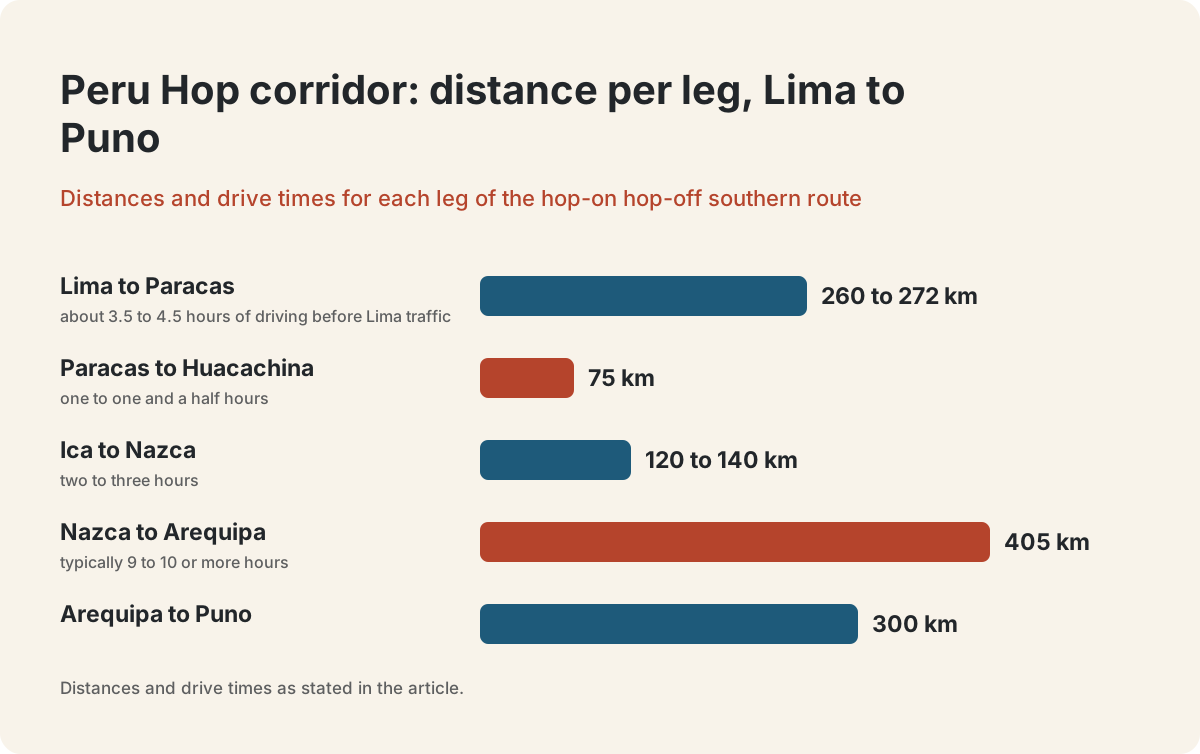
The way most travelers actually use the corridor explains the pass model's appeal. Lima to Paracas is roughly 260 to 272 km, about 3.5 to 4.5 hours of driving before Lima traffic. Paracas to Huacachina is around 75 km, one to one and a half hours. Ica to Nazca is roughly 120 to 140 km, two to three hours. Nazca to Arequipa is about 405 km, typically 9 to 10 or more hours. Arequipa to Puno is around 300 km, 6 to 7 hours, and Puno to Cusco is roughly 388 km, typically 8 to 10 hours depending on whether the service stops. String those together with buses, terminals and tickets and you are planning six separate bookings.
Peru Hop compresses that planning burden into one pass, and the flexibility is real: passes are valid up to one year from first use, and you can change a bus time in the app up to 12 hours before departure. If you love Huacachina and want an extra day on the sand dunes, you stay. If Arequipa's white volcanic architecture is enough after a day and a half, you move on. Cruz del Sur offers none of that; a ticket is for a specific service on a specific date, and changing it means rebooking.
The direct line's advantage is equally real. Roughly 21.5 to 24 hours from Lima to Cusco on a premium seat is a hard number, not a rolling estimate. There is no risk that you will linger too long somewhere and find your onward leg full. For an itinerary built around Cusco and the Sacred Valley, the corridor is simply a transfer to be endured overnight, and Cruz del Sur does that transfer well, with a fully flat Suite seat aimed exactly at that traveler.
Travelers who want the coastal highlights without committing to the full pass or a full day of driving have a third option worth noting. A premium day trip such as the Lima Paracas and Huacachina day trip covers the two most visited coastal stops in one booked excursion, about 16 hours round trip, from $119, with a sunset toast at the oasis and free cancellation. It is rated 4.8 from 2,636 reviews, a substantial pool, and it competes directly with the first two legs of the pass.
If you are still sketching the overall route, our Lima to Cusco by bus guide breaks down every leg, operator and stop in one place, and it is the natural companion to this comparison.
How Do Comfort And Safety Compare?
On comfort, both premium long-distance products are well equipped: Cruz del Sur's Suite class offers flat-bed seating, and Peru Hop buses run a climate-control system, reclining semi-cama seats, an onboard bathroom, wifi and USB charging. On safety, both operate daytime and overnight services on the Lima-Arequipa-Cusco corridor, one of the corridors US government employees are permitted to use with commercial bus companies at night.
The comfort comparison is closer than most people expect. Cruz del Sur is a flagship carrier with a well-earned reputation for equipment: its Suite class is one of the more comfortable overnight seats in South America. Peru Hop's fleet is a modern touring fleet too. Peru Hop buses run a climate-control system to keep the cabin at a steady temperature, provide a blanket per passenger, which matters on the high-altitude Puno leg, and carry a bilingual local host on every departure. Buses come with wifi, USB charging, an onboard bathroom and reclining semi-cama seats, and a few reviewers note the wifi and USB can be inconsistent, so download anything you want before boarding.
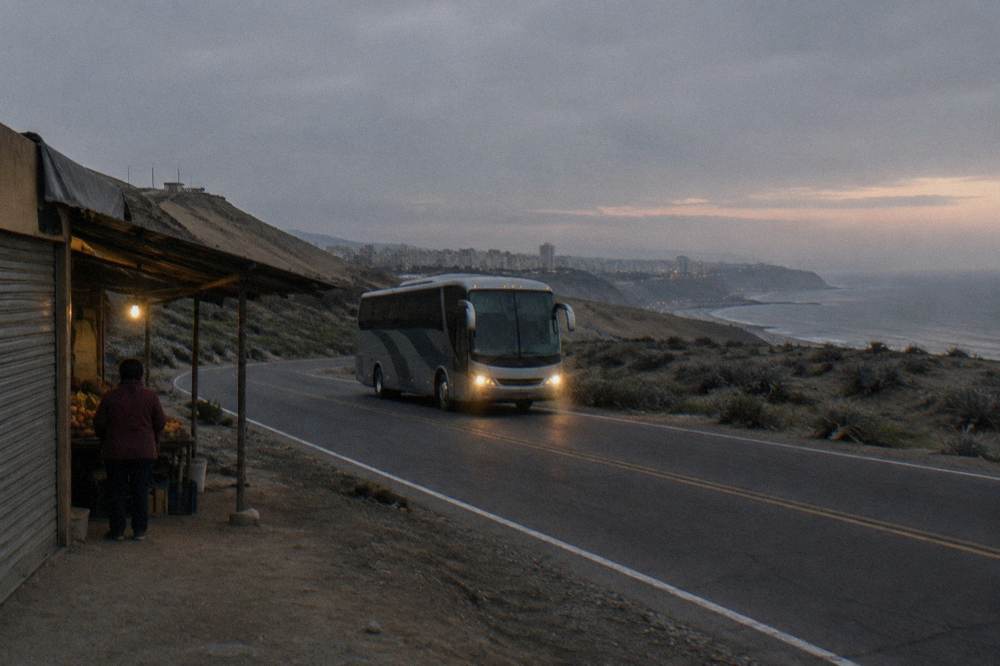
On safety, the official advisories treat both the same way, because the advisory is about roads, not brands. The UK FCDO advice for Peru is blunt: "Bus crashes are common, especially at night. Only use reputable transport companies, and where possible, avoid overnight travel, especially in mountainous and remote regions." The US State Department advisory for Peru carries the same sentence, and separately restricts its own employees' nighttime road travel to specific corridors, including the Lima-Arequipa-Cusco corridor, where they may also use commercial buses. Both Cruz del Sur and Peru Hop are reputable companies operating on exactly that permitted corridor.
| Comfort factor | Peru Hop | Cruz del Sur |
|---|---|---|
| Seat type | Reclining semi-cama seats | Semi-cama and flat-bed Suite class |
| Climate | Climate-control system, blanket per passenger | Air-conditioned premium cabin |
| Bathroom | Onboard bathroom | Onboard bathroom |
| Power and wifi | USB charging and wifi, occasional variability reported | Suite class includes onboard amenities |
| Host | Bilingual English/Spanish host on every bus | Standard crew; Spanish primary |
| Pickup | Hotel or hostel pickup and drop-off in participating locations | Terminal-based departures |
The host is the one comfort feature that genuinely differentiates the products, and it is easy to underrate. On a pass, the same host walks you through each stop, the timing, and the onward options. On a direct line, you board at a terminal, the crew does its job, and you arrive; nothing is wrong with that, but nothing about it helps a first-time visitor decide whether Huacachina deserves an extra night.
One honest caveat on Peru Hop: some legs run long, and several run overnight or into the evening, so the pass does not automatically spare you the night-driving question. The Nazca to Arequipa leg, roughly 9 to 10 or more hours, is the one that most often lands after dark, whichever operator you ride with. That is a corridor reality, not a company failing.
What About Price, Tickets And Flexibility?
On raw ticket price, a single direct Cruz del Sur seat is normally cheaper than a full Peru Hop pass, because you are buying one leg rather than a framework for a multi-week trip. On flexibility, the pass is far ahead: Peru Hop passes are valid up to one year from first use with in-app date changes up to 12 hours before departure, while a Cruz del Sur ticket is fixed to a specific service unless you rebook.
The price question needs honest framing. Peru Hop costs more than a bare Cruz del Sur or Oltursa seat before you total in the taxis, terminal transfers and separate tour bookings that independent travel along the corridor requires. The fair comparison is not pass versus one ticket; it is pass versus the sum of six tickets, six terminal taxis, and the tours you would otherwise book separately at each stop. For the traveler who just wants one direct seat, Peru Hop is simply not the cheapest option, and no honest comparison pretends otherwise.

Flexibility is where the pass earns its keep. A pass holder who decides in Paracas to add a day in Huacachina changes the date in the app, up to 12 hours before departure, subject to availability. A Cruz del Sur passenger who wants the same change is rebooking a ticket. Passes are valid up to one year from first use, which matters for long trips and for travelers who build in a contingency week. Roads in Peru occasionally see strikes or protests, so check current conditions before travel; both operators monitor SUTRAN alerts, and pass flexibility is a genuine advantage when a leg gets disrupted.
Ticketing mechanics differ too. Cruz del Sur sells through its own site and through ticket aggregators, and a good first move for price shoppers is to compare bus and train seats on the corridor as a budget, direct-ticket alternative to a hop-on-hop-off pass. Peru Hop sells its pass through its own site only, which keeps pricing simple but removes the aggregator discount game.
| Ticket factor | Peru Hop | Cruz del Sur |
|---|---|---|
| What you buy | A pass covering a sequence of legs | A ticket for one specific service |
| Validity | Up to one year from first use | Date and departure specific |
| Changes | In-app, up to 12 hours before departure, subject to availability | Rebooking required |
| Pickup | Hotel or hostel pickup and drop-off | Terminal departure |
| Best for | Multi-stop trips over one to three weeks | One direct leg, fastest corridor transit |
Travelers pairing the pass with booked excursions should also know that many of the corridor's most popular day trips run with free cancellation. That combination, a flexible pass plus cancellable tours at the stops, is the closest thing to a fully adjustable southern-Peru trip you can build without renting a car.
If price is the deciding factor and the pass does not fit, read our Peru Hop reviews rundown before writing it off; the value case depends heavily on how many stops you actually use.
Which Service Works Better For Arequipa, Puno And Titicaca?
Both services reach Arequipa and Puno, but Peru Hop structures the altiplano legs as part of the pass with scenic stops, while Cruz del Sur treats them as point-to-point connections. From Arequipa onward the elevation climbs steeply, from about 2,335 m in Arequipa to 3,827 m in Puno, and the pass model gives you natural acclimatization nights at each stop.
The southern corridor's second half is where the two models diverge most. Arequipa sits at about 2,335 m, a comfortable acclimatization stage. Puno sits at 3,827 m on Lake Titicaca, whose surface sits at 3,812 m, and Cusco sits at about 3,399 m. Climbing that staircase gradually, with a night or two in Arequipa and another in Puno, is the standard advice for avoiding altitude sickness, and the pass model produces exactly that itinerary by default. The direct line produces the opposite: a fast climb to Cusco, ideally broken voluntarily.
The altiplano legs also reward stopping. The Puno to Cusco road is roughly 388 km, typically 8 to 10 hours, and scenic "Ruta del Sol" style services with cultural stops and lunch take the upper end of that range on purpose. A dedicated option on this site, the Route of the Sun bus from Cusco to Puno, covers those stops in detail. Travelers coming the other direction, Puno to Cusco, have the same choice of direct or scenic services, laid out in our Puno to Cusco bus guide.
One scenic connection worth booking separately is the Chivay to Puno bus across the altiplano, which links Colca Canyon to Lake Titicaca in about 6.5 hours with stops along the way, from $41.03, rated 4.7 from 88 reviews with free cancellation. It is a useful leg for travelers who add Colca Canyon to an Arequipa stay, a route our Colca Canyon from Arequipa guide covers in full.
Cruz del Sur's strengths here are the same as anywhere: a direct seat, a timetable and a terminal. For a traveler who has already seen Titicaca or who is short on days, flying Cusco to Juliaca and busing to Puno is a common shortcut, though flying directly into Juliaca, at about 3,825 m, increases altitude risk by skipping the gradual climb. The pass traveler gets the gradual climb whether they wanted it or not; the direct traveler has to choose it deliberately.
What Do You Do Once You Reach Cusco?
Neither service reaches Machu Picchu itself: Cusco is the end of both lines, and Machu Picchu is reached by train or trek from Cusco. From Cusco, the standard structure is a bus or transfer to Ollantaytambo, about 62 to 72 km, then a train of roughly 1 hour 30 minutes to Aguas Calientes, then the citadel.
This is the fact that catches the most first-time visitors, and it applies to both products equally. Peru Hop's route ends at Cusco; it does not run to Machu Picchu, Huaraz, Iquitos or Puerto Maldonado. Cruz del Sur's corridor service also ends at Cusco. From there the journey continues by rail: PeruRail and Inca Rail both run multiple daily departures from Ollantaytambo, roughly 1 hour 20 minutes to 1 hour 45 minutes to Aguas Calientes, and our Cusco to Machu Picchu train guide compares the classes and schedules in detail.
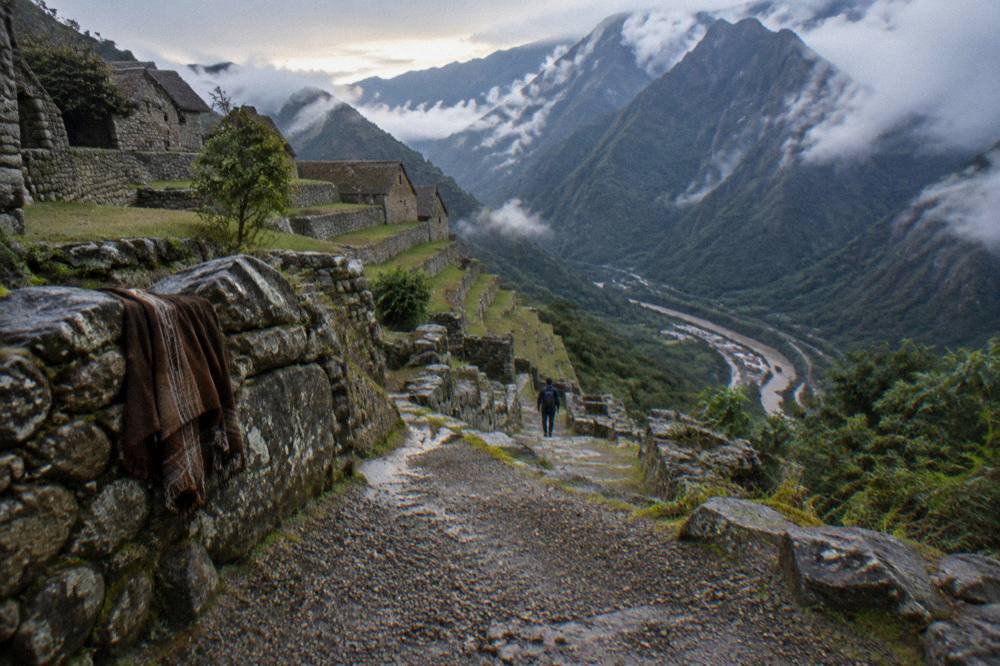
Two booked options cover most travelers' needs. A full-day group tour from Cusco, from $332, handles the bus to Ollantaytambo, the train, the connection and a guided citadel tour in one package, about 12 hours door to door; it carries 4.7 from 2,307 reviews, though its listing shows no standard free-cancellation policy, so check the terms before booking.
The premium alternative is the full-day train tour, around 16 hours with panoramic viewing cars on the rail legs, free cancellation, and a 5.0 rating from 317 reviews. Between the two, the group tour is the value pick and the Vistadome is the splurge.
Arrival logistics in Cusco itself are worth ten minutes of planning. The city sits at about 3,399 m, and the first afternoon is best kept slow. Private transfers from Cusco Airport to hotels start from $13 per group, rated 4.8 from 251 reviews, and take 20 to 25 minutes; pre-booking one means you are not negotiating a fare at 3,400 m after a 24-hour bus ride.
Should You Choose Peru Hop Or Cruz Del Sur?
Choose Peru Hop if your trip is two or more weeks, you want to stop at Paracas, Huacachina, Nazca, Arequipa or Puno, and you value hotel pickup, a bilingual host and year-long pass flexibility. Choose Cruz del Sur if you are going straight to Cusco, want the roughly 21.5 to 24 hour direct run in a flat-bed seat, and prefer paying for one leg rather than a framework.
The honest summary is that most travelers asking this question already know which trip they are taking. The pass buyer is building a journey; the direct buyer is closing a distance. If the phrase "Lima to Cusco" describes your whole route and Machu Picchu is the goal, a direct bus seat or a flight is the better tool, and our Peru Hop vs flying comparison covers that trade directly. If the phrase describes a corridor you intend to explore over ten days or more, the pass model fits the shape of the trip.
| Traveler profile | Better fit | Why |
|---|---|---|
| Two weeks or more, five or more stops | Peru Hop | Pass flexibility, hotel pickup, host guidance at each stop |
| Eight days or fewer, Cusco and Machu Picchu focus | Cruz del Sur or a flight | Direct transit beats a rolling itinerary |
| First trip to Peru, nervous about logistics | Peru Hop | Bilingual host and door-to-door pickup reduce friction |
| Returning visitor, seen the coast | Cruz del Sur | No reason to pay for stops you will skip |
| Budget traveler, one leg only | Cruz del Sur | A single seat costs less than a pass |
Planning the full Lima to Cusco route by bus?
Lima To Cusco covers every leg, operator and stop on the corridor in one place. See Peru Hop passes, timetables and pickup points to check whether the hop-on-hop-off model matches your dates.
One last practical note for pass buyers: roads in Peru occasionally see strikes or protests, so check current conditions before each long leg, and keep your in-app change window in mind. Passes can be shifted up to 12 hours before departure, subject to availability, which is precisely the kind of safety valve a fixed ticket does not offer.
Common Questions About Peru Hop Vs. Cruz Del Sur
Is Peru Hop better than Cruz del Sur?
Neither is better overall. Peru Hop is better for multi-stop trips along the southern corridor, because the pass covers every leg with hotel pickup and a bilingual host. Cruz del Sur is better for a single direct journey, especially the overnight Lima to Cusco run of roughly 21.5 to 24 hours in Suite class, because you pay for one seat, not a framework.
Does Cruz del Sur go from Lima to Cusco?
Yes. Cruz del Sur runs direct Lima to Cusco buses, roughly 21.5 to 24 hours, with multiple daily departures from terminals including Javier Prado. Its Suite class is a flat-bed style seat aimed at overnight travel on this corridor.
Does Peru Hop go to Machu Picchu?
No. Cusco is the end of the line. Machu Picchu is reached by train or trek from Cusco, typically a bus or transfer to Ollantaytambo, then a train of roughly 1 hour 30 minutes to Aguas Calientes, then the citadel entrance.
Is Peru Hop more expensive than Cruz del Sur?
A pass costs more than a single bare seat, yes, and Peru Hop is not the cheapest option for a traveler who just wants one direct ride. The fair comparison is a pass versus the sum of six separate tickets plus terminal taxis and tours at each stop, where the pass often comes out ahead on multi-stop trips.
Can you change Peru Hop dates after booking?
Yes. Passes are valid up to one year from first use, and you can change a bus time in the app up to 12 hours before departure, subject to availability. Cruz del Sur tickets are fixed to a specific service and require rebooking to change.
Is it safe to take an overnight bus in Peru?
Both operators are reputable companies on the Lima-Arequipa-Cusco corridor, one of the corridors US government employees may use with commercial buses at night. The official advisories still recommend avoiding overnight travel in mountainous and remote regions where possible, so weigh the schedule against your route.