Is There A Train From Lima To Cusco?
Plenty of travelers arrive at Lima airport convinced a sleeper train will carry them over the Andes to Cusco. It will not, because no such train exists. Here is what the rail network actually covers, and the routes that do the job instead.
Short answer
No, there is no passenger train from Lima to Cusco, and no railway links Peru's capital to its Andean interior at all. The only scheduled tourist trains near this route run out of Cusco itself: the PeruRail Titicaca service to Puno (from $395, about 10 hours) and the Machu Picchu trains from Ollantaytambo. You reach Cusco by air or by road.
Is There A Train From Lima To Cusco?
No. There is no passenger train from Lima to Cusco, and no railway of any kind connects Peru's capital to the Andean south. The trains that do exist on this side of the country depart from Cusco itself: the PeruRail Titicaca service to Puno and the Machu Picchu trains out of Ollantaytambo. Every journey between Lima and Cusco happens by air or by road.
That answer surprises a lot of first-time visitors, and the confusion is understandable. Machu Picchu imagery sells Peru as a rail destination, the Hiram Bingham name carries enormous romantic weight, and several other South American countries do run long-distance sleeper trains. So the expectation of a Lima to Cusco train appears in search queries thousands of times a month, and tour sellers sometimes lean on vague "train to Machu Picchu" phrasing that makes the network sound bigger than it is.
The reality on the ground is narrower. Peru's passenger rail offering consists of two tourist-oriented corridors, both anchored in the Cusco region: the Cusco to Puno lake crossing operated as the PeruRail Titicaca service, and the short but spectacular branch from Ollantaytambo to Aguas Calientes, the gateway town below Machu Picchu. PeruRail publishes its full schedule and frequency detail on its official train schedules page, and nothing on it departs Lima for the mountains.
This matters for planning because the mental model changes. You are not choosing between a train and a plane. You are choosing between a 1 hour 20 minute flight over the Andes, a long-haul bus ride of roughly 21.5 to 24 hours on companies like Cruz del Sur or Oltursa, or a multi-stop overland route that breaks the journey at Paracas, Huacachina, Nazca and Arequipa. The train rides you have seen in photos come after you arrive, as excursions from Cusco. A good starting point for weighing the road and air options is the site's Lima to Cusco by bus guide, which covers timetables, classes and stop choices in detail.
One bus-based option worth naming early is Peru Hop, a hop-on hop-off pass service that links Lima, Paracas, Huacachina, Nazca, Arequipa and Puno before finishing in Cusco, with hotel pickup and a bilingual host on every bus. It solves the "I wanted one ticket that handles everything" instinct that a train booking normally satisfies.
Why Doesn't Peru Have A Lima To Cusco Train?
Geography and economics killed the idea long ago, and no project exists to revive it. A rail line from Lima to Cusco would have to climb from sea level all the way up to the city's 3,399 meters, cross some of the most folded terrain in the Andes and serve a corridor where cheap flights now exist. Peru's passenger rail instead shrank to two tourist corridors, both starting from Cusco, both running where the mountains already permit it.
The engineering case is brutal even by Andean standards. Cusco sits at about 3,399 meters above sea level, and the direct road distance is covered by buses in roughly 21.5 to 24 hours on the best operators, which tells you how much vertical work the route involves. Peru's mountain railways were built to move minerals and agricultural freight from specific highland points to the coast, not to knit the country together like a national network. Passenger service survived only where tourism pays for it.
That is exactly what you see today. The two live corridors earn their keep from visitors: the Titicaca train between Cusco and Puno, a roughly 10 hour rolling lunch-and-observation run, and the Machu Picchu branch where the 43 to 44 kilometers from Ollantaytambo down to Aguas Calientes take between 1 hour 20 minutes and 1 hour 45 minutes on Inca Rail's published timings. Inca Rail details its own stations and schedules at incarail.com. Both operators price these as experiences, from $395 for the Titicaca train on the roster this site tracks, not as commuter transport.
There is also a political layer. Peru's big transport investment of this decade is not rail at all: it is Chinchero International Airport outside Cusco, reported at roughly 40 percent physical progress as of mid-to-late 2026, with operations targeted for late 2027 or 2028 at the earliest. The state is spending its Andean transport money on runways, because air is how the Lima-Cusco demand actually moves.
For a traveler, the takeaway is simple: stop budgeting for a rail seat that does not exist, and start budgeting for the mode that fits your time. The good news is that the substitutes are genuinely good, and the triangle of trips below covers what most people actually want from a Lima to Cusco journey.
Can A Train Get You Part Of The Way To Cusco?
Yes, but only on the far side of the journey. The PeruRail Titicaca train links Cusco with Puno on Lake Titicaca in about 10 hours, from $395, and the Machu Picchu branch runs from Ollantaytambo to Aguas Calientes in under two. Neither helps you reach Cusco from Lima; both are excursions or onward legs that begin once you have already arrived.
The Titicaca train is the closest thing Peru has to the romantic long-distance rail people imagine when they search for a Lima to Cusco train. It is a full-day experience: roughly 10 hours between Cusco and Puno, a dining car, an observation bar and a route that rolls across the altiplano at heights above 3,800 meters near Puno, which sits at 3,827 meters with the lake surface itself at 3,812 meters. On the roster this site tracks, the service lists from $395 with 294 reviews, a pool too small for a trustworthy star claim. Its live listing carries the current schedule and fare detail.
If the goal is scenic rail rather than the lake, the Machu Picchu branch is the stronger ride per kilometer. Trains leave Ollantaytambo, at 2,792 meters, and follow the Urubamba river gorge down toward Aguas Calientes at the foot of the citadel. The ruins themselves stand at about 2,430 meters, far below Cusco's 3,399 meters, which is why travelers often feel better at Machu Picchu than in the city itself. A full-day Vistadome tour from Cusco, from $419 with a 5.0 rating across 317 reviews on this site's roster, bundles the transfer, train and guided citadel visit.
There is a third rail-adjacent option that deserves the name of the train it replaces. The "Route of the Sun" bus from Cusco to Puno, from $50 with 4.7 from 633 reviews on the roster, runs the same corridor the Titicaca train covers, stopping at Andahuaylillas, Raqchi and La Raya with a buffet lunch included, in about 11 hours. Travelers who want the sightseeing without the $395 rail fare choose it constantly. The site's Cusco to Lake Titicaca tours guide compares these lake approaches side by side.
So the honest framing is: a train can carry you around the Cusco region beautifully, and one of them, the Titicaca service, can even carry you away from Cusco toward Bolivia and back. But every rail kilometer in southern Peru starts from the city you were trying to reach.
What Is The Best Way From Lima To Cusco Without A Train?
Flying is the practical answer for most itineraries: 1 hour 20 to 25 minutes nonstop on LATAM, JetSMART or Sky Airline. The direct bus takes about 21.5 to 24 hours with Cruz del Sur or Oltursa and suits travelers who want to save a night's lodging. The multi-stop coastal and altiplano route, usually on a hop-on-hop-off pass, turns the transfer into the trip itself.
Each option earns its place. The flight is short but weather-sensitive: Cusco's airport sits at 3,310 meters and afternoon cloud and storms regularly delay or cancel the later departures, so morning flights are the reliable buy. The distance flown is roughly 584 to 587 kilometers, which gives a sense of how much terrain the bus version has to wind through instead.
The direct bus is the value play. Cruz del Sur and Oltursa run Lima to Cusco in the 21.5 to 24 hour range with fully flat or near-flat sleeper seats, and the fare gap versus a flight is meaningful on a long trip. The UK Foreign Office puts the standard caution plainly: "Bus crashes are common, especially at night. Only use reputable transport companies, and where possible, avoid overnight travel, especially in mountainous and remote regions," advice mirrored in the US State Department's Peru travel advisory. Both Cruz del Sur and Oltursa sit firmly in the reputable category, and the US advisory specifically permits its own staff to ride commercial buses on the Lima-Arequipa-Cusco corridor.
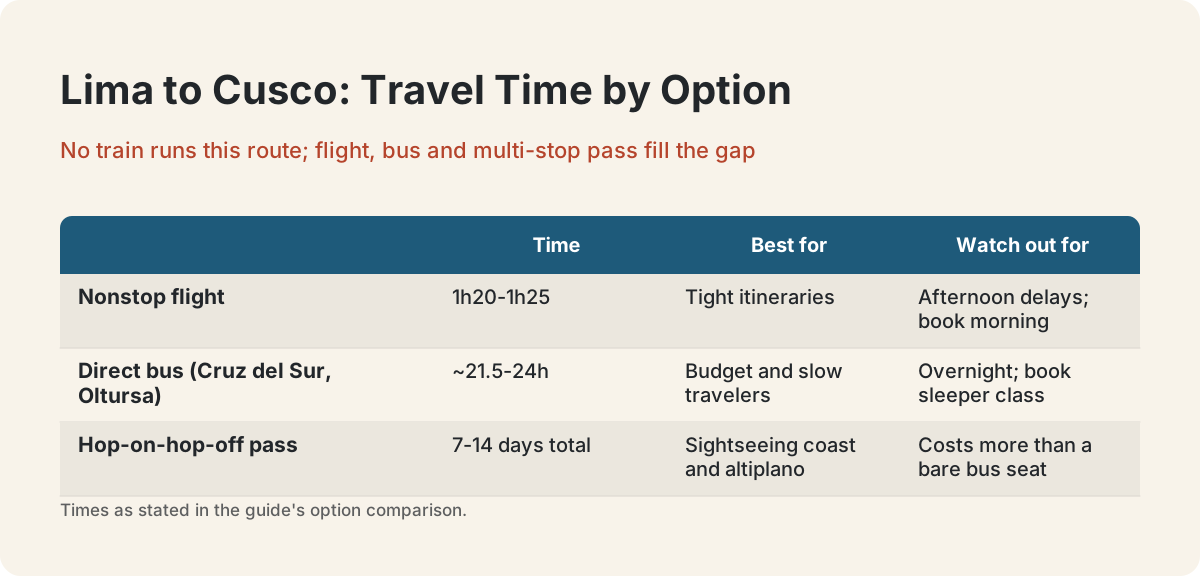
| Option | Time | Best for | Watch out for |
|---|---|---|---|
| Nonstop flight | 1h20-1h25 | Tight itineraries, anyone altitude-sensitive | Afternoon weather delays; book morning |
| Direct bus (Cruz del Sur, Oltursa) | ~21.5-24h | Budget and slow travelers | Overnight segment; book sleeper class |
| Hop-on-hop-off pass | 7-14 days total | Sightseeing the coast and altiplano | Costs more than a bare bus seat |
| Train | Not available | Nothing, today | No line exists from Lima |
The hop-on-hop-off route deserves its own paragraph, because it answers the emotional need a train would have answered. Peru Hop runs hotel pickup and drop-off in participating stops, so you skip the bus terminals with your luggage, and a bilingual local host rides every bus. Passes stay valid up to one year from first use, and you can change a departure in the app up to 12 hours before it leaves, subject to availability. The honest caveat, as with any pass: it costs more than a bare Cruz del Sur or Oltursa seat before you count the included tours and the terminal taxis you avoid, and if you only want one direct seat it is not the cheapest way to buy it.
Planning the overland route instead?
A hop-on-hop-off pass covers Lima, Paracas, Huacachina, Nazca, Arequipa, Puno and Cusco with hotel pickups, a bilingual host on every bus and free date changes up to 12 hours before departure. See Peru Hop passes and timetables.
For travelers who prefer plain point-to-point tickets over a pass, compare Lima to Cusco bus schedules and fares on Busbud as a budget, direct-ticket alternative. And once you land in Cusco, the last leg is short: a private airport transfer runs from $13 per group with 4.8 from 251 reviews on this site's roster, about 20 to 25 minutes to the historic center.
Once you are in Cusco with the altitude behind you, the citadel day is the obvious next booking. The full-day Machu Picchu group tour from Cusco, from $332 with 4.7 from 2,307 reviews, coordinates the bus to Ollantaytambo, the train, the connection and the guided citadel circuit in one 12-hour package.
Can You Combine Bus And Train On One Lima To Cusco Itinerary?
Yes, and this is the way to actually get a train into your Lima to Cusco trip. The classic shape is: bus or pass along the coast and altiplano from Lima through Paracas, Huacachina, Nazca and Arequipa to Puno, the Titicaca train or a Route of the Sun bus to Cusco, then the Machu Picchu rail branch as your finale.
That routing works because the geography cooperates. The pass-style services already run Lima to Puno with the coastal stops included, and Puno is precisely where the train begins. You never ride backward, and the train becomes a highlight rather than a detour. The distances are manageable: Lima to Paracas runs about 260 to 272 kilometers, Paracas to Huacachina roughly 75 more, and Huacachina to Nazca via Ica about 120 to 140 kilometers, the leg public operators cover in 2 to 3 hours.
A sample two-week skeleton looks like this:
| Day | Leg | Mode | Notes |
|---|---|---|---|
| 1-2 | Lima to Paracas | Bus, ~4h core drive | Ballestas Islands and the reserve |
| 2-3 | Paracas to Huacachina | Bus, 1-1.5h | Dune buggy and sunset at the oasis |
| 3-4 | Huacachina to Nazca to Arequipa | Bus, 2-3h then 9-10h | Overflight of the lines from Ica if booked |
| 5-6 | Arequipa to Colca to Puno | Tour bus | Chivay at 3,635 m; condors in the morning |
| 7-8 | Puno to Cusco | Titicaca train or Route of the Sun bus | From $395 rail or $50 bus-and-lunch |
| 9-13 | Cusco, Sacred Valley, Machu Picchu | Train from Ollantaytambo | 1h20-1h45 down to Aguas Calientes |
The Paracas and Huacachina section can be compressed into one long day if time is short: a premium day trip from Lima with a sunset toast in Huacachina runs from $119 with 4.8 from 2,636 reviews on the roster, about 16 hours door to door. The Nazca overflight from Ica or Huacachina, from $249 with 4.7 from 4 reviews, is a 35-minute flight that pairs naturally with that stop. For a fuller comparison of these coastal legs, the site's Lima to Paracas bus guide breaks down schedules and station logistics.
On the Cusco side, the rail finale is where the itinerary pays off. The full-day Vistadome option from $419, 5.0 from 317 reviews, is the panoramic-car version of the Machu Picchu day; the group tour from $332, 4.7 from 2,307 reviews, is the efficient one. Travelers who want deeper detail on the branch line itself, stations and all, should read the site's Cusco to Machu Picchu train guide alongside this page. Whichever way you book the citadel, remember the 2026 rules: timed hourly entry windows, three main circuits and a 4,500 visitor daily cap that rises to 5,600 on peak dates.
One more piece of the combination is worth flagging. This site's Lima To Cusco planning pages exist precisely because the corridor is multi-modal: no single ticket covers it, so the sequence of bus, flight, train and tour choices is the actual planning work. Start from the pieces above and the rest follows.
What Does The Closest Thing To A Lima Cusco Train Cost?
The rail-inclusive version of the journey prices out well above the plain transfer. The Titicaca train lists from $395, a Vistadome Machu Picchu day from $419 and the group version from $332, so a bus-plus-train itinerary can stack several of these booked experiences on top of the basic transfer before you even reach food and lodging. A flight plus the same Cusco-side trains lands in the same band.
The comparison below uses this site's verified roster figures for the bookable pieces; anything not listed varies by season and is quoted at booking.
| Booked piece | From price | Rating | Reviews | Duration |
|---|---|---|---|---|
| Lima to Paracas one-way bus | $19 | 4.2 | 53 | ~3 hours |
| Premium Paracas and Huacachina day trip | $119 | 4.8 | 2,636 | ~16 hours |
| Route of the Sun bus, Cusco to Puno | $50 | 4.7 | 633 | ~11 hours |
| PeruRail Titicaca train, Cusco to Puno | $395 | rating not shown | 294 | ~10 hours |
| Full-day Machu Picchu group tour | $332 | 4.7 | 2,307 | 12 hours |
| Full-day Vistadome train tour | $419 | 5.0 | 317 | ~16 hours |
| Cusco airport private transfer | $13 per group | 4.8 | 251 | 20-25 minutes |
Read that table as a menu, not a bill of requirements. The budget floor for the whole corridor is low: a $19 bus seat starts the coastal leg, and premium day trips and rail days are add-ons you choose, not taxes you owe. The $395 rail seat and the $50 bus cover the same 388-kilometer Cusco-Puno corridor; the difference is the dining car, the observation bar and the story you get to tell. Plenty of travelers ride the train one direction and the bus the other, splitting the cost and the experience.
The practical advice, given every figure above can move with season: treat the roster prices as your planning floor, confirm at the operator's live listing before you commit, and book the timed-entry items, Machu Picchu above all, further ahead than the transport legs. The citadel's daily cap and hourly windows are the scarcest resource on this entire corridor, scarcer than any train seat. If a full-day group tour from $332 fits your plan, Check availability while your dates are still open.
Common Questions About The Lima To Cusco Train
Is there a train from Lima to Cusco?
No. No passenger train connects Lima and Cusco, and no railway line links Peru's capital to the Andean south at all. You travel between the two cities by air or by road, and the scheduled tourist trains in the region, the Cusco to Puno Titicaca service and the Machu Picchu branch from Ollantaytambo, both depart from Cusco itself.
Does the PeruRail Titicaca train start in Lima?
No. The Titicaca train runs between Cusco and Puno on Lake Titicaca, a journey of about 10 hours, from $395 on this site's roster. It is one of the great rail days in South America, but its rails never come within several hundred kilometers of Lima.
Can you take a train from Lima to Machu Picchu?
No. Every rail journey to Machu Picchu begins with reaching Cusco first, then traveling about 62 to 72 kilometers by road to Ollantaytambo, where the train covers the final 43 to 44 kilometers to Aguas Calientes in 1 hour 20 minutes to 1 hour 45 minutes. Full-day tours from Cusco bundle all three legs, from $332 for the group version.
Is anyone planning to build a Lima to Cusco train?
There is no active project to build one. Peru's major Andean transport investment is Chinchero International Airport outside Cusco, reported at roughly 40 percent construction progress as of 2026 with operations targeted for late 2027 or 2028. The state is expanding air capacity, not rail, on this corridor.
What is the closest alternative to a train from Lima to Cusco?
A multi-stop overland route on a hop-on-hop-off pass comes closest in spirit: one booking carries you from Lima through Paracas, Huacachina, Nazca, Arequipa and Puno to Cusco, with hotel pickups and stops along the way. You can then add the real trains, the Titicaca service or the Machu Picchu branch, as excursions from Cusco.