Lima Airport Transfers: Getting To Miraflores
Almost every Peru itinerary that follows the southern corridor begins the same way: a long-haul arrival into Lima, a night in Miraflores, then the route south toward Paracas, Arequipa, Puno and Cusco. The first decision is how to cover the gap between the arrivals hall and your hotel.
Short answer
Most travelers starting a southern Peru itinerary land at Lima's Jorge Chavez airport and sleep in Miraflores before moving on. Your transfer options are a pre-booked private pickup, a taxi or app cab from the rank, or a hotel-arranged shuttle, and a hop-on hop-off pass covers the onward legs with hotel pickup so you skip the terminal entirely.
What Are Your Options For A Lima Airport Transfer?
The realistic choice at Lima's airport comes down to three things: a pre-booked private driver who meets you at arrivals, a taxi or app cab taken on the day at the rank or through your phone, or a shuttle arranged through your hotel or tour operator. Each one trades cost against certainty, and the right pick depends less on the airport itself than on when you land, how much luggage you carry, and whether anyone is meeting you. Travelers who arrive late at night tend to pre-book. Travelers landing mid-morning with one bag often just walk to the rank.
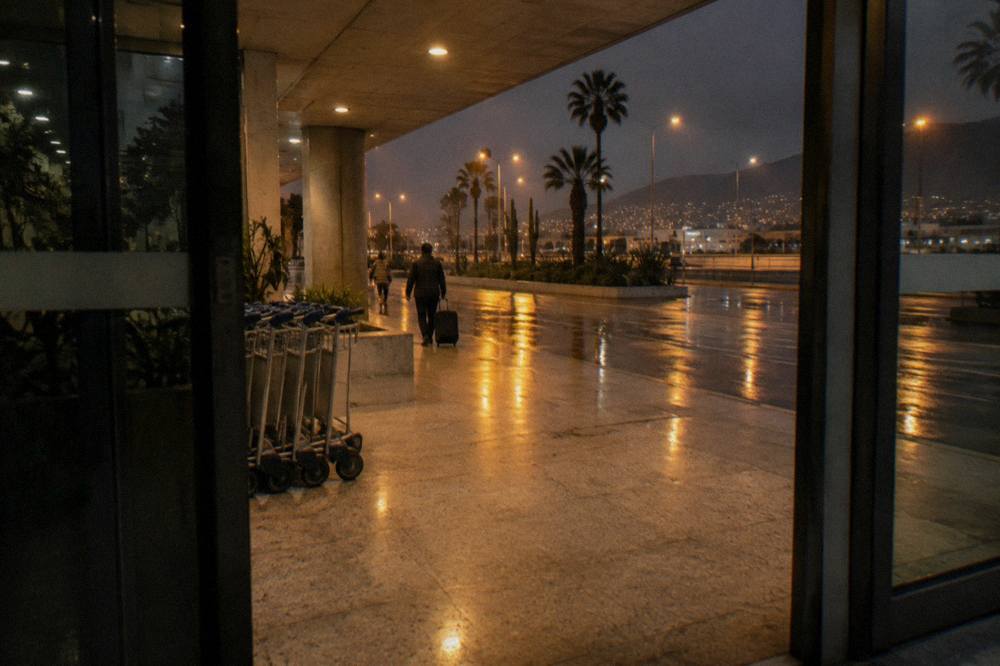
Lima's Jorge Chavez airport is the main international gateway for the whole southern half of the country, and nearly every itinerary published on this site starts there before running down the coast and up into the Andes. That makes the first mile a fixed problem: you arrive, you need to get to a hotel in Miraflores, Barranco or San Isidro, and you will likely be tired, at sea level, and carrying everything you need for two or three weeks.
The useful way to think about it is certainty versus flexibility. A pre-booked transfer is fixed: a named driver, a set vehicle, and someone tracking your flight. A rank or app taxi is flexible but variable: you pay what the meter or the app says on the day, and queues at the rank move at their own speed. A hotel shuttle sits between the two, coordinated by the people who know the route best but dependent on their schedule rather than yours.
| Option | Best for | Trade-off |
|---|---|---|
| Pre-booked private transfer | Night arrivals, groups, heavy luggage | Fixed cost agreed before travel |
| Taxi or app cab from the airport | Solo travelers, midday arrivals, short trips | Variable fare and queue time |
| Hotel or operator shuttle | Booked hotels with pickup service | Runs on the operator's schedule |
No option on that table needs to be booked weeks ahead except during peak season, when late-night arrivals in particular can find the better-reviewed private services fully allocated. If your flight lands at a reasonable hour and you are comfortable with a phone and some Spanish, the rank works. If it lands at 1 a.m. and you have never been to Peru before, pre-booking earns its keep.
How Do You Get From Lima Airport To Miraflores?
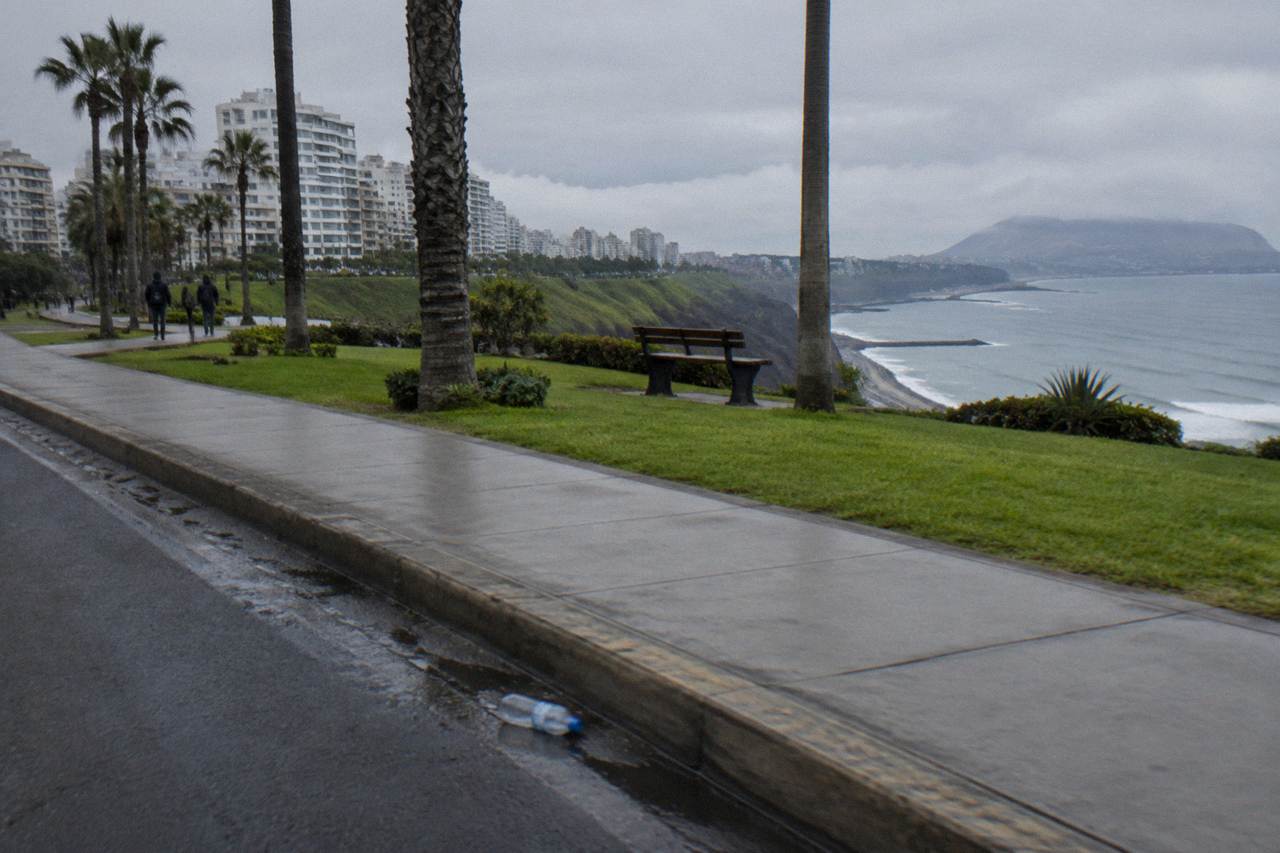
Miraflores is the district most travelers sleep in on their first night in Lima, sitting right on the coast at roughly 79 meters above sea level, and the transfer from the airport is a straightforward road run along the north-south spine of the city. Traffic is the main variable: the run through Lima can be quick outside peak hours and slow within them, so the honest answer is to build in generous time rather than a tight connection. Plan for the trip taking longer than any map estimate suggests.

The district itself earns its popularity. Miraflores sits at about 79 meters elevation, which means your first night in Peru happens at sea level, a genuinely useful fact for the acclimatization plan that follows. The standard advice for the southern corridor is to use Lima, Arequipa at about 2,335 meters, or both as stepping stones before sleeping at altitude in Puno at roughly 3,827 meters or Cusco at around 3,399 meters. A night or two in Miraflores is not just sightseeing time, it is the bottom rung of the altitude ladder.
Practically, three things decide how your arrival goes. First, timing: an afternoon arrival will hit Lima traffic, so arrange a later dinner plan rather than a tight one. Second, luggage: the run from the airport is short enough that any vehicle class works, but confirm your booking covers your whole party and bags. Third, payment: agree at booking whether the fare is paid online or to the driver, so you are not counting cash in a dark arrivals hall.
One pattern worth knowing: travelers beginning a hop-on hop-off itinerary often skip the standalone airport transfer question entirely, because their pass starts with hotel pickup. Peru Hop picks up and drops off at your hotel or hostel in participating locations, so the question becomes simply how to reach the first hotel, and the rest of the corridor is handled from there. That is a different way of solving the first mile, and it changes what you book before you fly.
If a private arrival transfer is what you want for the Lima end, the same logic applies at the Cusco end of the trip, where this site does carry bookable listings. The three options below cover the Cusco airport pickup and the onward Machu Picchu day that most itineraries build toward.
Should You Pre-Book An Airport Transfer Or Sort It On Arrival?
Pre-booking is the safer choice when your flight lands late, when you arrive during a peak travel window, or when the idea of negotiating transport in a new country after a long-haul flight sounds worse than paying a known price. Sorting it on arrival is fine for daytime landings, confident travelers, and anyone who prefers to see the options first. Neither approach is wrong; they suit different arrivals.
The case for pre-booking is not really about money, since a booked private car and a rank taxi often land in the same ballpark once you include wait time and luggage. It is about removing decisions. A pre-booked driver meets you inside arrivals with a name board, tracks your flight if it is delayed, and takes a fixed payment arranged in advance. After an eleven-hour overnight flight into a country where you do not speak the language, that removal has real value.
The case for waiting is equally real. If you land mid-morning, the rank and the app options are sitting right there, prices are visible in the app before you commit, and you may prefer a smaller vehicle than a private service assigns. Travelers connecting onward the same day, for example straight onto a bus toward Paracas, often skip a Miraflores hotel entirely and just need to reach a terminal or a pickup point.
For the Cusco end of the corridor, the same pre-book logic has a specific product shape. The listing known as "Private Pickup, Door To Door" runs from about $14.99 with a 4.5 rating from 98 reviews, covering the 15 to 30 minute run from Cusco's airport to a hotel with free cancellation. Its sister option, "Private Transfer, Shared Rate," starts from $13 per group and holds a 4.8 rating from 251 reviews on a 20 to 25 minute ride. Both solve the arrival moment at the altitude end of the trip, where the last thing most travelers want is a terminal negotiation.
A middle path many travelers land on: pre-book the arrival into Lima because that flight is the long one, then use apps or the rank for everything inside the city afterward. Lima's traffic is the villain of the story, and a local driver who knows the district is more use on the airport run than on short hops between Miraflores and Barranco, which are close enough to walk in pleasant weather.
Where Does Your Peru Trip Actually Start: Lima Or Cusco?
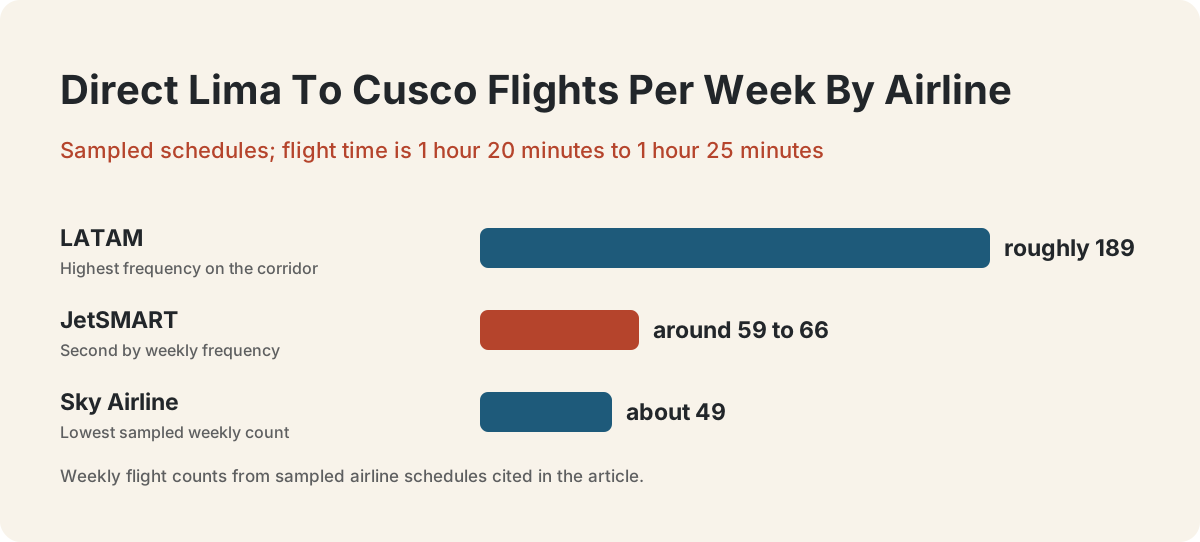
Some travelers can skip the Lima first mile altogether by flying straight into Cusco, because three airlines, LATAM, JetSMART and Sky Airline, run direct flights from Lima to Cusco in roughly 1 hour 20 minutes to 1 hour 25 minutes. The trade is altitude: Cusco's airport sits at about 3,310 meters, so flying straight in puts you at elevation within hours of leaving sea level. Starting in Lima and sleeping in Miraflores is the gentler acclimatization plan; starting in Cusco saves a day.
This is a real fork in itineraries, and the flight facts make the fork measurable. The Lima-Cusco air corridor is served by LATAM at the highest frequency, roughly 189 flights a week in sampled schedules, followed by JetSMART at around 59 to 66 and Sky Airline at about 49. Flight time is consistent at 1 hour 20 minutes to 1 hour 25 minutes across the three carriers, over a distance of roughly 584 to 587 kilometers. There is no mystery about the mechanics; the question is only whether your body prefers a slow climb or a fast one.
The altitude argument favors the coastal start. Cusco sits at about 3,399 meters, and the standard acclimatization guidance for the corridor is gradual ascent, rest on arrival, hydration, light meals, and avoiding alcohol in the first days at elevation. Arriving via Lima at sea level and then climbing through Paracas, Huacachina at roughly 368 meters, Nazca at around 520 meters, and Arequipa at about 2,335 meters spreads the climb over days. Landing directly in Cusco compresses it into a single afternoon, which plenty of travelers do without trouble and plenty of others regret.
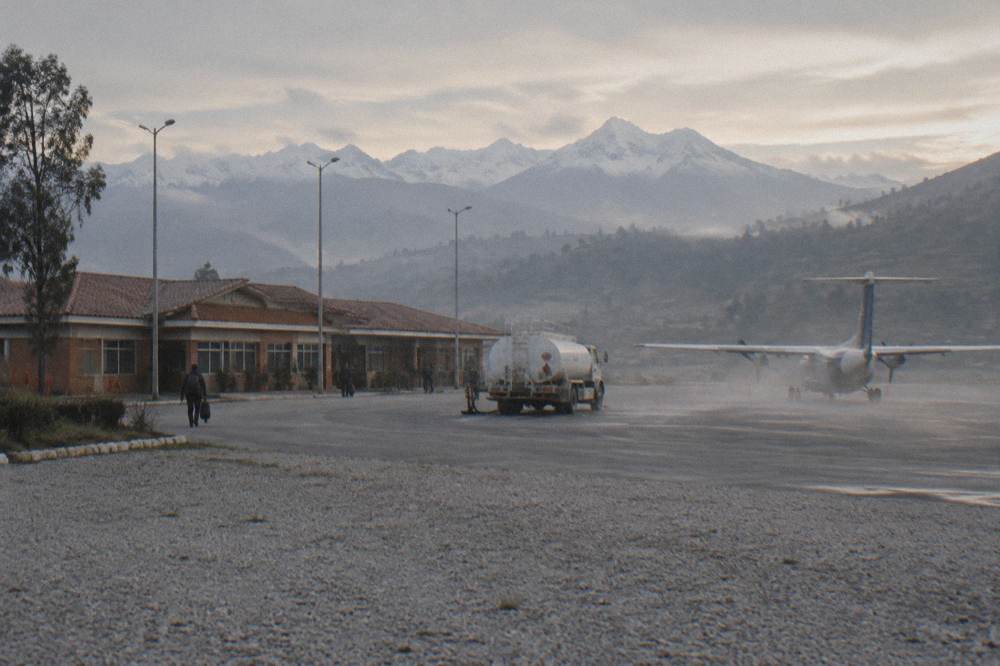
There is a timing wrinkle worth knowing at the Cusco end. Morning flights into Cusco are generally more reliable, while afternoon departures face higher disruption risk from valley fog and afternoon cloud build-up, especially in the rainy season from about November to March. Cusco's airport at about 3,310 meters is among the world's highest commercial airports, and the thin air brings performance limits, weight restrictions in heat, and occasional baggage offloads. Booking the earlier flight and the first night's transfer in Cusco at the same time is the pattern experienced travelers settle into.
| Start point | Elevation on night one | Pros | Cons |
|---|---|---|---|
| Lima (Miraflores) | About 79 m | Sea-level acclimatization, coastal sights, flexible onward bus | Adds travel days before the Andes |
| Cusco direct | Airport at about 3,310 m; city about 3,399 m | Saves a day, lands you at the Machu Picchu hub | Compressed altitude gain, weather-dependent flights |
The new Chinchero International Airport outside Cusco is under construction at roughly 40 percent progress, with operations targeted for late 2027 or 2028, so the existing airport remains the one you fly into on any trip planned in the near term. Travelers weighing the two starting points in more depth can read the fly into Lima or Cusco comparison, which works through the decision in full.
How Does A Peru Hop Pass Handle The First Mile From Lima?
A hop-on hop-off pass answers the first-mile question differently from anything else on this page: the pass does not serve the airport run itself, but it picks up and drops off at your hotel or hostel in participating locations, so the only transfer you arrange is airport to first hotel. From there, the pass carries you down the corridor with a bilingual host on every bus and in-app date changes up to 12 hours before departure, valid for up to one year from first use.
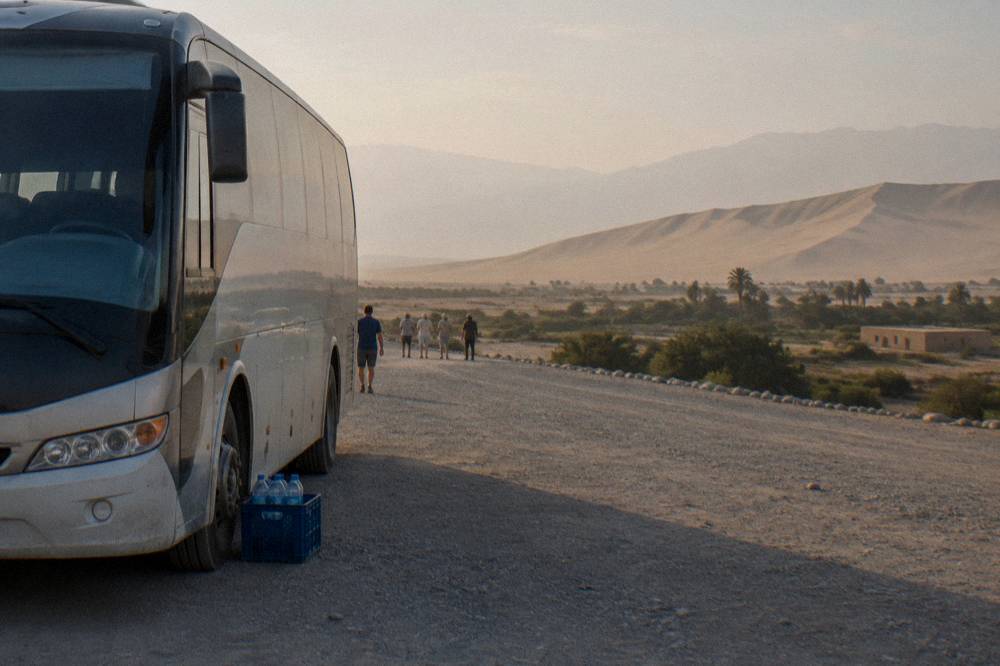
The mechanics, as Peru Hop states them: a bilingual English and Spanish host rides every bus, helping with borders, tickets and onward logistics; passes are valid up to one year from first use; and you can change a bus time in the app up to 12 hours before departure, subject to availability. Buses run a climate-control system to hold the cabin at a steady temperature, with wifi, USB charging, an onboard bathroom and reclining semi-cama seats, though a few reviewers note wifi and USB can be inconsistent. A blanket is provided per passenger, which matters on the high-altitude Puno to Cusco leg.
The safety framing is worth reading plainly, because it comes from official advisories rather than marketing. The UK Foreign Office advises: "Bus crashes are common, especially at night. Only use reputable transport companies, and where possible, avoid overnight travel, especially in mountainous and remote regions," per its Peru travel advice. The US State Department advisory for Peru echoes the same language and adds that US government employees may ride commercial buses at night only along specific corridors, including the Lima-Arequipa-Cusco route, which is itself a quiet endorsement of the main tourist spine. Peru Hop runs daytime legs on that corridor and states it uses GPS monitoring, speed limits and two drivers on long routes.
One honest caveat belongs here: a pass costs more than a bare seat on a premium line like Cruz del Sur or Oltursa before you total in the taxis, hotel pickups and assistance you would otherwise pay for separately, and some legs run long or overnight. A traveler who just wants one direct seat is better served by a direct ticket, an option covered in the Lima to Cusco by bus guide. Peru Hop reports 395,000-plus passengers carried and cites roughly 19,000 TripAdvisor, 8,000-plus Google and 1,500-plus Trustpilot reviews, with its current TripAdvisor listing showing about 20,295 reviews at 4.8 out of 5. Those are operator-stated figures, presented as such.
Starting in Lima and running the full southern corridor to Cusco? See Peru Hop's Peru passes and timetables to plan the hotel-pickup legs from day one.
Roads in Peru occasionally see strikes or protests, so check current conditions before any travel day. That is general advice rather than a specific warning about any corridor, and it applies to every operator equally. The pass model absorbs this reasonably well because a missed leg can be moved to the next departure within the pass year, whereas a standalone ticket depends on the individual operator's policy.
What Comes After Miraflores: The Route South From Lima?
The first leg south is the Lima to Paracas run, roughly 260 to 272 kilometers along the Panamericana Sur, with typical bus travel time of about 3.5 to 4.5 hours before stops, and the cheapest bookable one-way ticket on this site's roster starts from $19 with a 4.2 rating from 53 reviews. From Paracas it is a short hop to the Huacachina oasis and then Nazca, before the corridor turns inland toward Arequipa. The first hotel in Miraflores is the anchor; everything after it is a sequence of legs.
The direct bus option carries the decision name "Direct Bus, One Way" on the roster: it runs from Miraflores to Paracas in about 3 hours, starts from $19, holds a 4.2 rating from 53 reviews, and comes with free cancellation. For travelers who want the coast compressed into a single long day, the two premium day trips cover Paracas and Huacachina together. The "Premium Day Trip, Peru Hop Run" version starts from $67 with a 4.9 rating from 9,650 reviews across a 16 to 18 hour day, while the "Premium Day Trip, Sunset Toast" version starts from $119 with a 4.8 rating from 2,636 reviews over about 16 hours. Both are coast-category listings with free cancellation.

Why does a page about airport transfers spend a section on the route south? Because the first-mile decision and the onward decision are really one decision. Travelers who book a hop-on pass solve both at once. Travelers who book legs individually should plan the airport transfer and the first onward departure as a pair: the hotel you pick in Miraflores determines your pickup point, and your departure time determines whether your airport transfer needs to be a relaxed evening run or a same-day connection. The Lima to Paracas bus guide breaks that first leg down stop by stop, and timetables from the major lines are listed on independent route guides for Lima to Paracas.
For the far end of the itinerary, the pattern repeats in reverse. The most common final booking on this corridor is the full day at Machu Picchu: the "Full-Day Group Tour" runs from Cusco by bus to Ollantaytambo, train, bus and a guided citadel tour, about 12 hours door to door, starting from $332 with a 4.7 rating from 2,307 reviews. Note that this one does not show a standard free-cancellation policy, so it behaves differently from the transfer listings earlier on this page, which all cancel freely. Lock flights and Lima logistics first, and book the inflexible items last.
What Should You Sort Before You Land In Lima?
Three things repay arranging before your flight departs: the arrival transfer into Miraflores or your first-night hotel, the first onward leg or pass out of Lima, and any altitude-sensitive bookings at the top of the itinerary, with the inflexible ones booked last once flights are fixed. Everything else, taxis inside Lima, day tours, restaurant bookings, can be decided on the ground without penalty.
A short pre-departure sequence looks like this: choose your Lima hotel in a walkable district like Miraflores or Barranco; decide whether the arrival transfer is pre-booked or handled at the rank based on your landing time; pick your first onward move, whether that is a pass with hotel pickup, the $19 one-way bus to Paracas, or a premium day trip; then, only once flights are firm, book the top-of-itinerary items. This mirrors the ordering logic across Lima To Cusco planning pages: fix the movable parts first and the fixed parts last.
| Booking | When to arrange | Cancellation posture |
|---|---|---|
| Lima arrival transfer | Before departure, especially night flights | Most private transfers cancel freely; confirm on the listing |
| First-night hotel in Miraflores | Before departure | Check the hotel's own policy |
| Pass or first onward leg | Before departure | Pass dates change in-app up to 12 hours before departure; the $19 bus and the day trips cancel freely |
| Cusco airport pickup | Once Cusco flights are fixed | Both listed Cusco transfers cancel freely |
| Machu Picchu full day | Last, after all transport | The group tour shows no standard free-cancellation policy |
The table's logic holds for any starting point. If you fly straight into Cusco instead, invert the sequence: the Cusco airport pickup becomes the urgent item, the altitude-sensitive Machu Picchu day stays last, and the Lima first mile disappears from the plan altogether. Either way, the corridor between the two cities is well served enough that the parts you fail to arrange in advance are almost all recoverable on the ground, with the exception of high-season Machu Picchu entry, which is capacity-limited and sells on timed windows.
If your trip is still shapeless, the how to get around Peru overview maps every mode on the corridor, buses, trains, flights and passes, in one place. And if the budget question is the one blocking your booking, the honest summary of this whole page is simple: the first mile is the cheapest, easiest, most recoverable leg of the entire trip. Spend your planning energy on the parts of the itinerary that are hard to fix later, and treat the airport run as the solved problem it is.
Common Questions About Lima Airport Transfers
How do I get from Lima airport to Miraflores?
Take a pre-booked private transfer, a taxi or app cab from the rank, or a hotel-arranged shuttle. The run is a straightforward road trip along the city's main axis, with traffic the main variable, so allow generous time, especially for afternoon arrivals. Travelers on a hop-on hop-off pass still need one transfer: airport to the first hotel, since passes pick up at hotels rather than at the airport.
Should I book my Lima airport transfer in advance?
Book in advance if you land late at night, arrive in peak season, or want a fixed price and a driver waiting at arrivals. Sort it at the airport if you land midday, travel light, and are comfortable using an app or the rank. The free-cancellation options on this site's transfer listings make pre-booking low-risk either way.
Do I need to stay in Lima before heading to Cusco?
It is not required, but it helps with altitude. Miraflores sits at about 79 meters, while Cusco is around 3,399 meters, and flying direct from Lima lands you at elevation within about 1 hour 20 minutes of leaving sea level. A night or two on the coast spreads the climb and pairs well with stops at Paracas, Huacachina and Arequipa, at about 2,335 meters, on the way up.
Can a Peru Hop pass replace my airport transfer?
Partly. The pass does not run the airport-to-hotel leg, but it picks up and drops off at your hotel or hostel in participating locations, so the pass covers every leg after the first night. You still need one arrival transfer into Miraflores, then the pass handles the corridor south.
What is the cheapest way to leave Lima for the south coast?
The bookable one-way bus from Miraflores to Paracas starts from $19, rated 4.2 from 53 reviews, with free cancellation and a journey of about 3 hours. Premium Paracas and Huacachina day trips start from $67 and $119 respectively for travelers who want both stops in a single day.
Is it safe to take a taxi from Lima airport at night?
Official advisories recommend reputable transport in Peru generally. The UK Foreign Office advises using only reputable transport companies and avoiding overnight travel where possible, especially in mountainous and remote regions. A pre-booked private pickup, or a hotel-arranged shuttle for late arrivals, sidesteps the rank entirely after dark.