Is It Better To Fly Into Lima Or Cusco
Should you land in Lima or Cusco first? An honest comparison of flights, altitude, cost and itinerary logic for entering Peru, with current airline and airport facts.
Is It Better To Fly Into Lima Or Cusco
For most travelers, flying into Lima first is the better entry point: it starts you at sea level, gives you a natural acclimatization ladder through Paracas, Arequipa and Puno, and leaves Cusco and Machu Picchu as the climax. Flying straight into Cusco saves two to three days of overland travel, but it lands you at 3,399 m within hours of leaving sea level, a genuine altitude risk on a tight schedule.
Three airlines currently fly the Lima to Cusco hop nonstop: LATAM, JetSMART and Sky Airline. The flight itself is short, about 1 hour 20 minutes to 1 hour 25 minutes in the air, covering roughly 584 to 587 km. That speed is exactly why the question matters. The Andes stop being a barrier and become a shortcut, and the shortcut has consequences.
The decision really hinges on two things. First, how much time you have: a 7 to 10 day trip usually cannot absorb two days of bus travel plus acclimatization, so a direct flight into Cusco can be the only sensible route. Second, what you want Peru to feel like: starting in Lima gives you the desert coast, the Nazca overflights, the Colca Canyon and Lake Titicaca in a logical ascending line, while starting in Cusco gives you the highlights fast and saves the coast for another visit, if ever.
This site exists, in a sense, because of that first route. Lima To Cusco is the classic overland corridor, and every article on it assumes you are climbing, not jumping. Still, the honest answer is that Cusco entry is not wrong. It is just a different trip with different risks, and this article lays out both sides with the current numbers.
What Flying Into Cusco Actually Looks Like
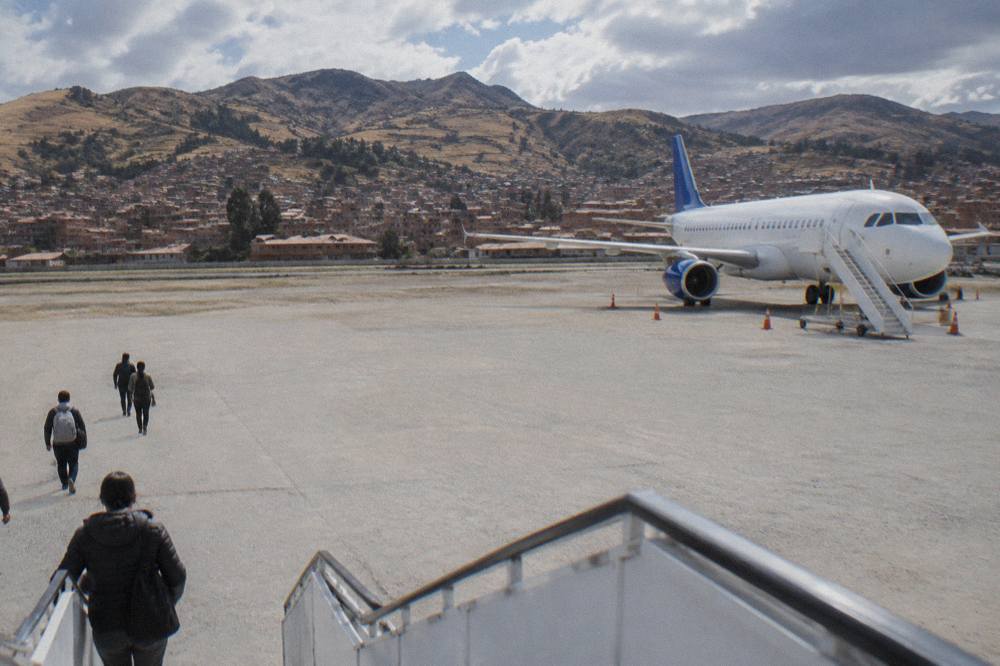
Cusco's Alejandro Velasco Astete airport sits at 3,310 m, one of the highest commercial airports in the world, and the city above it sits at 3,399 m. Direct international connections are effectively nonexistent, so flying into Cusco means flying into Lima first anyway, then connecting on a domestic hop of about 1 hour 20 minutes. Weather, especially morning fog and afternoon cloud in the November to March rainy season, is the main cause of delays and cancellations.
The altitude math is the part people underestimate. Lima sits at roughly sea level, with the Miraflores district at about 79 m. If you board in Lima at breakfast, you can be standing in Cusco's thin air by mid-morning, a vertical gain of well over 3 km in about two hours of flying. Altitude sickness advisories for Cusco consistently recommend gradual ascent where possible, rest on arrival, hydration, light meals and skipping alcohol for the first day. Flying direct removes the "gradual" part entirely.
Not everyone gets sick, and plenty of travelers land in Cusco, take it slow for 24 hours, and are fine. But if your Machu Picchu or trek dates are locked in for the day after arrival, a bad altitude day can derail them. The safer Cusco-entry pattern is to build in one full rest day before anything strenuous, which eats into the very time you saved by flying.
There is also the airport itself to consider. Operations at CUZ have historically been daylight-restricted and now run much longer hours, but performance limits at that elevation mean weight restrictions in heat, occasional baggage offloads, and a one-runway layout surrounded by mountains. Morning flights are generally the most reliable; afternoon and evening departures face higher disruption risk, especially in the rainy season from roughly November to March.
The long-promised replacement is not here yet. Chinchero International Airport, under construction outside Cusco, was reported at roughly 38 to 40 percent physical progress as of mid-to-late 2026, with operations now targeted for late 2027 or 2028 after repeated delays. Until it opens, every Cusco arrival flows through the small, high, weather-sensitive airport it has always used.
One thing Cusco entry does very well: the moment you land, you are two hours from Ollantaytambo's train station and half a day from Machu Picchu. The full-day group Machu Picchu tour from Cusco, currently from $332 with a 4.7 rating across 2,307 reviews, bundles the bus to Ollantaytambo, the train, the citadel tour and the connections into one 12-hour day. If Machu Picchu is the whole point of your trip, this is the fastest sane path to it.
Why Most Travelers Still Start In Lima
Lima is Peru's main international gateway, which means the widest choice of long-haul flights and usually the cheapest fares, and it sits at sea level, which makes it the natural first rung of the altitude ladder. From Lima, the classic southern route climbs gradually through Paracas, Huacachina, Nazca, Arequipa at 2,335 m, Puno at 3,827 m, and finally Cusco, giving your body days to adjust rather than hours.
The acclimatization argument is not folklore; it is the standard guidance attached to every altitude advisory for the region. Arequipa in particular functions as the acclimatization stop, large enough to spend two nights in, high enough at 2,335 m to start the adjustment, and low enough that almost nobody struggles there. By the time you ride from Puno to Cusco, roughly 388 km by road, you have been above 3,800 m already and Cusco feels manageable.
The other argument is simply coverage. Starting in Lima and moving south overland strings together Paracas and the Ballestas Islands, the Huacachina oasis, the Nazca Lines, Colca Canyon and Lake Titicaca before you ever reach Cusco. These are not filler stops. Fly into Cusco and most of them never fit the trip, because the logic of a Cusco start pulls you toward the Sacred Valley and Machu Picchu immediately, and the coast becomes a separate journey you will probably never take.
A one-way bus from Lima to Paracas costs from $19 and takes about three hours, rating 4.2 from 53 reviews, which tells you how cheaply the overland route begins. The premium Paracas and Huacachina day trip from Lima, the "Premium Day Trip, Sunset Toast" run, costs from $119, runs about 16 hours, and carries a 4.8 rating from 2,636 reviews. For travelers who only have a single coast day before heading into the interior, it compresses the two headline stops into one long, well-reviewed outing.
For a deeper comparison of the two ways to cover that first stretch, the Lima to Cusco by bus guide breaks down the full corridor day by day. If you are weighing a single flight against the whole overland climb, Lima to Cusco flight vs bus runs the numbers on both, including the comfort case for the hop-on-hop-off pass, whose buses pick you up at your hotel and carry a bilingual host on every leg. Peru Hop, the operator of that pass, reports more than 395,000 passengers carried, and its passes stay valid up to one year with app-based date changes up to 12 hours before departure. It costs more than a bare seat on a premium line like Cruz del Sur or Oltursa, which is the honest trade-off for the flexibility and the hotel pickups.
For comparing and booking individual flight legs on your own schedule, checking current airfares for Peru is a reasonable second opinion against the airline sites, especially for the Lima to Cusco hop, where fares swing widely by day and season.
Cost, Timing And Acclimatization Compared
Flying into Lima and connecting onward to Cusco adds about 1 hour 20 minutes of flying but typically costs more than starting your long-haul in Lima and climbing overland, which takes two to three extra days. Cusco entry saves those days but puts you at 3,399 m within hours, with no acclimatization buffer before Machu Picchu or treks. Roughly: Lima entry suits 10-day-plus trips and altitude-sensitive travelers; Cusco entry suits tight, highlight-focused trips.
The table below pulls the comparison into one view, using the verified corridor numbers.
| Factor | Fly into Lima, climb overland | Fly into Cusco direct |
|---|---|---|
| Entry altitude | 79 m (sea level) | 3,399 m city, 3,310 m airport |
| Days to reach Cusco | 7 to 10 on the full southern route | 1 (plus connection in Lima) |
| Acclimatization | Gradual, via Arequipa at 2,335 m | None; full altitude on day one |
| Coast and Titicaca stops | All included along the route | Mostly skipped or a separate trip |
| Typical flight exposure | One long-haul into Lima | Long-haul into Lima plus domestic hop |
| Weather disruption risk | Buses reroute or pause; flexible passes absorb it | Fog and cloud at CUZ can delay or cancel |
| Best fit | First trips, 10+ days, altitude-sensitive travelers | Short trips fixed on Machu Picchu |
One nuance worth stating plainly: "fly into Cusco" almost never means a direct international arrival. You will still change planes in Lima. So the real comparison is not two airports but two itineraries: spend your Peru days climbing the country, or spend them in and around Cusco with the coast omitted. That reframing settles the question for most people faster than any fare comparison does.
Timing also matters seasonally. The May to October dry season is the peak window for the whole southern corridor, and both airports run busy; book ahead either way. In the November to March rainy season, Cusco's afternoon cloud and fog raise cancellation odds on the domestic hop, while the overland buses simply run, occasionally slower. The best month to visit Peru question interacts with this one more than travelers expect: an afternoon Cusco flight in February is a genuine gamble in a way a morning one is not.
Which Entry Point For Which Trip
Entry choice should follow your trip length and your anchor booking. Under about 8 days with fixed Machu Picchu dates: fly into Cusco, rest one full day, then tour. Ten days or more, or a first trip to Peru: fly into Lima and climb the coast and altiplano overland, arriving in Cusco acclimatized with everything already seen behind you. Anyone prone to altitude sickness should treat the Lima entry as the default.
The short-trip version deserves spelling out, because it works well when done deliberately. Land in Cusco, book nothing for the first 24 hours beyond a hotel and easy meals, and spend the acclimatization day in the city itself. From day two, the Sacred Valley sits below Cusco in elevation, Ollantaytambo at 2,792 m is actually lower, and Machu Picchu at 2,430 m is lower again. A smart Cusco-start itinerary descends into the valley for day two or three, which is a legitimate acclimatization strategy in its own right: you sleep high on arrival, then work lower.
That is the counterintuitive part. Machu Picchu itself is not the altitude problem; Cusco is. The citadel sits nearly a full kilometer below the city. A traveler who lands in Cusco, struggles for a day, then heads down to the valley often feels dramatically better within hours of descending. The danger is only in stacking a demanding citadel visit or a trek onto the first 48 hours after a direct flight, before your body has said anything about how it will respond.
For the first hours after landing in Cusco, a prebooked transfer removes the taxi-queue scramble at altitude. The "Private Transfer, Shared Rate" airport transfer runs from $13 per group, takes 20 to 25 minutes to the hotel, and carries a 4.8 rating from 251 reviews with free cancellation.
The door-to-door alternative, the "Private Pickup, Door To Door" transfer from $14.99, rates 4.5 from 98 reviews. Both are short rides; the difference is mainly in vehicle exclusivity and meet-and-greet handling.
For the Lima-entry version, the same logic applies in reverse at the end of the trip: you finish in Cusco with altitude fully behind you, and if time runs short you can always fly the final leg back to Lima, which is the hybrid most long-trip travelers actually use. Climb the country north-to-south by bus, sample the passes and the canyon and the lake on the way up, then buy a one-way flight home from Cusco only if the calendar demands it. The Peru itinerary for 10 days guide shows that hybrid pattern in full.
On safety, both entries carry the same country-level picture. The US State Department currently rates Peru at Level 2, Exercise Increased Caution, and notes that demonstrations "can shut down local roads, trains, and major highways," often without warning; the current advisory also permits its own staff to ride commercial buses at night on the Lima-Arequipa-Cusco corridor specifically, which is a meaningful signal about that route's standing. The UK FCDO advice for Peru adds the standard caution that bus crashes are more common at night and recommends reputable companies, which applies to your ground connections from either airport. Neither advisory singles out either city as an entry point to avoid.

Common Questions About Flying Into Lima Or Cusco
Is It Better To Fly Into Lima Or Cusco?
For trips of 10 days or more, and for anyone altitude-sensitive, fly into Lima and climb overland through Arequipa and Puno so you acclimatize gradually. For trips under about 8 days focused on Machu Picchu, flying into Cusco saves days; just keep the first 24 hours free of strenuous activity.
Is there an international flight straight into Cusco?
Effectively no. Cusco's airport handles domestic traffic; international travelers connect through Lima on a separate 1 hour 20 minute hop operated by LATAM, JetSMART and Sky Airline. The long-haul fare you buy still lands in Lima first.
Is flying into Cusco dangerous because of altitude?
It is not dangerous for most healthy travelers, but landing at 3,310 m within hours of leaving sea level carries a real chance of altitude sickness symptoms like headache and nausea. Standard guidance is to rest on arrival, hydrate, eat light, avoid alcohol, and give yourself a full day before trekking or visiting Machu Picchu.
Which airport is cheaper to fly into?
Lima. It is Peru's main international gateway with the widest long-haul competition, so fares are usually lower. Flying into Cusco means paying the Lima international fare plus a separate domestic hop, though the hop itself is often cheap if booked early.
Can I fly into Cusco and still see the coast?
Yes, but it usually means backtracking: a coast day trip out of Lima before your flight home, or reversing the corridor at the end. The Paracas and Huacachina day trip from Lima, from $119, is the most common way to add the coast to a Cusco-centered trip.
Do flights to Cusco get cancelled often?
Cancellations cluster in the rainy season from November to March, when morning fog and afternoon cloud at the high-elevation airport cause holds and occasional cancellations. Morning flights are the most reliable option, and building schedule slack on either side protects a tight itinerary.