Is There A Train From Cusco To Arequipa
No passenger train runs from Cusco to Arequipa. Here is why the corridor has no rail line, plus the direct bus, the Titicaca train detour and the scenic Colca routing that actually work.
Is There A Train From Cusco To Arequipa
There is no passenger train from Cusco to Arequipa. Peru's passenger network connects Cusco only toward Puno, on the PeruRail Titicaca train, and toward Machu Picchu via Ollantaytambo. The Cusco to Arequipa leg is covered by road: a direct tourist bus, or a scenic two-step through Puno and the Colca Canyon that turns the detour into the highlight.
That answer surprises a lot of travelers, and the surprise is reasonable. Cusco and Arequipa are the two most visited cities in southern Peru, both carry heavy tourist traffic year after year, and both sit on historic rail corridors that appear on old maps of the country. Surely, the thinking goes, someone runs a train between them. Nobody does. Not a sleeper service, not a scenic day train, not even a slow local. The search results that promise "train from Cusco to Arequipa" are almost always pointing at one of three different things: the bus that actually covers the route, the train from Cusco to Puno that covers part of the region, or a page about the Machu Picchu railway that has nothing to do with Arequipa at all.
The practical consequence is simple. If Arequipa is on your itinerary and Cusco is too, you will cross that ground on a bus, on a plane, or on a combination that strings the two together through the altiplano. That is not a consolation prize. The stretch between the two cities is some of the most dramatic road scenery in the southern Andes, and the workarounds, a scenic multi-stop bus to Puno, a lake crossing into Bolivia, a canyon loop through Colca, are the trips many travelers end up remembering more than the cities themselves.
The rest of this page lays out the honest picture: why the railway never happened, what the bus ride is actually like, which trains you can ride nearby, and how to build the scenic version of the trip if you have the days for it. Every price, rating and schedule figure below reflects what the operators themselves publish and listings that serve this corridor.
Why No Rail Line Connects The Two Cities
No scheduled passenger train links Cusco and Arequipa, and nothing in the current pipeline changes that. The reason is geography: the road between them climbs over high passes that reach roughly 4,800 to 4,910 metres near the Colca route, dropping from Cusco at 3,399 m to Arequipa at 2,335 m. Peru's passenger rail simply never built that corridor.
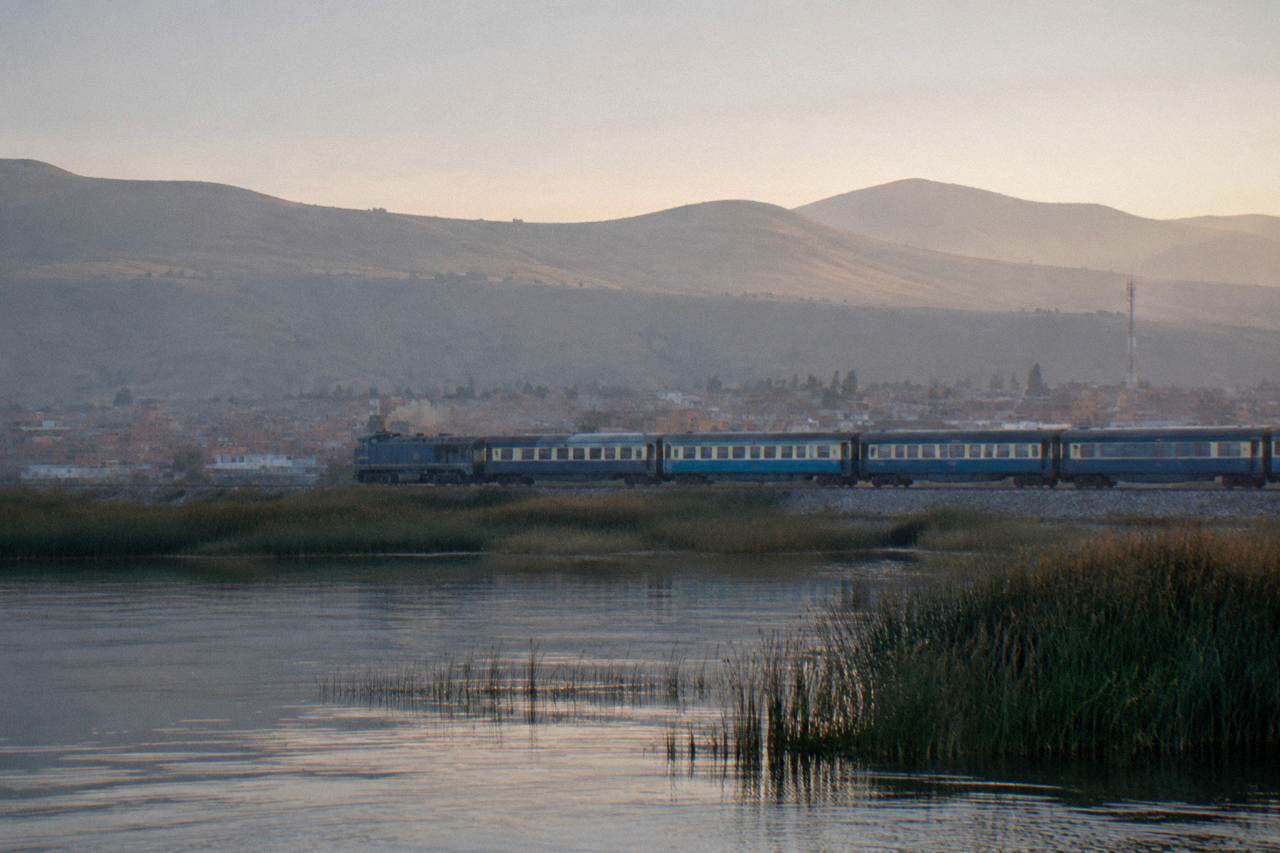
Peru's scheduled passenger rail network is small, and it is worth understanding just how small, because it explains the whole search result mess. Out of Cusco, trains run in two directions only. One corridor runs toward Lake Titicaca: the PeruRail Titicaca train covers the roughly 10-hour run between Cusco and Puno, a beautiful day-long ride, but its tracks stop at the lake and turn around. The other corridor runs down the Sacred Valley to Ollantaytambo and on to Aguas Calientes, the town at the foot of Machu Picchu, a stretch of about 43 to 44 km that takes 1 hour 20 minutes to 1 hour 45 minutes on most services. Arequipa is not on either line.
The gap in between is some of the least rail-friendly terrain in the Americas. Between Cusco's basin and the Arequipa region the land rises and falls through altiplano plateaus, canyon country and passes that tower above anything a conventional railway would willingly cross. Building and maintaining tracks at those altitudes, through territory where even the highway needs constant repair, has never penciled out for passenger volumes. Freight and heritage lines exist elsewhere in southern Peru, but nothing in any current project, including the transport ministry's airport and infrastructure slate, proposes reviving a Cusco to Arequipa passenger rail link.
So when a booking site or search snippet dangles a "train" for this route, read it carefully. In almost every case the product behind the listing is a bus tour, a scenic bus such as the multi-stop services to Puno, or the Titicaca train on the adjacent corridor. Those are real and often excellent, which is exactly why they get marketed to people searching for a train that does not exist. A later section of this page covers which of them are worth the money.
It also helps to know that this is not a Peru-specific quirk. Passenger rail across the Andes collapsed as a network decades ago across the region, and the services that survived are the ones with dense tourist demand on short, spectacular corridors: Cusco to Machu Picchu, Cusco to Puno, the equivalent runs in Ecuador and Bolivia. The long cross-country links, including anything over this particular stretch of the southern Andes, moved to the highway, and the highway is where they have stayed.
What The Cusco To Arequipa Bus Journey Actually Looks Like
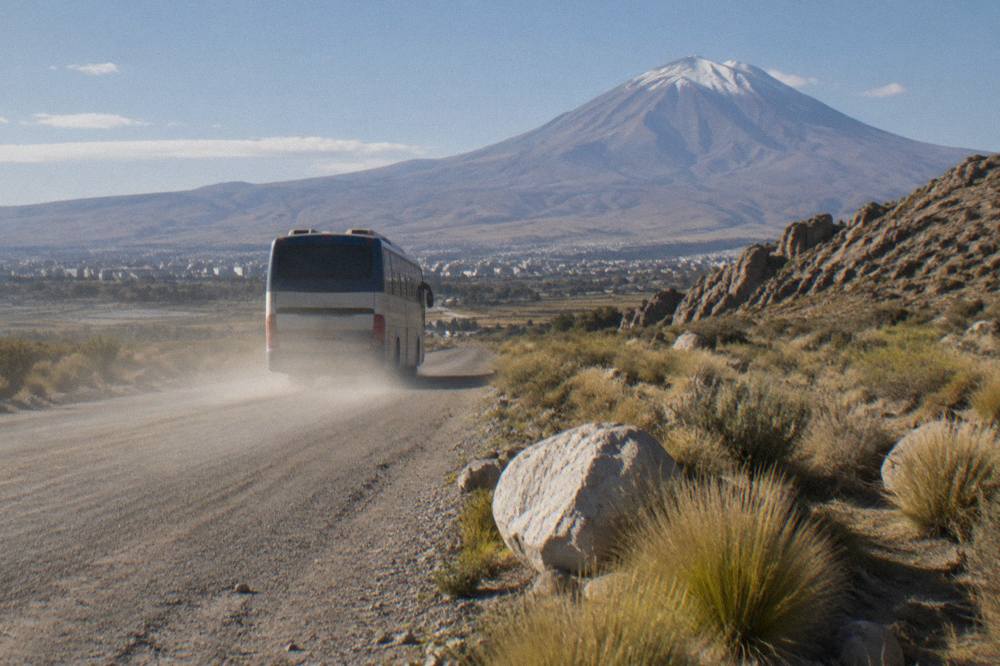
The Cusco to Arequipa connection is a road journey across the high altiplano, run by Peru's long-distance bus companies and by hop-on hop-off services. Cusco sits at 3,399 m and Arequipa at 2,335 m, and the highway between them crosses open highland terrain. Reputable daytime services are the standard advice from both the UK and US travel advisories.
The bus is the default answer, and it is a better answer than the missing train might suggest. Peru's premium long-distance carriers run the southern corridor with reclining seats, onboard bathrooms and climate control, and the hop-on hop-off operator Peru Hop serves both cities on a pass that also stops at Paracas, Huacachina, Nazca and Puno along the way. Peru Hop picks up and drops off at your hotel or hostel in participating locations, so you skip the bus terminal with your bags, and a bilingual local host rides every bus. The trade is honest: the crossing is a long ride, and some legs run overnight or into the evening.
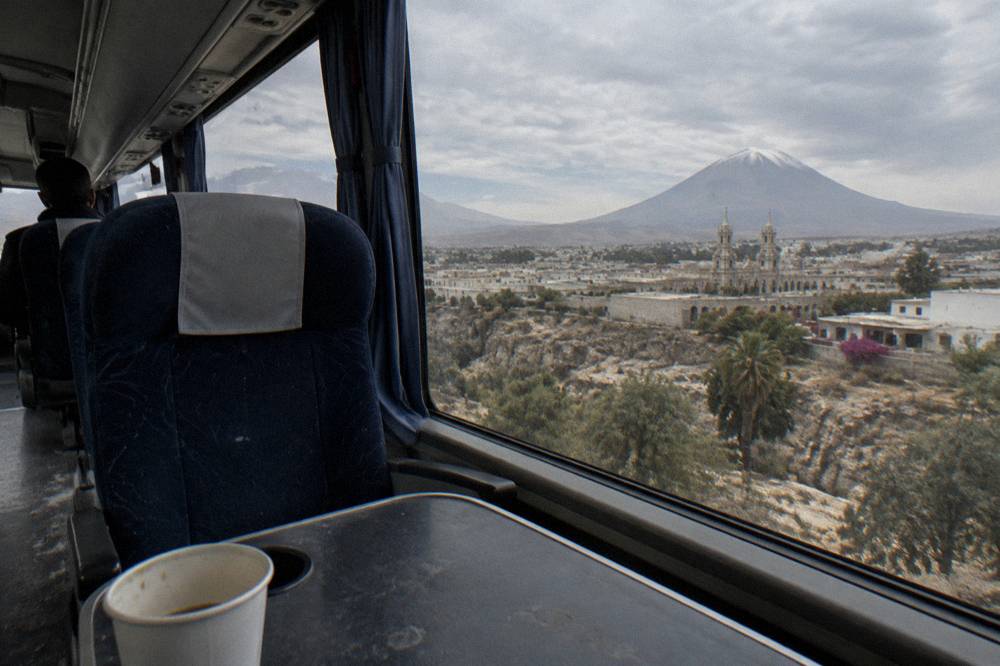
Safety framing on this corridor is more reassuring than travelers often expect, and it comes from official sources rather than marketing. The UK FCDO's advice for Peru reads, in its own words: "Bus crashes are common, especially at night. Only use reputable transport companies, and where possible, avoid overnight travel, especially in mountainous and remote regions." The nuance matters: the US State Department's advisory explicitly permits its own employees to ride commercial buses at night along the Lima-Arequipa-Cusco corridor, one of the few corridors where they may do so. In plain terms, the reputable operators on this specific route are considered a different category from the informal economy buses the advisories warn about. Peru Hop's buses, for reference, run wifi, USB charging, an onboard bathroom, reclining semi-cama seats and a blanket per passenger, though a few reviewers note the wifi and USB ports can be inconsistent.
If you want the full leg-by-leg breakdown, departure points, classes, how the border of altitude and schedule choices plays out, the site's dedicated Cusco to Arequipa by bus guide covers it in depth. For everyone else, the short version: book a reputable carrier, favor daytime departures where the schedule allows, and treat the ride as part of the trip rather than dead time, because the altiplano scenery between the two cities is genuinely worth the window seat.
Here is how the realistic options stack up, using the verified figures for the services that actually sell on this corridor and its scenic detours:
| Option | What it involves | Time | From | Reviews |
|---|---|---|---|---|
| Route of the Sun bus (Cusco to Puno) | Scenic multi-stop service with buffet lunch | ~11 hours, 6:10am to 5:30pm | From $50 | 4.7 from 633 reviews |
| PeruRail Titicaca train (Cusco to Puno) | Full-day train both directions | ~10 hours | From $395 | 294 reviews |
| Colca to Puno tourist bus (Chivay to Puno) | Scenic stops between the canyon and the lake | ~6.5 hours | From $41.03 | 4.7 from 88 reviews |
| Copacabana and Isla del Sol tour (from Puno) | Full-day trip to the Bolivia side of the lake | 12 hours | From $130 | 4.8 from 30 reviews |
Note what is not on that list: anything with wheels on rails pointed at Arequipa. Everything that sells under a "scenic" banner on this corridor is either a bus with good stops or a train that terminates at Puno.
Trains You Can Actually Ride From Cusco
The two passenger rail experiences out of Cusco are the PeruRail Titicaca train to Puno, roughly 10 hours, from $395, with 294 reviews on its listing, and the Machu Picchu trains from Ollantaytambo, about 43 to 44 km and 1 hour 20 minutes to 1 hour 45 minutes to Aguas Calientes. Neither reaches Arequipa.
If the train is the part you actually want, the honest move is to take the real one and rebuild your itinerary around it. The PeruRail Titicaca train is the closest thing to the Cusco-Arequipa railway of your imagination: a full-day ride across the altiplano to Puno at 3,827 m, with bar and observation cars, and a seat height that turns the whole southern tableland into a moving panorama. It runs about 10 hours each way, from $395, and carries 294 reviews on its live listing, with 294 reviews on the listing and no star average shown there. Its cancellation policy is not shown on the listing, so check the terms before you commit. For the schedule itself, the operator publishes current departure times and frequencies on its own site at PeruRail's official train schedules page.
The second rail experience is the Machu Picchu line, which is shorter but no less famous. Trains depart from Ollantaytambo, about 62 to 72 km and 1 to 1.5 hours by road from Cusco, and cover the remaining 43 to 44 km to Aguas Calientes in roughly 1 hour 20 minutes to 1 hour 45 minutes, with several departures across the day. If your trip pairs Cusco with Machu Picchu and then Arequipa, the practical shape is train to the citadel, back to Cusco, then bus south. Travelers weighing where to base themselves for that final leg can compare the trade-offs in the site's Cusco or Ollantaytambo article, which breaks down the timing and cost differences.
What you cannot do is chain these into a rail route to Arequipa. The tracks from Cusco end at Puno in one direction and at Aguas Calientes in the other, and from both termini the onward journey to Arequipa is by road. That is not a hidden limitation buried in fine print; it is the physical shape of the network, and every booking product that markets itself to train searchers on this route is, underneath the branding, a bus.
The Scenic Alternative: Route Of The Sun To Puno, Then Colca
The scenic routing swaps one long bus ride for three short ones: the Route of the Sun from Cusco to Puno runs about 11 hours with cultural stops and a buffet lunch, from $50, rated 4.7 from 633 reviews. From Titicaca you continue by road toward Colca and Arequipa, or ride the Chivay to Puno bus in the other direction.
This is the version of the trip the missing railway would have had to compete with, and it is the one this site recommends most often. Instead of a single long haul between Cusco and Arequipa, you build a loop through the altiplano's three headline sights: Titicaca, the Colca Canyon and the White City itself. The spine of the routing is the "Route of the Sun", a scenic bus from Cusco to Puno that departs around 6:10am, arrives around 5:30pm, and spends its 11 hours stopping at the Inca ruins, colonial churches and viewpoints along the old road rather than driving past them. Lunch is a buffet, included. It is from $50 and rated 4.7 from 633 reviews, one of the larger verified review pools on this corridor. The full logistics, stops and onward connections are laid out in the site's Cusco to Puno by bus guide.
From Puno the loop opens up. Travelers with a spare day cross into Bolivia on the Copacabana and Isla del Sol tour, a 12-hour day trip from Puno, from $130, rated 4.8 from 30 reviews, with boat crossings from Copacabana pier typically at 8:30am and 1:30pm and community fees of roughly 10 to 15 BOB at island checkpoints. Travelers heading toward Arequipa swing west instead, into canyon country. The classic routing is Arequipa to the canyon around Chivay, a night or two on the rim to catch the condors at Cruz del Condor, and then the canyon-to-lake bus onward. That last link is where the site's featured canyon service fits: the Colca Canyon to Puno tourist bus, rated 4.7 from 88 reviews, from $41.03, covering Chivay to Puno in about 6.5 hours with scenic stops along the way. Check availability if that direction matches your loop.
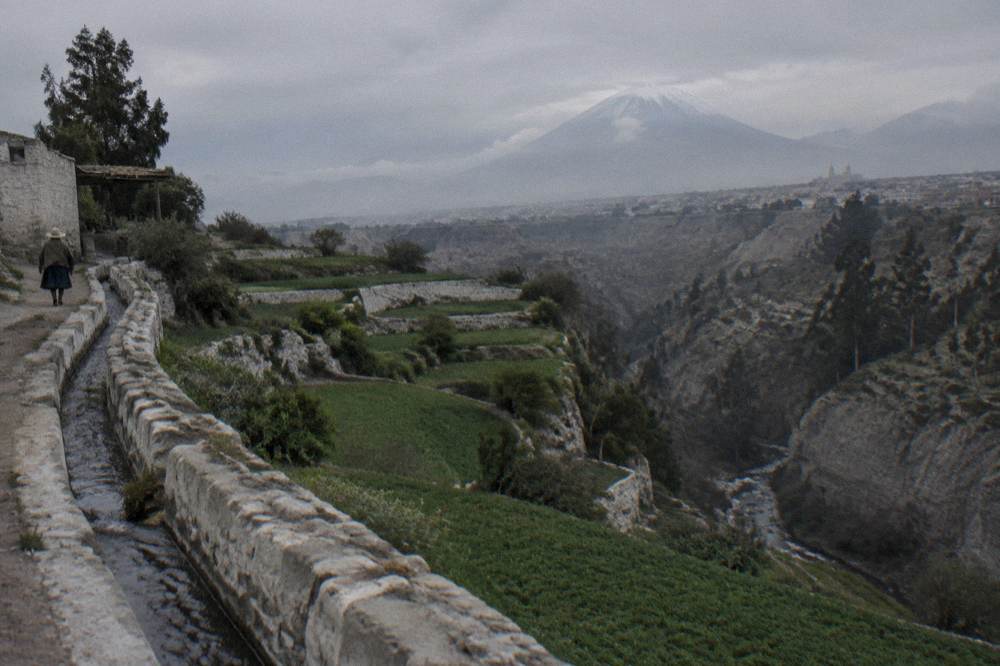
Direction matters when you plan this, so state it plainly: the canyon bus runs Chivay to Puno, not Puno to Chivay. If your trip runs Cusco first and Arequipa last, the natural order is Route of the Sun to Puno, a Titicaca day, then a direct road leg from Puno toward Arequipa country, roughly 300 km and 6 to 7 hours of driving on the direct routing, with the canyon explored from the Arequipa side. If your trip runs the other way, Arequipa first, the pieces reverse cleanly: canyon from Arequipa, Chivay to Puno by tourist bus, then the lake and the road back to Cusco. Either way you never ride the same highway twice, which is more than most point-to-point train trips can say.
The elevations along this loop deserve their own reckoning, because they swing more than a thousand metres and the order in which you climb them shapes how you feel each morning:
| Place on the loop | Elevation |
|---|---|
| Arequipa | 2,335 m |
| Cruz del Condor mirador | roughly 3,270 to 3,800 m |
| Chivay | 3,635 m |
| Lake Titicaca surface | 3,812 m |
| Puno | 3,827 m |
| Cusco | 3,399 m |
How To Book Seats On This Route
Book the direct bus seat through the operator's own site or a ticket aggregator, or buy a hop-on hop-off pass if you want hotel pickup and flexible dates. Passes are valid up to one year, and bus times can be changed in the app up to 12 hours before departure, subject to availability. No train booking exists for this leg.
For a traveler who just wants one seat from Cusco to Arequipa, the budget play is a direct-ticket comparison: compare direct bus tickets on this route across the carriers, then book the departure and seat class that suit. The premium long-distance lines on the corridor, Cruz del Sur and Oltursa among them, run the same corridor with comfortable equipment, and the hop-on hop-off alternative from Peru Hop layers hotel pickup, a bilingual host on every bus and date flexibility on top. Which one is right depends less on comfort than on shape: a pass suits a loop with several stops, a single seat suits a straight shot.
Two things are worth knowing before you pay. First, the flexibility claim on a pass is real and specific: passes are valid up to one year from first use, and you can change a bus time in the app up to 12 hours before departure, subject to availability. Second, the honest caveat the site attaches to every pass recommendation: it costs more than a bare Cruz del Sur or Oltursa seat before you total in the taxis and terminal transfers it replaces, and if you genuinely want only one direct seat, it is not the cheapest way to buy it.
The scenic services book the same way the buses do, through their live listings, and the three in this article's comparison table all show free cancellation on their listings, which is worth having when Andean weather or plans shift. The exception on the roster is the Titicaca train, whose cancellation policy is not shown on the listing; read those terms before you commit $395. And whatever you book, keep the confirmation offline. Wifi on the altiplano roads is a bonus, not a plan, a point several Peru Hop reviewers make about the onboard USB and wifi in the same breath as they praise everything else.
Altitude, Timing And Safety On The Southern Loop
Plan the southern loop around altitude: Arequipa at 2,335 m works as an acclimatization stop before Puno at 3,827 m and the canyon rim, and the condor viewing at Cruz del Condor is best on dry season mornings between April and November. Roads in Peru occasionally see strikes or protests, so check current conditions before travel.
The altitude ladder in the table above is not trivia; it is the single best planning tool for this part of Peru. Standard guidance for the region is gradual ascent: Arequipa's 2,335 m is low enough to sleep well and high enough to start adapting, which is why so many itineraries climb it before Puno, the canyon rim or anything above 3,800 m. The classic symptoms to watch for are headache and nausea, and the standard advice is rest on arrival, hydration, light meals and no alcohol for the first night at a new elevation. Flying straight into the highest stop of a loop raises the risk; building the loop from the low end lowers it. The site's altitude sickness on the bus routes guide covers the practical side, including what to keep in your daypack.
Timing works on two clocks. The dry season, May through October on the general Andean calendar and April through November for the clearest Colca skies, is the reliable window for canyon viewpoints and lake crossings. Within any day, the condors are a morning show: sightings at Cruz del Condor are best between roughly 7 and 10am, when the thermals rise off the canyon walls. Lake excursions run year-round, but peak season books ahead, and Isla del Sol boat crossings from Copacabana cluster around the 8:30am and 1:30pm departures.
Safety on the loop, last, is mostly a matter of choosing the right equipment. Both the UK FCDO and the US State Department advise reputable transport companies and caution against overnight travel in remote mountain regions where possible, and the US advisory specifically permits its employees the Lima-Arequipa-Cusco corridor on commercial buses at night, the corridor's quiet endorsement as the country's best-served road. Travelers who want the advisory language in full can read the FCDO's current Peru travel advice and the US State Department's Peru advisory directly.
Common Questions About Trains From Cusco To Arequipa
Is There A Train From Cusco To Arequipa?
No. There is no scheduled passenger train of any kind between Cusco and Arequipa, and no current project plans one. The journey is covered by road, either a direct bus or a scenic routing through Puno and the Colca Canyon, or by air between the two cities' airports.
What is the closest thing to a train ride in this region?
The PeruRail Titicaca train from Cusco to Puno, about 10 hours, from $395, with 294 reviews on its listing. It crosses the same altiplano scenery the Cusco-Arequipa road covers, then returns or continues by road. The Machu Picchu trains from Ollantaytambo are the other scheduled passenger rail option out of Cusco.
How do you get from Cusco to Arequipa without a train?
Take a long-distance bus from a reputable carrier, ride a hop-on hop-off pass that stops at Arequipa along with Paracas, Huacachina, Nazca and Puno, or fly. Travelers with extra days usually build the scenic loop: Route of the Sun bus to Puno, the lake, then Colca Canyon and Arequipa by road.
Can you visit Colca Canyon between Cusco and Arequipa?
Yes, and it is the most popular way to break up the journey. The canyon sits between Arequipa and Puno: explore it from the Arequipa side or ride the Chivay to Puno tourist bus, from $41.03, rated 4.7 from 88 reviews, about 6.5 hours with scenic stops.
Is the Route of the Sun bus a good substitute for a scenic train?
For most travelers, yes. It runs Cusco to Puno in about 11 hours with cultural stops and a buffet lunch, from $50, rated 4.7 from 633 reviews, and its stops, Andahuaylillas-style church visits, Inca ruins and viewpoints, give the day the same rhythm a scenic train would.
Does Peru Hop go from Cusco to Arequipa?
Yes, both cities are on its pass network, with hotel pickup and drop-off in participating locations and a bilingual host on every bus. Passes are valid up to one year, and bus times can be changed in the app up to 12 hours before departure, subject to availability. Note that the service reaches Cusco as the end of the line, not Machu Picchu itself.
If this page settled the train question, the rest of Lima To Cusco covers every leg of the southern corridor in the same detail, buses, trains, tours and border crossings included.