Peru Itinerary: 2 Weeks
Two weeks is enough to cross the whole classic corridor, Lima to Paracas to Arequipa to Puno to Cusco, if you plan the legs in the right order and respect the altitude.
Short answer
A 2 week Peru itinerary works best southbound: Lima (2 days), Paracas and Huacachina (1-2 days), Nazca or Arequipa (3 days), Colca Canyon (1-2 days), Puno and Lake Titicaca (2 days), then Cusco and Machu Picchu (4-5 days). The full-day Machu Picchu group tour from Cusco runs from $332 and takes about 12 hours.
Two weeks is the single most-searched trip length for Peru, and it is the shortest span that comfortably covers the whole southern corridor without flying between every stop. The route runs roughly 1,500 road kilometers from sea level in Lima to 3,399 m in Cusco, and the order you travel it in matters more than the sights you pick. Go southbound, and the altitude climbs in steps: 79 m in Miraflores, 368 m at the Huacachina oasis, 2,335 m in Arequipa, then 3,827 m in Puno. Arrive in Cusco last, after your body has adjusted partway.
This guide lays out the full 14 days, the costs, and the booking order that matters most. The headline decision is simple: Machu Picchu entry is capped and timed, so it is the thing you book first, not last.
How Do You Spend 2 Weeks In Peru?
You split the fortnight into five blocks: two days in Lima, two on the desert coast around Paracas and Huacachina, three or four in Arequipa with Colca Canyon, two in Puno on Lake Titicaca, and four or five in Cusco with Machu Picchu at the end. Southbound pacing keeps the altitude gain gradual, and no single leg exceeds about ten hours by bus.
That five-block shape is what almost every successful two-week trip follows, and it works because it matches the geography. The Pan-American Highway carries you down the desert coast fast, then the road turns inland and climbs through Arequipa into the altiplano. Puno sits higher than Cusco, so spending a night or two at Lake Titicaca before Cusco actually helps acclimatization rather than hurting it.
The one thing two weeks does not allow is everything. You cannot add Huaraz or the Amazon and still do the southern corridor justice. Pick the coast-plus-highlands route and you leave with the country's four most distinctive landscapes, from Pacific desert to Andean passes above 4,800 m, without a single wasted day.
What Does The Classic 2 Week Peru Itinerary Look Like Day By Day?
Days 1-2 stay in Lima, days 3-4 cover Paracas and Huacachina, day 5 passes Nazca to Arequipa, days 6-7 do Colca Canyon, day 8 rides to Puno, days 9-10 cover Lake Titicaca, and days 11-14 finish in Cusco with Machu Picchu and the Sacred Valley. Each day involves at most one long transfer, and the two longest sit in the middle of the trip.
Here is the full framework, with the practical detail for each leg:
| Days | Base | What you do | Main transfer |
|---|---|---|---|
| 1-2 | Lima | Miraflores, Barranco, the historic center, food tours | None |
| 3 | Paracas | Ballestas Islands, Paracas National Reserve | ~3-4 hours bus from Lima |
| 4 | Huacachina | Dune buggy and sandboarding, sunset at the oasis | ~1-1.5 hours from Paracas |
| 5 | Nazca or straight to Arequipa | Nazca Lines overflight or viewing tower, night bus | 2-3 hours to Nazca, or a long overnight leg |
| 6-7 | Arequipa | Santa Catalina convent, then Colca Canyon | ~3-4 hours Arequipa to Chivay |
| 8 | Puno | Cruz del Condor viewpoint, scenic drive to Puno | ~6.5 hours Chivay to Puno |
| 9-10 | Puno | Uros floating islands, Taquile or Copacabana day trip | Boat trips from Puno |
| 11-14 | Cusco | San Blas, Sacred Valley, Machu Picchu full day | ~7-10 hours Puno to Cusco |
Two structural points shape everything else. First, the Chivay-to-Puno bus leg is itself a sightseeing run: the "Colca To Puno, Scenic Stops" service from Chivay takes about 6.5 hours and crosses the 4,910 m Patapampa pass, so you spend a day doing transport and viewpoints at once. Second, the Puno-to-Cusco leg has two flavors, a fast direct bus of roughly 7-8 hours or the "Route Of The Sun, Buffet Lunch" tourist bus that stretches it to about 11 hours with stops at Andahuaylillas, Raqchi and La Raya. On a two-week clock, either fits.
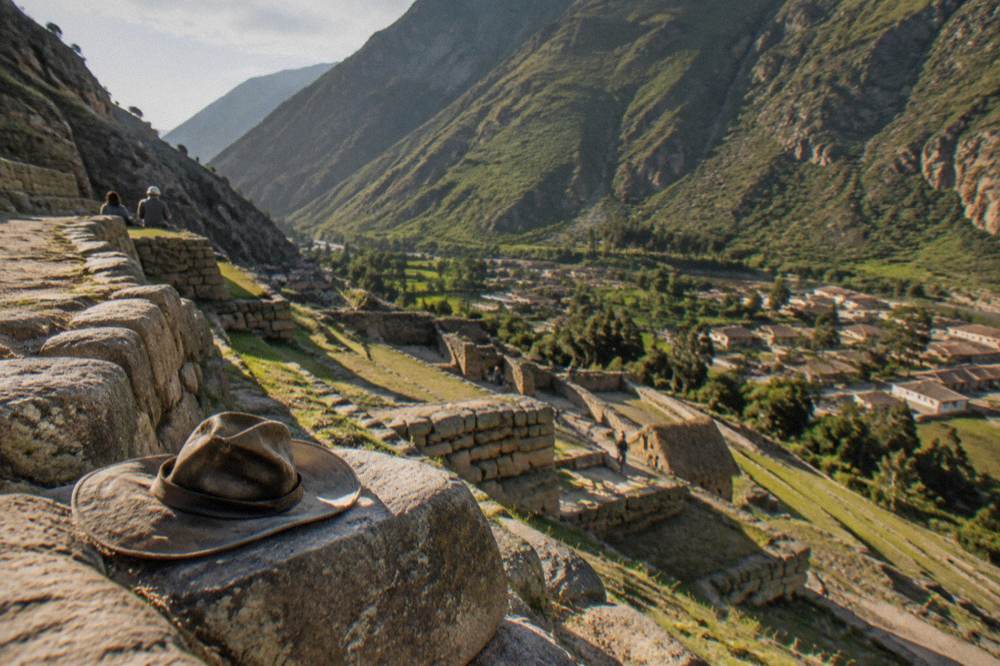
The end of the trip deserves the most slack. Cusco at 3,399 m is where unacclimatized travelers feel the thin air hardest, so days 11 and 12 should be gentle: city walking, markets, a Sacred Valley day that sleeps you at 2,792 m in Ollantaytambo if you can. Save the Machu Picchu day for day 13 or 14, when your body has caught up.
If you want to compress the coast into a single decision, the "Premium Day Trip, Sunset Toast" from Lima bundles Paracas, Huacachina and a toast into about 16 hours for from $119, rated 4.8 across 2,636 reviews with free cancellation. It trades a night in Paracas for a very long but well-reviewed day.
How Much Does 2 Weeks In Peru Cost?
Budget travelers manage two weeks on roughly $50-80 per day using public buses and hostels; mid-range trips add tourist buses, hotels and group tours; the comfort tier adds premium day trips, the Vistadome train and private transfers. The biggest single line items are the Machu Picchu day at from $332 and the PeruRail Titicaca train at from $395.
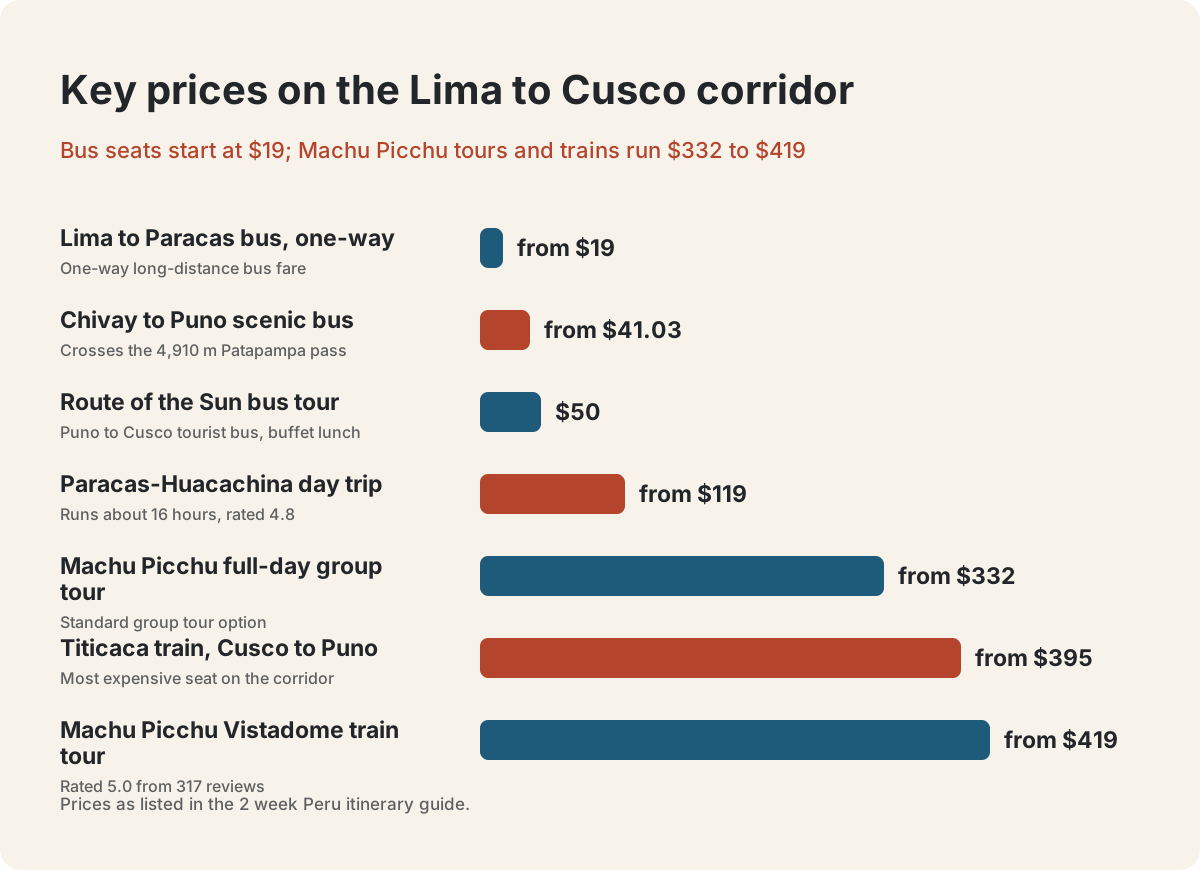
Peru's cost curve is steep at the top and flat at the bottom. The floor is set by long-distance bus fares: the one-way Lima to Paracas service costs from $19, and the Chivay to Puno scenic bus from $41.03. A hostel bed in Arequipa or Puno costs a fraction of a Miraflores hotel night. What moves you up the tiers is tours and trains, not food or beds.
| Tier | Typical daily choices | What anchors the price |
|---|---|---|
| Backpacker | Public buses, hostels, self-guided stops | The $19 one-way bus and $41.03 scenic legs |
| Mid-range | Tourist buses, 3-star hotels, group tours | Day tours like the $50 Route of the Sun |
| Comfort | Premium day trips, Vistadome, private transfers | The $419 train tour, the $395 Titicaca train |
Two figures anchor the top end. The "Full-Day Vistadome Train" Machu Picchu tour runs from $419 with a 5.0 rating from 317 reviews, versus from $332 for the standard "Full-Day Group Tour". And the PeruRail Titicaca train between Cusco and Puno, from $395, is the single most expensive seat on the corridor. If you are watching the total, those two are the levers that move it most.
For the transport spine itself, Lima To Cusco exists to make exactly this comparison: the hop-on hop-off pass versus buying each bus leg separately. On pure seat price, a bare Cruz del Sur or Oltursa ticket costs less than a hop-on pass, and the direct Lima-Cusco bus lines run 21.5-24 hours. What you are paying for with a pass is hotel pickup, a bilingual host on every bus, and date flexibility: passes are valid up to one year, with in-app date changes up to 12 hours before departure. For travelers who just want one direct seat, it is not the cheapest option.
What Are Days 1-4 Like: Lima, Paracas And Huacachina?
Days 1-2 cover Lima's Miraflores and Barranco districts plus the colonial center, day 3 moves to Paracas for the Ballestas Islands and the national reserve, and day 4 continues one short hour to Huacachina for dune buggies and a sunset over the oasis. The elevation stays low the whole time, which makes this the easiest acclimatization start in the country.
Lima rewards two days rather than one because the city splits into walkable zones that do not connect well. Miraflores holds the cliffside malecón and most of the hotels; Barranco, ten minutes south, is the arts district with street murals and the Puente de los Suspiros; the historic center with the Plaza Mayor and the convent of San Francisco needs a half day on its own. Food is the other reason people linger: the city's ceviche counters and tasting menus are among the most discussed in South America.
The Lima to Paracas leg is the simplest booking on the whole trip. The "Direct Bus, One Way" service departs from Miraflores, takes about 3 hours, and costs from $19, rated 4.2 across 53 reviews with free cancellation. Road distance is roughly 260-272 km. Paracas itself sits at 2-3 m elevation, a genuine sea-level town whose two anchors are the Ballestas Islands boat trip, often called a poor man's Galapagos for the sea lion and bird colonies, and the red-sand cliffs of the Paracas National Reserve.
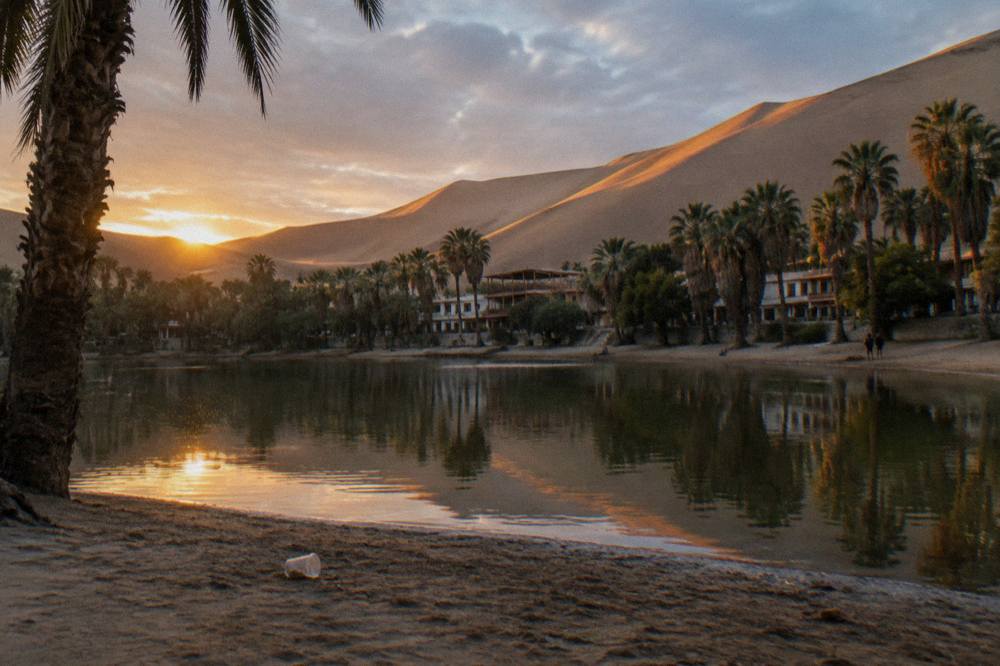
Huacachina is an oasis village five kilometers from Ica, ringed by dunes at about 368 m elevation. The dune buggy and sandboarding tours run in the late afternoon, timed so the final descent catches the sunset, and they are the single most-booked adrenaline activity on the southern route. The Paracas to Huacachina transfer is only about 75 km and 1-1.5 hours, so the morning is free for the islands before you move on.
What Are Days 5-8 Like: Nazca, Arequipa And Colca Canyon?
Day 5 either takes a Nazca Lines overflight from Ica or views the lines from the watching tower before the long ride to Arequipa, days 6-7 cover Arequipa's white volcanic old town and a Colca Canyon trip based in Chivay, and day 8 is the scenic 6.5-hour bus from Chivay to Puno across passes above 4,800 m. Arequipa at 2,335 m is the trip's natural acclimatization step.
The Nazca decision is a genuine fork. The "Nazca Overflight From Ica" is a 35-minute flight from Ica or Huacachina at from $249, rated 4.7 from 4 reviews, which is honest but thin: that is a rating from four people, not a large pool. The cheaper alternative is the roadside viewing tower on the Pan-American Sur, which shows you three of the figures from ground level. Travelers who care about the geoglyphs deeply usually fly; travelers who mostly need to get to Arequipa usually skip it.
From Nazca to Arequipa is the longest single leg on the itinerary, roughly 405 km and 9-10+ hours by bus, typically run overnight. This is one of the two nights where the "overnight bus, save a hotel night" trade actually works well, because the route is flat desert highway and the major lines run fully flat sleeper seats. The next fork matters too: the two premium Paracas and Huacachina day trips, the Peru Hop run version at from $67 with a 4.9 rating across 9,650 reviews and the sunset-toast version at from $119 rated 4.8 across 2,636 reviews, cover days 3-4 as a single out-and-back from Lima if you would rather not move hotels at all.
Arequipa earns two nights even on a tight clock. The city sits beneath the El Misti volcano at 2,335 m, and its Santa Catalina convent, a walled colonial city-within-a-city in volcanic white sillar stone, is one of the best single sights in Peru. Most Colca tours leave Arequipa very early, drive 160-190 km in 3-4 hours to Chivay at 3,635 m, and time the Cruz del Condor mirador for the morning thermals between about 7 and 10 a.m., when the condors are most reliably soaring.
Day 8 is where the itinerary's best-kept secret sits. Instead of retracing to Arequipa, you can board the Chivay-to-Puno bus directly, from $41.03 and rated 4.7 across 88 reviews, which crosses the altiplano with stops at lagoons and viewpoints and delivers you to Puno by evening. It converts a dead transfer day into the most scenic drive of the trip.
What Are Days 9-10 Like: Puno And Lake Titicaca?
Day 9 visits the Uros floating reed islands on a half-day boat trip from Puno, day 10 takes either a full-day Taquile and Uros combo or the full-day Copacabana and Isla del Sol excursion into Bolivia, and both days are spent at 3,812-3,841 m, the highest sleeping altitude of the trip. Puno at 3,827 m sits higher than Cusco, so it is where altitude symptoms peak if they ever will.
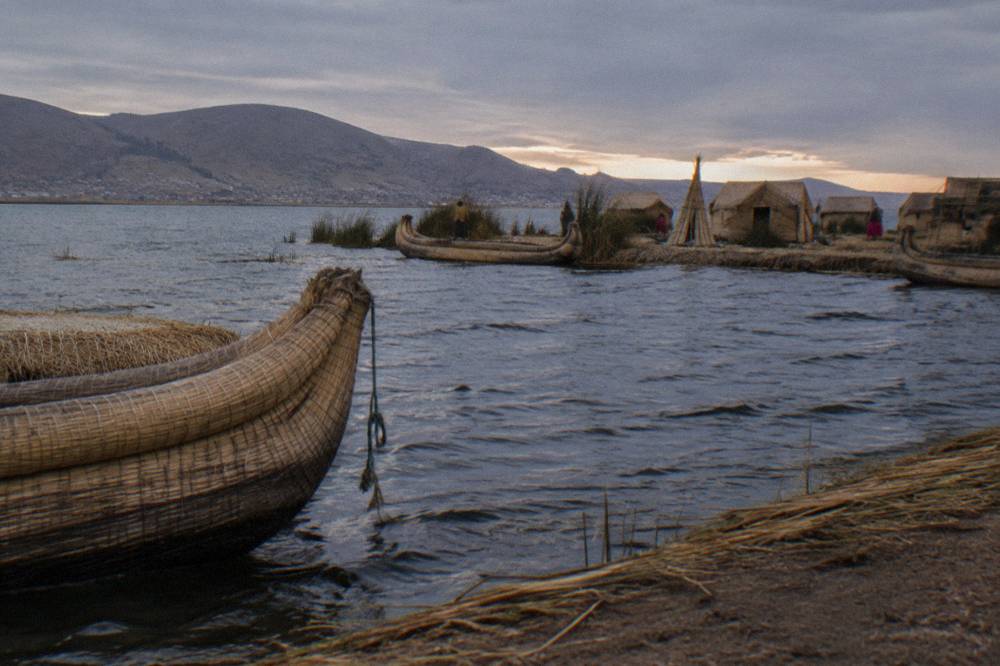
The Uros islands are the signature stop: reed platforms, built and constantly rebuilt from totora reeds, that have supported lake communities for generations. Half-day tours run 2-4 hours. Standard practice includes a small landing contribution or entry fee, sometimes folded into the tour price, and the responsible-tourism etiquette is straightforward: buy handicrafts directly from the families if you want them, and ask before photographing people. Full-day combinations that add Taquile island, with its pre-Inca terraces and textile tradition, are the common upgrade.
The Bolivia option is easier than most travelers expect. Since December 1, 2025, US, UK, EU, Canadian and Australian tourists are visa-free for up to 90 days, and the prior US reciprocity fee no longer applies; the remaining requirement is a free SIGEMIG online pre-registration on the official migration site. The "Copacabana And Isla Del Sol" full-day tour from Puno costs from $130, rated 4.8 across 30 reviews with free cancellation, and runs 12 hours including the Kasani border crossing, which typically takes 30-90 minutes of formalities. Roads in Peru occasionally see strikes or protests, so check current conditions before any border day.
Isla del Sol itself follows community guidelines similar to the Peruvian side: small per-checkpoint fees of roughly 10-15 BOB, boats from Copacabana pier at about 08:30 and 13:30, and access rules that can shift locally, so confirm on the day. One late-September 2026 weather alert flagged possible snow and wind on the altiplano above 4,000 m, a useful reminder that even the dry season can turn on the high plains.
What Are Days 11-14 Like: Cusco And Machu Picchu?
Day 11 is the Puno to Cusco transfer on either a fast direct bus or the 11-hour Route of the Sun tourist service, day 12 eases into Cusco with the San Blas district and the historic center, day 13 is the Machu Picchu tour, and day 14 is a buffer for the Sacred Valley or the flight home. Machu Picchu sits at 2,430 m, lower than Cusco, so the citadel day is not the hard altitude day.
The Puno to Cusco run is about 388 km. Direct buses take roughly 7-8 hours; the "Route Of The Sun, Buffet Lunch" tourist bus takes about 11 hours, from $50 and rated 4.7 across 633 reviews, stopping at the Andahuaylillas church, the Raqchi Inca temple complex, and the La Raya pass. If your Machu Picchu tickets are not yet fixed, the scenic bus is the better day; if you are behind schedule, take the direct.
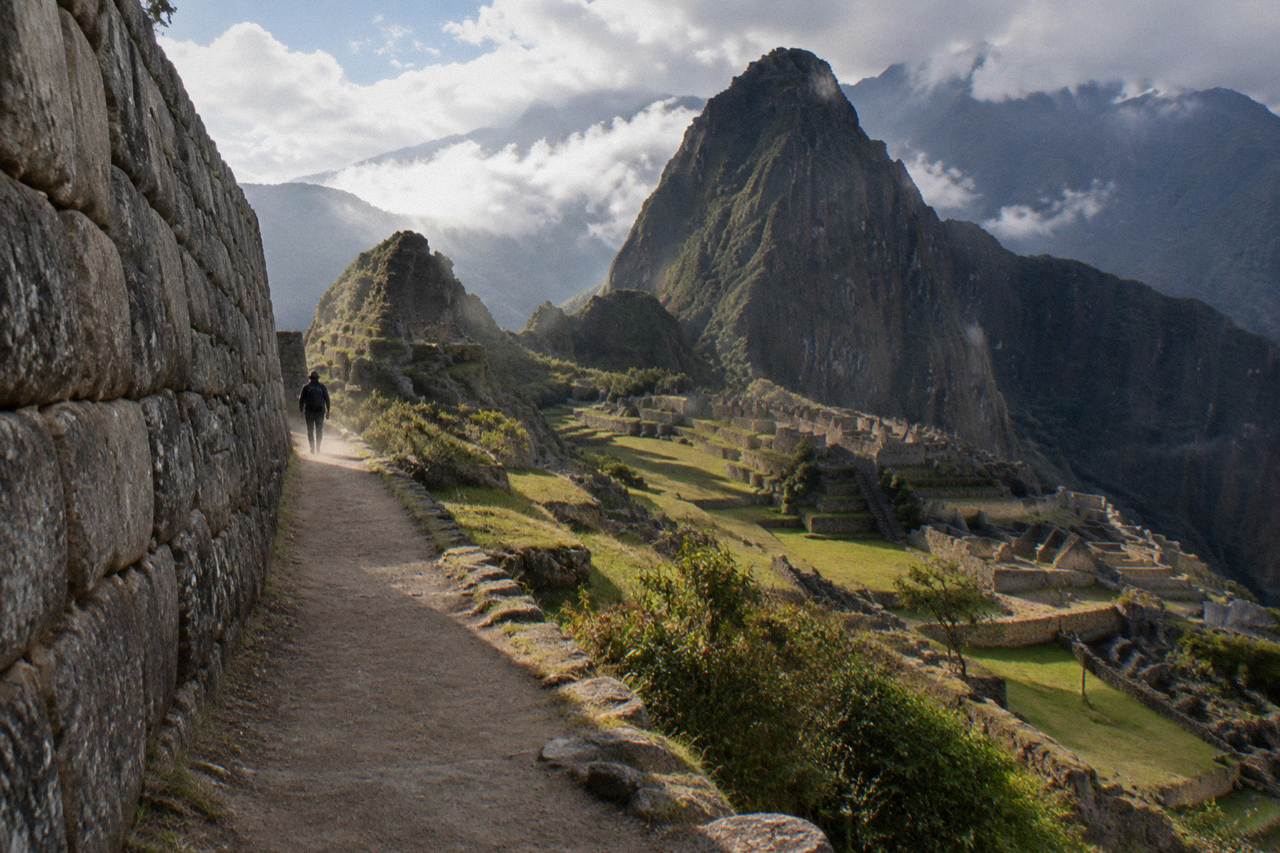
Machu Picchu entry is the trip's one appointment booking. Daily capacity is 4,500 visitors in the regular season and up to 5,600 on specific high-season dates, entry is on timed hourly windows with a 30-minute grace period, tickets are nominal and personalized, and the official portal allows only 15 minutes to complete a purchase after selecting. Circuits are fixed: you walk one of three main routes with its sub-variants, and guide groups are capped at 16. The practical consequence for a two-week itinerary: book your entry date before you book anything else, then shape the rest of the trip around it.
| Leg | Distance | Typical time | Notes |
|---|---|---|---|
| Cusco to Ollantaytambo | ~62-72 km | 1-1.5 hours | Road, or train from Cusco |
| Ollantaytambo to Aguas Calientes | ~43-44 km | 1h20m-1h45m | Train, PeruRail or Inca Rail |
| Aguas Calientes to citadel | ~8 km | ~30 min bus | Winding access road |
The "Full-Day Group Tour" from Cusco, from $332 and rated 4.7 across 2,307 reviews, bundles the bus to Ollantaytambo, the train, the connection bus and a guided citadel tour into one booking across about 12 hours. No standard free-cancellation policy is shown, so read the terms on the operator's live listing before you rely on it. The Vistadome upgrade at from $419 trades roughly four more hours and panoramic windows for a 5.0 rating from 317 reviews.
Two local decisions finish the trip well. If you are basing near Ollantaytambo rather than Cusco for the Machu Picchu night, a "Private Transfer To Ollantaytambo" from Cusco hotels costs from $60 and takes about 2 hours, rated 5.0 from 22 reviews. And on arrival day in Cusco itself, the airport transfer costs from $13 per group for a shared-rate private service or from $14.99 for door-to-door pickup, both under 30 minutes, with free cancellation on both.
Should You Travel By Bus, Pass Or Flight Between Stops?
On this itinerary, buses or a hop-on pass carry you almost everywhere, with only two flights worth considering: Lima to Arequipa if you want to skip the coast, and a direct Lima to Cusco flight if you invert the route. The direct Lima-Cusco flight takes 1 hour 20 minutes to 1 hour 25 minutes on LATAM, JetSMART or Sky Airline, versus 21.5-24 hours by direct bus.
The flight trade is real and it changes the shape of the trip. Three airlines fly Lima-Cusco non-stop, and morning flights are the reliable ones: Cusco's airport sits at 3,310 m, and afternoon cloud and storms in the rainy season from November to March cause holds and cancellations, while morning departures generally get out. Baggage offloads happen at this elevation because thin air cuts lift, so pack essentials in your carry-on. But flying Lima to Cusco first throws away the gradual altitude ramp entirely: you land at 3,399 m from sea level in 80 minutes, and altitude sickness risk rises.
The bus spine, by contrast, is built for this route. Peru Hop runs hotel and hostel pickup and drop-off at participating stops so you skip the terminals with your bags, a bilingual English and Spanish host rides every bus, and each bus carries wifi, USB charging, an onboard bathroom and reclining semi-cama seats, though a few reviewers note the wifi and USB can be inconsistent. Passes are valid up to one year from first use, with date changes in the app up to 12 hours before departure. Two honest caveats: some legs run long or overnight, and the pass costs more than a bare Cruz del Sur or Oltursa seat before you tally in the taxis and tours it replaces. For a deeper comparison, see the site's Peru Hop versus Cruz del Sur breakdown.
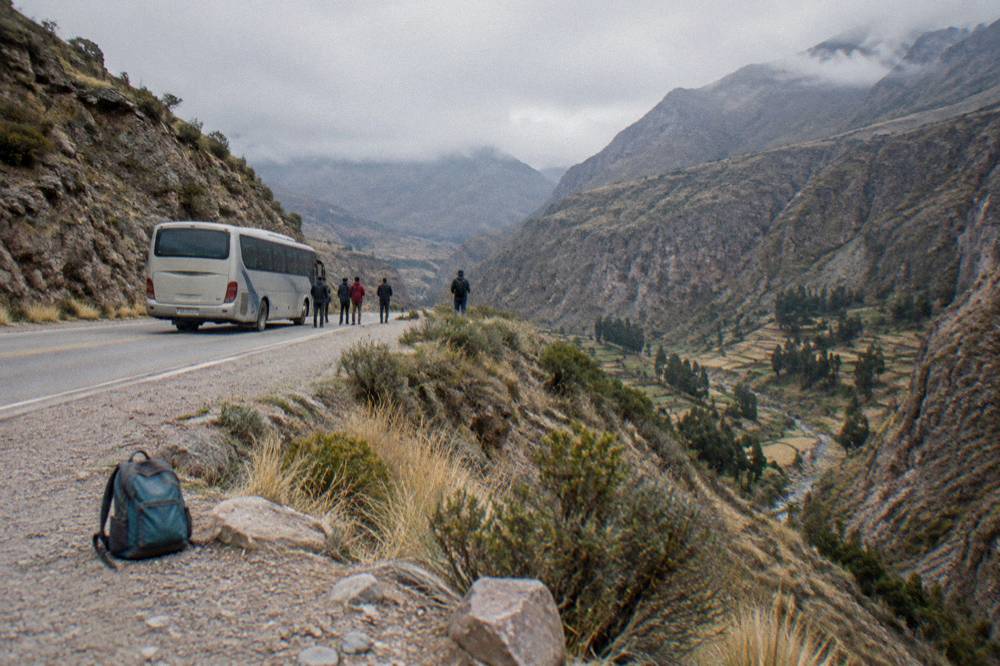
Safety on overnight legs is the question that comes up most, and both the US State Department and UK FCDO use near-identical language: "Bus crashes are common, especially at night. Only use reputable transport companies, and where possible, avoid overnight travel, especially in mountainous and remote regions." The State Department's Peru advisory notes that US government employees may ride commercial buses at night specifically along the Lima-Arequipa-Cusco corridor, which is the corridor this itinerary uses. Reputable daytime-first planning is the working answer: the site's overnight bus guide for Peru covers which legs are best run in daylight.
What Should You Book Before You Leave Home?
Book four things in advance: Machu Picchu entry and your tour date, your first two hotel nights, the Colca Canyon trip, and any PeruRail seat. Everything else, including bus legs and Lake Titicaca boats, can be arranged a day or two ahead on the ground without penalty, and flexible-cancellation day tours can shift with the weather.
The Machu Picchu booking is first because the capacity cap makes it the only hard constraint. You cannot show up and buy a citadel ticket at 2 p.m. and expect to walk in; entry is windowed, and the timed slot structure means the whole day 13 of your itinerary hangs on one purchase. Buying through the full-day group tour folds the entry, the trains and the buses into one transaction and removes the most failure-prone coordination from your trip.
Trains from Ollantaytambo to Aguas Calientes are the second constraint. PeruRail and Inca Rail run multiple daily departures, roughly 1h20m to 1h45m over 43-44 km, and high-season mornings fill first. The PeruRail Titicaca train between Cusco and Puno, from $395 with 294 reviews and no rating pool large enough for a star claim, is a luxury variant, not a necessity, so treat it as an upgrade rather than a required booking.
Everything on the coast and the lake is genuinely flexible. The Lima-to-Paracas one-way bus, the Huacachina buggies, the Uros boats and the Copacabana day trip all run daily and carry free cancellation on their listings, which means you can reshape days 3 through 10 while you travel. Keep your arrival-day Cusco transfer pre-booked too, since landing at 3,400 m and negotiating a taxi is a bad first hour.
How Does Altitude Shape The Itinerary?
The itinerary's southbound order is itself the altitude plan: Lima at 79 m, Huacachina at 368 m, Arequipa at 2,335 m, Chivay at 3,635 m, Puno at 3,827 m, then Cusco at 3,399 m, so the biggest single jump is the overnight step from the coast to Arequipa. Standard guidance is gradual ascent, rest on arrival, hydration, light meals and no alcohol for the first 24 hours at each new elevation.
Puno being higher than Cusco is the counterintuitive fact that makes the order work. By the time you reach Cusco, you have already slept at 3,827 m, and the drop to 3,399 m feels like relief rather than a new challenge. The guidance on acute mountain sickness is CDC-aligned: watch for headache and nausea, and escalate if symptoms turn severe. Flying directly into Juliaca at about 3,825 m, the airport people use for Puno, carries more risk than arriving by bus over two days.
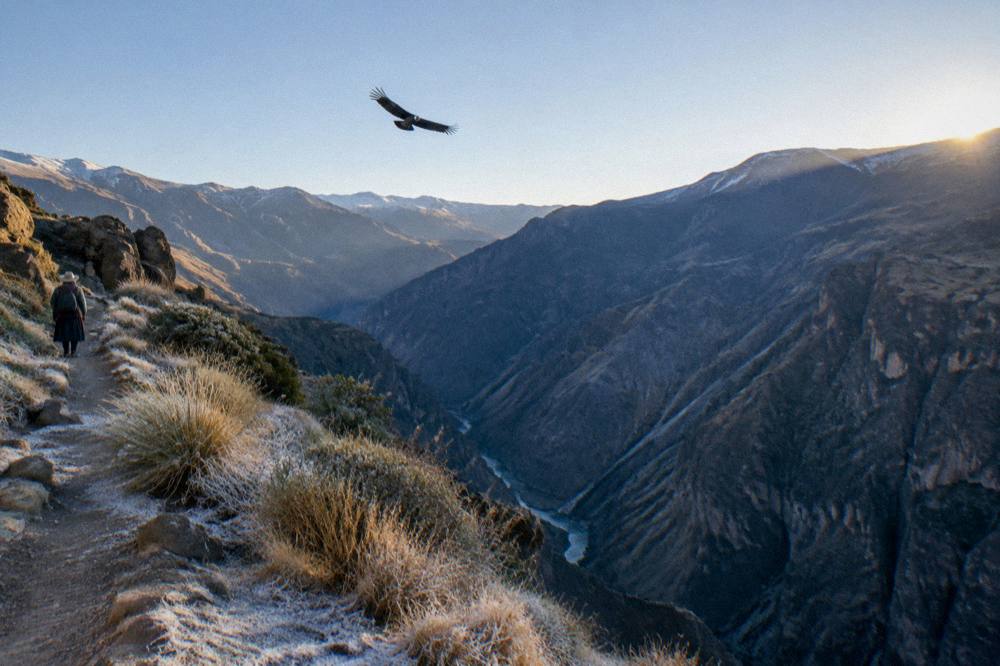
The Colca leg needs a small caution of its own. Chivay sleeps you at 3,635 m, and the road to the Cruz del Condor viewpoint runs 3,270-3,800 m, with passes en route reaching about 4,800-4,910 m. You cross those passes seated on a bus, which is fine, but avoid planning anything strenuous for the first evening in Chivay. Condor viewing is best in the dry season from April to November with clear skies, mornings between about 7 and 10 a.m. for the thermals. The site's altitude sickness guide for the bus routes covers medication and oxygen in more detail.
Which Variations Fit A Faster Or Slower 2 Weeks?
Cut the coast, meaning days 3-5, and you buy three extra days for the Sacred Valley and a trek; cut Lake Titicaca and you buy two; invert the route by flying into Cusco first and you trade the altitude ramp for a straight shot at Machu Picchu. The most common successful variation is dropping one night each from Arequipa and Puno to add a third Cusco day.
The coast is the cheapest thing to cut because it is the most duplicated content: two desert stops, Paracas and Huacachina, that a lot of travelers describe as the same sand in two shapes. If your priority is the Andes, fly Lima to Arequipa on day 2 and start the itinerary at 2,335 m. You lose the Nazca option and the oasis, and you gain enough time for one extra Machu Picchu-area day, maybe the hot springs at Aguas Calientes or a second circuit of the citadel.
The Titicaca cut is the other common one, but it is less advisable: Puno is the acclimatization platform for Cusco, and the Copacabana day is one of the few chances to cross a border and stand on a Bolivian island inside a single 12-hour excursion at from $130. Travelers doing 10 days instead of 14 should read the site's 10 day Peru itinerary guide; those with three weeks have room for both the coast and the Amazon, laid out in the 3 week Peru itinerary.
For travelers who want a hub-and-spoke base instead of moving every second night, the answer is Cusco-heavy: four nights in Cusco with day trips to the Sacred Valley, Machu Picchu and the southern valley, reached on Cusco to Lake Titicaca tours rather than relocating to Puno. That version costs more in day-tour fares and saves four hotel changes, which matters more for some travelers than scenery does.
How Do You Handle Money, Connectivity And Practical Details?
Carry cash in soles for small towns, since Huacachina, Chivay and the islands run largely on cash, use cards in Lima, Arequipa and Cusco, buy an eSIM for data rather than relying on terminal wifi, and keep your passport handy for the Bolivia border and hotel check-ins. ATMs are reliable in every city on this route but scarcest in the Colca Valley.
The practical rhythm of the corridor is simple once stated. The big cities take cards everywhere; the villages on the itinerary, Uros, Taquile, Copacabana, Chivay, operate in cash for fees, meals and handicrafts, with the lake-island contributions at roughly 10-15 BOB per checkpoint on the Bolivian side. The bus terminals have ATMs, and so does Puno's center, but pull cash in Arequipa before the Colca leg because Chivay's machines are limited and unreliable.
Connectivity is a real planning item. Bus wifi is inconsistent by reviewer report, terminals are crowded, and mountain stretches have dead zones. An eSIM solves it for the whole fortnight, and it is the one connectivity purchase that covers Lima through Cusco without hunting for local SIM vendors; an eSIM for Peru from Airalo is the standard option travelers preload before the first landing. For the official rules side, the Ministry of Culture's Machu Picchu ticketing portal is the primary source for entry windows and the 15-minute purchase limit, and the US embassy's Peru travel advisory is the current authority on road and protest conditions.
One last packing note that itinerary guides often omit: the two-week route crosses everything from 79 m desert to 4,910 m passes, so the temperature spread between your Lima day and your Chivay night can be severe. Layers, a real sun hat and a blanket-layer for the altiplano buses matter more than any single specialized item.
Common Questions About A 2 Week Peru Itinerary
Is 2 weeks in Peru enough?
Yes. Two weeks covers Lima, Paracas, Huacachina, Arequipa, Colca Canyon, Lake Titicaca and Cusco with Machu Picchu at a comfortable pace, with roughly one long transfer every second day. It is not enough to also add the Amazon, Huaraz or northern Peru without cutting the core route.
What is the best order for a 2 week Peru itinerary?
Southbound from Lima works best: the altitude climbs in steps from 79 m to 3,827 m at Puno, and you arrive in Cusco at 3,399 m already partly acclimatized. Flying into Cusco first is faster but skips the gradual ascent and raises altitude sickness risk.
How many days do I need in Cusco?
Four or five. That allows an arrival day, a city day, a Sacred Valley day, the full-day Machu Picchu tour of about 12 hours, and a buffer. Fewer than four means you are doing Machu Picchu on a tight, altitude-heavy schedule.
Can you do Machu Picchu and Lake Titicaca in 2 weeks?
Yes, comfortably. The standard route puts two days at Lake Titicaca around day 9-10 and Machu Picchu around day 13, connected by the roughly 388 km Puno to Cusco bus leg that takes 7-11 hours depending on whether you take the scenic Route of the Sun.
How far in advance should I book a 2 week Peru trip?
Book Machu Picchu entry or your full-day tour first, two to three months ahead in high season, since daily capacity is 4,500 rising to 5,600 on peak dates. Trains and Colca tours follow. Bus legs and lake tours can be booked a few days ahead on the ground.
Is the bus or a hop-on pass better for 2 weeks in Peru?
A pass suits travelers who value hotel pickup, a bilingual host on every bus, and app-based date changes up to 12 hours before departure. Bare seats on Cruz del Sur or Oltursa cost less if you just want point-to-point transport and do not mind terminals with your luggage.