What To Pack For A Peru Bus Trip
A practical packing list for long-distance bus travel in Peru: layers for altiplano cold, the published Cruz del Sur and Oltursa luggage limits, valuables, motion and altitude sickness items, and onboard comfort essentials.
What To Pack For A Peru Bus Trip
Pack for three climates at once, a strict carry-on limit, and cold you will not expect: layered clothing for passes above 4,000 metres, a daypack that stays with you holding documents and medication, toilet paper and snacks, motion sickness tablets, and nothing valuable in the hold. The published Cruz del Sur carry-on cap is 6 kg and 50 x 35 x 21 cm, so the bag at your feet has to be chosen with that in mind.
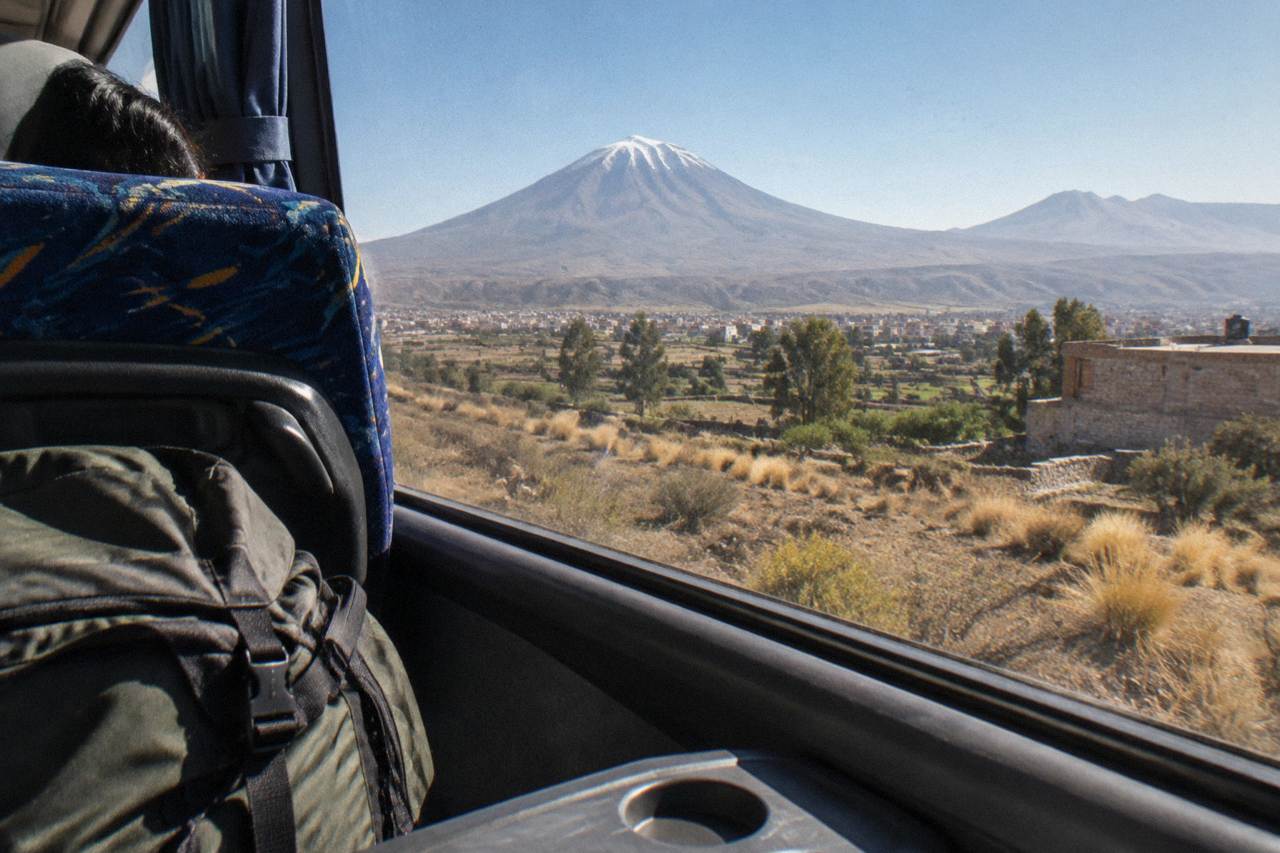
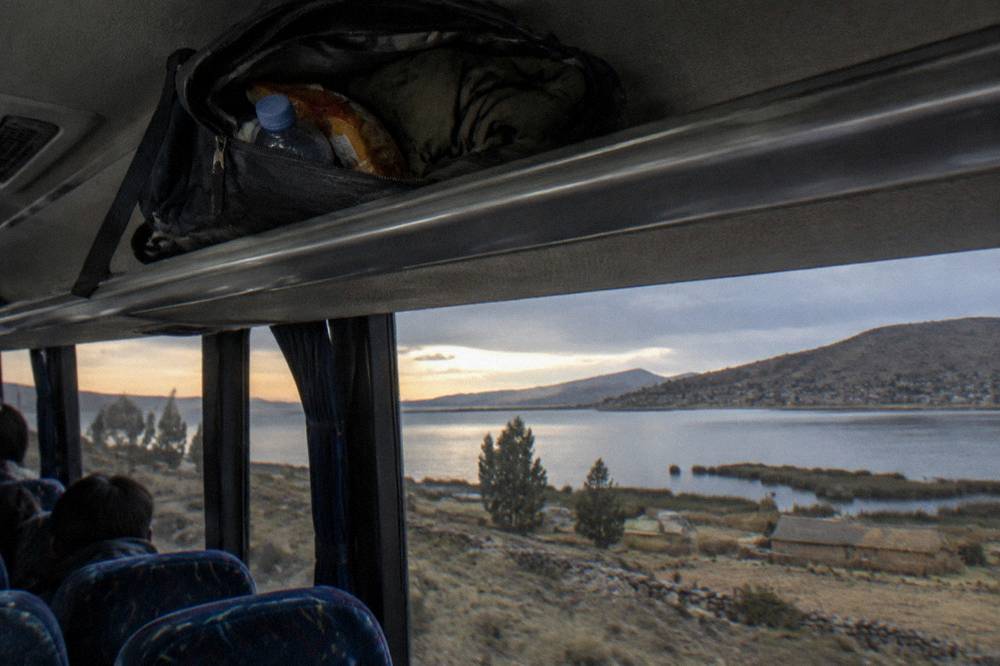
A Peru bus trip is not a normal coach ride. The classic southern route, Lima to Paracas to Huacachina to Nazca to Arequipa to Puno to Cusco, climbs from sea level to altiplano above 3,800 metres and crosses passes that can sit near 4,800 metres on the Colca leg. You leave Lima in coastal humidity and wake up in Puno where the surface of Lake Titicaca sits at 3,812 metres. What works on a European motorway run fails here in specific, predictable ways, and most of the failures come down to temperature, luggage rules and the small things the bus does not supply.
This guide walks through the packing decisions in the order you will actually face them: what to wear on board, what goes in the hold versus what stays with you, the health kit that matters at altitude, and the comfort items that make a 10-hour leg bearable. Every luggage figure quoted is the operator's own published limit, and the health advice is general common sense, not a prescription, so talk to a doctor about medication before you travel.
If you are still choosing how to split the journey, the scenic legs are where packing matters most, because the cold hours on board line up with the best views out the window. The Colca to Puno scenic bus crosses the high altiplano between two of Peru's headline sights, and a daypack with layers within reach is what makes the viewpoint stops comfortable rather than survivable.
Layers For Cold Altiplano Nights And High Passes
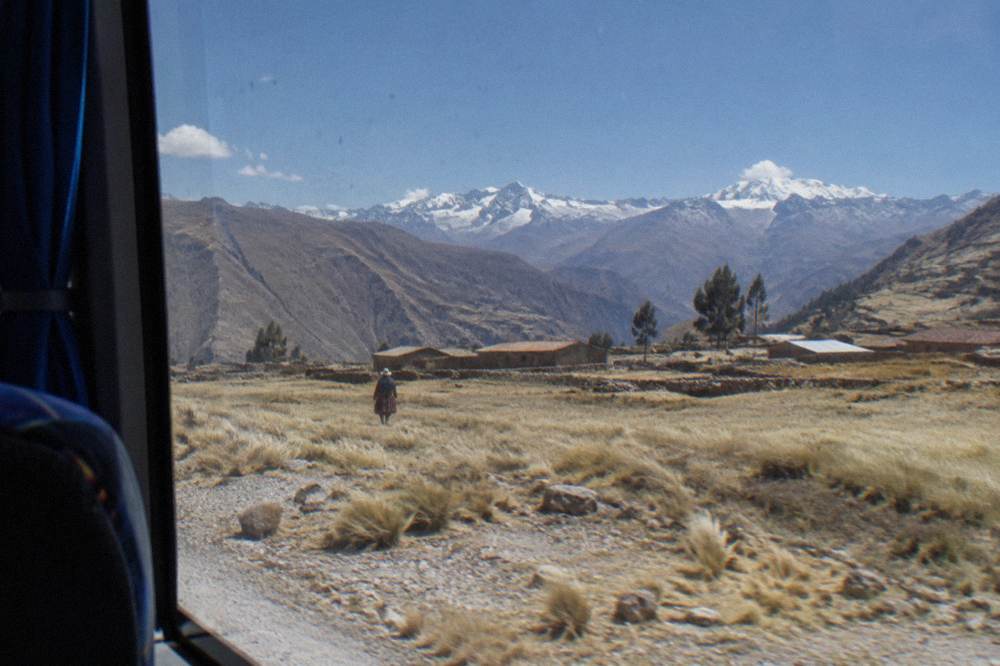
The single biggest packing mistake on this route is dressing for Lima. Coastal Peru is mild, but the altiplano is not: Chivay sits at 3,635 metres, Puno at 3,827 metres, and passes on the Colca route reach roughly 4,800 to 4,910 metres. Pack a base layer, a fleece, a windproof shell, a warm hat and gloves, and keep at least the fleece in your daypack, not the hold.
The pattern that works is the one hikers already know: thin layers you can add and remove as the bus climbs and the sun moves. A long-sleeve merino or synthetic base layer takes almost no space in a bag and changes a shivering overnight leg into a sleepable one. Over that, a fleece or light down jacket. Over that, something that blocks wind, because the viewpoint stops at altitude are windy almost by definition. You will wear all three at a 6 a.m. stop at Cruz del Condor and peel them off two by two as the bus descends toward the coast.
The numbers behind that advice are worth internalising before you pack. Arequipa, the mid-route stop most travellers sleep a night or two in, sits at 2,335 metres, which feels cool at night but manageable in a jumper. Chivay, the staging town for the canyon, is a full 1,300 metres higher at 3,635 metres. Puno is higher again at 3,827 metres, and the road between them crosses terrain in the 4,000-metre range, with some references putting passes near 4,910 metres. The Cruz del Condor viewpoint itself sits around 3,270 to 3,800 metres depending on which rim reference you read. None of these are numbers you feel in a heated bus; all of them are numbers you feel the moment the door opens at a photo stop.
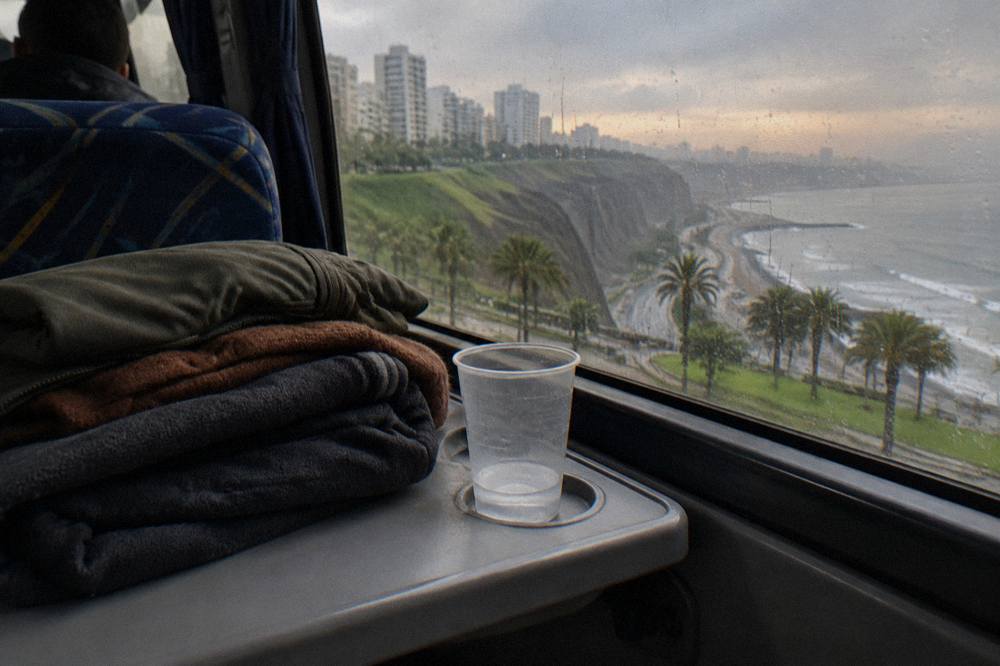
Blankets are part of this picture too. Semi-cama and cama classes on the premium lines typically include a blanket: Oltursa's semi-cama service does, and Peru Hop provides a blanket per passenger, with a climate-control system that keeps the cabin at a steady temperature rather than a simple on-or-off air conditioner. Treat the blanket as a bonus, not a plan. Buses run cold on the high legs regardless of operator, and a reviewer on the hop-on service notes that some journeys simply run long, which means more hours at altitude than the timetable suggests. A lightweight packable blanket of your own weighs little and never depends on the operator stocking it.
One honest caveat about the comfort framing: the featured hop-on pass costs more than a bare Cruz del Sur or Oltursa seat before you total in the taxis and tours it replaces, and it is not the cheapest option for a traveller who just wants one direct seat. For packing purposes, though, its luggage approach is the simplest on the route: no strict published weight limit, a standard suitcase in the under-bus hold plus one carry-on daypack. That is the standard this article assumes.
Carry-On Versus Hold Luggage: The Published Limits
Cruz del Sur allows up to 20 kg of tagged hold baggage and a carry-on capped at 6 kg and 50 x 35 x 21 cm, with excess subject to space; Oltursa allows one carry-on around 5 kg and 45 x 30 x 20 cm. Pack on the assumption that your carry-on will be weighed or measured at the terminal, because on the premium lines it sometimes is.
These numbers come from the operators' own published baggage policies, and they shape everything about your bag choice. A soft 40-litre duffel fits the Cruz del Sur sizer with room to spare; a rigid wheeled carry-on often does not, because the 21 cm depth is the dimension that catches people out. The hold allowance is generous at 20 kg, so the real packing skill is deciding what earns a place at your feet.
The rule that never fails: everything you cannot afford to lose, or cannot ride 10 hours without, goes in the daypack. Passport and any migration slips, money and cards, medication, phone and charger, one full layer of warm clothing, water, snacks, and toilet paper. Hold baggage on a long-distance bus is tagged and generally handled well on the premium lines, but it is separated from you for hours at a time, and the terminal in Cusco alone houses dozens of companies in one building, which makes the retrieval area busy and easy to linger in with the wrong bag.
| Operator | Hold allowance | Carry-on limit | Notes for packers |
|---|---|---|---|
| Cruz del Sur | Up to 20 kg, tagged | 6 kg, max 50 x 35 x 21 cm | Excess charged subject to space |
| Oltursa | Per ticket, semi-cama and above | Around 5 kg, 45 x 30 x 20 cm | Blanket included on semi-cama |
| Peru Hop | Standard suitcase in hold, no strict published weight limit | One carry-on daypack | Hotel pickup skips the terminal with your bags |
The terminal point deserves its own sentence. Peru Hop picks up and drops off at your hotel or hostel in participating locations, so you skip the bus terminal with your luggage entirely, while Cruz del Sur and Oltursa depart from their own terminals: Javier Prado in Lima for Cruz del Sur, Surquillo for Oltursa, and the single Terminal Terrestre on Vía de Evitamiento in Cusco. That difference changes what you pack on the last morning, because a hotel pickup means you hand your bag over at the door rather than hauling it across a terminal forecourt. If you are comparing the two approaches in detail, the Cruz del Sur bus classes explained piece breaks down what each seat type includes.
Valuables, Documents And The Daypack Itself
Choose a daypack that closes fully, ideally with a zip against your back on crowded terminal floors, and treat it as your lifeline: passport, onward-ticket proof, cash in two places, cards, medication, electronics and chargers all ride with you, never in the hold. Peru's terminals are normal busy transport hubs, not danger zones, but a bag that cannot be closed is an invitation on any bus system in the world.
The documents side is straightforward but unforgiving. Your passport is the one item with no workaround: bus companies in Peru require it to issue tickets, and the border crossings toward Bolivia, at Yunguyo and Kasani if you continue to Copacabana, need both the Peruvian exit stamp and the Bolivian entry process. Keep a phone photo of your passport's photo page as a backup, and keep the passport itself in a zipped inner pocket rather than a jacket you might remove at a viewpoint stop. The rest of the planning pages sit on Lima To Cusco.
Cash deserves a small amount of planning. Terminal fees exist, a S/1 usage fee is charged at the Cusco Terminal Terrestre, and taxis from Cusco's Plaza de Armas to the terminal run around 10 to 15 soles with the price confirmed in advance. Small notes matter more than big ones. Cards work for tickets and in cities, but the fee windows, the taxi ranks and the food stalls at intermediate stops are cash-only territory.
Electronics packing follows the same logic as documents. A power bank is close to mandatory: buses carry USB charging, and a few reviewers note the ports can be inconsistent, so a charged bank is the reliable version of the same comfort. Keep the bank and cable in the daypack, use the seat's USB when it works, and save the bank for the stretches where it does not. A short cable reaches a seat-back port better than a long one trailing across the aisle.
Motion Sickness, Altitude And The Small Health Kit
Pack motion sickness tablets for the switchbacks, altitude symptom awareness for the climbs above 3,800 metres, and basic remedies in your daypack, but treat all medication as something to discuss with a doctor before you travel, not something to dose from a travel article. Headache, nausea and poor sleep at altitude are the signals to slow down, and the standard prevention is gradual ascent, which the southern route gives you naturally if you let it.
The geography explains the health packing list better than any checklist does. Nazca sits around 520 metres, Arequipa at 2,335 metres, and Puno at 3,827 metres, so a well-sequenced trip ascends in steps rather than one jump. That stepwise climb is why the classic itinerary works: Arequipa is the acclimatisation stop that makes Puno tolerable. Flying straight into Juliaca at roughly 3,825 metres removes those steps, which is why the overland route is often recommended for travellers worried about altitude.
The motion sickness half of the kit matters on specific legs rather than everywhere. The descent from the altiplano toward Arequipa, the road into the Colca Canyon and the stretch between Cusco and Ollantaytambo are the winding ones. Tablets, ginger or acupressure bands all have their users, and the choice between them is personal; what is not personal is the advice to take something before the road turns rather than after, because the window for prevention closes early. If you want the full picture on how altitude interacts with these routes, the altitude sickness on the bus routes guide covers symptoms and sensible responses in detail.
Beyond medication, the kit that earns its space is small: rehydration salts, basic pain relief for altitude headaches, lip balm and high-factor sunscreen, because altiplano sun through a bus window burns faster than coastal sun, and a small tube of hand sanitiser. Nothing here needs a pharmacy's worth of supplies. The one non-negotiable is water: buy sealed bottles at stops rather than refilling from unknown taps, and keep the day's bottle at your seat rather than in the hold.
Official advice supports the general shape of this section. The UK Foreign Office's Peru travel guidance states plainly: "Bus crashes are common, especially at night. Only use reputable transport companies, and where possible, avoid overnight travel, especially in mountainous and remote regions." The US State Department's advisory echoes the same reputable-companies point and notes that demonstrations can shut roads without warning, which is a reason to keep a charged phone and a buffer day in your plans, not a reason to avoid the buses. The premium operators on this route are the reputable tier that advice is pointing at, and the general safety picture is covered in is Peru bus travel safe.
Food, Water And Onboard Comfort Items
Pack a modest food bag: sealed snacks that survive heat and altitude, more water than you think you need, and items the bus will not supply such as toilet paper and wipes, because onboard toilets on most long-distance services are urinal-only and rarely stocked. A 10-hour leg with no planned meal stop turns a snack bag from a nicety into the difference between a good day and a bad one.
The toilet reality deserves blunt wording because it surprises people. Long-distance buses in Peru have onboard bathrooms on most services, but they are frequently urinal-only, and toilet paper is not provided. A small travel pack of tissues and a sealed wipe is the single highest-value item per gram in your daypack. The same logic covers the intermediate stops: drivers schedule rest and meal breaks, and the food available at them ranges from proper restaurants to snack counters, so the bag you packed is the floor under the day, not the ceiling.
Comfort items beyond food are few and cheap. Earplugs and an eye mask for overnight legs, when the cabin lights and other passengers do not follow your schedule. A neck pillow that actually packs small, because semi-cama reclines to roughly 140 degrees, which is a big lean-back but not a bed. Slip-on shoes for the same reason: you will want your shoes off on an overnight leg and back on fast at a rest stop. A book or downloaded entertainment for the stretches where the wifi, which buses do carry, proves inconsistent, as some reviewers note it can be.
What not to pack is the quieter half of the list. Do not pack valuables in hold luggage, full stop. Do not pack glass bottles or anything that leaks under pressure changes, because a 4,800-metre pass is not kind to sealed containers. Do not pack more than one bag per person on the hop-on services, where the simplicity of a suitcase plus a daypack is part of what you are paying for. And do not pack for every weather extreme in one bag; the laundry services in Arequipa and Cusco are cheap and good, which is the fact that keeps most packing lists honest.
The long legs reward preparation most. The Cusco Route of the Sun to Puno runs about 11 hours, 6:10 a.m. to 5:30 p.m., with a buffet lunch included, and it is the kind of leg where the food bag, the layers and the entertainment all get used in a single day. It carries a 4.7 rating from 633 reviews and free cancellation, from $50, and it turns a transfer into a sightseeing day, which changes what you want at your seat: camera charged, snacks reachable, warm layer on.
For travellers who would rather not ride the whole corridor by bus, the train alternative exists on one leg: the PeruRail Titicaca train links Cusco and Puno in about 10 hours, from $395, and its cancellation policy is not shown on the listing, so check before committing. It is a different packing problem, more like a flight than a bus, and it suits anyone whose priority is the journey itself over the budget. The rest of the corridor, coast to Colca, remains road-only.
Common Questions About Packing For A Peru Bus Trip
What To Pack For A Peru Bus Trip?
Layers for cold altiplano nights and passes near 4,800 metres, a daypack holding documents, medication, water, snacks and toilet paper, a power bank, motion sickness tablets, and a hold bag within the 20 kg Cruz del Sur allowance with a carry-on under 6 kg and 50 x 35 x 21 cm.
Do Peru buses provide blankets?
Premium services generally do. Oltursa includes a blanket on semi-cama, and Peru Hop provides one per passenger. Economy public buses often do not, so a lightweight packable layer of your own is the reliable plan.
How strict is the carry-on limit on Cruz del Sur?
The published limit is 6 kg and 50 x 35 x 21 cm, with hold baggage up to 20 kg tagged. Excess is charged subject to space. Pack as if it will be checked at the terminal, because on busy departures it can be.
Do I need to bring my own toilet paper on Peruvian buses?
Yes. Onboard toilets on most long-distance services are urinal-only and rarely stocked. A travel pack of tissues and a sealed wipe is one of the most useful items you can carry.
What helps with altitude on the bus routes?
Gradual ascent is the main prevention: the classic route climbs through Arequipa at 2,335 metres before Puno at 3,827 metres. Drink water, eat light, skip alcohol on arrival, and talk to a doctor before travel about medication such as acetazolamide if you are prone to altitude sickness.