Which Bus Terminal Do You Use In Lima And Cusco
Lima has no single bus station: each company runs its own terminal. Cusco has one main Terminal Terrestre. Here is where buses actually leave from, how to reach them, and what it costs.
Which Bus Terminal Do You Use In Lima And Cusco
In Lima you use whichever company terminal your bus operator runs, not a single city station: Cruz del Sur departs from its Javier Prado terminal in La Victoria, Oltursa from Surquillo, and some northern routes from Plaza Norte. In Cusco nearly every long-distance bus uses one place, the Terminal Terrestre on Avenida Vía de Evitamiento in the Santiago district. Peru Hop instead picks up at your hotel in participating locations.
That asymmetry is the single most common point of confusion on the southern Peru circuit. Travelers arrive in Lima expecting something like a European main station, buy a ticket, and then discover the departure point depends entirely on which company they booked. There is no shared hub, no central departures board, and terminals can sit 20 to 30 minutes apart in traffic. In Cusco the situation inverts: the city funnels essentially all long-distance service through one terminal, which makes arrival simple but means every incoming passenger lands at the same place.
The practical consequence is that your terminal is chosen at the moment of booking, not on the day of travel. A Cruz del Sur ticket commits you to La Victoria; an Oltursa ticket commits you to Surquillo. If you are comparing operators on price alone, the taxi fare and the travel time to each terminal belong in the comparison. On the Lima-Cusco corridor that difference is usually small, but during evening traffic it can be the difference between a calm departure and a sprint.
It also affects how you plan the first hour of your trip. If your hotel is in Miraflores and your bus leaves from Javier Prado, you are crossing half the city before you have even started the journey south. If instead you are heading only as far as the coast, say Paracas or Huacachina, the departure is still from the same cluster of Lima terminals, but the ride itself is short enough that the terminal logistics end up being a bigger share of your total travel time than the bus leg. That is worth keeping in mind when you decide how much effort to put into the terminal question at all.
If you would rather not handle the terminal logistics with your bags at all, the bookable services below cover the two ends of this route: airport-to-hotel transport in Cusco, and the direct Lima to Paracas bus leg that starts this whole southern itinerary.
For travelers who want to compare every scheduled operator and price on the corridor before committing, Busbud's Lima and Cusco departure listings work as a budget, direct-ticket alternative to a hop-on-hop-off pass, and they show you the departure terminal for each service before you pay.
Which Terminals Do Long-Distance Buses Use In Lima?
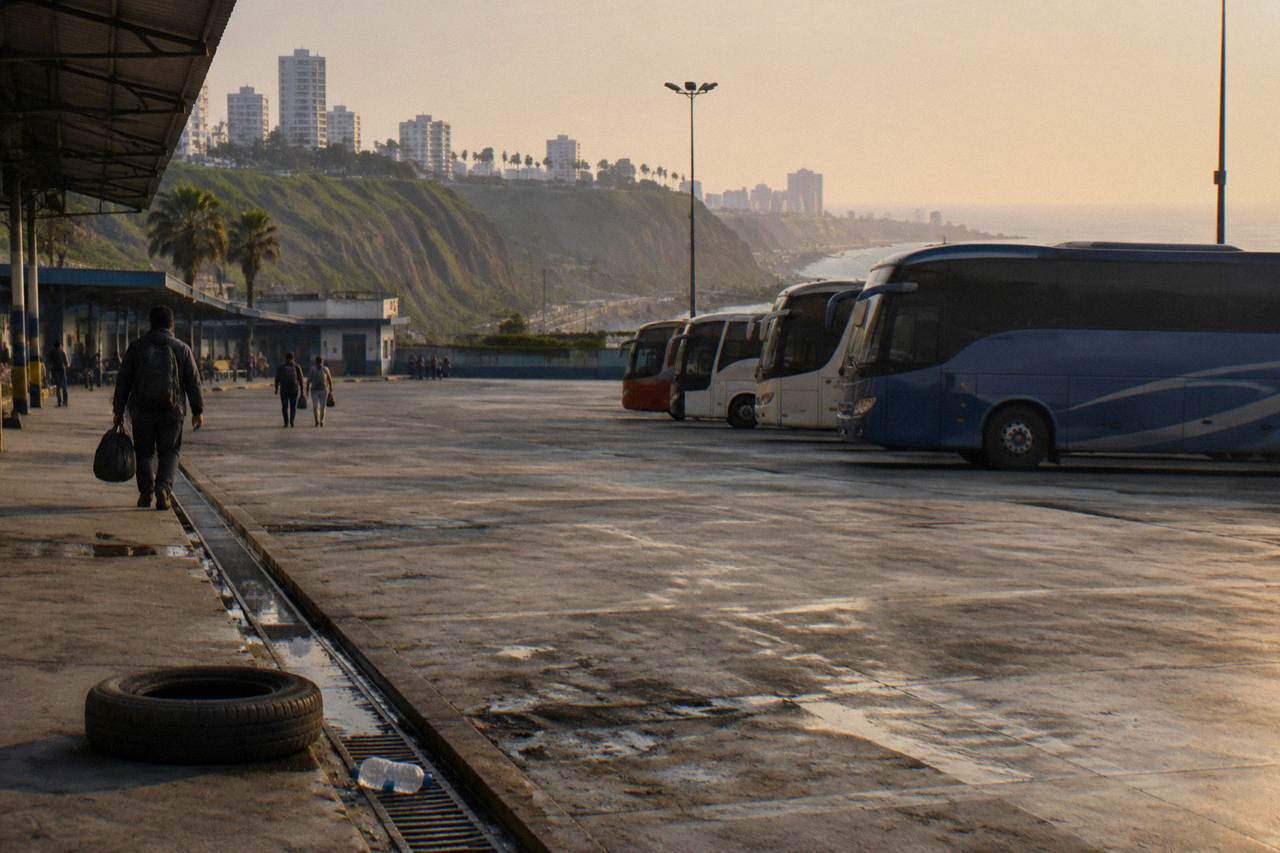
Lima's long-distance tourist buses leave from company terminals rather than one central station. Cruz del Sur uses its Javier Prado terminal at Avenida Javier Prado Este 1109 in La Victoria, Oltursa uses its Surquillo terminal at Jr. Portocarrero 380, and Plaza Norte at Avenida Gerardo Unger 6917 in Independencia serves some northern routes and hosts counters for several companies.
The geography matters more than the names. Javier Prado and the surrounding La Victoria area handle most southern and southeastern departures, which is exactly the direction of Ica, Nazca, Paracas, Arequipa, Cusco and Puno. If your ticket says Cruz del Sur, you are going to La Victoria. Civa and other companies also cluster in the same Javier Prado area, so a taxi driver who knows one generally knows them all. Plaza Norte sits far to the north of the city center, which is why it matters mainly for northern routes; booking a southern departure from Plaza Norte is possible with some companies but it is the exception rather than the rule.
Oltursa's Surquillo terminal is the outlier in position, sitting closer to the Miraflores and San Isidro hotel zones than La Victoria is. For travelers staying in Miraflores, an Oltursa departure can mean a shorter and cheaper taxi ride than a Cruz del Sur one, sometimes by a meaningful margin in evening traffic. That is worth weighing when the two operators price a Lima to Cusco or Lima to Ica ticket within a few soles of each other.
| Terminal | Address | District | Main Users | Typical Routes |
|---|---|---|---|---|
| Cruz del Sur Javier Prado | Av. Javier Prado Este 1109 | La Victoria | Cruz del Sur | South and southeast: Ica, Nazca, Paracas, Arequipa, Cusco, Puno |
| Oltursa Surquillo | Jr. Portocarrero 380 | Surquillo | Oltursa | South and southeast corridor |
| Plaza Norte | Av. Gerardo Unger 6917 | Independencia | Cruz del Sur counters and others | Northern routes, some company counters |
Treat the addresses as reported and confirm the exact departure point printed on your ticket before travel day. Companies occasionally shift departures between their own offices and terminals, and the ticket, not a guide or a map, is the binding document. If your ticket lists a different address than the one above, trust the ticket.
Arrival in Lima works the same way in reverse: your bus drops you at the operator's terminal, not at a central point. From Javier Prado, central Miraflores is a taxi ride away, so plan for that last leg rather than assuming you can walk it with luggage. Late-night arrivals deserve particular care, because the area around a big terminal after the last departures is not where you want to be negotiating a taxi from scratch. If your bus lands at 11 p.m., have a hotel-booked driver or a ride app arranged in advance, and if that is not possible, use the official taxi counters inside the terminal rather than touts at the door.
For the first leg of the southern route, the direct bus from Lima to Paracas is the cleanest illustration of how the terminal system works in practice. The "Direct Bus, One Way" service runs from Miraflores, which means the departure point is already in the hotel zone rather than out at a company terminal, and it covers the roughly 3-hour run to Paracas from $19 with a 4.2 rating from 53 reviews and free cancellation.
Where Do Buses Arrive And Depart In Cusco?
Cusco uses one main long-distance terminal, the Terminal Terrestre on Avenida Vía de Evitamiento 429 in the Santiago district, and it houses dozens of companies including Cruz del Sur, Oltursa and Civa, each with its own counters and offices inside the building.
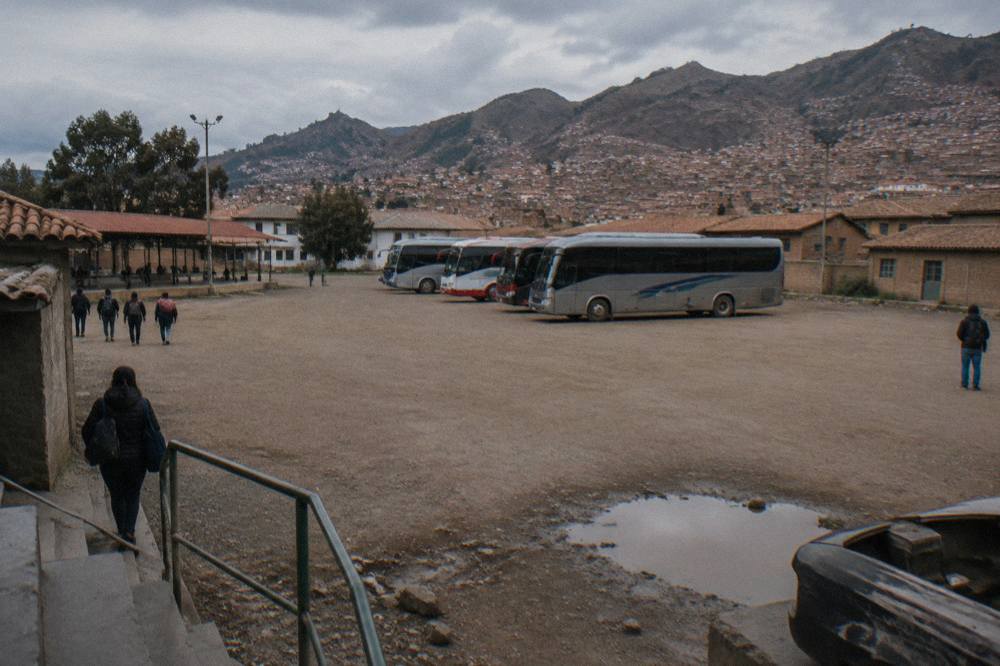
The single-terminal setup is genuinely convenient once you know it. Every long-distance arrival funnels through the same building, so there is no guessing about where your bus from Puno, Arequipa or Lima will land. Inside, the terminal functions like a small airport of counters: you find your company's window, confirm your departure, and wait in a shared hall. The terminal charges a usage fee, reported at S/1 per passenger, which is normally collected at the entrance or included in your ticket handling, so keep a one-sol coin or small note handy.
The distance from the terminal to the historic center is short but not walkable with luggage. The reported taxi fare from the Plaza de Armas area to the Terminal Terrestre runs about 10 to 15 soles for a roughly 15-minute ride, and the standard advice applies everywhere in Peru: confirm the price with the driver before getting in, since taxis in Cusco do not use meters. Arrivals work the same way in reverse, and the taxi rank outside the terminal is busy whenever a long-distance bus discharges.
One thing that surprises arrivals is the altitude interaction. Cusco sits at about 3,399 m, and if you have come up from sea level in Lima overnight, the walk from the bus to the taxi rank can be the first moment you feel it. Take the arrival slowly, let someone else handle your bag if you can, and do not plan anything strenuous for the first few hours. The same advice applies to the Puno direction at 3,827 m, which is higher still.
If you are arriving in Cusco by air rather than by road, the same door-to-door logic applies with more force. A prebooked private transfer such as the Cusco airport pickup and private transfer, from $14.99 with a 4.5 rating from 98 reviews, meets you at arrivals and skips the fare negotiation entirely.
One structural note for planning: no long-distance bus reaches Machu Picchu itself, and none departs for it from the Terminal Terrestre. All Machu Picchu journeys route through Ollantaytambo and the train, or the long road via Santa Teresa to Hidroelectrica. The Terminal Terrestre is for the intercity network, Arequipa, Puno, Lima and the Sacred Valley towns, not the citadel.
How Do You Get To The Terminal And What Does It Cost?
From central Lima to the Javier Prado area, expect a taxi ride of 20 to 40 minutes depending on traffic, and budget accordingly for evening departures. From Cusco's Plaza de Armas to the Terminal Terrestre, the reported fare is about 10 to 15 soles for roughly 15 minutes. The Cusco terminal adds a reported S/1 usage fee per passenger.
The two cities reward opposite strategies. In Lima, the risk is traffic: a departure at 8 p.m. from Javier Prado means crossing a city that seizes up between 6 and 9 p.m., so leave a wide buffer and treat the taxi time as unpredictable. In Cusco, the risk is not distance but the small stuff: having the exact fare, the one-sol terminal fee, and a driver who actually knows the terminal entrance rather than the general area. Confirm the price before you load your bags, in both cities. The wider set of guides lives on Lima To Cusco.
Terminal fees are small but they are real. The S/1 usage fee at the Cusco Terminal Terrestre is the only one verified for this route, and it is collected per passenger. Lima's company terminals generally fold any handling into the ticket price, but carry small change regardless, because payment windows and kiosks inside terminals often cannot break large notes late at night.
| Leg | Reported Cost | Reported Time | Notes |
|---|---|---|---|
| Central Cusco to Terminal Terrestre by taxi | 10-15 soles | ~15 minutes | Confirm price in advance, no meters |
| Cusco terminal usage fee | S/1 per passenger | Collected at entry | Keep small change |
| Lima hotel to Javier Prado terminal by taxi | Varies by starting point | 20-40 minutes | Worst in evening traffic |
| Lima hotel to Oltursa Surquillo by taxi | Varies by starting point | Shorter from Miraflores | Closer to the hotel zones |
For luggage, the standard airline-style rules apply on premium buses: Cruz del Sur allows up to 20 kg of tagged hold baggage with a carry-on maximum of 6 kg at 50×35×21 cm, and Oltursa runs similar limits with one carry-on of about 5 kg. Excess hold baggage is charged subject to space, so if you are traveling heavy on a full departure, get to the terminal early rather than assuming the allowance is soft.
Timing your arrival at the terminal is its own small skill. Aim for 45 to 60 minutes before a domestic departure on the premium lines, which is when check-in counters open and baggage tagging happens. Arriving two hours early buys you nothing except a hard bench, and arriving 15 minutes before departure risks losing your seat on a sold-out bus, since some companies release unclaimed seats shortly before boarding. If you are traveling in peak season, roughly May through September on the southern corridor, the terminals get genuinely crowded and the queues at popular counters stretch, so lean toward the earlier end of that window.
How Does Peru Hop Avoid The Terminal Altogether?
Peru Hop picks up and drops off at your hotel or hostel in participating locations, so you skip the bus terminal with your bags entirely. A bilingual English and Spanish host rides every bus, passes are valid up to one year from first use, and you can change a bus time in the app up to 12 hours before departure, subject to availability.
The terminal-avoidance is not a side benefit, it is the core of the product. Every other operator on this corridor starts and ends your journey at a terminal, which means a taxi, a fare negotiation, a usage fee and a wait in a hall with your luggage. Peru Hop inverts that: the bus comes to your accommodation in participating cities, a host handles the boarding, and the same applies at the drop-off end. For travelers carrying a suitcase and a daypack through Lima at rush hour, that difference is worth real money and real stress.
The buses themselves are built for the same traveler. Peru Hop buses run a climate-control system to keep the cabin at a steady temperature, provide a blanket per passenger, and come with wifi, USB charging, an onboard bathroom and reclining semi-cama seats, though a few reviewers note the wifi and USB can be inconsistent. Peru Hop states that its buses carry GPS monitoring and speed limits, and the service runs daytime departures on the southern corridor. Peru Hop reports 395,000+ passengers carried, with roughly 19,000 TripAdvisor, 8,000+ Google and 1,500+ Trustpilot reviews cited, and current TripAdvisor showing about 20,295 reviews at 4.8/5.
The flexibility is the other half of the value. Because passes are valid up to one year from first use and date changes happen in the app up to 12 hours before departure, you can decide in Paracas whether to stay an extra day for the Ballestas Islands without rebooking a fixed ticket. On a corridor where the highlights, Paracas, Huacachina, Nazca, Arequipa, Colca, Puno, are strung out over a thousand kilometers, that freedom to linger is what the fixed-terminal operators cannot sell you at any price.
The honest caveat: all of this costs more than a bare Cruz del Sur or Oltursa seat before you total in the taxis and tours, and some legs run long or overnight. Hotel pickup also applies only in participating locations, so confirm your accommodation is on the pickup list before assuming door-to-door service. If you just want one direct seat from Lima to Cusco as cheaply as possible, a direct ticket is the better buy.
What Should You Know On Terminal Day?
Arrive 45 to 60 minutes before departure, keep valuables and documents in your daypack rather than the hold bag, carry small change for the terminal fee and the taxi, and confirm the departure address on your ticket the night before. If your operator is Cruz del Sur or Oltursa, the baggage limits are strict and tagged, not informal.
The security advice on Peruvian roads is consistent across official sources. The UK FCDO advises: "Bus crashes are common, especially at night. Only use reputable transport companies, and where possible, avoid overnight travel, especially in mountainous and remote regions." The US State Department notes that demonstrations "can shut down local roads, trains, and major highways" often "without warning or clear information on reopening times." Both point to the same practical rule for terminal day: book reputable operators, prefer daytime departures where your schedule allows, and check current conditions before you travel, since roads in Peru occasionally see strikes or protests.
Inside the terminal, the routine is simple. Find your company's counter, present your passport and ticket, check your hold bag through with its tag, and keep a daypack with water, snacks, medications, documents and chargers with you at all times. Onboard toilets on most long-distance services are urinal-only, so carry toilet paper or wipes as standard. For the altitude legs across the altiplano, where passes climb above 4,000 m, layers are essential: nights are cold even when Lima was warm, and while premium services provide blankets, a backup layer costs nothing to pack.
Motion sickness and altitude both deserve a place in the daypack. Bring medication, ginger or acupressure bands if you are prone to the former, and for soroche, the altitude sickness that hits travelers above 3,000 m, hydration, light meals and avoiding alcohol on arrival day are the standard advice, with acetazolamide worth discussing with a doctor before the trip if you are sensitive.
A final word on the arrival end in Cusco. The Terminal Terrestre is functional but it is not a place to linger, and the smart move is to know your next step before the bus stops. If your hotel is in the historic center, the 10 to 15 sol taxi is the whole journey. If you are connecting straight to the Sacred Valley or to Ollantaytambo for a train to Machu Picchu, tell the driver your destination before loading, because the road out of the terminal heads in that direction anyway and a through fare can save you a second ride through central Cusco's narrow streets.
Before you lock in your tickets, the services below cover the two ends of the corridor: the Cusco airport transfers that remove the arrival scramble, and the direct Lima to Paracas bus that starts the southern route from the Miraflores hotel zone.
Common Questions About Bus Terminals In Lima And Cusco
Which Bus Terminal Do You Use In Lima And Cusco?
In Lima, you use the terminal of whichever company you booked: Cruz del Sur departs from Javier Prado in La Victoria, Oltursa from Surquillo, and some northern routes from Plaza Norte. In Cusco, nearly all long-distance buses use the single Terminal Terrestre on Avenida Vía de Evitamiento in the Santiago district.
Is there one central bus station in Lima?
No. Lima has no single central station. Each major operator runs its own terminal, and southern routes toward Ica, Arequipa, Cusco and Puno cluster around the Javier Prado area in La Victoria, with Oltursa departing from its own Surquillo terminal.
How much is a taxi from Cusco center to the Terminal Terrestre?
The reported fare from the Plaza de Armas area to the Terminal Terrestre is about 10 to 15 soles for a ride of roughly 15 minutes. Taxis in Cusco do not use meters, so confirm the price with the driver before loading your bags.
Does the Cusco bus terminal charge an entry fee?
Yes. The Terminal Terrestre charges a reported usage fee of S/1 per passenger, collected at the terminal. Keep small change handy, since payment windows may not break large notes late at night.
Can a bus take me from the terminal to Machu Picchu?
No long-distance bus reaches Machu Picchu itself. All journeys route through Ollantaytambo and the train to Aguas Calientes, or the long road via Santa Teresa to Hidroelectrica followed by a walk or short train. The Terminal Terrestre serves intercity routes only.
Does Peru Hop use the bus terminals?
No. Peru Hop picks up and drops off at your hotel or hostel in participating locations, so you skip the terminal with your bags. Confirm your accommodation is on the pickup list, since the service applies only in participating cities.
Planning the wider route? Our guide to getting around Peru covers every mode, and the Lima to Cusco bus route guide walks through the full southern corridor leg by leg. For more on the operator side of the comparison, the Peru bus companies compared guide breaks down the differences between the main lines.