Is Arequipa Worth A Stop On The Way To Cusco
A route-stop decision for travellers heading from Lima to Cusco: whether Arequipa earns its place, how many nights to give it, and how to move onward to Puno or Cusco.
Is Arequipa Worth A Stop On The Way To Cusco
Yes, for most travellers Arequipa is worth two nights, because it breaks the single longest leg of the southern route and gives your body a staged climb from sea level to 2,335 m before Puno at 3,827 m or Cusco at 3,399 m. Skipping it means a brutal Nazca to Arequipa style overnight anyway, or flying straight into 3,400 m altitude with no adjustment.
The southern route from Lima to Cusco is not one journey, it is a chain of legs, and Arequipa is the hinge where the desert coast turns into the Andes. The Nazca to Arequipa leg alone runs roughly 405 km and takes 9 to 10 hours or more on public buses, so almost nobody passes through this part of Peru without an overnight somewhere. The question is not really whether to stop, it is whether Arequipa is the right place to spend that night rather than pushing straight through.
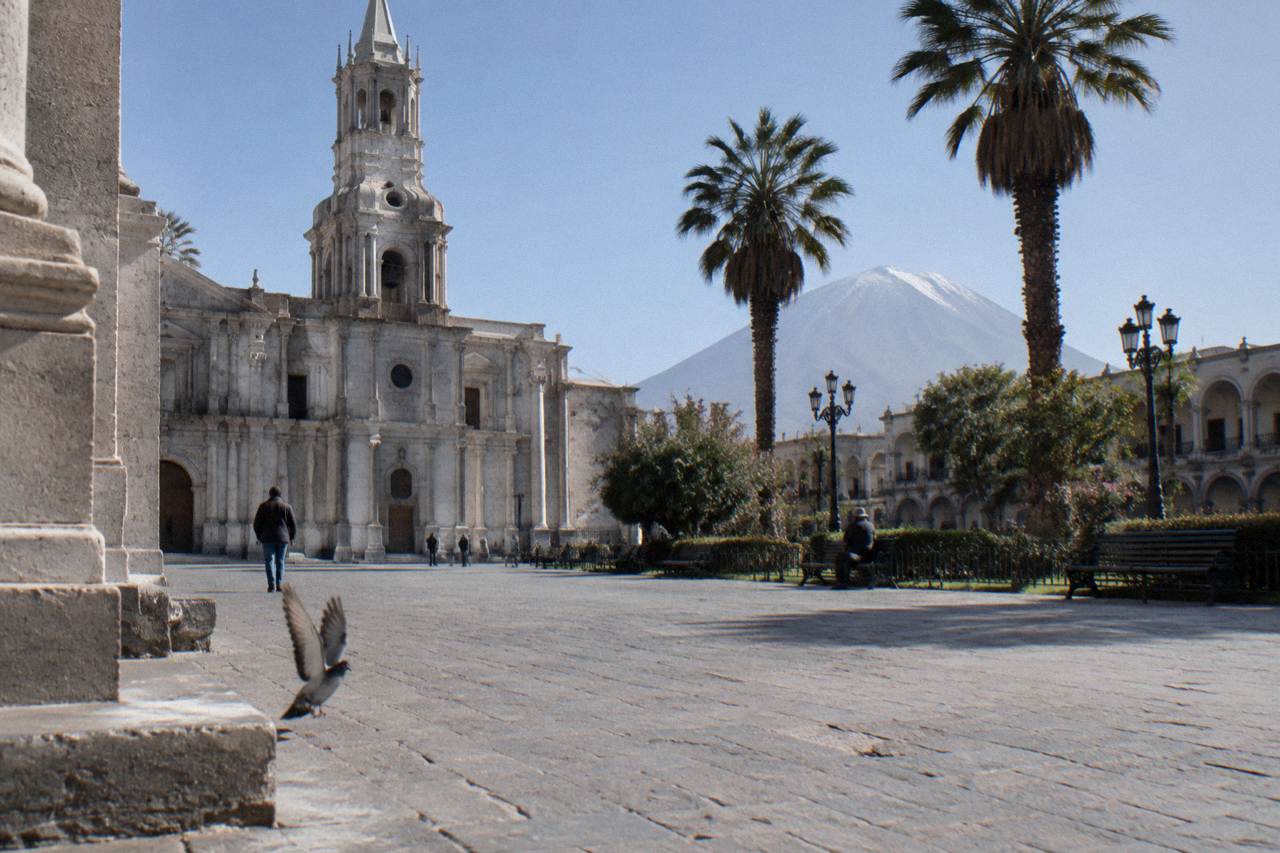
The case for Arequipa rests on three things. First, altitude: at 2,335 m it sits in the gap between the coast and the high plains, which makes it the natural place to sleep before going higher. Second, the city itself: a colonial centre built from white volcanic sillar stone, ringed by El Misti volcano, and widely regarded as the most complete Spanish-era cityscape in the country outside Cusco. Third, position: from Arequipa you can branch to Colca Canyon, continue to Puno and Lake Titicaca, or head directly onward toward Cusco.
The case against is simple. If your trip is short and Machu Picchu is the only goal, a flight from Lima to Cusco takes about 1 hour 20 minutes, and Arequipa becomes a detour you cannot afford. The stop decision is really a trip-length decision.
For travellers building the trip around ground transport, the arithmetic favours the stop. A hop-on hop-off pass such as Peru Hop includes Arequipa as a core stop on its southern circuit, with hotel pickup and drop-off so you skip the terminal with your bags, and a bilingual host on every bus. Passes are valid up to one year, with date changes in the app up to 12 hours before departure, which suits a route where you may want an extra day somewhere you did not expect to love.
The honest caveat: a hop-on hop-off pass costs more than a bare Cruz del Sur or Oltursa seat before you total in the taxis and tours, and some legs run long or overnight. If you just want one direct seat from Lima to Cusco, it is not the cheapest way to buy it.
How Many Nights Does Arequipa Actually Need?
Two nights is the sweet spot for most itineraries: one full day for the historic centre, the Santa Catalina monastery and the mirador views, and a buffer morning before an onward bus. Add a third and fourth night only if you are folding in Colca Canyon, which needs its own overnight in Chivay at 3,635 m to catch the morning condors.
One night is enough only if you treat Arequipa as a sleep stop. You arrive in the evening from Nazca or the coast, you leave the next morning, and you see almost nothing. That is a legitimate choice for tight schedules, but it wastes the city's one clear advantage over every other overnight point on the route, which is that it is genuinely worth a day of your trip in its own right.
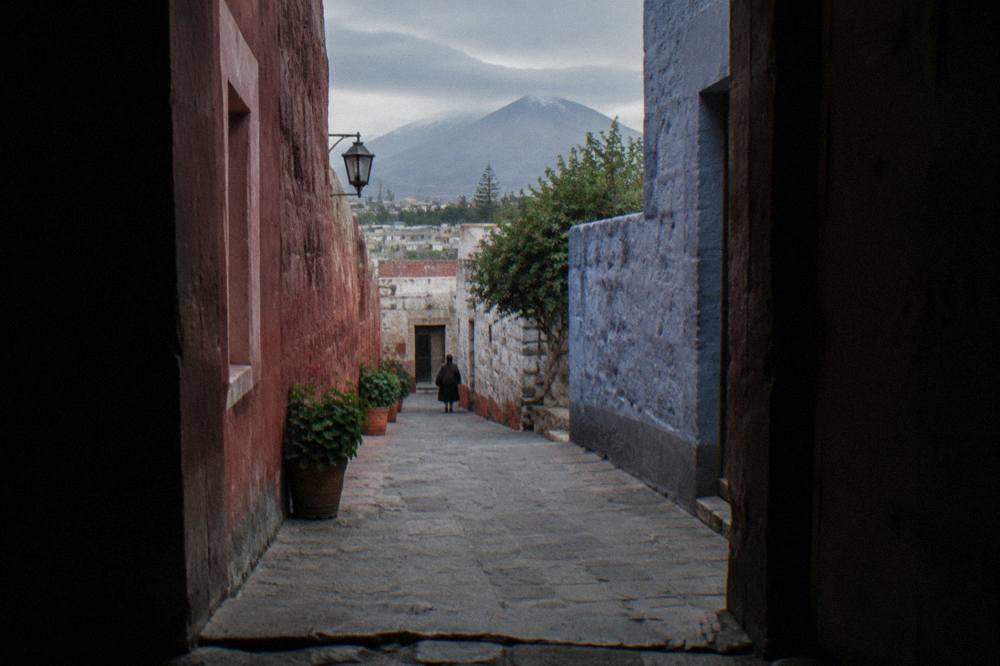
Two nights gives you a real visit. The historic centre is compact and walkable, and the Santa Catala monastery alone can absorb half a day. Restaurants in Arequipa are a step up from most of the southern route, with picanterias serving regional dishes that exist nowhere else in the country. You also get a full night at 2,335 m, which is the acclimatisation benefit doing its work while you sleep.
Three or four nights is the Colca Canyon version. The standard pattern is a morning departure from Arequipa, a 3 to 4 hour drive up to Chivay through the altiplano, an overnight near the canyon, a dawn visit to the Cruz del Condor viewpoint at roughly 3,270 m, and then either back to Arequipa or onward. The second option is the interesting one for Lima to Cusco travellers, because a tourist bus runs directly from Chivay to Puno, turning the canyon into a genuine onward link rather than a loop back.
If you are leaning toward the canyon, the Colca Canyon to Puno tourist bus is the piece that makes the geometry work: you leave the canyon after the condor viewing window and arrive at Lake Titicaca the same day. Our Lima to Arequipa bus guide covers the leg into the city in detail, and the Arequipa to Puno bus guide covers the leg out.
How Do You Get To Arequipa From Lima?
The standard approach is a long-haul bus from Lima, roughly 16 to 17 hours on premium lines such as Cruz del Sur or Oltursa, usually overnight in a semi-cama or cama seat. Most Lima to Cusco travellers do not do this in one go: they break it at Paracas, Huacachina or Nazca first, which turns the journey into two manageable daytime legs.
The full Lima to Arequipa run is a real commitment, and the class of seat matters more than the operator. Cruz del Sur's premium classes recline toward 160 to 180 degrees on overnight services, with blankets, individual screens and climate control, and the company states its buses carry GPS monitoring and driver changes every four hours. Oltursa runs similar equipment on overlapping routes. The UK Foreign Office puts it plainly for bus travel in Peru: "Bus crashes are common, especially at night. Only use reputable transport companies, and where possible, avoid overnight travel, especially in mountainous and remote regions." The Lima to Arequipa corridor is the well-served exception, and US government employees are explicitly permitted to travel it at night with commercial bus companies.
The staged alternative is what most leisure travellers actually do. Lima to Paracas is about 260 to 272 km and 3.5 to 4.5 hours of driving, Paracas to Huacachina is roughly 75 km, and Huacachina to Nazca via Ica is around 120 to 140 km and 2 to 3 hours. That puts you in Nazca by late afternoon, ready for a morning overflight of the lines, and the Nazca to Arequipa leg of roughly 405 km takes 9 to 10 hours or more on public buses. Peru Hop runs this same sequence with scheduled stops, and its buses come with wifi, USB charging, an onboard bathroom and reclining semi-cama seats, though a few reviewers note the wifi and USB can be inconsistent.
If you would rather compare every direct seat price on the corridor before committing to a pass, Busbud lists Lima to Arequipa bus schedules as a budget, direct-ticket alternative to a hop-on hop-off pass.
There is also the flight option. Arequipa's Rodriguez Ballon airport receives domestic services, and flying Lima to Arequipa then bussing onward is a legitimate hybrid for travellers short on time. It costs you the coastal stops, but it preserves the altitude staging, which is the part you should not trade away.
What Does The Altitude Profile Do To This Decision?
Arequipa at 2,335 m is the last comfortable sleeping altitude before the route jumps above 3,800 m, and that single fact is the strongest argument for the stop. Puno sits at 3,827 m, Lake Titicaca's surface at 3,812 m, and Cusco at 3,399 m. Climbing to those heights straight from sea level roughly doubles your odds of a rough first day.
The physiology is not complicated. Acute mountain sickness risk rises with sleeping altitude and speed of ascent, and the standard guidance, aligned with CDC recommendations, is gradual ascent, rest on arrival, hydration, light meals and avoiding alcohol. Arequipa is almost exactly the intermediate step the guidance describes: a night or two at 2,335 m before sleeping at 3,800 m gives your body a staged adjustment that a direct Lima to Puno bus or a flight into Juliaca at 3,825 m simply does not. Everything else covered here is indexed on Lima To Cusco.
This is also why the order of your stops matters. Travellers who go Lima, coast, Arequipa, Puno, Cusco climb in sensible steps. Travellers who fly Lima to Cusco land at 3,399 m and commonly lose their first day to a headache and nausea, which is a poor trade for a 1 hour 20 minute flight saving.
The Colca Canyon branch complicates the profile slightly. Chivay sits at 3,635 m and the Cruz del Condor viewpoint at roughly 3,270 m, with passes en route reaching toward 4,800 m, so the canyon is a step up from Arequipa itself. Doing the canyon before Puno is the right order: it softens the arrival at Titicaca rather than stacking two big jumps back to back.
| Stop on the route | Elevation | What it means for your body |
|---|---|---|
| Lima (Miraflores) | 79 m | Sea level, no adjustment needed |
| Paracas | 2-3 m | Coastal desert, no adjustment needed |
| Huacachina | ~368-404 m | Desert oasis, effectively low |
| Nazca | ~520-595 m | Still low, fine for overflights |
| Arequipa | 2,335 m | First real step, mild effect for most |
| Chivay (Colca) | 3,635 m | Noticeable, sleep comes after a canyon day |
| Puno | 3,827 m | High, the hardest sleeping altitude on the route |
| Cusco | 3,399 m | High, but easier after Arequipa or Puno |
Is The Colca Canyon Detour Worth Adding From Arequipa?
Yes if you have the nights, because Colca is one of the deepest canyons on earth and the condor viewing at Cruz del Condor is best in the morning, which forces exactly one overnight in Chivay. The detour costs you about two days total, and the Chivay to Puno bus means it costs you no backtracking.
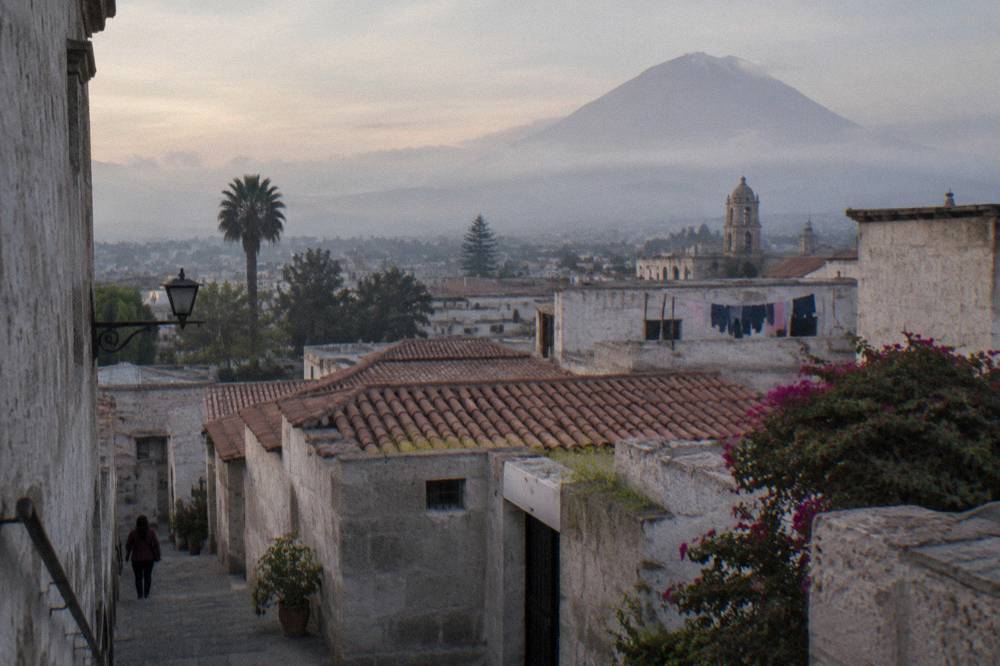
The classic objection to Colca is that it is a detour, and on most routes that would be true. From Arequipa the canyon is 160 to 190 km and 3 to 4 hours away, and the standard tour loops back to the city, which burns a day and a half for a viewpoint. The loop version only makes sense if Arequipa is your base for the whole region.
For through-travellers, the one-way version is better. You leave Arequipa, cross the altiplano to Chivay, sleep there, watch the condors from Cruz del Condor in the morning when the thermals are strongest, and then board the tourist bus that runs directly from Chivay to Puno, a journey of about 6.5 hours with scenic stops. The canyon stops being a detour and becomes your route to Lake Titicaca.
The onward bus is rated 4.7 from 88 reviews and costs from $41.03, with free cancellation. Two alternatives compete for the same leg if you would rather skip the canyon: the Route of the Sun service from Cusco to Puno, rated 4.7 from 633 reviews and from $50, runs the same style of multi-stop sightseeing day in the other direction, and the PeruRail Titicaca train covers Cusco to Puno in about 10 hours from $395 for travellers who want the rail experience instead.
Timing matters for the condors. Dry season, April to November, brings the clearest skies, and the 7 to 10 a.m. window is when the birds ride the morning thermals along the rim. Year-round sightings happen, but weather-dependent is the honest framing, and a late-September 2026 weather alert for snow and wind above 4,000 m in the altiplano is a useful reminder that the passes around the canyon can be genuinely cold in any month.
How Do You Travel Onward From Arequipa To Puno Or Cusco?
Direct Arequipa to Puno buses cover roughly 300 km in 6 to 7 hours, with daily departures through the Lagunillas viewpoint country. From Puno, buses to Cusco take 6 to 9 hours direct, or you can book a scenic multi-stop service that stretches the day to 9 to 11 hours with cultural stops and lunch. There is no direct Arequipa to Cusco shortcut that skips Puno worth taking.
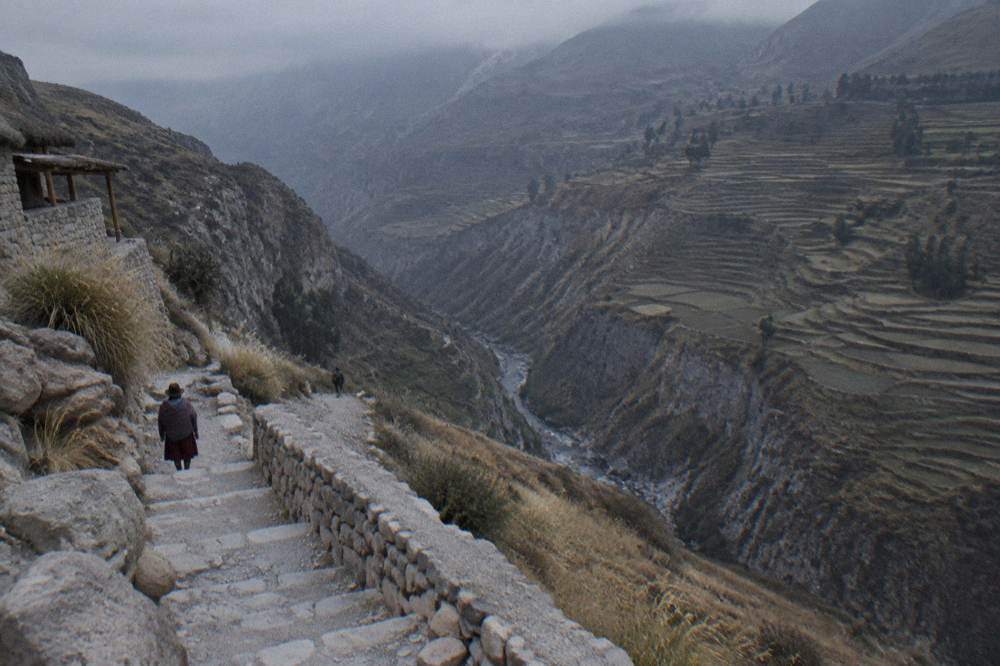
The onward geometry is what makes Arequipa such a clean stop. Every ground option to Cusco from the south passes through, or near, Puno, so the decision is really about how you want to cover the Arequipa to Puno leg and what you want from the Puno to Cusco leg after it.
| Onward option | Leg covered | Time | Price | Rating |
|---|---|---|---|---|
| Direct public bus | Arequipa to Puno | ~6-7 hours | on the operator's listing | varies by operator |
| Colca to Puno tourist bus | Chivay to Puno | ~6.5 hours | from $41.03 | 4.7 from 88 reviews |
| Route of the Sun service | Cusco to Puno | ~11 hours | from $50 | 4.7 from 633 reviews |
| PeruRail Titicaca train | Cusco to Puno | ~10 hours | from $395 | 294 reviews, no star rating shown |
The direct bus is the workhorse: Cruz del Sur and Oltursa both run the corridor, and a published Peru Hop example on the same road departs Arequipa around 05:45 and arrives Puno around 13:00 with a Lagunillas viewpoint stop, about 7.25 hours all in. That timing is worth copying whatever you ride, because it puts you at Lake Titicaca with an afternoon to spare.
From Puno the choices widen. Direct buses to Cusco cover the roughly 388 km in 6 to 9 hours depending on stops, and the scenic services turn the same road into a full sightseeing day, with stops at sites along the route and lunch included on some departures. Peru Hop publishes flexible daytime options in this range, and its passes allow date changes in the app up to 12 hours before departure, which helps if a Titicaca day runs long.
The train is the splurge. The PeruRail Titicaca service links Cusco and Puno in about 10 hours and carries 294 reviews on its listing, too few for a reliable star claim, but the experience is the point: a full day of altiplano from a bar car instead of a bus seat, from $395. Schedules are on PeruRail's official schedule page.
One border note for travellers extending past Puno: Bolivia is now visa-free for US, UK, EU, Canadian and Australian tourists for stays up to 90 days, a change effective from December 1, 2025, though a free SIGEMIG online pre-registration through the Bolivian migration site is required for all visitors. If La Paz is on your list, the Puno to Copacabana crossing takes 3 to 4 hours including the border.
What Do You Skip If You Pass Arequipa Straight Through?
Flying Lima to Cusco directly skips the entire southern route: Paracas, Huacachina, Nazca, Arequipa, Colca Canyon and Lake Titicaca all disappear from your trip in exchange for about 1 hour 20 minutes in the air. You also skip the altitude staging, arriving at 3,399 m with no adjustment, which commonly costs a full day of your Cusco stay.
The trade is real and some travellers should take it. If you have ten days or fewer and Machu Picchu is the mission, the southern route is a week of your trip by itself, and no amount of scenic bus windows changes that arithmetic. The flight is short, frequent, and lands you where you actually want to be.
What you give up is substantial, though. The coast holds the Ballestas Islands and the Paracas National Reserve, the Huacachina oasis and its dunes, and the Nazca Lines, best seen from the air on an overflight. The mountains hold Arequipa's sillar cityscape, Colca's condors, and Titicaca's floating reed islands and Isla del Sol. That is not a list of filler stops, it is the majority of what southern Peru offers besides Cusco itself.
The middle path is the hybrid: fly Lima to Arequipa or Lima to Juliaca, and bus the rest. You keep the altitude staging and the Titicaca section while cutting the long coastal legs. The weakness of flying into Juliaca at 3,825 m is altitude, arriving directly at the route's highest sleeping point, so the Arequipa version of the hybrid is the safer one for your first days.
For a fuller treatment of the stop-by-stop case, our pieces on whether Paracas earns a stop and whether Lake Titicaca earns a stop cover the other decision points on the same route.
Common Questions About Stopping In Arequipa
Is Arequipa Worth A Stop On The Way To Cusco?
Yes, for most overland travellers. It breaks the route's longest legs, gives you a staged altitude climb to 2,335 m before the 3,800 m altiplano, and the city itself deserves a full day. Only skip it if your trip is too short for any southern stops at all.
How many nights should I stay in Arequipa?
Two nights for the city itself: one full day for the historic centre and a buffer morning for an onward bus. Add two more nights if you are folding in Colca Canyon, which needs an overnight in Chivay at 3,635 m to catch the morning condor viewing.
Can I visit Colca Canyon and continue to Puno without returning to Arequipa?
Yes. A tourist bus runs directly from Chivay in the canyon to Puno, covering the leg in about 6.5 hours with scenic stops. It is rated 4.7 from 88 reviews and costs from $41.03 with free cancellation, which turns the canyon into an onward link rather than a loop.
Is the altitude in Arequipa a problem?
Rarely. At 2,335 m most travellers feel little beyond mild breathlessness on stairs. The bigger altitude risk on this route is skipping the staging entirely, by flying from sea level straight to Cusco at 3,399 m or Puno at 3,827 m without an intermediate night.
How long is the bus from Arequipa to Puno?
Roughly 300 km and 6 to 7 hours on direct services, with a published Peru Hop example departing around 05:45 and arriving around 13:00 including a Lagunillas viewpoint stop. Multi-stop scenic versions run longer by design.
Should I fly to Arequipa instead of busing from Lima?
It is a reasonable hybrid if you are short on time. You keep the altitude staging and the onward southern legs while cutting the 16-plus hour Lima to Arequipa bus ride, at the cost of skipping the coastal stops at Paracas, Huacachina and Nazca.