How To Avoid Getting Sick In Peru
How to avoid getting sick in Peru: the water rules, altitude pacing and food choices that keep a Lima, Cusco and Titicaca trip on track, plus what to do if illness strikes.
How To Avoid Getting Sick In Peru
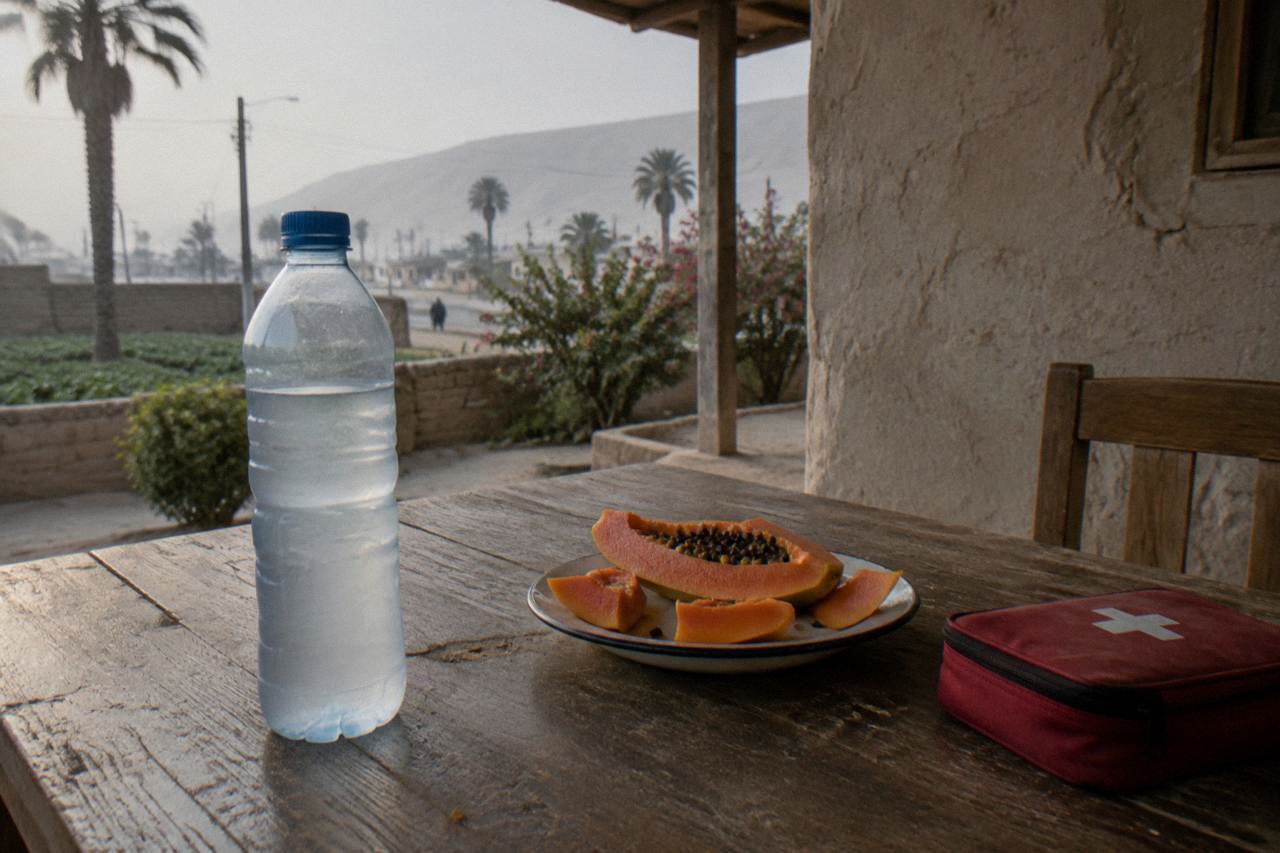
Most illness on a Peru trip is preventable and mild: travelers' diarrhea, altitude sickness on the Cusco to Puno corridor, and plain exhaustion from overpacked schedules. Drink bottled or filtered water, wash hands before eating, ascend gradually with a stop in Arequipa, sleep well before big altitude days, and carry a small medical kit. Do those five things and the odds swing heavily in your favor.
Lima's Miraflores district sits at 79 m above sea level. Cusco, where most itineraries end, stands at 3,399 m. That single number explains most of what goes wrong on a Peru trip: your body is asked to handle a climb of more than three kilometers, new food, new water, and long tour days, often within the same week. None of it is exotic. The stomach bugs are the same ones that flatten travelers in Mexico or Southeast Asia, and the headache at 3,800 m in Puno is the same soroche locals deal with.
The good news is that the countermeasures are cheap and boring. Bottled water, hand sanitizer, a slow first day in Cusco, and a schedule with a rest day built in. None of it requires special gear. What it does require is discipline on day one, when you land feeling fine at sea level in Lima and it is tempting to book everything at once.
The rest of this article breaks the problem into its parts: what actually makes people sick, how to pace the altitude, the water rules, the food rules, the long-bus and long-tour rules, and what to do if something goes wrong anyway. The route this article's home site, Lima To Cusco, covers is the classic circuit, Lima through Paracas and Arequipa to Puno, Cusco and Machu Picchu, and every stop on it is manageable with the same handful of habits.
What Actually Makes Travelers Sick In Peru?
Three problems account for most sick days on the tourist circuit: contaminated food and water, the altitude jump between Lima at sea level and the altiplano above 3,800 m, and sheer fatigue from 12 to 16 hour tour days stacked back to back. Serious tropical disease is rare on the Lima, Cusco and Titicaca route. What actually hurts travelers is ordinary, and each risk has a simple countermeasure.

It helps to be honest about the ranking. Stomach trouble first: it hits more travelers than everything else combined, usually for a day or two, usually from one careless meal or glass of water. Altitude second: it does not infect anyone, but the corridor climbs without pause, and Puno at 3,827 m is high enough that a sizable share of arrivals feel it. Fatigue third, and underrated, because travelers treat a 16-hour day trip as a fun adventure rather than the physical event it is.
Then there are the things people worry about that mostly do not happen on this route. Mosquito-borne disease is a low concern in the cold, high south; the classic circuit sits above the altitude where dengue is a routine problem. Food hygiene in established restaurants is decent, and Peruvian kitchens cook at high heat. The realistic picture is a day or two of discomfort, not a hospital story, provided you take the basics seriously.
| Problem | Where it usually strikes | Main defense |
|---|---|---|
| Travelers' diarrhea | Street food, unwashed produce, tap water | Sealed bottled water, hot freshly cooked food, hand sanitizer |
| Altitude sickness | Cusco at 3,399 m, Puno at 3,827 m, Colca rim viewpoints | Gradual ascent, hydration, light meals, a slow arrival day |
| Sunburn and dehydration | Coast and dry high-altitude air | Sunscreen, hat, refilled filter bottle |
| Exhaustion | Back-to-back long tours, overnight buses | Rest days, daytime travel, realistic pacing |
One pattern shows up again and again in the planning stage: travelers cram the altitude into the final third of the trip when the body has no ramp left. The fix is sequencing, which is covered in the altitude section below.
How Do You Prevent Altitude Sickness On The Route To Cusco?
Go up in stages rather than one jump. Lima sits near sea level, Cusco at 3,399 m and Puno higher still at 3,827 m, so a schedule that climbs over two or three days, with a night in Arequipa at 2,335 m, gives your body time to adjust. Hydrate hard, skip alcohol on arrival night, eat light, and keep the first high-altitude day slow. If symptoms worsen at any point, descending is the cure.
The classic overland route does the acclimatization for you, if you let it. Lima to Paracas to Huacachina to Arequipa is a gentle staircase: 79 m, then a few meters, then the oasis at roughly 368 to 404 m, then Arequipa at 2,335 m, which is a genuinely useful training night. Flying straight into Cusco or, worse, Juliaca at about 3,825 m skips the staircase entirely, and the difference in how people feel on day one is obvious to anyone who has watched both groups check into a Puno hotel.
| Place | Elevation | What it means for you |
|---|---|---|
| Lima (Miraflores) | 79 m | Sea-level baseline, no altitude concerns |
| Arequipa | 2,335 m | The ideal acclimatization night before going higher |
| Cusco | 3,399 m | Keep the arrival day slow and the meals light |
| Ollantaytambo | 2,792 m | Lower than Cusco, a gentler base for the Sacred Valley |
| Machu Picchu | 2,430 m | Lower than Cusco; most people feel better here |
| Chivay (Colca) | 3,635 m | Cruz del Condor viewpoints sit around 3,270 to 3,800 m |
| Puno | 3,827 m | The high point of most trips; pace the arrival |
The bus rides themselves can be part of the adjustment. The Colca To Puno, Scenic Stops service from Chivay crosses the altiplano over about 6.5 hours with photo stops, a slow, high traverse that lets you read how your body responds to sustained altitude before you commit to sleeping at it. It rates 4.7 from 88 reviews, runs from $41.03, and carries free cancellation, which matters when you are deciding day by day how you feel.
For the same reason, do not book your biggest altitude day for the morning after you arrive in Cusco. A booked tour such as the Full-Day Machu Picchu Group Tour out of Cusco is a 12-hour day that starts before dawn, combines bus, train and a guided citadel walk at 2,430 m, and it goes much better on day three than on day one. It holds 4.7 from 2,307 reviews; note that free cancellation is not offered on this tour, so it is one to book only once your Cusco dates are firm. Sequencing advice, including how to build the ramp, is laid out in the guide to altitude sickness on Peru bus routes, and a well-shaped example lives in a ten day Peru itinerary that puts Arequipa before Puno.
Can You Drink Tap Water In Peru?
No, not anywhere on the standard tourist route. Use sealed bottled water or a filter bottle for drinking and brushing teeth, and skip ice anywhere that looks casual. Municipal systems in Lima and Cusco exist, but treatment standards vary and traveler stomachs carry no local immunity, so the safe default costs a couple of dollars a day and removes the single most common trigger of illness on the trip.
The rule is simple enough that people talk themselves out of it. Tap water in Peruvian cities is not poison; locals drink it in various forms. But a stomach that has never met these particular bacteria has no defenses, and the classic mistake is being careful about drinking water while brushing teeth with the tap, or accepting a drink with ice at a place that otherwise looked fine. Brushing teeth with bottled water is the detail travelers most often skip, and it is the cheapest one to fix.
Filter bottles have made this easier and cheaper than the old all-bottled-water routine. A good filter bottle handles tap water in most cities on the route, cuts plastic waste dramatically, and removes the awkwardness of refills. The one caution is very turbid or unknown rural sources, where boiling still wins. Guesthouses almost universally provide sealed bottles or reliable filtered dispensers; when in doubt at a small property, ask which dispenser is filtered.
The same logic covers anything made with unboiled water: fresh juices (ask for them sin hielo, without ice), salads rinsed in tap water, and fountain drinks. This is the water section; the food rules are their own topic, next.
Which Foods Should You Be Careful With In Peru?
Treat raw seafood, unwashed fruit and lukewarm buffet food as the main hazards. Ceviche from a high-turnover Lima restaurant is a very different risk from ceviche at a quiet stall; heat kills what washing misses, so hot, freshly cooked food from busy vendors is the safest category. Go especially easy the first days at altitude, when digestion slows and appetite drops anyway.

Peruvian food is one of the main reasons to make the trip, and the goal is not to eat defensively everywhere. It is to know which categories carry the risk and which barely do. The pattern that holds across the world also holds here: the busiest stall with the shortest turnover, cooking everything fresh in front of you at high heat, is usually safer than the half-empty restaurant whose buffet has been sitting at room temperature since noon.
Ceviche deserves its own sentence because it is the dish most travelers want on day one. Raw fish marinated in lime is genuinely riskier than cooked food, and the mitigation is turnover and refrigeration, both of which are better at established Lima restaurants than at roadside stops along the south coast. A reasonable approach: eat ceviche early in your trip in Lima, from places with lines, and stick to cooked dishes on the smaller-coast leg.
| Food | Risk level | Smart approach |
|---|---|---|
| Ceviche and raw fish | Moderate | High-turnover restaurants in Lima, not roadside stands |
| Street skewers and grilled meats | Low to moderate | Hot off the coals, from busy vendors, eaten immediately |
| Fresh salads and raw vegetables | Moderate | Order cooked sides in cheaper places; wash produce yourself |
| Whole fruit | Low | Buy whole, peel it yourself, skip pre-cut trays |
| Fresh juices | Low to moderate | Ask sin hielo, no ice, at casual spots |
| Buffet food | Moderate | Take items from steaming trays, skip the lukewarm ones |
Two more practical notes. Altitude genuinely dulls appetite and slows digestion, so a heavy dinner on arrival night in Cusco sits badly even when the food was clean; the local instinct for light soups on the first evening is sound. And coca tea, offered everywhere on the altiplano, is a mild traditional remedy that helps some people with altitude headaches, though it is a comfort rather than a treatment and is not a substitute for the pacing rules above.
How Do You Stay Healthy On Long Bus Rides And Tour Days?
Pick daytime departures on reputable companies, keep your hands off your face during the ride, and treat long tours like the athletic days they are. Overnight buses save a hotel night but stack two risks at once, and sleeping badly at 3,800 m undermines acclimatization. The single best upgrade is a rest buffer after any 12 hour-plus excursion.
The official advice on this point is unusually blunt. The UK foreign office travel advice for Peru states: "Bus crashes are common, especially at night. Only use reputable transport companies, and where possible, avoid overnight travel, especially in mountainous and remote regions." The US State Department's current Peru advisory adds that demonstrations can shut down roads and highways "without warning or clear information on reopening times," which is why built-in schedule slack matters on any overland leg.

Health-wise, a long bus day is mostly a hygiene and hydration problem. Sanitize before eating, keep a sealed bottle rather than shared cups, and get up at rest stops to move. Premium long-distance lines such as Cruz del Sur and Oltursa generally run climate control, as does the hop-on operator Peru Hop, which runs a climate-control system, a blanket per passenger and a bilingual English/Spanish host on every bus, though a hop-on pass costs more than a bare Cruz del Sur or Oltursa seat once you count the extras. The honest caveat for budget travelers: if you just want one direct seat, a direct-ticket service is the cheaper play.
The bigger health issue on this route is the tour-day stack, not the bus. Two examples from the roster: the Premium Day Trip, Sunset Toast from Lima to Paracas and Huacachina runs about 16 hours door to door, rates 4.8 from 2,636 reviews and starts from $119 with free cancellation; the full-day Machu Picchu tours out of Cusco run 12 to 16 hours. Any one of them is fine. Two of them back to back, with a 4 a.m. wake-up and no rest day, is how people end up run down by the time they reach Titicaca. Book the long ones on alternating days, or with one recovery day between, and sleep the night before matters more than any supplement.
A small kit covers most of what goes wrong on buses and tours: rehydration salts, motion sickness tablets, basic painkillers for altitude headaches, sunscreen, and lip balm for the dry altiplano air. None of it is hard to find in Peru, but having it in your daypack beats searching for a pharmacy in Huacachina at 9 p.m.
What Should You Do If You Do Get Sick In Peru?
Pharmacies are everywhere and pharmacists are the first line of care, selling rehydration salts and standard medicines over the counter. For anything worse, private clinics in Lima, Arequipa, Cusco and Puno treat travelers quickly and at modest cost. Carry insurance that pays clinics directly, keep your vaccine record on your phone, and know the symptoms that mean descend now: worsening breathlessness at rest, confusion, or a cough with fluid.
For the ordinary day of stomach trouble, the protocol is boring and effective: rehydration salts in bottled water, plain food when appetite returns, and 24 hours without alcohol. Peruvian pharmacies (Inka Farma and Mi Farma are on every other corner in the cities) will dispense most standard medicines without a prescription and the pharmacists are used to travelers, though it is worth being cautious about accepting antibiotics casually for a bug that would clear on its own.
For altitude, the escalation signs matter more than the arrival symptoms. A headache and mild nausea on day one in Puno is normal soroche. Shortness of breath that gets worse while resting, vomiting that will not stop, confusion, or a wet cough are altitude sickness escalating, and the treatment is descent, not another cup of coca tea. Chivay, Arequipa and the coast are all within a bus ride of the high points on this route, which is one quiet advantage of a corridor that drops as reliably as it climbs.
For everything else, travel insurance that pays clinics directly is the difference between a quick visit and a credit-card negotiation, and the private clinics in the four cities on this route are accustomed to English-speaking patients. Keep the insurer's emergency number offline, screenshot your policy, and photograph your vaccination record before you fly. None of this will likely be needed. All of it is cheap to have.
Common Questions About Avoiding Getting Sick In Peru
How To Avoid Getting Sick In Peru
Drink sealed or filtered water, wash hands before eating, ascend gradually with a night in Arequipa before the altiplano, keep the first high-altitude day slow, and space out the 12 to 16 hour tour days. Those five habits prevent the great majority of sick days on the Lima, Cusco and Titicaca circuit.
Can you drink tap water in Cusco?
No. Use sealed bottled water or a filter bottle for drinking and for brushing teeth, and skip ice at casual places. Municipal supply exists but traveler stomachs lack local immunity, and a filter bottle solves the whole problem for a couple of dollars a day.
How long does altitude sickness last in Peru?
Typically one to three days, with the worst of it on the first night at each new high elevation. Hydration, light meals and rest help. If symptoms worsen at rest, or include confusion, vomiting or a wet cough, that is a signal to descend immediately.
Is ceviche safe to eat in Peru?
At high-turnover restaurants in Lima, it is generally a reasonable risk and a highlight of the trip. At quiet roadside stands along the coast, it is not. The difference is fish turnover and refrigeration, so follow the lines and eat ceviche early in your trip while you are still at sea level.
Do I need vaccinations before traveling to Peru?
Routine vaccines should be current, and a yellow fever certificate can be relevant for some itineraries, though the classic Lima to Cusco and Titicaca circuit sits above the yellow fever zone. Check with a travel clinic before departure, and carry your record on your phone.
What medicine should I bring to Peru?
A small kit is enough: rehydration salts, painkillers for altitude headaches, motion sickness tablets, stomach remedies, sunscreen and lip balm. Pharmacies stock all of it in every city on the route, so the kit is a convenience on day one rather than a necessity.