Is Nazca Worth A Stop On The Way To Cusco
A route-stop decision guide to Nazca on the Lima to Cusco journey: tower versus overflight, how many hours or nights to give it, and the onward bus legs to Arequipa.
Is Nazca Worth A Stop On The Way To Cusco
Yes, if the lines themselves are the reason you are in Peru, and even more so if you fly over them; a two-hour ground stop at the viewing tower is a modest payoff for a significant detour, while the 35-minute overflight is the only way to actually read the figures. The honest arithmetic is this: Nazca is a small desert town at 520 m elevation with one world-famous attraction, and the stop costs you either an afternoon (tower only) or a night (overflight plus onward timing). If you skip it, you lose nothing on the road itself, because the buses to Arequipa run through regardless. If you stop, you gain one of the strangest sights on the continent, seen properly only from the air.
That is the short version. The longer version depends on how you weigh a $249 flight against a $1-ish tower ticket, whether you are moving on a hop-on hop-off pass or point-to-point bus tickets, and how much the desert between Ica and Arequipa already gives you for free from the window. This page works through the decision the way the route actually presents it: the stop itself, the time budget, the tower-versus-flight question, the onward legs, and what you quietly give up by passing through.
How Many Hours Or Nights Should You Give Nazca?
An afternoon stop covers the viewing tower and the museum and suits a same-day push toward Arequipa; an overnight stay is what makes the overflight realistic, because flights mostly run in the morning when the air over the desert is calmest. Two nights is more than almost anyone needs. The practical floor is roughly four hours for a tower-only stop, and the practical sweet spot is one night: arrive mid-afternoon, fly the next morning, and board an afternoon bus to Arequipa. That single night converts Nazca from a roadside curiosity into the reason you remember the leg.
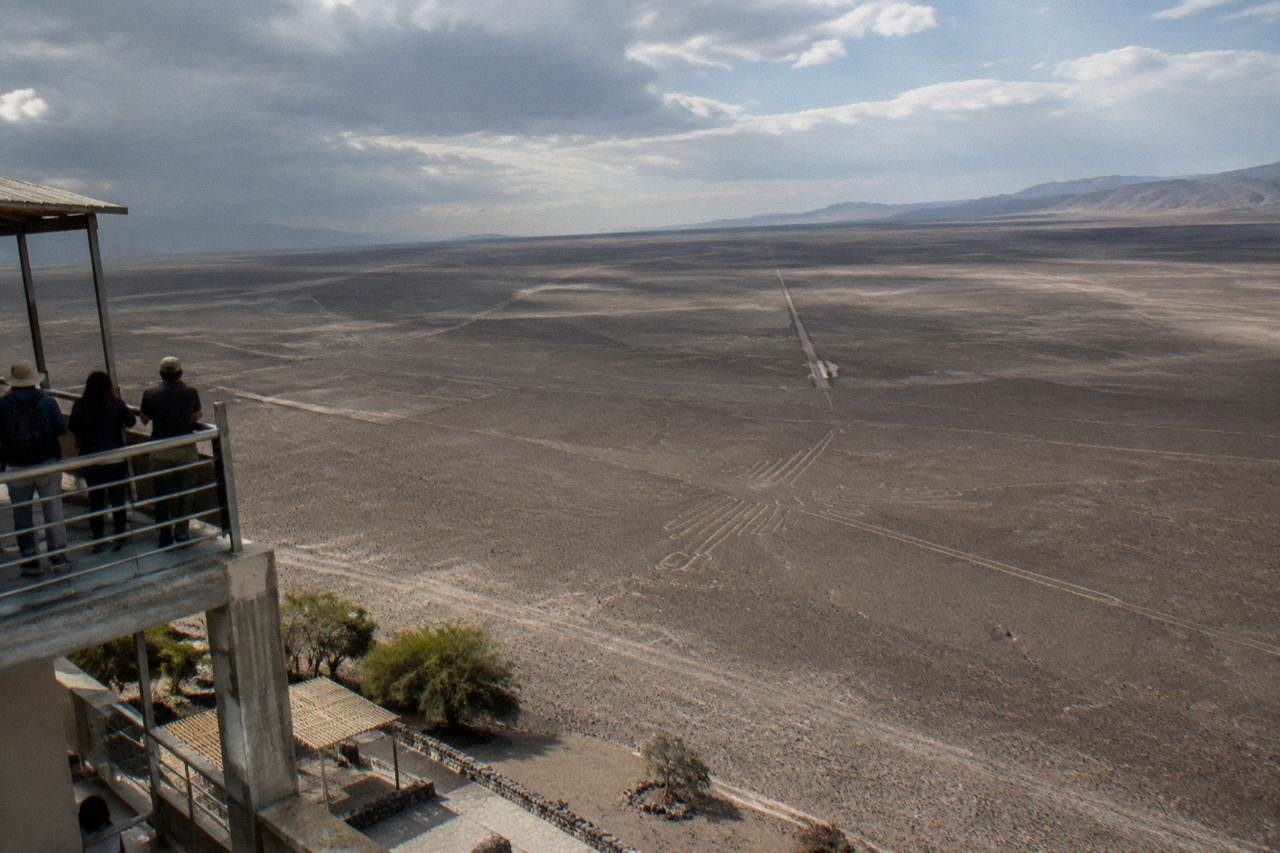
The timing is not arbitrary. The Nazca Lines are shallow desert-floor geoglyphs, and the small aircraft that view them fly best in stable morning air; by early afternoon the desert thermals make the ride bumpier and the operators thinner out. A tower-only traveller does not care about any of this, which is exactly why the tower-only stop can be so short: you drive to the Mirador on the Panamericana Sur, climb the metal staircase, look down at a handful of figures, and continue.
What the stop looks like in practice:
| Stop style | Time on the ground | What you get | Best for |
|---|---|---|---|
| Tower only, no overnight | 2-4 hours | Three or so figures from the Mirador, plus the Maria Reiche museum if time allows | Travellers who mainly want to say they saw lines, and anyone on a tight schedule |
| One night | 18-24 hours | Morning overflight, the tower, the museum, an evening in a quiet desert town | Anyone who wants to actually see the figures clearly |
| Two nights | 48 hours | All of the above plus the aqueducts at Cantalloc and a slower pace | Archaeology buffs and people recovering from long travel days |
The one-night version is the one this site would steer most travellers toward, with one honest caveat: Nazca the town is functional rather than charming. Hotels are inexpensive, food is simple, and the evening is quiet. You are there for the morning, not the night.
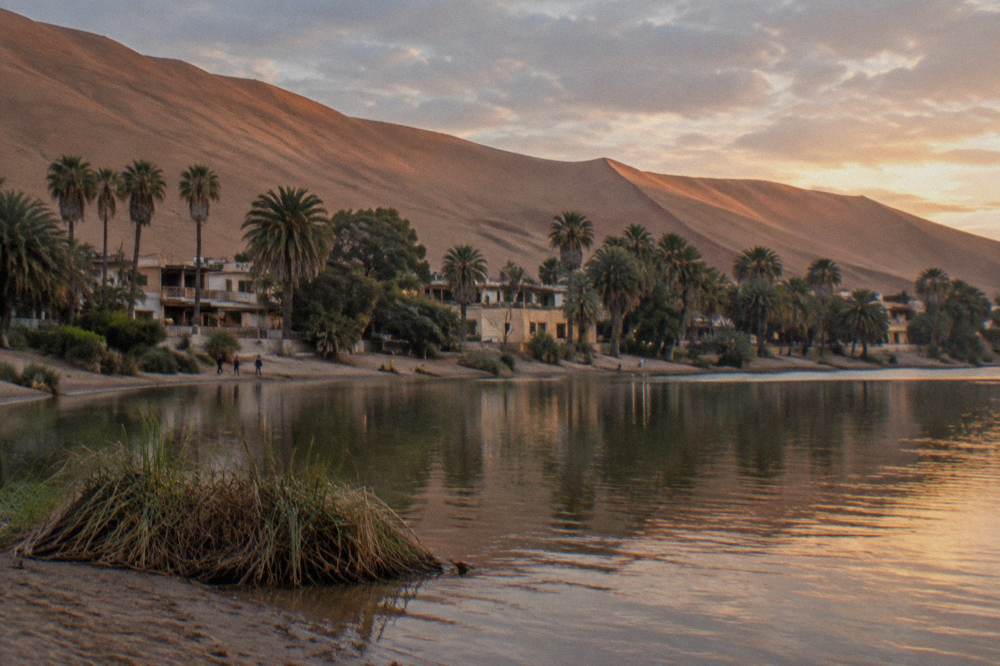
If you are building the stop into a coastal sequence from Lima, the premium Paracas and Huacachina day trip from Lima is the natural first day, ending at the Huacachina oasis, from where the onward leg to Nazca is short. That tour runs about 16 hours, is rated 4.8 from 2,636 reviews, and carries free cancellation, which matters when you are chaining connections across several days and one delay would cascade. Book it for your first full day out of Lima, sleep in Huacachina or Ica, and Nazca becomes a short morning hop rather than another long haul from the capital.
Viewing Tower Or Nazca Lines Flight: Which Fits Your Route?
The viewing tower shows you a few figures at a shallow angle and costs a small fee on the spot; the overflight shows you the whale, the astronaut, the hummingbird and the rest at the angle they were meant to be seen from, and books from $249 as a 35-minute flight. They are not two versions of the same experience. The tower is a taster; the flight is the attraction. Deciding between them is really deciding whether Nazca is a checkbox or a reason for the stop.
The tower, the Mirador on the Panamericana Sur south of town, is a metal structure beside the highway. From its platform you see a handful of figures, partly, at a low angle. It costs a small local fee paid at the site, and every bus between Lima and Arequipa can pause for it. A traveller on a hop-on hop-off pass typically reaches it in the late afternoon, looks for twenty minutes, and moves on. For some people that is genuinely enough: the shapes are visible, the scale is surprising, and the story of how they survived fifteen centuries of wind is told just as well from the ground.
The flight is a different animal. The "Nazca Overflight From Ica" option, bookable from Ica or Huacachina as well as from Nazca itself, is a 35-minute flight over the main figures, rated 4.7 from 4 reviews, from $249, with free cancellation. The review pool is small, so treat the rating as a signal rather than a verdict, but the format is standard: a light aircraft, banks left and right over each figure, and the pilot narrates. From that altitude the lines resolve into shapes, hands, monkeys, birds, the way nothing at ground level or tower level ever manages. You can Check availability on the operator's live listing alongside the full overflight tour page.
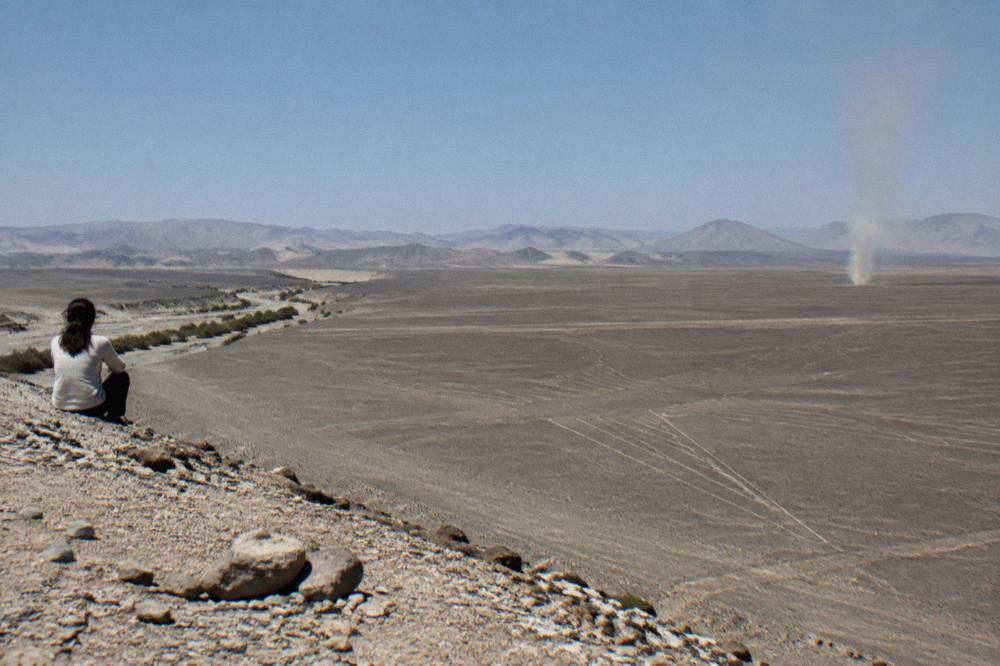
The real constraint is your stomach and your schedule. The flights are short but genuinely bumpy for a minority of passengers, and they cluster in the morning, which is what forces the overnight. The tower asks nothing of you and gives correspondingly less back. A reasonable rule: if you are already paying for the time and lodging to stop in Nazca, the flight is the version worth stopping for; if you would only stop on the way past, the tower is the honest choice, and you should not pretend otherwise afterwards.
There is also a middle path worth naming, because a few travellers take it without realising it is a pattern: book the overflight from Ica or Huacachina before you ever reach Nazca, fly from the airstrip there, and then ride the bus straight through the town without stopping at all. It costs the same flight price and saves the night in Nazca, at the expense of a very long single day. For travellers with more budget than calendar, that is sometimes the sharpest trade on the whole coast.
Getting To Nazca And Onward To Arequipa
The Ica to Nazca leg runs roughly 120-140 km and takes 2-3 hours by bus; Nazca to Arequipa is roughly 405 km and takes 9-10 or more hours, almost always overnight or as a long daytime run. Those two numbers define the stop. The way in is easy; the way out is the long pole in the tent, and it is why most travellers either give Nazca a full night or skip it entirely rather than trying a quick turnaround.
On the way in, the sequence from Lima is well trodden. Lima to Paracas is about 260-272 km and 3.5-4.5 hours of driving, Paracas to Huacachina is about 75 km and an hour or so, and Huacachina to Nazca via Ica is the short 2-3 hour hop. A hop-on hop-off pass stitches these together with hotel or hostel pickup and drop-off in participating locations, so you skip the bus terminals with your bags, and a bilingual local host rides every bus. Peru Hop serves Nazca as a stop on the southern route, with passes valid up to one year from first use and date changes in the app up to 12 hours before departure, subject to availability.
On the way out, your options from Nazca are the direct long-distance buses toward Arequipa, roughly 405 km and 9-10 or more hours depending on the service, or the same hop-on hop-off legs that continue south with stops. If you would rather buy a single point-to-point seat, comparing direct Nazca to Arequipa bus tickets on an aggregator is the budget alternative to a hop-on hop-off pass. Either way, the overnight run is the default, and the advisory language on Peruvian roads is blunt about it: the US State Department notes that "bus crashes are common, especially at night" and recommends reputable companies, and the UK FCDO advises avoiding overnight travel in mountainous regions where possible. The practical reading for this route: choose the premium operators, and if the schedule allows, the daytime run from Nazca to Arequipa trades a hotel night for daylight through the coastal desert.
One structural point worth knowing: Peru Hop does not sell you a separate Nazca-to-Arequipa ticket, it moves you along the route your pass already covers, with pickup at your accommodation. The trade-off is honest and worth stating plainly: a pass costs more than a bare Cruz del Sur or Oltursa seat before you total in the taxis and tours it replaces, and some legs run long or overnight. For a traveller who just wants one direct seat from Ica to Arequipa, the point-to-point ticket is the cheaper instrument. The wider set of guides lives on Lima To Cusco.
| Leg | Approximate distance | Typical bus time | Notes |
|---|---|---|---|
| Lima to Paracas | 260-272 km | 3.5-4.5 hours | Panamericana Sur; Lima exit traffic can stretch it |
| Paracas to Huacachina | ~75 km | 1-1.5 hours | Short coastal and desert hop |
| Huacachina/Ica to Nazca | ~120-140 km | 2-3 hours | Usually a late-morning or early-afternoon departure |
| Nazca to Arequipa | ~405 km | 9-10+ hours | Overnight or long daytime run |
What You Skip By Passing Straight Through
Passing through Nazca without stopping costs you the lines themselves and almost nothing else: the town is a transport node, the surrounding desert is visible from the bus window, and the next real highlight down the road, Arequipa at 2,335 m, is where the altitude climb and the colonial architecture begin. This is the part of the decision most guides soft-pedal. Nazca's stop value is concentrated almost entirely in one morning's flight or one tower visit. Everything else you would do there, the museum, the aqueducts, a quiet dinner, is pleasant but not load-bearing.
The counterweight is what the stop costs beyond money. A tower-only pause adds a couple of hours to a long day. A night adds a night, plus the friction of a morning flight slot you cannot fully control, plus a departure to Arequipa that lands you in the evening or the next morning depending on the service. If your Peru budget is ten days or fewer, that night may be better spent in Arequipa itself, or in the Sacred Valley, and this site's two-week Peru itinerary makes exactly that trade in one of its variants.
There is also the matter of what the coast gives you before Nazca. Paracas and Huacachina sit earlier on the same road, and for many travellers they deliver more stop-value per hour: wildlife at the Ballestas Islands, dune buggying at the oasis, a sunset over sand. If you have already given the coast a full day there, Nazca's marginal appeal narrows to the lines alone, which is fine if the lines are why you came to Peru and thin if they are not. The Huacachina to Arequipa via Nazca guide lays out the full sequence with the same leg times.
The honest summary for the skipper: you will not regret it in the way you might regret skipping Machu Picchu. The lines are extraordinary from the air and underwhelming from the tower, and doing neither leaves you with a story about a long bus ride rather than a story about a missed wonder. That is a legitimate outcome. The stop is a genuine either-or, which is more than can be said for most of the route's other candidates.
Altitude, Timing And Practicalities For The Nazca Stop
Nazca sits at roughly 520 m, the lowest point on the whole Lima-to-Cusco overland route, so altitude is a non-issue here and the stop is actually a useful place to bank a comfortable night before the climb begins: Arequipa at 2,335 m, then Puno at 3,827 m and Cusco around 3,400 m. The altitude story on this journey is back-loaded, and Nazca is where you still sleep easy. Timing-wise, the dry season from April to November gives the clearest desert air for both flights and tower visits, and the road corridor had no verified sustained closures in 2026 reporting, though roads in Peru occasionally see strikes or protests, so check current conditions before travel.
Practical points that actually change decisions:
| Practical question | Answer for Nazca |
|---|---|
| Altitude concern? | None; about 520 m, the lowest stop on the route |
| Best season | April to November for clear desert air; year-round access |
| Flight timing | Morning slots are the calmest and most reliable |
| Overnight needed? | For the overflight, yes in practice; for the tower, no |
| Onward leg | Nazca to Arequipa, ~405 km, 9-10+ hours |
Pack for the stop the way you would pack for any long Peruvian bus sequence: layers for cold air-conditioned cabins and cold altiplano nights later on, valuables in your daypack, water and snacks, and motion-sickness remedies if the flight is on your list, because the banks are real. The onboard toilets on long-distance services are often urinal-only, so carry paper. Blankets are typically provided on semi-cama and cama classes, but a backup layer earns its space by the time you are north of 4,000 m on a later leg.
For travellers moving on a hop-on hop-off pass, the mechanics are simple: the pass moves you along the southern route with accommodation pickup, a bilingual host on board, and the ability to change travel dates in the app up to 12 hours before departure. For point-to-point travellers, the premium bus companies run the corridor from the Javier Prado terminal cluster in Lima onward, and the whole sequence books without any specialist help. Either way, Nazca is the easiest logistically tricky stop on the route to add, because everything about it, the short approach, the flat elevation, the morning flight, the overnight departure, lines up neatly with how the buses already run.
The last planning question is where the stop sits in a bigger picture, and the honest answer is that Nazca rewards travellers who already know why they are stopping. If the lines are on your list, give the town one night and the morning flight, then roll south. If they are not, the coast's better stops are earlier and the mountains' better stops are later, and the road will not miss you. That is the whole decision, and it is a good one to have: both answers are defensible, and neither leaves you with a wasted day in Peru.
Common Questions About Nazca
Is Nazca Worth A Stop On The Way To Cusco?
Yes, if you take the morning overflight, which is the only way to see the figures clearly; the viewing tower alone is a modest payoff for the detour. Give it one night if you fly, or a two to four hour pause if you only visit the tower, then continue toward Arequipa.
Can you see the Nazca Lines without flying?
Partly. The viewing tower beside the Panamericana Sur shows a handful of figures at a shallow angle for a small on-site fee, and the Maria Reiche museum explains the history. But the full figures, the monkey, the hummingbird, the astronaut, only resolve from the air.
How long is the bus from Nazca to Arequipa?
Roughly 405 km and 9-10 or more hours depending on the service, usually run overnight or as a long daytime trip. Both premium bus companies and hop-on hop-off services cover the corridor.
How many days should I spend in Nazca?
One night is the sweet spot for most travellers: arrive in the afternoon, take a morning overflight, and board an afternoon bus to Arequipa. Two nights only makes sense for travellers adding the Cantalloc aqueducts or recovering from long travel days.
Is there altitude sickness risk in Nazca?
No. Nazca sits at roughly 520 m, the lowest stop on the Lima to Cusco overland route. The altitude climb starts afterwards, with Arequipa at about 2,335 m, and gets serious near Puno at 3,827 m.
When is the best time of year to stop at Nazca?
The dry season, April to November, gives the clearest desert air for both flights and tower visits. Access is year-round, but morning flights are the most reliable in any season because the air is calmest before the desert thermals build.