Is Colca Canyon Worth The Detour On The Way To Cusco
A route-stop decision guide to Colca Canyon: how many nights the detour from Arequipa really costs, the altitude at Chivay, condor viewing at Cruz del Condor, and how to rejoin the bus route to Puno and Cusco.
Is Colca Canyon Worth The Detour On The Way To Cusco
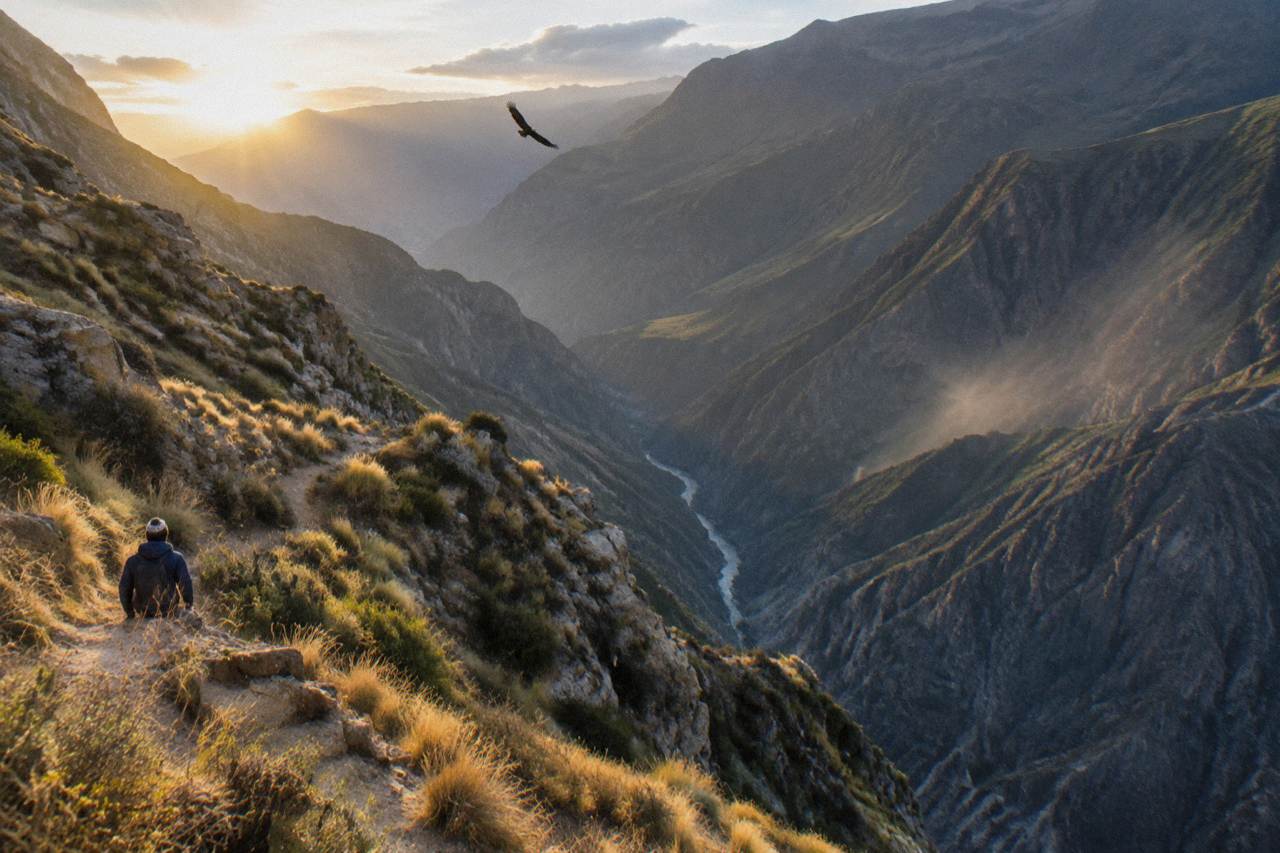
Yes, if you have at least two spare days and you want the deepest-canyon scenery and condors of the southern route. The detour adds roughly 160 to 190 km of side road between Arequipa and the canyon town of Chivay, and the canyon sits at serious altitude, 3,635 m at Chivay. Travelers with one week or less usually skip it and ride straight through to Puno; travelers with ten days or more rarely regret the stop.
The honest framing is that Colca Canyon is not on the way to Cusco at all. The main corridor runs Arequipa to Puno, about 300 km and six to seven hours on a direct bus. Colca branches west off that corridor, and visiting it means leaving the through-route, sleeping at altitude, and rejoining the route a day or two later from Chivay. That is the whole decision in one sentence: the canyon trades a straight shot to Lake Titicaca for two of the most distinctive landscapes in southern Peru.
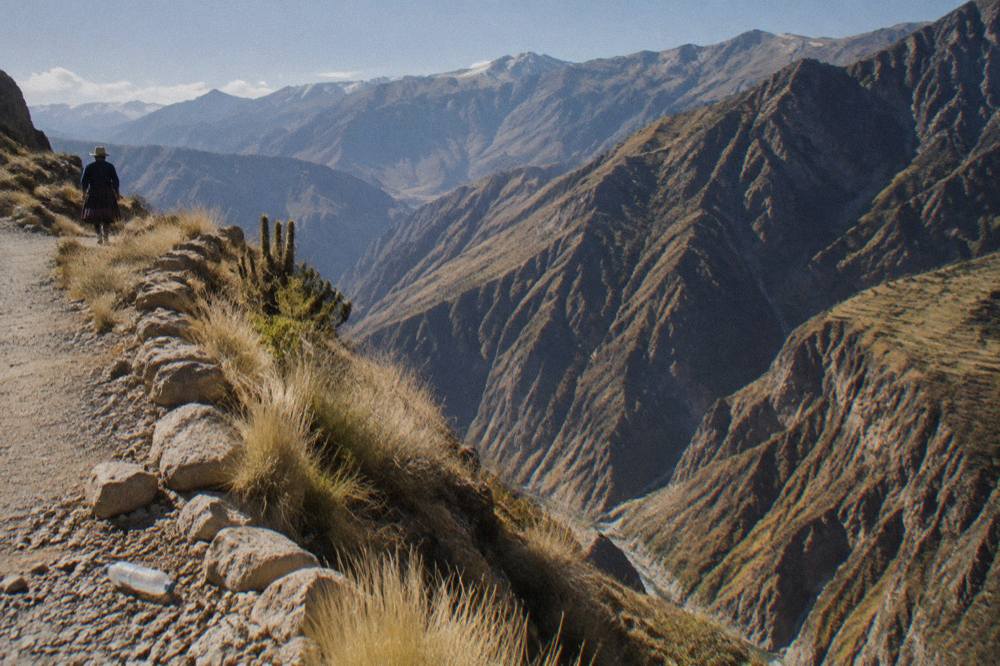
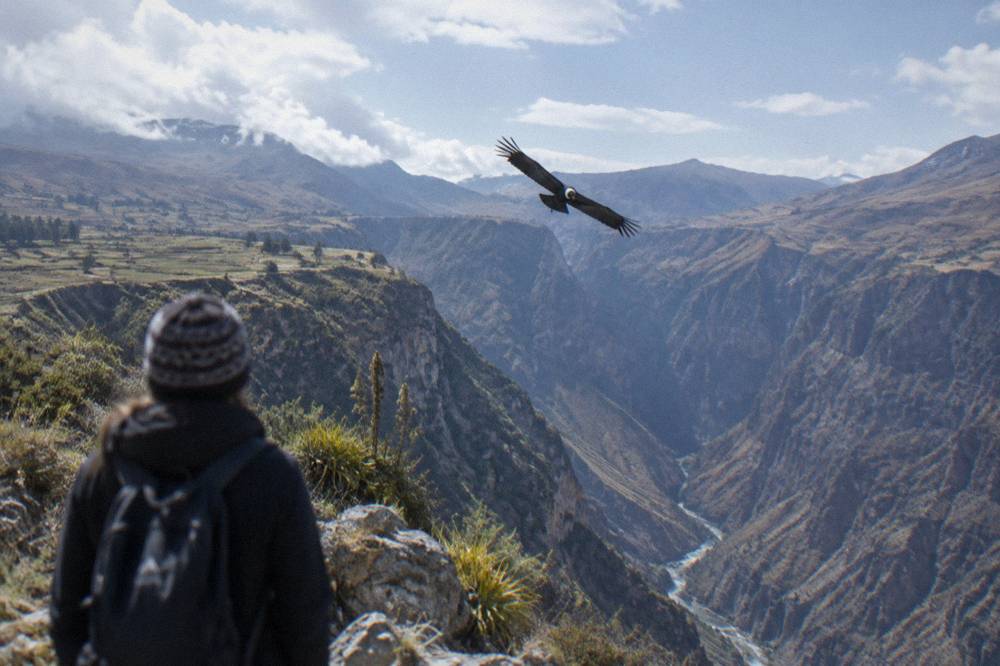
What you are actually buying with those days is a canyon that locals will tell you is roughly twice the depth of the Grand Canyon, a string of villages with pre-Inca agricultural terraces still in use, and the Cruz del Condor viewpoint, where Andean condors ride the morning thermals. The viewpoint sits at roughly 3,270 m on the rim, with higher passes en route reaching toward 4,800 m. Condor sightings are best in the dry season, April through November, and mornings between dawn and about 10 a.m., when the thermals are strongest.
The cost side of the ledger is real too. Arequipa sits at 2,335 m and is a comfortable acclimatization stop. Chivay is well over a kilometre higher, and Puno, your next main stop, is higher again at 3,827 m. Sleeping at Chivay means your first high-altitude night comes a day or two earlier and harder than it would on the direct route. Travelers who struggle with altitude sometimes find the canyon leg the roughest part of the whole trip south.
If the detour fits your calendar, the practical core of this article covers how to get in, how to rejoin the route, and what the altitude does to you. If it does not fit, the through-options from Arequipa toward Puno and Cusco are covered in the Arequipa to Puno bus guide, and the onward leg from Puno is covered in the Cusco to Puno bus guide. Either way, the three transport options below cover the most common ways travelers handle this stretch of the route.
How Many Days Does The Colca Detour Actually Cost?
Budget two nights and a full extra day beyond what the direct Arequipa to Puno run requires. The road from Arequipa to Chivay takes three to four hours over roughly 160 to 190 km, most canyon tours leave Arequipa very early to reach Cruz del Condor in the morning, and rejoining the through-route from Chivay to Puno takes about 6.5 hours by tourist bus. In practice the detour converts one travel day into three.
The typical shape of the trip looks like this. Day one: an early departure from Arequipa, the climb over the high passes, arrival in Chivay, and an afternoon to settle in, with the option of the local hot springs. Day two: the pre-dawn drive out to Cruz del Condor for the morning thermals, a slow return through the canyon villages, and a second night in Chivay. Day three: the 6.5-hour tourist bus from Chivay to Puno with scenic stops, arriving in the late afternoon.
| Leg | Typical time | Notes |
|---|---|---|
| Arequipa to Chivay | 3-4 hours | Roughly 160-190 km, crossing passes toward 4,800 m |
| Chivay to Cruz del Condor | ~1 hour each way | Best viewing between dawn and 10 a.m. |
| Chivay to Puno | ~6.5 hours | Tourist bus with scenic stops, from $41.03 |
| Direct Arequipa to Puno (skipping canyon) | 6-7 hours | ~300 km, the route you skip |
A compressed version exists: some travelers do a single very long day trip out of Arequipa that reaches the viewpoint and returns the same night. It works, but it means about eight hours of driving wrapped around an hour at the mirador, and it skips the quiet of the canyon in the late afternoon when the day-trippers have gone. The two-night version is the one that earns the detour.
The onward bus from Chivay is the piece most travelers under-plan. It is not a frequent public corridor; the tourist service that runs it, the "Colca To Puno, Scenic Stops" bus, carries a 4.7 rating from 88 reviews and costs from $41.03, with free cancellation. It exists precisely to stitch the canyon back into the through-route, and it is worth reading the details on the Chivay to Puno tour page before you commit to the detour, or checking the live listing directly: Check availability.
What Is The Altitude At Chivay And The Cruz Del Condor Viewpoint?
Chivay sits at 3,635 m, the Cruz del Condor mirador at roughly 3,270 m, and the road between Arequipa and the canyon crosses passes that reach toward 4,800 m. That is a jump of well over a kilometre from Arequipa at 2,335 m, and it happens inside a single morning of driving. Chivay is often a traveler's first real high-altitude sleep on this route.
The altitude sequence matters more than the raw numbers. The southern route naturally ascends in steps: Lima at sea level, Arequipa at 2,335 m, then Puno at 3,827 m. Inserting Colca Canyon moves the big jump forward by a day and makes it steeper, because you go from Arequipa to a pass near 4,800 m to a Chivay night at 3,635 m in the space of a few hours. Your body notices.
Standard acclimatization guidance applies: take the first afternoon in Chivay slowly, drink water, eat light, and skip alcohol. The general advice aligned with public-health recommendations is to watch for headache and nausea as early altitude-sickness signals and to escalate care if symptoms turn severe. Travelers who flew into Arequipa only a day earlier sometimes find the canyon leg comes too fast; if your itinerary allows, two nights in Arequipa before the canyon softens the climb considerably.
One practical note on the high passes: the road between Arequipa and Chivay tops out well above 4,000 m, and buses there run heating or climate control on premium services, but the air outside at a photo stop is genuinely thin and cold. Bring layers even in dry season. The altiplano sections of this route can drop below freezing at night year-round.
How Do You Get From Arequipa Into The Canyon?
Most travelers reach the canyon on a group tour or private transfer from Arequipa, a three to four hour drive, because regular public bus service into Chivay is limited and the viewpoint is not walkable from town. Tours typically leave Arequipa around 6 a.m. to hit the passes in daylight and the canyon by late morning. The alternative is a local bus to Chivay and arranging everything from there independently.
The tour route from Arequipa matters for the condor question. Cruz del Condor is about an hour beyond Chivay toward Cabanaconde, and the birds ride the morning thermals along the rim, so departure times are built backward from that window. The dry season, April through November, gives the clearest skies and the most reliable sightings, though condors are seen year-round and nothing is guaranteed on any given morning.
On the hop-on-hop-off side, plain honesty helps: Peru Hop lists its southern corridor stops as Paracas, Huacachina, Nazca, Arequipa, Puno and Cusco, and Chivay does not appear on that list. Peru Hop does not serve the canyon directly, so the standard pattern for pass holders is to hop off at Arequipa, take a canyon tour from there, and rejoin the pass at Puno, which the pass's flexibility is designed to allow, since passes are valid up to one year from first use with date changes in the app up to 12 hours before departure. Travelers who prefer booking each leg separately can compare direct bus seats on the corridor through a ticket aggregator such as 12Go's Peru bus listings.
Independent travel into the canyon is possible and cheaper, but it demands more planning. Public transport reaches Chivay, and from there colectivos run up the valley, though schedules thin out in the afternoon. The trade for saving the tour cost is that you manage your own viewpoint timing, your own altitude adjustment, and your own onward connection, in a town where the next bus leaves when it leaves.
How Does The Detour Rejoin The Main Route To Puno?
The rejoin is a single daily-pattern tourist bus from Chivay to Puno, about 6.5 hours with scenic stops, costing from $41.03. There is no train from the canyon and no fast option; you either ride that bus or return to Arequipa, about three to four hours back, and take a direct Arequipa to Puno service instead. Most travelers ride the Chivay bus and treat its stops as a bonus sightseeing day.
The Chivay to Puno leg is the quiet hero of the detour. Rather than backtracking to Arequipa, the "Colca To Puno, Scenic Stops" bus climbs out of the valley and crosses the altiplano toward Lake Titicaca, stopping at viewpoints along the way, which turns a dead-end side trip into a loop. It carries a 4.7 rating from 88 reviews and free cancellation, and at about 6.5 hours it is only marginally longer than the direct Arequipa to Puno run.
From Puno, the route to Cusco continues east and north, about 388 km, with direct buses taking roughly six to eight hours and tourist services with cultural stops running nine to eleven. The best-known of the scenic options is the "Route Of The Sun, Buffet Lunch" service, a roughly 11-hour day from 6:10 a.m. to 5:30 p.m. with lunch included, carrying a 4.7 rating from 633 reviews at from $50. If the canyon detour has put you in a sightseeing mood, that leg continues the theme all the way to Cusco.
One traveler wrote in a September 2026 review that going Lima to Cusco in eight days was fast-paced but very fun, which is exactly the trade this detour sits inside. Every day you give Colca is a day taken from Paracas, Huacachina, or time at the lake, and at eight days total the canyon is usually the first thing cut. At ten days or more, it slots in without strain.
What Do You Give Up By Skipping The Canyon?
Skipping Colca buys you back one to two full days, one less high-altitude night, and a simpler route, at the cost of the condors, the terraced villages, and the deepest canyon scenery in Peru. Travelers who skip it typically spend the recovered time at Lake Titicaca, in Arequipa itself, or on an extra day in Cusco before Machu Picchu. The direct Arequipa to Puno bus takes six to seven hours.
Arequipa alone absorbs a recovered day well. The white volcanic stone of the historic center, the Santa Catalina monastery, and the food scene make it more than a transit stop, and at 2,335 m it is the friendliest altitude sleep on the whole southern route. Some travelers decide the city plus a fast climb to Puno is a better two days than the city plus the canyon, and that is a defensible read, not a failure.
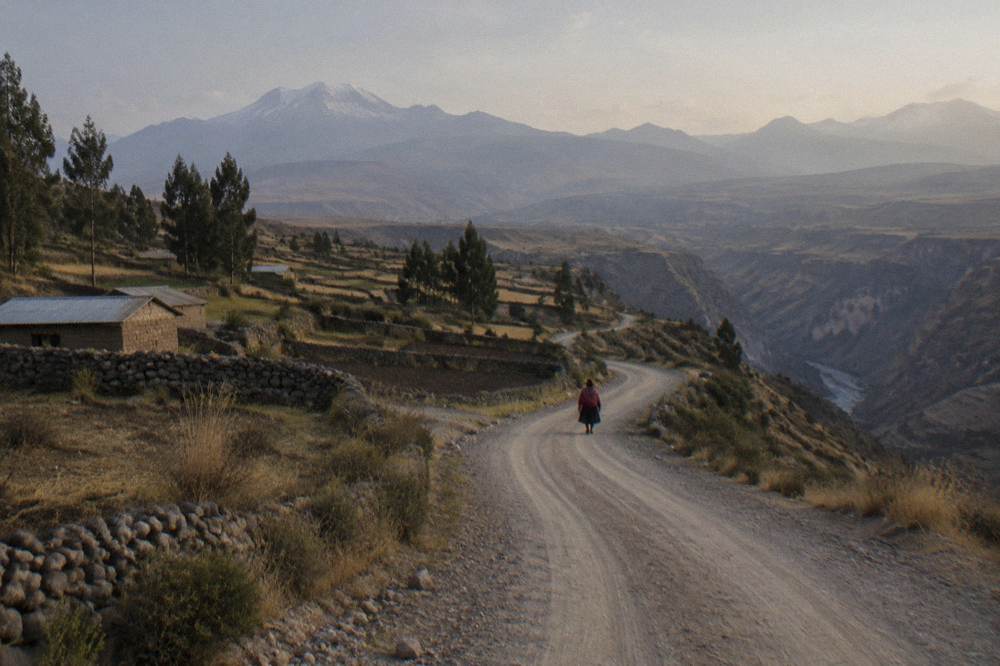
The other thing you skip is cost and complication. The detour means a tour or transfer in, two nights of accommodation in Chivay, entry fees at viewpoints and hot springs, and the onward bus. None of it is expensive by international standards, but it is three or four separate transactions in a place where paying in cash and confirming times locally still smooths everything out.
There is also a rail option for the onward journey that some travelers fold into the decision. The PeruRail Titicaca train runs between Cusco and Puno in about ten hours, from $395, a sightseeing day on rails rather than a bus leg, though its listing carries too few rated reviews at 294 for a star claim. It does not touch the canyon at all, but travelers weighing the canyon detour sometimes weigh the train splurge in the same breath, since both are ways to make the Puno-Cusco stretch memorable.
Is The Detour Worth It For The Condors Alone?
For condors alone, no; a single wildlife sighting on a single morning is too fragile a thing to anchor two days of itinerary. For the condors plus the canyon landscape, the terraces, and the altiplano crossing to Puno, yes, comfortably. Travelers who report the detour as their trip highlight almost always describe the whole sequence, the passes, the valley, the birds, and the lake afterward, not the birds in isolation.
The condor reality deserves honesty. Cruz del Condor is one of the most reliable places on earth to see Andean condors, and in dry-season mornings the sighting rate is high, but wildlife does not sign contracts. A cloudy or windy morning can thin the flight window, and travelers who built the whole detour around one bird sometimes leave deflated while the traveler beside them, who came for the valley, leaves delighted.
The valley is the insurance policy. Even on a thin condor morning, the canyon's scale, the terracing around the villages, and the hot springs at Chivay carry the day. That is why the standard advice is to commit to the canyon as a landscape, treat the condors as the probable bonus, and book the morning at the viewpoint because it is the best single use of the day regardless.
On safety and timing, the corridor itself is standard southern-Peru bus country. The UK FCDO's current advice for Peru reads: "Bus crashes are common, especially at night. Only use reputable transport companies, and where possible, avoid overnight travel, especially in mountainous and remote regions." The canyon legs are daytime legs, which fits that guidance, and roads in Peru occasionally see strikes or protests, so check current conditions before travel. The US State Department's Peru advisory notes that demonstrations can shut down roads without warning, which is a general Peru reality rather than a Colca-specific one.
The final tally, then: with ten or more days on the Lima to Cusco route, the detour is worth it, and the Chivay to Puno bus makes the rejoin painless. With a week or less, ride the direct corridor, bank the days for the lake and Machu Picchu, and keep Colca on the list for the next trip. And if this article has settled the canyon question for you, the route planning continues at Lima To Cusco, where every leg of the southern corridor is broken down stop by stop.
Common Questions About Colca Canyon
Is Colca Canyon Worth The Detour On The Way To Cusco?
Yes, if you have at least two spare days. The detour adds a 3-4 hour drive in from Arequipa, one or two nights at 3,635 m in Chivay, and a 6.5-hour bus back to the route at Puno. Travelers on tight schedules usually skip it and ride the direct Arequipa to Puno bus in 6-7 hours.
How many days do you need for Colca Canyon?
Two nights is the comfortable standard: one to arrive and acclimatize in Chivay, one for the morning at Cruz del Condor, then the onward bus to Puno on day three. A rushed single-day trip out of Arequipa is possible but spends around eight hours driving for roughly an hour at the viewpoint.
What is the altitude at Chivay?
Chivay sits at 3,635 m, and the road in from Arequipa crosses passes that reach toward 4,800 m. It is well over a kilometre above Arequipa at 2,335 m, so it is often a traveler's first serious altitude night on the southern route. Take the first afternoon slowly, hydrate, and skip alcohol.
When is the best time to see condors at Cruz del Condor?
Dry season, April through November, with clear morning skies. Condors ride the morning thermals, so arrive between dawn and about 10 a.m. Sightings are likely but never guaranteed; the canyon scenery is the reliable half of the visit.
Does Peru Hop stop at Colca Canyon?
No. Peru Hop's published southern-corridor stops are Paracas, Huacachina, Nazca, Arequipa, Puno and Cusco, and Chivay is not among them. Pass holders typically hop off at Arequipa, take a canyon tour from there, and rejoin the route at Puno, using the pass's up-to-one-year validity.
How do you get from Colca Canyon back to the main route?
The main rejoin is the tourist bus from Chivay to Puno, about 6.5 hours with scenic stops, from $41.03, rated 4.7 from 88 reviews with free cancellation. The alternative is returning to Arequipa, 3-4 hours, and taking a direct bus to Puno from there.