Lima To Huacachina By Bus: What To Know
There is no bus terminal in Huacachina. Every overland route runs Lima to Ica or Paracas first, then a short final hop into the oasis village, and knowing which of those legs to buy separately is the whole trick of this journey.
Short answer
The bus from Lima to Huacachina takes about 4 to 5 hours to Paracas plus a 1 to 1.5 hour connection, or roughly 4 to 5 hours direct to Ica followed by a short taxi to the oasis. One-way bus tickets start at $19, while a full Paracas and Huacachina premium day trip runs from $119 per person.
How Long Does The Bus From Lima To Huacachina Take?
Count on roughly three and a half to four and a half hours of driving from Lima to Paracas, about 75 kilometers and another one to one and a half hours from Paracas into Huacachina, or a similar run direct to Ica with a short taxi hop from the terminal to the oasis. Huacachina sits roughly 368 to 404 meters above sea level, a low desert stop, so there is no altitude factor to plan around on this route.
Those are the drive times under normal conditions on the Panamericana Sur. Real-world door-to-door runs longer, because Lima traffic can add an hour to any departure, and tourist services that collect passengers from multiple hotels in Miraflores and Barranco start their clocks well before the bus reaches the highway. Operators that stop along the way, including the hop-on-hop-off services, show longer totals: some Lima departures reach the Paracas area around early afternoon once pickups and a viewpoint stop are folded in.
The geography is simple. Lima sits at sea level on the coast, Paracas is essentially level with the ocean at 2 to 3 meters, and Huacachina is a lagoon village pressed against a dune field on the edge of the city of Ica. Nothing on this route climbs, which is why it works as an easy first or last leg of a longer southern Peru itinerary.
| Leg | Distance | Typical bus time |
|---|---|---|
| Lima to Paracas | 260-272 km | 3.5-4.5 hours |
| Paracas to Huacachina | ~75 km | 1-1.5 hours |
| Ica to Nazca (if continuing south) | ~119-143 km | 2-3 hours |
One structural point shapes everything below: no scheduled long-distance bus drops you inside Huacachina village. The buses serve Paracas and the Ica terminal, and the final approach to the oasis is a taxi or a pre-arranged pickup. If a booking promises "Huacachina" as the destination, it is selling you a connection, not a direct seat.
What Are Your Real Transport Options From Lima?
There are three practical ways to do it: a hop-on-hop-off tourist pass that links Lima, Paracas, Huacachina, and points south with hotel pickup; a conventional bus ticket to Paracas or Ica plus a taxi connection; or a booked day trip that runs the whole coast route for you and returns you to Lima the same night. The right choice depends on whether Huacachina is a stop on a longer route or a standalone escape from the capital.
The hop-on-hop-off approach suits travelers building a southern itinerary. Peru Hop runs this corridor with a bilingual host on every bus, pickups and drop-offs at your hotel or hostel so you skip the terminal with your bags, reclining semi-cama seats, wifi, USB charging, an onboard bathroom, and a blanket per passenger on cooler desert evenings. Passes are valid for up to one year from first use, and you can change a bus time in the app up to 12 hours before departure, subject to availability. A few reviewers note the wifi and USB ports can be inconsistent, so download anything you want before leaving Lima.
The conventional-ticket approach suits the traveler who just wants one seat at the lowest price. Peru Hop costs more than a bare Cruz del Sur or Oltursa seat before you total in the taxis and tours a do-it-yourself route eventually needs, and for a single Lima-to-Huacachina run with nothing else planned, a plain bus ticket is often the cheaper call. For that, a budget and direct-ticket alternative to a hop-on-hop-off pass is worth a look, and the "Direct Bus, One Way" product from Lima's Miraflores district to Paracas covers the first leg: it is rated 4.2 from 53 reviews, starts at $19, takes about 3 hours, and carries free cancellation. You then buy the short Paracas-to-Huacachina leg separately.
The day-trip approach suits the traveler with a fixed base in Lima and limited time, and it is covered in full later in this guide, because the two premium products differ enough in price and pacing to deserve their own comparison.
How Much Does The Lima To Huacachina Bus Cost?
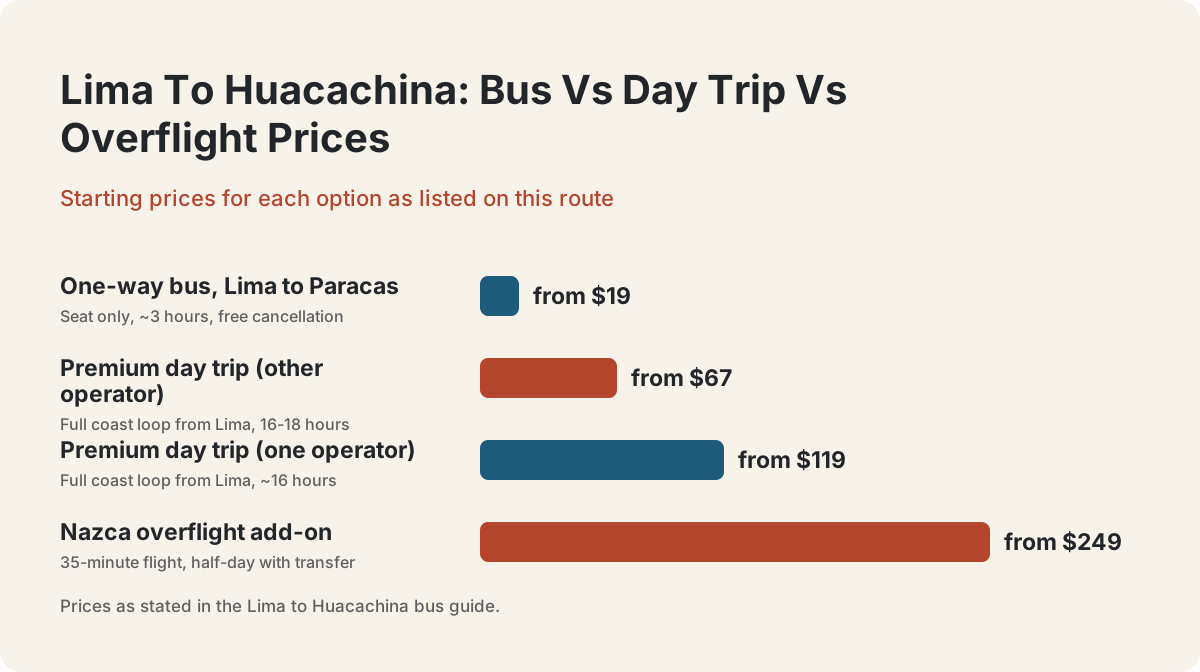
The pure bus spend is small: the one-way Lima to Paracas seat starts at $19, the short onward leg to Huacachina is a local fare, and a taxi from the Ica terminal to the oasis is a fixed, modest hop. The budget shifts when you add the desert activities and the Ballestas Islands boat, which is why many travelers end up comparing a $119 premium day trip against the do-it-yourself total.
The honest way to price this route is to price the whole day, not the seat. A bare bus ticket gets you to the dunes, but the reason most people go is the dune buggy ride and the sandboarding, plus the boat out to the Ballestas Islands if the Paracas stop is on the list. Those add-ons are bought locally or bundled, and they change the math considerably.
| Option | Price | What it includes |
|---|---|---|
| One-way bus, Lima to Paracas | from $19 | Seat only, ~3 hours, free cancellation |
| Premium day trip (one operator) | from $119 | Full coast loop from Lima, ~16 hours, sunset toast, free cancellation |
| Premium day trip (other operator) | from $67 | Full coast loop from Lima, 16-18 hours, sunset toast, free cancellation |
| Nazca overflight add-on from Ica or Huacachina | from $249 | 35-minute flight over the lines, half-day with transfer |
If you prefer to buy conventional seats directly rather than through a curated pass, comparing scheduled bus fares across the corridor is straightforward, and a fare aggregator such as Busbud's Lima to Ica and Paracas listings shows the range of direct-ticket options alongside each other.
Is The Lima To Huacachina Bus Route Safe?
Yes, for a traveler using reputable operators on this corridor in daylight, the coast route is one of the lower-stress bus runs in Peru, flat and heavily traveled. The UK FCDO advises: "Bus crashes are common, especially at night. Only use reputable transport companies, and where possible, avoid overnight travel, especially in mountainous and remote regions," and the US State Department permits its employees to ride commercial buses at night along this corridor.
That framing matters because the two governments treat this coastal stretch differently from the mountain roads further south and east. The Pan-American Highway between Lima and Paracas is the corridor where even US government employees, who are otherwise prohibited from nighttime road travel, are allowed on commercial buses after dark. It is the best-served and most patrolled road in the country's south.
The practical safety moves are unglamorous. Book with known companies rather than informal combis and colectivos, which the verified safety research distinguishes from premium long-distance lines: premium operators like Cruz del Sur, Oltursa, and Peru Hop generally run climate control, while informal economy buses often do not. Travel in daylight, keep your daypack on your lap rather than in an overhead rack, and use the hotel pickup model where it exists, because terminal crowds are where most petty-theft risk on any Peruvian bus route actually lives.
Roads in Peru occasionally see strikes or protests, and blockades can close highways without warning. No specific sustained disruption on the Lima-Ica corridor has been confirmed in current reporting, but checking conditions shortly before you travel is simply good practice on any Peruvian route. The US embassy's current Peru advisory and the FCDO's Peru travel advice both carry road-safety language worth reading before a long bus leg, and operators in the tourist network monitor official alerts and reroute or refund when roads close.
Where Do You Board In Lima, And Where Does The Bus Drop You?
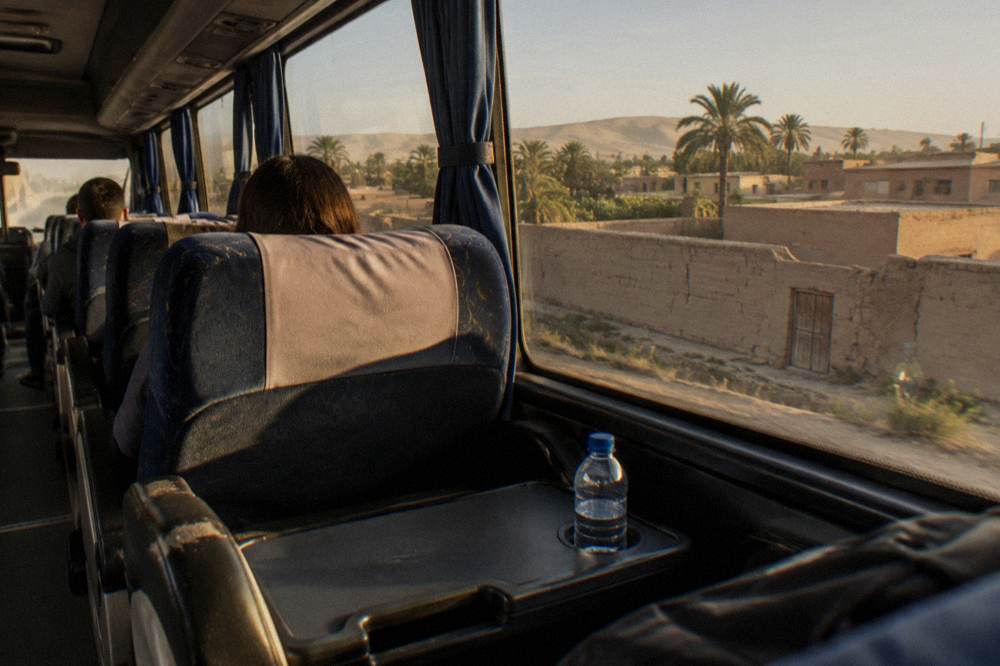
Most tourist services and the one-way products collect from hotels and hostels in Miraflores and Barranco rather than using a central terminal, while conventional long-distance buses depart from Lima's terminals such as Javier Prado or La Victoria. On arrival, no service stops inside Huacachina village: you are dropped at Paracas or at the Ica terminal, and the last stretch to the oasis is a taxi or an arranged pickup, a few minutes' drive from the dunes.
The Lima end is the part most first-time visitors get wrong. If you book a conventional bus, you need to reach the correct terminal, and Lima terminals are far from the tourist districts, so a pre-dawn taxi from Miraflores to Javier Prado is a normal part of the itinerary. If you book a hop-on or a one-way tourist product, the pickup happens at your accommodation in participating locations, which removes the terminal and the luggage-hauling entirely from your morning.
At the far end, the geography repeats in miniature. Paracas is a small resort town where the bus stops near the malecon and the boat departure point. Ica is a proper city with a terminal on its edge, and Huacachina is a village of a few streets five kilometers into the dunes from the center of Ica; the connection is a short taxi ride that every driver in the terminal knows by heart. Hostels in Huacachina also routinely arrange pickups in Ica, so if you have booked a night at the oasis, ask them to meet your bus.
One booking that covers the whole corridor
Hotel pickup in Lima, the Paracas and Huacachina stops, and a host who manages the connections: Peru Hop links the coast legs that this guide is piecing together, and its passes stay valid for up to a year if your dates move.
Planning the reverse direction works the same way in mirror. Buses leave Ica for Lima through the day, and the same advice about daytime travel applies: an afternoon departure puts you into Lima in the evening, which is a better pattern than a night arrival with luggage.
What Do You Do Once You Arrive: Sandboarding And Dune Buggies?
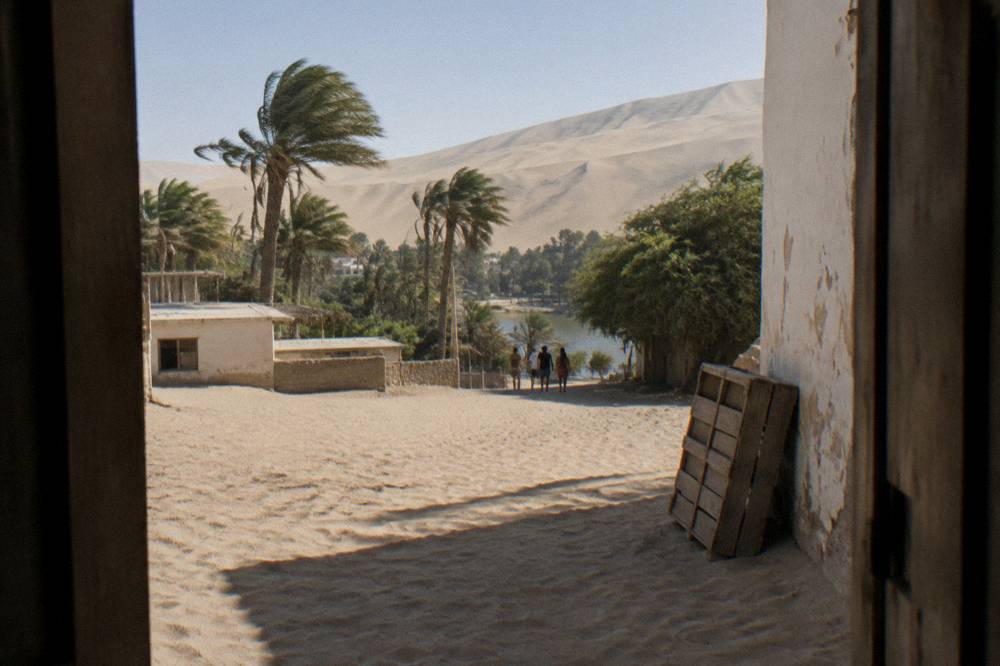
Huacachina's whole economy is the dune field around it: dune buggy rides carrying visitors over the crests at speed, sandboarding runs down the same slopes, and sunset from the ridge above the lagoon. Tours run from the village itself, bought on the spot or through your hostel, and the standard outing is a shared buggy with boards included, timed to finish on the dunes as the light drops.
The buggy circuit is the signature experience. Drivers take the vehicles over rolling dune faces that leave most passengers screaming and laughing in equal measure, then stop at the tallest slopes for the sandboarding. You can ride the boards standing if you have snowboard experience or sitting flat like a sled if you do not, and most people choose the sled option within one run. Helmets and goggles are worth insisting on, since blowing sand stings at speed.
Timing matters more than anything else here. The dunes radiate heat through the middle of the day, and mid-afternoon outings are punishing. Late afternoon departures, which most operators run, hit the same terrain in cooler air and end with the sunset that Huacachina is known for, when the dune faces go from pale yellow to deep orange and the shadows stretch across the ridgelines. That is the moment the postcards come from.
| Activity | Where bought | Typical notes |
|---|---|---|
| Dune buggy and sandboarding | Village operators or hostels | Shared vehicle, boards included, late-afternoon departures |
| Ballestas Islands boat | Paracas malecon or as part of a day trip | Coastal wildlife circuit, paired with the Paracas stop |
| Sunset toast on the dunes | Bundled in premium day trips | Operator-organized, timed to the ridge light |
| Nazca Lines overflight | From Ica or Huacachina | 35-minute flight, from $249, rated 4.7 from 4 reviews |
For travelers extending the desert theme, the overflight is the big add-on. The "Nazca Overflight From Ica" product flies the lines out of Ica or Huacachina with transfer included: a 35-minute flight over the geoglyphs, from $249, rated 4.7 from 4 reviews, with free cancellation. The review pool is small, so read the recent feedback on the live listing yourself before booking, and note that overflights are weather-dependent in a way ground tours are not; morning slots have the calmest air over the desert.
One warning that applies to the village itself: the lagoon is smaller than photographs suggest, and Huacachina is genuinely tiny. A night here is atmospheric. Three nights here require dune-related tolerance. Most travelers find one night and a full activity day exactly right before moving on to Nazca, Arequipa, or back to Lima.

Should You Just Take A Paracas And Huacachina Day Trip Instead?
If Huacachina is your only southern destination and you are Lima-based, yes, a day trip is usually the better call: it packs the Ballestas Islands boat, the Paracas reserve, and the Huacachina dunes into one 16-to-18-hour day with connections handled, from $67 to $119 by operator. If Huacachina is one stop on a longer southbound route, the day trip wastes a return leg; the bus or hop-on approach wins.
There are two premium products on this exact route and they are not interchangeable. The "Premium Day Trip, Sunset Toast" runs from $119, about 16 hours door to door, rated 4.8 from 2,636 reviews, with free cancellation. The "Premium Day Trip, Peru Hop Run" covers the same coast loop from $67, runs 16 to 18 hours, and carries a 4.9 rating from 9,650 reviews plus a Badge of Excellence on this site. Both bundle the sunset toast on the dunes, which is the single best-photographed moment of the day and the thing independent bus travelers most often miss by catching a late departure.
The pacing question is the real decision. A day trip means a pre-dawn pickup and a very late return, a long but structured day with no logistics to solve. Doing it by bus means you control the clock, can stay the night at the oasis, and can catch the dunes at sunset without watching a watch, but you will spend real effort on connections and you may find that the sum of the parts approaches the bundled price once the boat, the buggy, and the taxis are paid. See the site's fuller breakdown in is Huacachina worth it for the value judgment.
For the flight-based alternative on the wider corridor, the site's Lima to Paracas bus guide covers that first leg in detail, and the Paracas to Huacachina bus guide handles the short connector. If a single day is all you have, the premium day trip, bookable through the tour page on this site, or Check availability on the live listing, is the format most Lima visitors end up choosing, and the cancellation terms on both premium products mean a shifted plan does not strand your money.
When Is The Best Time Of Year To Do This Trip?
The desert coast runs on two seasons: the dry, sunny stretch from roughly May through October, when the dunes are hot by day and crisp at sunset, and the warmer months from November through March, when the same region sees occasional rain and heavier humidity. Dry season is the safer bet for the activities that define Huacachina, since buggy tours and overflights both depend on stable air.
The coastal desert around Ica is one of the driest places on earth, which cuts both ways. Clear light for photography is close to guaranteed in the dry months, but midday heat on bare sand is intense year-round, and summer afternoons from December through February push it further. Travelers doing the day-trip format should note that the schedule puts you in the dunes in the late afternoon either way, which is the kindest part of the day to be there.
Rain, when it does come to this coast, is brief but disruptive, because desert roads and trails drain poorly and operators occasionally pause buggy runs after heavy rain makes the sand unstable. Nothing on this route closes for a season. The practical planning range is simply this: for the dry season, book the coast legs and the popular day trips ahead, since they are the site's best-reviewed products and dates fill in peak weeks; for the shoulder months, a few days of flexibility is usually enough.
One timing note for the wider route: if Huacachina is your first stop on a longer trip that continues to Arequipa, Puno, or Cusco, the dry season window is the same one that suits the Andes, which makes May through October the single best period to do the entire southern corridor. The site's Lima to Ica bus guide covers the Ica-side logistics for the version of this trip that continues south rather than returning to the capital, and Lima To Cusco covers the full corridor beyond it.
However you buy the leg, the structure of this route does not change: Lima to Paracas or Ica by bus, a short hop into the oasis, dunes by afternoon, and a decision between one night at the lagoon or a late ride back to the capital. The bus is cheap, the road is flat, and the desert does the rest.
Common Questions About Lima To Huacachina By Bus
How long does the bus from Lima to Huacachina take?
Roughly 4 to 5 hours from Lima to Paracas plus another 1 to 1.5 hours from Paracas to Huacachina, or a similar 4-to-5-hour run direct to Ica followed by a short taxi to the oasis. Hotel pickups and traffic in Lima can add an hour to the door-to-door total.
Is there a bus that goes directly into Huacachina village?
No. No scheduled long-distance bus stops inside the village. Buses terminate at Paracas or at the Ica terminal, and the last stretch into the oasis is a short taxi ride or an arranged hostel pickup from Ica.
How much does the Lima to Huacachina bus cost?
The one-way bus from Lima to Paracas starts at $19. The onward local leg and the taxi from Ica to the oasis are modest fixed fares. A bundled premium day trip covering Paracas, the Ballestas Islands, and Huacachina runs from $67 to $119 depending on the operator.
Is the Lima to Huacachina bus route safe?
Yes, using reputable operators in daylight. The UK FCDO notes that "Bus crashes are common, especially at night. Only use reputable transport companies, and where possible, avoid overnight travel, especially in mountainous and remote regions," and this coastal corridor is specifically one where US government employees are permitted to ride commercial buses at night.
Where do buses depart from in Lima?
Tourist and hop-on services collect from hotels and hostels in Miraflores and Barranco. Conventional long-distance buses depart from Lima's main terminals, such as Javier Prado or La Victoria, which are outside the tourist districts, so factor in a taxi to the terminal.
Can I visit Huacachina from Lima in one day?
Yes. Premium day trips run the full coast loop from Lima in 16 to 18 hours, covering the Ballestas Islands, the Paracas reserve, and Huacachina with a dune sunset toast, with all connections handled and free cancellation on both premium products.